TL;DR:
- Phone data specialists recover and preserve mobile evidence with a success rate up to 96% when storage remains intact. They follow strict forensic protocols, including chain-of-custody documentation and cryptographic verification, to ensure evidence is admissible in court. Early engagement with qualified examiners prevents data loss and maintains the integrity needed for legal cases.
Phone data specialists are professionals trained to extract, analyse, and preserve mobile phone data for use in legal proceedings and criminal investigations. The industry term for this discipline is mobile device forensics, and it sits at the intersection of digital forensics and evidence law. Professional phone data experts report success rates up to 96% for logical and physical recovery cases where the storage chip remains intact. That figure reflects the maturity of the field and the gap between what a qualified forensic lab can achieve versus a general repair shop. For legal professionals, law enforcement, and private investigators, understanding what these specialists do, and how they do it, determines whether mobile evidence holds up in court.
What do phone data specialists actually do?
Phone data specialists, known formally as mobile device forensic examiners, recover, decode, and preserve data from smartphones and other mobile devices. Their work spans everything from extracting deleted text messages to bypassing encrypted lock screens without triggering a remote wipe. The scope of data recovered typically includes photos, messages, contacts, app data, call logs, location history, and deleted files. Each of these data types carries direct evidential weight in civil disputes, criminal prosecutions, and private investigations.
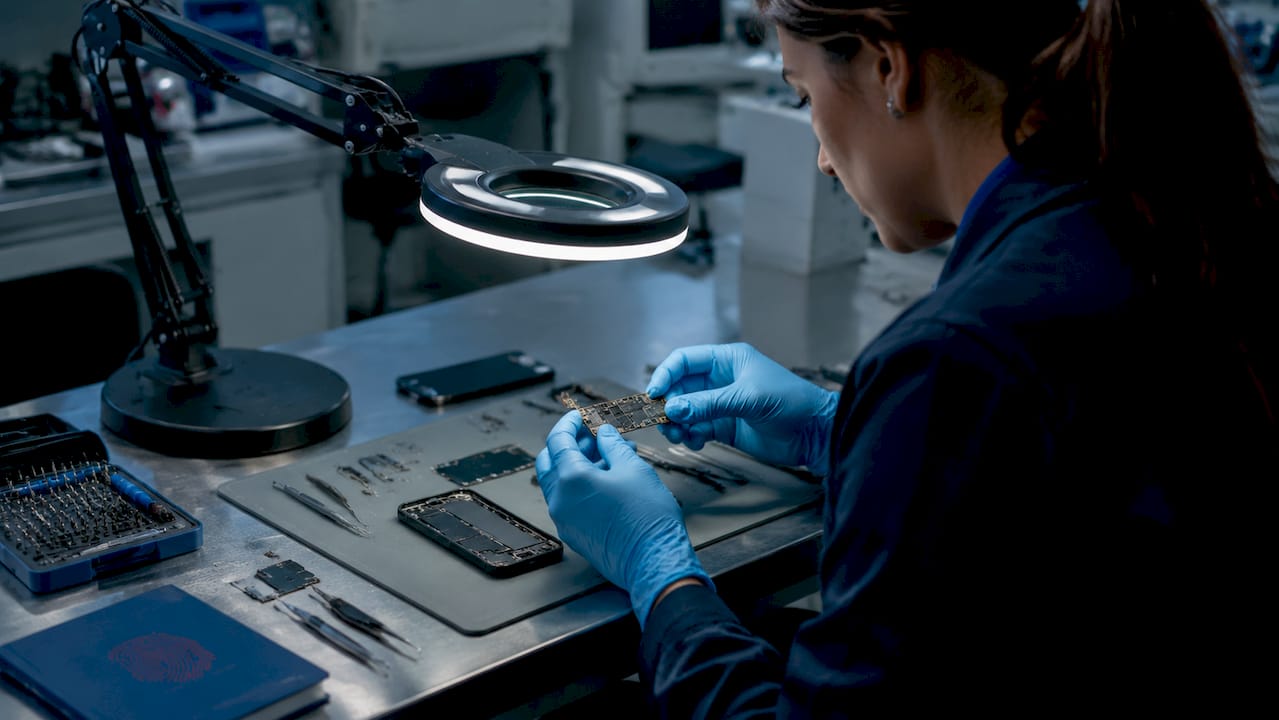
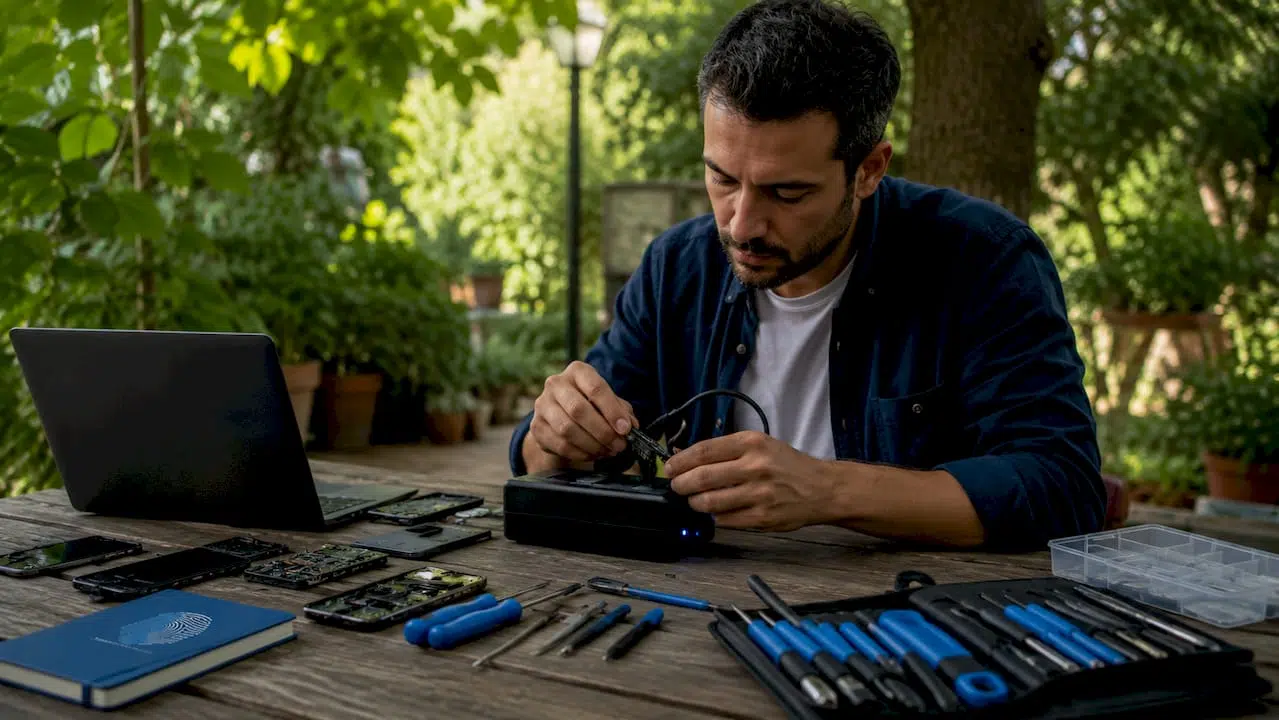
The distinction between a phone data specialist and a standard repair technician is significant. A repair technician fixes hardware so the device functions again. A forensic examiner extracts data without altering it, documents every step, and produces output that meets court admissibility standards. Computerforensicslab operates precisely in this forensic space, providing mobile device analysis for legal clients across the UK.
How do phone data specialists recover data from damaged or locked phones?
Recovery methods fall into two broad categories: logical and physical. Logical recovery targets data accessible through the device’s operating system, typically used when the phone powers on but has suffered software corruption or accidental deletion. Physical recovery goes deeper, working directly with the storage chip when the device cannot boot at all.
The main technical approaches used by qualified specialists are:
- Chip-off extraction. The NAND flash memory chip is physically removed from the device’s circuit board and read directly. This method works when the board is too damaged to function but the chip itself is intact.
- JTAG extraction. Test access ports on the circuit board allow direct communication with the device’s memory, bypassing the operating system entirely.
- Microsoldering repairs. Broken solder joints, damaged connectors, or failed power management circuits are repaired at component level to restore enough function for a logical extraction.
- Forensic phone cracking. Certified examiners use court-accepted tools like Cellebrite UFED to bypass device locks without altering data. Cryptographic hashing confirms the extracted data matches the original bit for bit.
- Logical extraction via forensic software. For accessible devices, forensic programs pull a full file system image, including app databases and cached data that standard backups miss.
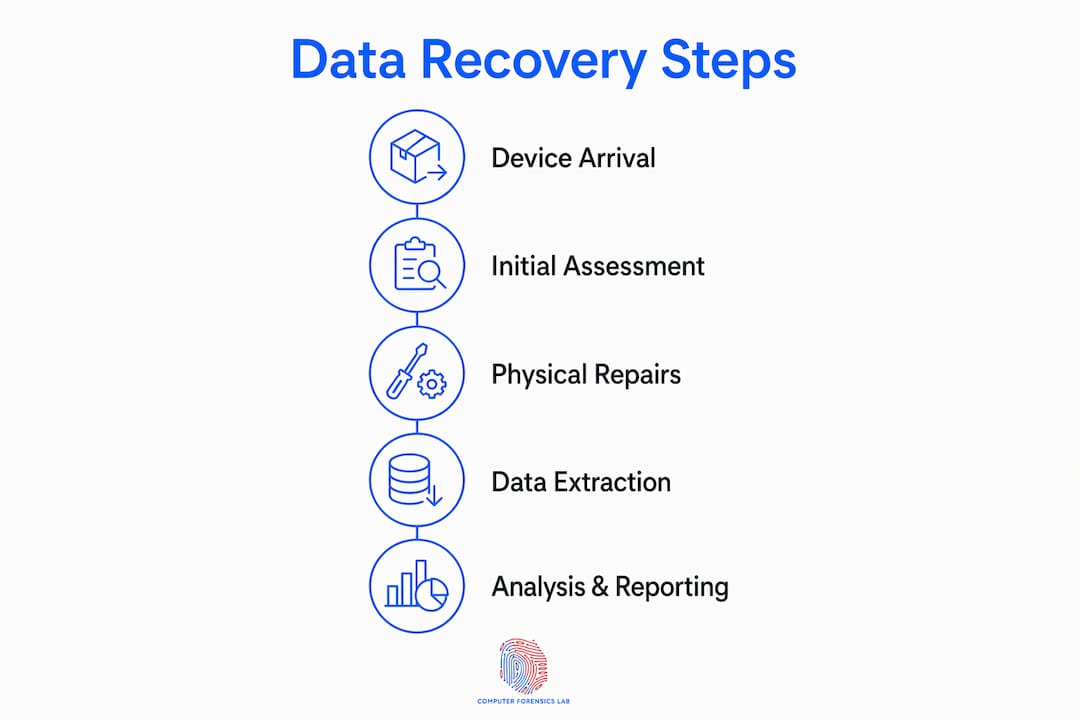
Mail-in assessment services typically require 2–3 business days for device arrival and initial triage. Complex physical recoveries take longer, depending on the extent of damage and the extraction method required.
Pro Tip: Never attempt a software restore, factory reset, or operating system update before a specialist assesses the device. Attempting restoration before specialist assessment can overwrite recoverable data, particularly in power management fault cases where the data chip is still fully intact.
What legal and forensic protocols must phone data specialists follow?
Forensic standards are not optional extras. They are the difference between evidence that stands up in court and evidence that gets thrown out. Every qualified mobile device forensic examiner works within a defined legal and procedural framework.
The core requirements are:
- Chain of custody documentation. Every transfer, examination, and storage event must be logged with timestamps, personnel names, and purpose. Chain-of-custody lapses can render evidence inadmissible or expose it to legal challenge.
- Legal authorisation. Forensic phone cracking requires a court order or documented proof of device ownership before any examination begins. Without this, the extraction itself may be unlawful.
- Cryptographic hashing. MD5 or SHA-256 hash values are generated from the extracted data image immediately after acquisition. Any subsequent alteration to the data produces a different hash, proving tampering.
- Write-blocking. Hardware or software write-blockers prevent any data being written to the device during examination, preserving the original state.
- Accredited tools and certifications. Examiners working on court-bound cases typically hold certifications such as Cellebrite Certified Operator (CCO) or equivalent, and use tools validated for forensic use.
“Failure to document chain of custody or improper handling can result in evidence being inadmissible or legally challenged in court. The integrity of the process is as important as the data itself.”
The consequences of skipping these steps are severe. A defence barrister who identifies a gap in the chain of custody can argue the evidence was tampered with, regardless of its actual content. For law enforcement and legal teams, engaging specialists who follow these protocols from the outset is not a precaution. It is a necessity.
Common challenges faced by phone data specialists and how they overcome them
Mobile device recovery is technically demanding. The challenges specialists face go well beyond a cracked screen or a forgotten PIN.
The most frequent obstacles include:
- Power IC failures. A failed power management chip makes a phone appear completely dead. The storage chip, however, is often undamaged. Professional repairs can restore logical access without touching the data, recovering everything intact.
- Physically damaged storage chips. Devices recovered from fires, floods, or impacts may have chips that require cleaning, reballing, or direct reading under specialist conditions.
- Encryption barriers. Modern smartphones use full-device encryption by default. Bypassing this without triggering a data wipe requires forensic phone cracking techniques that preserve the device state exactly as it was at intake.
- Data overwrite risk. Improper recovery attempts, including DIY software tools or unqualified repair shops, can permanently destroy recoverable data by writing new information to the same storage sectors.
The gap between a local repair shop and a specialist forensic lab is significant for complex cases. Most phone repair shops outsource board-level recoveries, adding time, reducing accountability, and breaking the chain of custody. In-house labs with component-level expertise produce better results and maintain the evidential integrity that legal cases demand.
| Challenge | General repair shop | Specialist forensic lab |
|---|---|---|
| Power IC failure | Device returned as unrecoverable | Component-level repair restores data access |
| Encrypted device | Unable to bypass without data loss | Forensic cracking preserves original state |
| Chain of custody | Not maintained | Fully documented from intake to report |
| Court-admissible output | Not provided | Expert report with hash verification |
Pro Tip: If a device shows signs of liquid damage, physical impact, or simply will not power on, treat it as a forensic case from the start. Mobile device investigation tips from qualified examiners consistently show that early specialist involvement prevents the irreversible data loss that DIY attempts cause.
How are phone data specialists crucial in legal investigations and litigation?
Mobile phones are the most information-dense personal devices most people carry. For legal professionals and investigators, they are often the most valuable source of evidence in a case.
The types of data that carry evidential weight include:
- Communications. SMS messages, WhatsApp conversations, iMessage threads, and email exchanges, including deleted versions, can establish timelines, intent, and relationships between parties.
- Location data. GPS logs, cell tower records, and app location histories place a device, and by extension its owner, at specific locations and times.
- Deleted files. Photos, documents, and messages deleted by a user often remain recoverable through forensic data recovery until the storage sectors are overwritten.
- App metadata. Social media activity, browser history, and app usage logs provide context that communications alone cannot.
- Call logs. Incoming, outgoing, and missed call records, including those deleted from the visible interface, support or contradict witness accounts.
Smartphone data experts play a direct role in litigation beyond simply recovering files. They prepare expert witness reports that translate technical findings into plain language for judges and juries. They give testimony under oath, explaining methodology and defending findings against cross-examination. In criminal investigations, their analysis can establish alibis, identify suspects, or corroborate victim accounts.
Civil disputes increasingly rely on mobile evidence too. Employment tribunals, divorce proceedings, and intellectual property cases all generate requests for phone data analysis. The legal professional who engages a qualified specialist early, before evidence degrades or devices are reset, holds a significant advantage. Computerforensicslab provides this support across criminal, civil, and regulatory matters, maintaining full chain-of-custody documentation throughout.
Key takeaways
Phone data specialists are mobile device forensic examiners who recover, analyse, and preserve smartphone evidence to forensic standards, making their work legally admissible and technically defensible.
| Point | Details |
|---|---|
| High recovery success rates | Professional specialists report up to 96% success where the storage chip is intact. |
| Legal protocols are non-negotiable | Chain of custody, legal authorisation, and cryptographic hashing determine court admissibility. |
| Specialist labs outperform repair shops | In-house forensic labs maintain evidence integrity that outsourced repairs cannot guarantee. |
| Early engagement prevents data loss | DIY attempts or software restores before specialist assessment risk permanent data overwrite. |
| Mobile evidence covers wide case types | Recovered data supports criminal prosecutions, civil disputes, and private investigations alike. |
Why I think most legal teams engage phone data specialists too late
The most common mistake I see is not a technical one. It is timing. Legal teams and investigators frequently contact a forensic specialist after someone has already attempted a factory reset, run a recovery app, or handed the device to a local repair shop. By that point, the recoverable data has often been partially or fully overwritten, and the chain of custody is already compromised.
The assumption driving this delay is that phone data recovery is a last resort, something you try when everything else has failed. That assumption is wrong. The earlier a qualified examiner assesses a device, the higher the probability of a complete, court-admissible extraction. A phone that appears dead due to a power IC fault still has its data intact. A locked device with encryption can be handled through proper forensic cracking without triggering a wipe. These outcomes are only possible if the device reaches a specialist before anyone else touches it.
The other misconception worth addressing is that proximity matters more than expertise. The best recovery results come from highly specialised labs rather than the nearest available service. A mail-in forensic examination from a qualified lab produces better evidence than a same-day assessment from a general repair shop. For legal cases, quality and process integrity always outweigh convenience.
Forensic technology continues to advance rapidly. Extraction capabilities that were impossible three years ago are now standard practice. That trajectory means the specialist you engage today has more tools available than ever before. The question is whether you engage them at the right moment.
— Computer
Computerforensicslab: phone data forensics for legal and investigative clients
Computerforensicslab provides dedicated mobile phone forensic analysis for legal professionals, law enforcement, and private investigators across the UK. The service covers physical and logical data extraction, forensic phone cracking with full legal authorisation, and complete chain-of-custody documentation from device intake to final report. Computerforensicslab also provides expert witness services for court proceedings, translating technical findings into clear, defensible testimony. Every examination follows established forensic protocols, producing output that meets the admissibility standards required by UK courts. For legal teams who need mobile evidence handled correctly from the outset, Computerforensicslab offers the technical depth and procedural rigour the work demands.
FAQ
What is mobile device forensics?
Mobile device forensics is the discipline of extracting, analysing, and preserving data from smartphones and tablets for use as legal evidence. It follows strict chain-of-custody and cryptographic verification protocols to ensure court admissibility.
Can data be recovered from a phone that will not turn on?
A phone that appears dead often has an intact storage chip. Specialists can perform component-level repairs or chip-off extractions to recover data from phones that cannot power on, provided the chip itself is undamaged.
Do phone data specialists need a court order to access a locked device?
Forensic phone cracking requires either a court order or documented proof of device ownership before examination begins. Without legal authorisation, the extraction may be unlawful and the evidence inadmissible.
What types of deleted data can specialists recover?
Specialists routinely recover deleted messages, photos, call logs, app data, and location history. Recovery is possible as long as the storage sectors containing the deleted files have not been overwritten by new data.
How does chain of custody affect phone evidence in court?
A gap in chain-of-custody documentation gives the opposing party grounds to challenge the integrity of the evidence. Courts can rule evidence inadmissible if the handling process cannot be fully accounted for from seizure to presentation.