
Most British criminal cases can collapse if digital evidence is challenged due to poor chain of custody. Courtrooms across London are seeing rising scrutiny of digital documentation, with over half of digital evidence disputes involving chain of custody errors. For criminal defense attorneys, mastering best practices in digital evidence handling makes the difference between weakened arguments and solid, persuasive submissions. This guide equips British practitioners with proven steps for documenting, tracking, and validating digital materials from first collection to court presentation.
Table of Contents
- Step 1: Prepare Evidence Handling Protocols
- Step 2: Secure Digital Devices And Data
- Step 3: Document Collection Actions Meticulously
- Step 4: Transfer Evidence With Detailed Logs
- Step 5: Validate Chain Of Custody Integrity
Quick Summary
| Key Point | Explanation |
|---|---|
| 1. Establish Evidence Handling Protocols | Create detailed protocols to maintain an admissible chain of custody for digital evidence. |
| 2. Secure Digital Devices Properly | Implement secure preservation methods to avoid data contamination during forensic investigations. |
| 3. Document Collection Actions Thoroughly | Record every detail of evidence handling to ensure legal integrity and transparency. |
| 4. Transfer Evidence with Precision | Use meticulous logs to track every evidence transfer, ensuring transparency and accountability. |
| 5. Validate Chain of Custody Integrity | Regularly verify the chain of custody to confirm that evidence remained unaltered and legally admissible. |
Step 1: Prepare evidence handling protocols
Establishing robust evidence handling protocols forms the foundation of maintaining a legally defensible chain of custody for digital evidence. Your documentation and procedural framework will determine whether collected digital materials remain admissible in legal proceedings.
Begin by creating a comprehensive comprehensive chain of custody guide that outlines precise steps for acquiring, documenting, and transferring digital evidence. This protocol must include multiple critical components such as detailed logging mechanisms, strict access control procedures, and comprehensive tracking systems that record every interaction with the evidence.
Your evidence handling protocol should mandate specific actions for each stage of digital evidence management. Start by establishing a unique identification number for each piece of digital evidence immediately upon collection. Photograph the original evidence in its initial state, document its location and condition, and record the exact time and date of acquisition. Create a standardised evidence collection form that captures the device serial number, make, model, and current state. Every team member who handles the evidence must sign and timestamp the documentation, creating a transparent audit trail that demonstrates unbroken custody.
Professional Recommendation: Invest in tamper-evident packaging and digital forensic write blockers to prevent accidental data modification during evidence collection and transportation.
Here’s a structured overview of essential tools in digital evidence handling:
| Tool or Method | Primary Purpose | Legal Impact |
|---|---|---|
| Tamper-evident packaging | Prevents unauthorised access | Ensures admissibility |
| Digital forensic write blocker | Avoids accidental data alteration | Preserves evidence integrity |
| Forensic imaging | Creates duplicate evidence copies | Minimises corruption risk |
| Standardised documentation | Captures complete evidence details | Supports chain of custody |
Step 2: Secure digital devices and data
Securing digital devices and data is a critical phase in maintaining the integrity of potential evidence during forensic investigations. Your primary objective is to prevent any potential data contamination or unintended modification that could compromise legal proceedings.
Begin by implementing secure digital evidence preservation protocols that protect devices from external tampering. This involves using write blockers to prevent any accidental data modification during initial examination. Immediately isolate the digital device from network connections, cellular signals, and wireless networks to prevent remote wiping or interference. Power down mobile devices carefully using specific forensic shutdown procedures that preserve volatile memory data.
Document every action meticulously during device seizure and handling. Photograph the device in its original state, including cable connections and positioning. Use evidence bags designed for electronic media, ensuring static protection and minimal environmental exposure. Seal containers with tamper evident tape, recording seal numbers in your documentation. Create a detailed log tracking device temperature, humidity, and handling conditions to demonstrate continuous protective custody.

Professional Recommendation: Always work with duplicate forensic images rather than original evidence to minimise potential data corruption risks.
Step 3: Document collection actions meticulously
Documenting collection actions represents the forensic investigator’s most critical safeguard in maintaining the legal integrity of digital evidence. Your documentation will serve as the primary narrative explaining precisely how evidence was obtained, handled, and preserved.
Begin by creating a comprehensive digital forensic documentation protocol that captures every minute detail of the evidence collection process. Each document must include specific information such as date, time, location, device serial numbers, examination conditions, and the names of all personnel involved. Develop a standardised collection form with predefined fields to ensure consistency and completeness across all investigations.
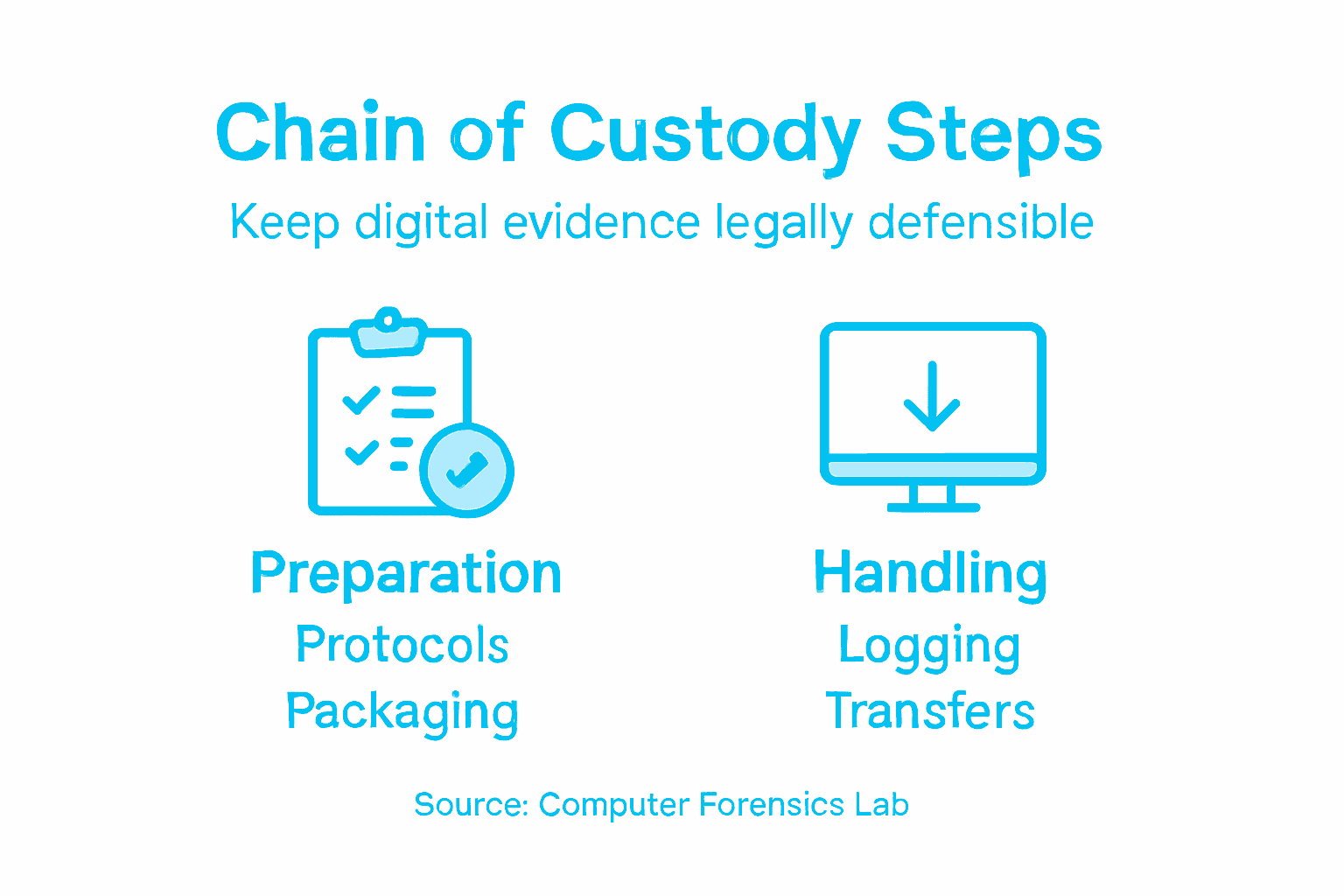
Ensure your documentation includes a chronological narrative of every action taken during evidence acquisition. Photograph the original device state, record environmental conditions, and note any visible damages or unique characteristics. Create a detailed log tracking device handling sequences, including precise timestamps for each interaction. Photograph evidence tags, seal numbers, and transportation containers to provide visual verification of the chain of custody. Capture screenshots or generate hash values that validate the forensic image’s integrity at the moment of collection.
Professional Recommendation: Always maintain multiple copies of your documentation and store them in separate secure locations to prevent accidental loss of critical evidence records.
Step 4: Transfer evidence with detailed logs
Transferring digital evidence requires precision and absolute transparency to maintain its legal integrity. Your documentation must create an unbreakable narrative that tracks every single interaction with the evidence from initial collection through final analysis.
Implement a comprehensive digital evidence custody tracking system that meticulously records each transfer. Create a standardised transfer log that captures critical information including precise timestamp, transferring and receiving personnel full names, their signatures, reasons for transfer, current device condition, and any observed changes. Use uniquely numbered evidence tags that correspond directly with your written documentation to provide cross reference verification.
Each transfer log must include specific environmental details such as temperature, humidity, and handling conditions during transportation. Photograph the evidence before and after each transfer to document its physical state. Generate cryptographic hash values for digital forensic images at each transfer point to validate data integrity. Ensure that all personnel involved in the transfer process sign the documentation and understand their legal responsibility to maintain evidence preservation.
Professional Recommendation: Implement a digital tracking system with automated timestamp and geolocation verification to create an additional layer of transparent evidence transfer documentation.
Step 5: Validate chain of custody integrity
Validating chain of custody represents the forensic investigator’s ultimate responsibility in ensuring digital evidence remains legally admissible and uncompromised. Your validation process must create an indisputable record of every interaction with the evidence.
Begin by implementing a comprehensive digital evidence integrity verification system that systematically checks and cross references all documentation. Generate cryptographic hash values for digital forensic images at multiple stages to detect even the most minute potential alterations. Compare initial forensic image hash values against subsequent versions to confirm absolute data integrity, documenting each verification step with precise timestamps and personnel signatures.
Create a comprehensive validation checklist that tracks multiple layers of evidence authentication. This should include verifying original device serial numbers, confirming personnel credentials, cross checking environmental condition logs, and ensuring all transfer documentation is complete and consistent. Review each transfer log meticulously, confirming that signatures match authorised personnel, timestamps are sequential, and no unexplained gaps exist in the custody record. Photograph and digitally record each verification step to provide additional layers of documentation.
Professional Recommendation: Develop a standardised digital validation template that automatically flags potential inconsistencies in chain of custody documentation to streamline your verification process.
This summary table highlights key verification steps and their legal significance:
| Verification Step | Description | Legal Benefit |
|---|---|---|
| Hash value comparison | Validates no data changes occurred | Demonstrates data authenticity |
| Environmental log audits | Tracks temperature and humidity | Defends evidence condition |
| Personnel signature checks | Confirms authorised handler identity | Strengthens custody record |
| Documentation cross-checking | Reviews transfer and handling logs | Detects inconsistencies |
Ensure Your Digital Evidence Remains Untouchable with Expert Chain of Custody Support
Preserving the chain of custody for digital evidence is a challenge that demands precision and unwavering attention to detail. This article highlights critical steps such as tamper-evident packaging, meticulous documentation, and rigorous transfer logs that safeguard evidence integrity. When you face the pressure of protecting valuable digital proof from contamination or alteration, trust becomes paramount.
At Computer Forensics Lab, we understand the anxiety and complexity involved in managing digital evidence. Our specialised Chain of Custody Tracking services ensure every interaction with your evidence is recorded with full transparency and legal defensibility. Combined with our comprehensive Computer Forensics expertise, we empower legal professionals and investigators to maintain unbroken custody using industry-leading techniques.
Do not risk your case’s credibility by leaving evidence handling to chance. Contact us today at https://computerforensicslab.co.uk and secure the integrity of your digital investigations with proven forensic solutions designed specifically to uphold the chain of custody.
Frequently Asked Questions
How can I establish a robust chain of custody for digital evidence?
To establish a robust chain of custody, create a comprehensive evidence handling protocol that outlines every step for acquiring, documenting, and transferring digital evidence. Begin by assigning unique identification numbers and using standardised documentation forms to ensure consistency and transparency.
What should I include in my evidence collection documentation?
Your evidence collection documentation should include the date, time, location, device serial numbers, examination conditions, and the names of all personnel involved. Ensure that each action taken during evidence acquisition is documented chronologically to maintain a clear narrative and support the chain of custody.
How do I prevent data corruption when handling digital evidence?
To prevent data corruption, always work with duplicate forensic images rather than the original evidence. Use digital forensic write blockers during the examination and isolate devices from network connections to eliminate risks of remote access or data modification.
What steps should I take when transferring digital evidence?
When transferring digital evidence, implement a comprehensive tracking system that logs each transfer’s timestamp, personnel details, and device condition. Photograph the evidence before and after each transfer to document its physical state and ensure that all personnel involved sign the documentation to affirm their legal responsibility.
How can I validate the integrity of the chain of custody?
You can validate the integrity of the chain of custody by generating cryptographic hash values at various stages and comparing them to detect any alterations. Conduct thorough checks of all documentation, ensuring that signatures and timestamps align correctly, to fortify your evidence’s legal admissibility.
What are the main components of a digital evidence handling protocol?
A digital evidence handling protocol should include logging mechanisms, access control procedures, evidence identification numbers, and transfer logs. Implement tamper-evident packaging and forensic imaging methods to protect evidence integrity throughout the entire handling process.