
Digital forensic investigations form the backbone of modern litigation, yet many legal professionals underestimate the precision required at each stage. Evidence integrity depends on following validated procedures that courts recognise and respect. This guide walks you through every critical step, from initial identification to expert testimony, ensuring your digital evidence withstands legal scrutiny in 2026 and beyond.
Table of Contents
- Introduction To Digital Forensics In Legal Contexts
- Prerequisites And Preparations Before Starting A Digital Forensic Investigation
- Core Digital Forensic Process Steps
- Chain Of Custody And Legal Admissibility
- Common Mistakes And Troubleshooting In Digital Forensic Processes
- Alternative Approaches And Tradeoffs In Digital Forensics
- Reporting And Expert Witness Preparation
- Expected Timelines, Success Metrics, And Legal Compliance
- Discover Expert Digital Forensic Services For UK Legal Teams
- Frequently Asked Questions
Key takeaways
| Point | Details |
|---|---|
| Sequential steps ensure evidence integrity | Digital forensic processes involve 6 main sequential steps critical for maintaining chain of custody and legal admissibility. |
| Legal authority precedes collection | Warrants or client consent must be secured before touching any digital evidence to comply with UK legal standards. |
| Chain of custody determines admissibility | Courts reject evidence lacking detailed custody records documenting every transfer and examination point. |
| Live forensics carries calculated risks | Rapid volatile data capture enables urgent cases but requires expert control to prevent evidence alteration. |
| Validated tools protect evidence credibility | Using non-validated forensic software risks data contamination and undermines courtroom defensibility. |
Introduction to digital forensics in legal contexts
Digital forensics involves the identification, collection, preservation, and analysis of digital evidence from computing devices, mobile phones, cloud storage, and networks. UK courts increasingly rely on digital evidence to resolve criminal prosecutions, civil disputes, and corporate investigations. Understanding this structured approach enables legal teams to present compelling, admissible evidence.
Three primary case types demand forensic expertise: criminal matters involving cybercrime or fraud, civil litigation concerning intellectual property theft or contract breaches, and corporate investigations addressing employee misconduct or data breaches. Each requires meticulous adherence to procedure. Courts scrutinise methodology, chain of custody, and tool validation before accepting digital evidence.
A common misconception suggests digital forensic analysis happens quickly with simple software scans. Reality involves multiple stages requiring specialised knowledge, controlled environments, and extensive documentation. Rushing through steps compromises evidence integrity and invites courtroom challenges. Digital forensic investigations and investigator roles demand both technical proficiency and legal awareness to navigate complex UK evidential standards successfully.
Prerequisites and preparations before starting a digital forensic investigation
Proper preparation prevents evidence contamination and ensures legal defensibility. Before touching any device, investigators must secure validated forensic hardware and software compliant with ISO/IEC 17025 standards. These tools maintain evidence integrity throughout examination processes. Courts reject findings generated by unvalidated software lacking proper testing protocols.
Legal authority forms the foundation of every investigation. Obtain warrants for criminal matters or written client consent for civil and corporate cases before collecting evidence. Proceeding without authorisation risks evidence exclusion and potential legal liability. Document all permissions meticulously within case files.
Establish secure forensic laboratories or controlled environments for analysis. These spaces prevent unauthorised access, environmental contamination, and accidental data modification. Temperature control, static protection, and restricted entry logs maintain evidence credibility.
Pro Tip: Train all staff handling digital evidence on UK forensic processes and data privacy laws. Regular training updates ensure team members understand evolving legal standards and technical methodologies. Certification programmes demonstrate professional competence to courts and clients.
Forensic analysis tools require regular validation testing to confirm accuracy and reliability. Maintain detailed records of tool versions, validation dates, and testing results. Forensic best practices emphasise documentation at every stage, creating defensible audit trails that withstand cross-examination.
Core digital forensic process steps
The digital forensic process involves 6 main sequential steps critical for evidence integrity according to ACPO guidance. Each phase builds upon the previous, creating a comprehensive investigative framework that courts recognise and accept.
-
Identification: Locate and document all relevant digital devices, storage media, and data sources. Photograph equipment in situ, record serial numbers, and note physical condition. Create detailed inventories listing every item seized or examined.
-
Preservation: Implement immediate protective measures preventing data modification or loss. Power down devices properly, disable network connections, and package items in anti-static materials. Document environmental conditions and transport methods.
-
Acquisition: Create forensic images using write-blockers that prevent any alteration to original evidence. Generate cryptographic hash values verifying image authenticity and completeness. Store original evidence securely whilst working exclusively from verified copies.
-
Examination: Systematically review acquired data using validated forensic tools. Search for relevant files, deleted content, metadata, and hidden information. Document all findings with timestamps, file paths, and hash values.
-
Analysis: Interpret examination results within case context. Correlate timeline events, identify patterns, and reconstruct user activities. Apply expert knowledge to technical findings, translating complex data into legally meaningful conclusions.
-
Reporting: Prepare comprehensive documentation detailing methodology, findings, and expert opinions. Structure reports for legal audiences, avoiding unnecessary jargon whilst maintaining technical accuracy.
| Process Step | Key Tools | Legal Rationale |
|---|---|---|
| Identification | Photography, inventory logs | Establishes evidence scope and location |
| Preservation | Write-blockers, Faraday bags | Prevents data modification claims |
| Acquisition | Forensic imagers, hash algorithms | Creates verifiable evidence copies |
| Examination | EnCase, FTK, X-Ways | Systematic validated analysis |
| Analysis | Timeline tools, correlation software | Interprets findings within case context |
| Reporting | Templates, documentation standards | Communicates findings to legal audiences |
Pro Tip: Document every action taken during investigation with precise timestamps, operator names, and tool settings. This continuous logging forms your chain of custody foundation, demonstrating evidence integrity from seizure through courtroom presentation. Missing documentation creates defence opportunities to challenge evidence authenticity.
Chain of custody and legal admissibility
Chain of custody documentation determines whether UK courts accept digital evidence. Every person handling evidence must log precise details: date, time, purpose, actions taken, and storage location. Gaps in custody records provide defence counsel opportunities to challenge evidence authenticity and integrity.
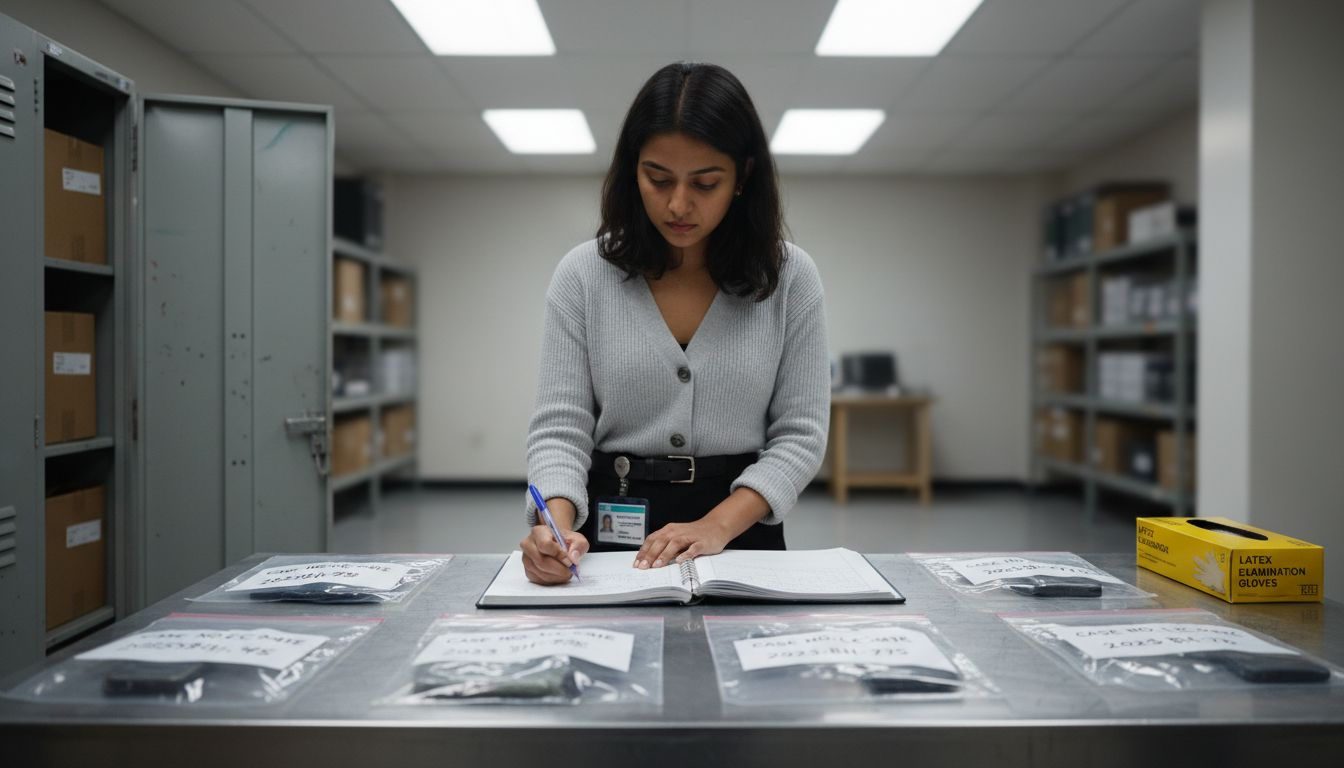
Legal standards mandate custody documentation demonstrating continuous control and accountability. Courts require proof that evidence remained unaltered between collection and courtroom presentation. Preserving chain of custody involves multiple safeguards protecting evidence credibility throughout investigation lifecycles.
Consequences of poor chain of custody prove severe. Judges may exclude evidence entirely when custody gaps raise reasonable doubt about authenticity. Even minor documentation errors undermine case strength, potentially leading to acquittals or adverse civil judgments.
Best practices include implementing custody logs capturing every evidence transfer, maintaining secure storage with restricted access, using tamper-evident packaging and seals, and conducting regular audits verifying documentation completeness. Assign custody responsibility clearly, ensuring one person controls evidence at any given time. Chain of custody importance cannot be overstated in maintaining legal defensibility across all investigation types.
Common mistakes and troubleshooting in digital forensic processes
Frequent procedural errors compromise evidence integrity and legal outcomes. Understanding these pitfalls enables legal professionals to identify and correct issues before they derail cases. Vigilance throughout investigation processes protects evidence credibility.
Failing to use write-blockers during evidence acquisition represents perhaps the most critical mistake. Direct device examination modifies timestamps, file metadata, and system logs, creating defence arguments about evidence tampering. Always employ hardware or software write-blockers preventing any alteration to original evidence.
Incomplete or inaccurate chain of custody records undermine otherwise solid cases. Missing entries, illegible handwriting, or undocumented transfers raise questions about evidence handling. Implement standardised custody forms with mandatory fields ensuring comprehensive documentation.
Premature analysis before properly preserving evidence creates irreversible problems. Examining devices without first creating forensic images destroys original evidence states. Follow sequential process steps rigorously, resisting pressure to rush investigations.
Using non-validated forensic tools risks data loss, corruption, or contamination. Courts question findings generated by unproven software lacking proper testing and validation. Maintain tool validation records demonstrating reliability and accuracy.
Pro Tip: Double-check documentation and tool validation before beginning any forensic work. Spending extra minutes verifying preparations prevents catastrophic errors that compromise months of investigation effort. Create checklists ensuring consistent adherence to validated procedures across all cases.
Digital evidence collection errors often stem from inadequate training or time pressure. Establish quality control processes reviewing work products before finalising reports or testimony.
Alternative approaches and tradeoffs in digital forensics
Traditional forensic imaging creates exact copies of storage media using write-blockers, preserving evidence in its original state. This methodical approach provides maximum legal defensibility but may miss volatile data existing only in system memory. Live forensic analysis provides rapid volatile data capture but risks data alteration and requires expert balance.
Live forensics examines running systems without powering down, capturing RAM contents, active network connections, and encrypted data before it becomes inaccessible. This technique proves valuable when volatile information holds case significance, such as active malware analysis or network intrusion investigations.
Heightened risks accompany live analysis benefits. Any interaction with running systems potentially modifies data, creating defence arguments about evidence tampering. Commands executed during live capture alter timestamps and logs. Expert knowledge and careful documentation mitigate but cannot eliminate these risks.
Decision criteria for employing live forensics include urgent cases requiring immediate volatile data capture, situations where powered-down devices lose critical encrypted information, and active threat scenarios demanding rapid response. Balance investigation urgency against evidence integrity requirements carefully.
| Approach | Advantages | Disadvantages | Best Use Cases |
|---|---|---|---|
| Traditional imaging | Maximum integrity, legal defensibility | Misses volatile memory data | Standard investigations, court evidence |
| Live forensics | Captures RAM, active processes | Risks data modification | Urgent cases, active threats |
| Hybrid method | Combines both approaches | Requires additional expertise | Complex investigations |
Safety precautions during live data capture include using validated live forensic toolkits, documenting every command executed with timestamps, capturing system state before interaction, and employing network isolation preventing remote evidence destruction. Alternative forensic approaches suit different investigation contexts when applied judiciously.
Reporting and expert witness preparation
Forensic reports bridge technical findings and legal understanding. Structure documents for legal audiences lacking technical backgrounds whilst maintaining methodological rigour. Courts value clarity over complexity, requiring expert witnesses to communicate findings accessibly without oversimplification.
Use clear language avoiding unnecessary jargon. Define technical terms on first use, providing context enabling judges and juries to follow reasoning. Present findings logically, building from evidence collection through analysis to conclusions.
Include comprehensive methodology sections detailing tools used, validation status, and procedures followed. Demonstrate adherence to UK forensic standards and ACPO guidelines. Document chain of custody completely, listing every person handling evidence with transfer dates and purposes.
Provide concise presentation of findings organised by relevance to case questions. Use tables, timelines, and visual aids clarifying complex relationships. Avoid overwhelming readers with excessive technical detail whilst ensuring sufficient depth for peer review and cross-examination.
Expert witness preparation requires anticipating challenge questions about methodology, tool selection, and alternative interpretations. Review case files thoroughly, ensuring complete familiarity with every detail before testimony. Practise explaining technical concepts simply without condescension.
Align reports with UK legal evidentiary standards, addressing authentication, relevance, and reliability requirements. Forensic reporting best practices emphasise transparency, completeness, and objectivity maintaining professional credibility across adversarial proceedings.
Expected timelines, success metrics, and legal compliance
Digital forensic investigations typically require between 3 days and 4 weeks in the UK, depending on complexity, data volume, and case urgency. Simple mobile phone examinations may complete within days, whilst comprehensive network breach investigations span weeks or months. Clear communication with forensic experts establishes realistic timeline expectations aligned with legal deadlines.
Key success metrics define quality outcomes. Hash value matches between original evidence and forensic images verify acquisition accuracy. Complete chain of custody documentation demonstrates evidence integrity throughout investigation. Court admissibility confirms methodology meets legal standards.
Legal compliance encompasses multiple dimensions in UK contexts. GDPR and Data Protection Act 2018 govern personal data handling during investigations. Proportionality requirements limit evidence collection to relevant materials. Retention periods mandate secure evidence storage and eventual destruction.
Balancing thoroughness with timely case progression challenges investigators. Rushing compromises quality whilst delays prejudice legal outcomes. Establish clear project plans with milestones, allocating sufficient time for proper evidence examination whilst meeting court schedules.
| Timeline Phase | Typical Duration | Success Metrics | Compliance Considerations |
|---|---|---|---|
| Identification & seizure | 1-2 days | Complete inventory, photographs | Legal authority obtained |
| Preservation & acquisition | 1-3 days | Hash match verification | Write-blocker use documented |
| Examination & analysis | 1-3 weeks | Relevant findings identified | Proportionate data review |
| Reporting & testimony | 3-5 days | Clear, defensible conclusions | GDPR compliance maintained |
Success depends on maintaining evidence integrity whilst respecting data protection obligations and delivering timely results supporting legal strategies effectively.
Discover expert digital forensic services for UK legal teams
Navigating complex forensic processes requires specialised expertise and validated methodologies that meet UK legal standards. Our comprehensive digital forensics services support law firms, solicitors, and legal professionals throughout investigation lifecycles. We handle evidence preservation, acquisition, analysis, and reporting with meticulous attention to chain of custody requirements.
Our team maintains certifications and validation protocols ensuring tools and procedures meet courtroom scrutiny. From initial device seizure through expert witness testimony, we provide defensible forensic solutions tailored to litigation demands. Digital forensic investigations benefit from our London-based expertise spanning criminal, civil, and corporate matters. Contact us to discuss how professional forensic support strengthens your case outcomes.
Frequently asked questions
What are the key legal requirements for digital evidence admissibility in UK courts?
Legal requirements include detailed chain of custody documentation, use of validated forensic tools compliant with ISO standards, and adherence to ACPO guidelines. Evidence must demonstrate integrity from collection through courtroom presentation. Courts scrutinise methodology rigorously, rejecting findings lacking proper validation or custody records. Compliance with GDPR and data protection laws remains essential throughout investigation processes.
How long does a typical digital forensic investigation take in the UK?
Typical investigations require between 3 days and 4 weeks depending on complexity, data volume, and case urgency. Simple mobile examinations complete faster than comprehensive network breach analyses. Clear communication with forensic experts helps manage realistic timeline expectations aligned with legal deadlines.
What common mistakes should legal professionals avoid during digital forensic investigations?
Failing to document chain of custody accurately and using non-validated tools represent frequent errors compromising evidence credibility. Premature analysis before proper preservation destroys original evidence states. Not employing write-blockers during acquisition creates modification risks that defence counsel exploits. Inadequate training and rushed procedures undermine otherwise solid cases.
When should live forensic analysis be used over traditional methods?
Live forensic analysis provides rapid volatile data capture that traditional imaging misses, making it valuable for urgent cases involving active threats or encrypted systems. Use this approach when volatile memory contains critical evidence or powered-down devices lose essential information. However, it requires expert control preventing evidence alteration despite faster data gathering capabilities.