
Cybercrime cases in London often turn on the strength of electronic evidence, making digital forensics a vital resource for criminal lawyers. Understanding how to properly extract, analyse, and present digital evidence can mean the difference between admissibility and dismissal in United Kingdom courts. This article breaks down key concepts such as chain of custody and data integrity, guiding you through what matters most when digital information holds the key to your case.
Table of Contents
- Digital Forensics: Definition And Core Concepts
- Types Of Digital Evidence Used In Court
- Investigation Workflow And Expert Witness Role
- Admissibility Criteria And Legal Frameworks
- Chain Of Custody And Data Integrity Requirements
- Risks, Challenges, And Common Mistakes In Uk Cases
Key Takeaways
| Point | Details |
|---|---|
| Digital Forensics Process | Digital forensics involves structured methodologies for collecting, preserving, analysing, and reporting digital evidence to ensure legal admissibility. |
| Types of Digital Evidence | Digital evidence includes communication records, transactional data, and device metadata, each requiring precise handling and analysis techniques. |
| Role of Expert Witnesses | Expert witnesses bridge the gap between technical findings and legal comprehension, providing objective interpretations of digital evidence in court. |
| Admissibility Criteria | Digital evidence must meet stringent admissibility criteria, including technical integrity, a documented chain of custody, and clear expert verification. |
Digital forensics: definition and core concepts
Digital forensics represents a sophisticated discipline that systematically investigates digital evidence across technological platforms. It serves as a critical investigative methodology for legal professionals seeking to uncover, analyse, and preserve electronic information in criminal and civil proceedings.
At its core, digital forensics encompasses a structured approach to extracting and analysing digital evidence from various technological devices and digital environments. This scientific process involves multiple critical stages:
- Evidence Collection: Methodically gathering digital artifacts from computers, mobile devices, networks, and cloud platforms
- Preservation: Ensuring forensic integrity and maintaining a strict chain of custody
- Analysis: Employing advanced technical techniques to examine digital traces
- Reporting: Preparing comprehensive, court-admissible documentation of findings
Digital forensics professionals must navigate complex technological landscapes, addressing challenges such as encryption, data fragmentation, and rapidly evolving digital technologies. Their work requires a unique blend of technical expertise, legal understanding, and meticulous investigative skills.

The discipline spans several specialised domains, including:
Here is a summary comparing the main domains of digital forensics and their distinctive focuses:
| Domain of Forensics | Primary Focus | Typical Evidence Sources |
|---|---|---|
| Computer Forensics | Analysing computer systems | Hard drives, file systems |
| Mobile Device Forensics | Extracting mobile data | Smartphones, SIM cards |
| Network Forensics | Tracking network activity | Routers, logs, traffic data |
| Cloud Forensics | Investigating cloud platforms | Online storage, SaaS platforms |
| Cybersecurity Investigation | Responding to security events | Malware, breach data, logs |
- Computer forensics
- Mobile device forensics
- Network forensics
- Cloud forensics
- Cybersecurity incident investigation
Pro tip: Always document every step of your digital forensic investigation to maintain legal admissibility and create a transparent audit trail.
Types of digital evidence used in court
Digital evidence represents a critical component of modern legal proceedings, encompassing a wide range of electronic information that can substantiate or challenge legal arguments. Electronic evidence spans multiple technological platforms and requires meticulous collection, preservation, and analysis to maintain its forensic integrity.
The primary categories of digital evidence include:
- Communication Records:
- Emails
- Text messages
- Social media interactions
- Instant messaging logs
- Transactional Data:
- Online banking records
- Financial transaction logs
- E-commerce purchase histories
- Device Metadata:
- GPS location tracking
- Device usage logs
- Network connection records
Legal professionals must understand that digital evidence requires sophisticated handling. Electronic evidence can be found across diverse digital storage platforms, including mobile devices, cloud services, network servers, and personal computing systems. Each source demands specific forensic techniques to extract, authenticate, and present information admissible in court.
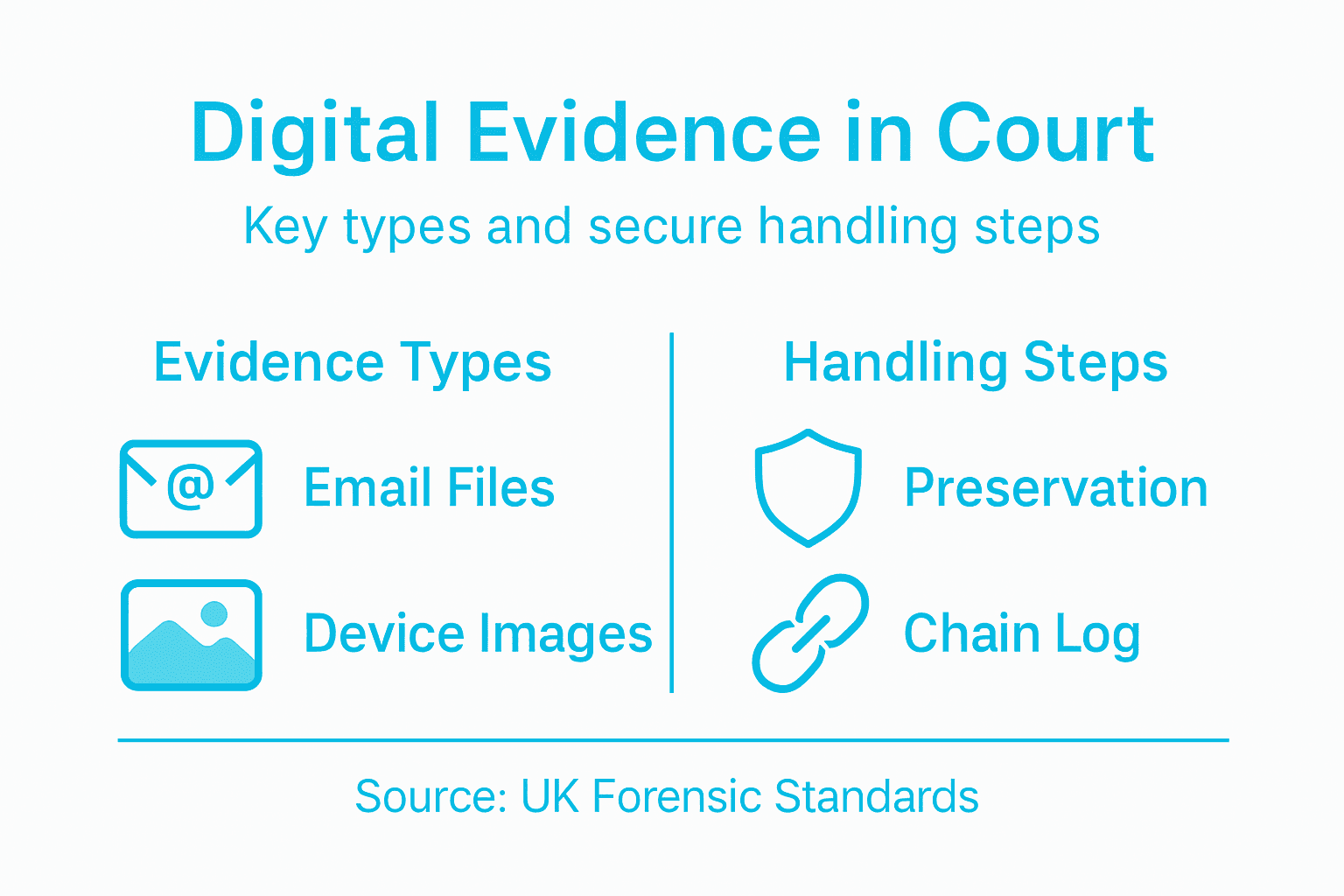
Courts increasingly recognise the significance of digital evidence, acknowledging its potential to provide crucial insights in criminal and civil proceedings. Sophisticated forensic analysis can reconstruct digital interactions, track communication patterns, and validate or challenge testimonial statements.
Pro tip: Engage digital forensics experts early in legal proceedings to ensure proper evidence collection and maintain chain of custody.
Investigation workflow and expert witness role
Digital forensics investigations follow a structured methodology designed to ensure the integrity and admissibility of electronic evidence in legal proceedings. Expert witnesses play a critical role in presenting forensic findings, bridging the complex technical landscape with legal comprehension.
The typical digital forensics investigation workflow encompasses several key stages:
-
Initial Case Assessment
- Understand investigation objectives
- Determine potential digital evidence sources
- Establish preliminary investigation strategy
-
Evidence Preservation
- Create forensic disk images
- Maintain strict chain of custody
- Implement write-blocking technologies
-
Evidence Examination
- Conduct thorough data analysis
- Extract relevant digital artifacts
- Document forensic processes meticulously
-
Analysis and Reporting
- Correlate digital evidence
- Develop comprehensive forensic report
- Prepare expert witness testimony
Expert witnesses in digital forensics serve a multifaceted role that extends beyond technical analysis. They must translate complex technological findings into clear, comprehensible language for legal professionals, judges, and juries. Their responsibilities include providing objective, scientifically rigorous interpretations of digital evidence while maintaining professional neutrality.
The forensic expert’s testimony typically involves explaining sophisticated technical processes, demonstrating how digital evidence was collected, analysed, and interpreted. This requires not only deep technical expertise but also exceptional communication skills to present complex information accessibly.
Expert witnesses must remain impartial, focusing on scientific methodology and factual interpretation rather than advocating for a particular legal outcome.
Pro tip: Maintain meticulous documentation throughout the digital forensics investigation to ensure the credibility and admissibility of your expert testimony.
Admissibility criteria and legal frameworks
Digital evidence presents unique challenges in legal proceedings, requiring stringent standards to ensure its reliability and credibility in court. Forensic science activities are governed by mandatory statutory standards, which establish critical guidelines for evidence collection, preservation, and presentation.
The key admissibility criteria for digital evidence in UK courts include:
- Technical Integrity:
- Verifiable evidence collection methods
- Preservation of original data integrity
- Documented forensic procedures
- Chain of Custody:
- Detailed tracking of evidence handling
- Continuous documentation of evidence movement
- Tamper-proof evidence storage protocols
- Expert Verification:
- Scientifically validated analysis techniques
- Reproducible forensic examination processes
- Clear, unbiased expert testimony
Legal Frameworks governing digital forensics in the United Kingdom encompass multiple regulatory mechanisms. These include the Police and Criminal Evidence Act (PACE), the Forensic Science Regulator Act, and specific judicial guidelines that define acceptable standards for electronic evidence.
Courts apply a rigorous reliability test when considering digital evidence, examining factors such as the competence of forensic experts, the scientific validity of investigation methods, and the potential for data manipulation. This scrutiny ensures that only the most robust and credible digital evidence is admitted during legal proceedings.
Digital evidence must meet the same fundamental standards of reliability, authenticity, and completeness as traditional forms of evidence.
Pro tip: Always maintain meticulous, contemporaneous documentation of every step in your digital forensics investigation to substantiate evidence admissibility.
Chain of custody and data integrity requirements
Digital forensics demands meticulous attention to evidence preservation, with chain of custody representing a critical legal safeguard that ensures the integrity and admissibility of electronic evidence in court proceedings.
The comprehensive chain of custody process involves several key documentation requirements:
- Initial Evidence Capture:
- Precise time and date of evidence acquisition
- Detailed device identification
- Forensic examiner’s credentials
- Evidence Handling:
- Comprehensive transfer logs
- Unique evidence tracking identifiers
- Sealed and authenticated evidence containers
- Technical Verification:
- Cryptographic hash values
- Bit-by-bit forensic imaging
- Verifiable forensic tool documentation
Digital Integrity Protocols require forensic professionals to maintain an unbroken, transparent record of all interactions with electronic evidence. This means documenting every single action, from initial collection through analysis, storage, and potential courtroom presentation.
Forensic experts must implement rigorous technical controls to prevent unauthorized modifications. These include write-blocking hardware, secure evidence storage systems, and detailed audit trails that record every interaction with digital evidence.
Maintaining an immaculate chain of custody is not just a procedural requirement, but a fundamental legal and ethical obligation in digital forensics.
Pro tip: Implement a standardised digital evidence log that captures every technical and procedural detail to strengthen the forensic investigation’s legal credibility.
Risks, challenges, and common mistakes in UK cases
Digital forensics investigations in the United Kingdom present complex challenges that can potentially compromise legal proceedings. Common mistakes in digital forensics investigations can critically undermine the entire evidentiary process if not carefully managed.
The most significant risks and challenges include:
- Technical Limitations:
- Rapidly evolving technological landscapes
- Complex encryption methodologies
- Diverse digital storage platforms
- Forensic Integrity Challenges:
- Potential evidence contamination
- Data fragmentation risks
- Preservation of original digital state
- Legal Complications:
- Admissibility threshold requirements
- Stringent chain of custody protocols
- Comprehensive documentation demands
Forensic professionals must navigate these challenges with exceptional precision. Working directly on original evidence, inadequate tool validation, and incomplete documentation represent critical errors that can render potentially crucial digital evidence inadmissible in court.
The UK legal system demands an extraordinarily high standard of forensic investigation. Digital evidence must withstand rigorous scrutiny, which means forensic experts must implement meticulous verification processes, use validated forensic tools, and maintain comprehensive, transparent investigative records.
The following table highlights key risks, common mistakes, and their potential consequences in UK digital forensics:
| Challenge Type | Frequent Issues | Potential Consequence |
|---|---|---|
| Technical | Outdated tools or untested methods | Lost or corrupted evidence |
| Procedural | Incomplete chain of custody records | Evidence deemed inadmissible |
| Legal | Breaching admissibility requirements | Dismissal of crucial digital proof |
| Human Error | Poor documentation or oversight | Loss of investigative credibility |
Digital forensics requires scientific precision, legal compliance, and unwavering professional integrity.
Pro tip: Develop standardised forensic protocols and consistently validate your investigative tools to mitigate risks of evidence inadmissibility.
Secure Your Digital Evidence with Expert Forensics Support
Navigating the complexities of digital forensics in UK courts demands precision, comprehensive documentation, and stringent adherence to legal frameworks. The challenges of maintaining a flawless chain of custody, preserving evidence integrity, and delivering clear, admissible forensic reports can be overwhelming. Whether you face issues with data recovery, evidential analysis, or expert witness testimony, understanding the critical importance of trustworthy digital evidence is key to protecting your case.
At Computer Forensics Lab, we specialise in delivering reliable solutions tailored to these pain points. Our expert team ensures meticulous digital evidence preservation through advanced techniques detailed on our Digital Evidence Preservation page. We also provide skilled forensic examiners who can interpret and present complex electronic information in court with confidence, as described in our Digital Forensics Examiner services. Don’t risk your litigation or investigation outcomes due to evidence mishandling. Act now to secure the integrity of your digital proof and gain trusted expert support.
Discover how to safeguard your case by visiting Computer Forensics Lab today. Reach out to our specialists and ensure your digital investigations meet the highest legal standards before your next court appearance.
Frequently Asked Questions
What is digital forensics?
Digital forensics is the systematic investigation of digital evidence across technological platforms, aimed at uncovering, analysing, and preserving electronic information for legal proceedings.
What are the key stages in a digital forensics investigation?
The key stages include initial case assessment, evidence preservation, evidence examination, and analysis and reporting.
How is digital evidence managed to ensure its admissibility in court?
Digital evidence is managed through strict adherence to chain of custody, preservation protocols, and documentation of evidence handling processes to maintain its integrity.
What are the common challenges faced in digital forensics investigations?
Common challenges include rapidly evolving technology, encryption methods, potential evidence contamination, and strict legal admissibility requirements.
Recommended
- Why Outsource Digital Forensics for Legal Success
- 7 Essential Digital Forensic Techniques for Success
- Why Use Digital Forensics in Litigation: A Deep Dive
- The Essential Guide to Digital Forensics in Litigation
- An online affair is real cheating, and it’s crucial to confront and recover from the pain of digital betrayal.