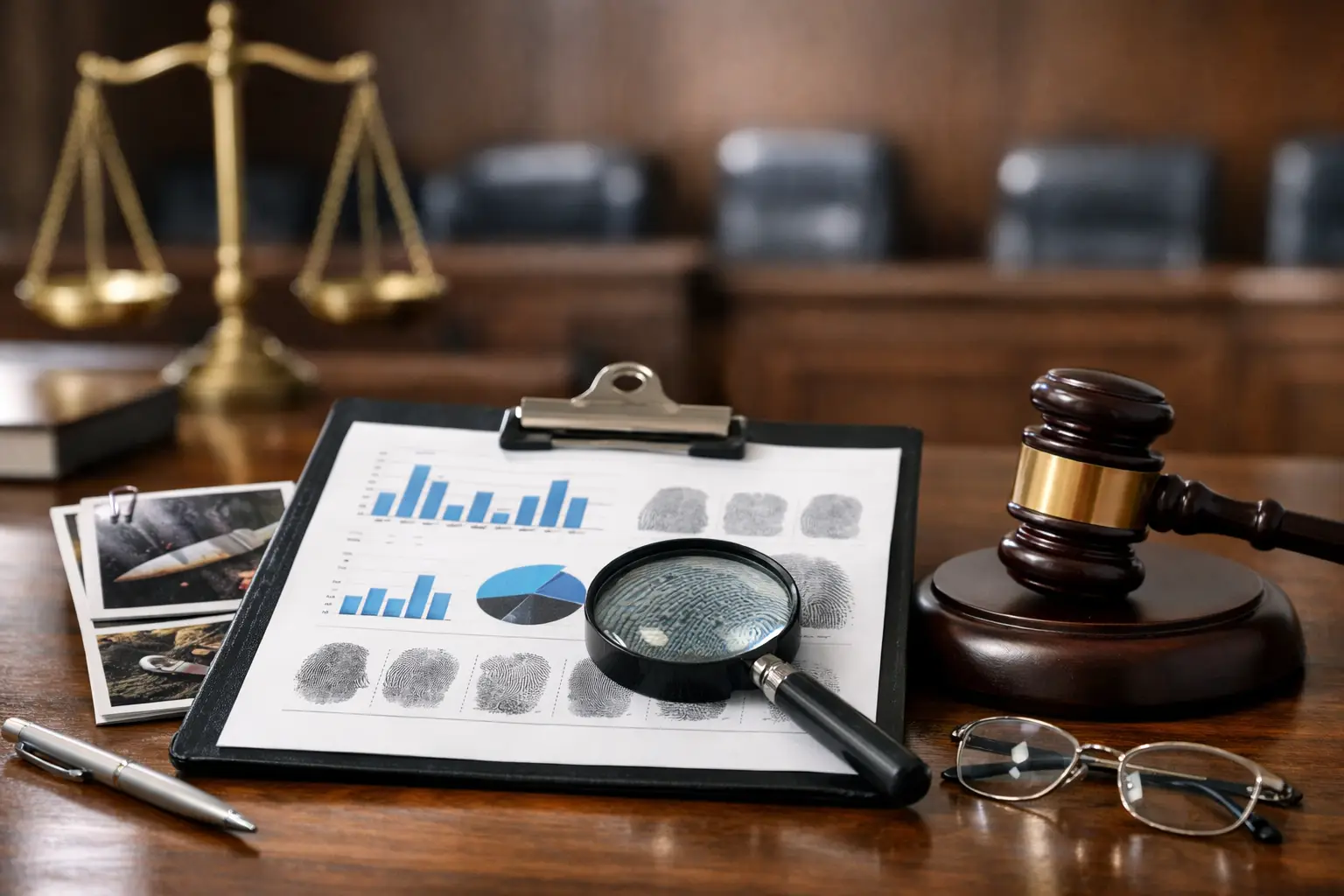
A case can turn on a single message, login, file transfer or deletion event. Yet the value of that evidence often depends less on what was found than on how it was handled, analysed and explained. That is why a forensic report for court is not simply a technical write-up. It is a formal evidential document that must present digital findings in a way that is clear, transparent, impartial and capable of withstanding challenge.
For solicitors, barristers, corporate investigators and private clients, the risk is usually not a lack of data. It is poor evidential handling, overstatement, missing methodology or a report that leaves too many unanswered questions. Courts do not need jargon-heavy assertions. They need reasoned opinions, grounded in recoverable artefacts, proper procedure and a defensible chain of custody.
What a forensic report for court is meant to do
A forensic report for court should help the tribunal understand what digital material was examined, how it was preserved, what methods were used, what was found and what the findings do – and do not – support. In digital matters, that can include mobile phone extraction results, computer usage history, deleted communications, file access patterns, internet activity, metadata, cloud-linked data and evidence of compromise or unauthorised access.
The strongest reports do not try to advocate for a party. They assist the court by presenting technical evidence with independence. That distinction matters. A report that appears argumentative, selective or speculative may lose weight quickly, even where the underlying material is significant.
In practice, a good report bridges two very different audiences. It must satisfy lawyers and judges who need a coherent evidential narrative, while also remaining technically sound enough to survive scrutiny from another expert. If it fails either test, its usefulness drops sharply.
The foundations of a court-ready forensic report
Before any opinion is expressed, the integrity of the evidence has to be protected. If a device was handled casually, powered on unnecessarily, searched without proper recording or passed between parties without documentation, the reliability of later findings may be challenged. A court-ready report starts long before the writing stage. It starts with acquisition, preservation and continuity.
That usually means recording when and from whom material was received, how it was stored, what forensic tools or processes were used to capture the data, and how the examiner ensured the source was not altered. In digital forensics, these are not administrative niceties. They are part of the evidential chain.
The methodology must also be proportionate to the issues in dispute. A broad trawl across every device and account is not always appropriate. Sometimes the right approach is a tightly scoped examination focused on dates, users, applications or allegations. In other matters, especially where concealment or coordinated activity is suspected, a wider review may be justified. Scope is a strategic question as much as a technical one, and a sound report should make that scope plain.
Clarity of instructions and issues
One of the most overlooked weaknesses in expert reporting is vague instruction. If the examiner has not been clearly asked what issue they are meant to address, the resulting report may gather interesting material without answering the central question. Was a device used at a relevant time? Were messages deleted? Did a user transfer confidential files? Is there evidence of remote access or malware? Each question demands a different forensic pathway.
A disciplined report identifies the instructions received and frames the findings against those instructions. That helps the court see relevance. It also helps avoid the common problem of technical overreach, where an examiner strays into matters not supported by the available artefacts.
Transparent methodology and reproducibility
Courts are rarely impressed by conclusions that cannot be traced back to method. A strong report explains the forensic process in plain but precise terms. It should identify the devices or datasets examined, the acquisition method, the software or tools used where relevant, the date ranges considered and any limitations encountered.
That does not mean every page must read like a laboratory manual. It does mean another competent examiner should be able to understand how the work was carried out and assess whether the conclusions logically follow. Transparency is one of the clearest markers of reliability.
What courts and legal teams look for
The most persuasive digital evidence is usually evidence that is both technically credible and easy to follow. Judges are not looking for drama. They are looking for a report that helps them answer factual questions safely.
That starts with structure. A well-prepared report normally moves from instruction and materials received, to preservation and examination methods, then to findings, interpretation and limitations. Screenshots, timelines, message extracts and metadata references may support key points, but they should not be dumped into the report without explanation. Raw data is not the same thing as evidence.
Language matters as well. Terms such as “shows”, “indicates”, “is consistent with” and “cannot determine” each carry different evidential weight. An experienced expert uses them carefully. Overstatement is dangerous. For example, a login artefact may indicate access from a device at a certain time, but it may not prove who was physically holding that device. A deleted message database may show removal activity, but not always the intent behind it. Courts tend to trust experts who recognise those distinctions.
Common weaknesses in a forensic report for court
The most damaging reports are often not wrong in every respect. They are simply vulnerable. They contain gaps that opposing counsel can exploit.
A frequent problem is inadequate chain of custody. If there is no clear record of handling, storage and examination, questions arise about alteration, contamination or completeness. Another is unsupported interpretation, where the report leaps from artefact to allegation without setting out the reasoning in between.
A third weakness is failure to address alternative explanations. Digital evidence can be complex. Timestamps may be affected by system settings. User activity may be automated, synchronised from another device or generated by an application in the background. A careful expert does not ignore those possibilities. They assess them.
There is also the issue of readability. A technically accurate report can still fail if it is dense, disorganised or full of unexplained terminology. Courts need precision, but they also need clarity. The best reports do both.
Why impartiality carries so much weight
In contentious matters, each side naturally wants evidence that supports its case. That pressure can lead to poorly framed instructions or unrealistic expectations of what a forensic expert can prove. The role of the expert, however, is not to become an advocate in technical clothing.
Impartiality increases the value of the report. It shows that the conclusions arise from the evidence rather than the desired outcome. It also tends to produce more durable evidence. A balanced opinion that identifies supporting and contradictory material is far harder to dismantle than a one-sided narrative.
This is especially important in allegations of employee misconduct, family disputes, cyber intrusion, harassment, fraud and disclosure failures. In those cases, digital artefacts may be emotionally charged, but the report must remain measured. Precision is often more persuasive than certainty.
When speed matters, and when caution matters more
Many instructions arrive under pressure. There may be an interim hearing approaching, a defence deadline, a disclosure dispute or a live business risk. Fast action is often necessary, particularly where devices may be wiped, overwritten or lost.
Even so, urgency should not erode procedure. A rushed acquisition, partial extraction or loosely drafted opinion can create more difficulty later. Sometimes the right course is an initial preservation step followed by phased reporting. That allows urgent evidence to be secured while giving the examiner time to complete a fuller review. It depends on the case, the available devices, the issues in dispute and the procedural timetable.
For legal teams, that balance is critical. Early expert involvement often reduces cost and confusion because the scope, questions and evidence handling can be set correctly from the outset.
Choosing an expert who can produce a report that stands up
Not every technically capable examiner is suited to court work. The difference lies in evidential discipline. A proper forensic expert should understand continuity, disclosure obligations, reporting standards, the limits of inference and the practical demands of litigation.
That includes knowing when a finding is strong, when it is tentative and when no safe conclusion can be drawn. It also includes the ability to explain technical matters plainly under scrutiny. At Computer Forensics Lab, that court-facing discipline is treated as part of the forensic process, not an afterthought once the analysis is done.
When instructing an expert, legal teams should focus on more than tool access or recovery claims. Ask how evidence is preserved, how findings are peer reviewed, how limitations are recorded and how opinions are expressed. Those details often determine whether a report assists the court or creates another front of dispute.
A strong forensic report does more than present digital evidence. It gives the court a reliable basis for understanding what happened, what can be proved and where the boundaries of the evidence lie. In high-stakes matters, that level of discipline is not a luxury. It is what makes digital findings usable when they matter most.