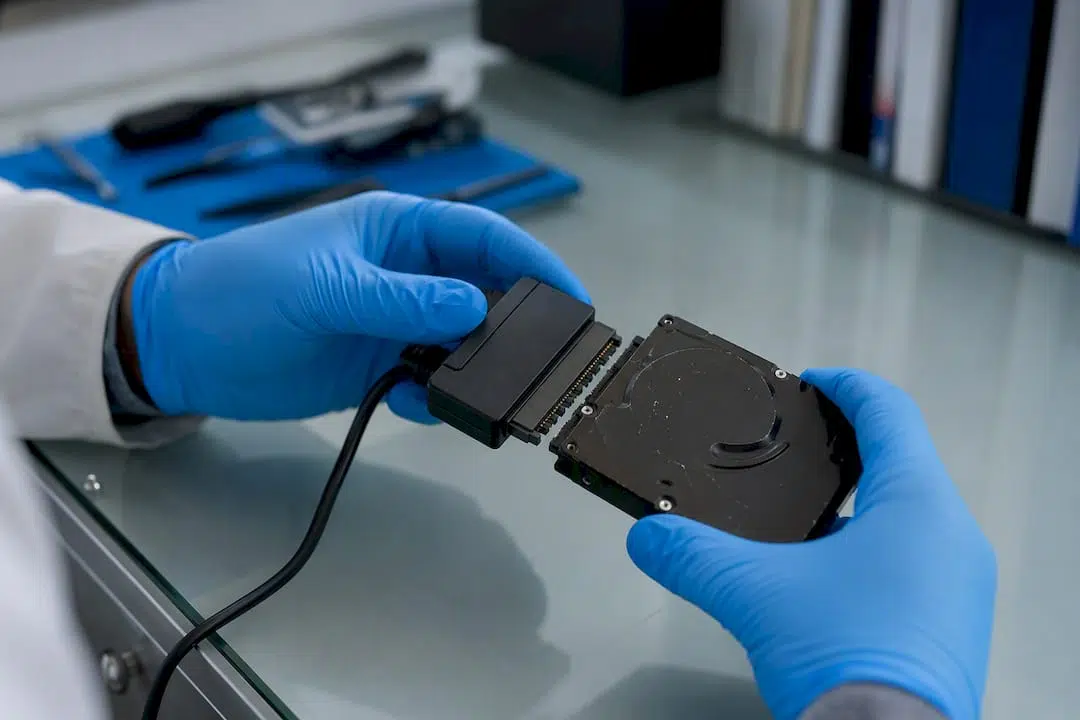
The best file recovery software is not a single application. It is a forensic acquisition and analysis process, performed with validated tools under an auditable chain of custody, by a lab such as Computerforensicslab. That combination, not any individual programme, is what makes recovered files admissible when a court, opposing counsel, or a regulator asks how the evidence was obtained.
Three requirements are non‑negotiable for any provider or in‑house team attempting this work:
- Validated imaging: read‑only, bitstream acquisition using tools tested against known standards, never a live copy‑paste.
- Cryptographic hashing: every acquisition hashed with a NIST‑approved algorithm immediately after imaging, before any analysis begins.
- Contemporaneous documentation: a written, timestamped record of who touched the device, when, and what commands were run.
Miss any one of these and the recovered files may still exist. Whether a judge will accept them is a separate question entirely.
Key Takeaways
Court‑admissible file recovery depends on validated imaging, cryptographic hashing, and contemporaneous documentation working together, not on any single recovery application.
| Point | Details |
|---|---|
| Forensic process beats software alone | Admissibility rests on validated tools, hashing, and documentation, not the recovery application itself. |
| Demand validation records | Request tool validation reports, test vectors, and proficiency testing before instructing any provider. |
| Insist on write‑blockers and standard formats | Acquisitions should use hardware write‑blockers and output E01, AFF4, or raw images. |
| Escalate early for complex cases | Litigation, encryption, anti‑forensics, or enterprise storage all justify instructing a specialist lab immediately. |
| Computerforensicslab delivers accountable recovery | Offers forensic imaging, hashing, chain‑of‑custody management, and expert witness reporting as one engagement. |
Table of Contents
- Why lab processes, validation and accreditation matter for admissibility
- What technical criteria define forensic‑grade recovery?
- How do you evaluate and validate a forensic recovery provider?
- What does the end‑to‑end forensic recovery workflow look like?
- How do cloud data, encryption and enterprise storage complicate recovery?
- When should you escalate to a specialist forensic lab?
- How Computerforensicslab supports your recovery and litigation needs
- Primary standards and guidance to cite in your instructions
- Frequently asked questions
- Sources
Why lab processes, validation and accreditation matter for admissibility
Recovering a deleted file is a technical task. Proving that the file recovered is the same file the custodian deleted, unaltered and correctly attributed, is a legal one. That gap is where most disputes over digital evidence actually happen, and it is why validation records matter more than most instructing solicitors expect.
Computerforensicslab builds its casework around expert reports, documented chain of custody, and forensic techniques that have been demonstrated in real proceedings, including media work such as Discovery+’s “999 Murder Calling”. The NIJ’s guidance on forensic lab quality assurance is explicit on this point:
Quality assurance and validation testing of hardware and software are necessary, and records of that validation must be maintained if the results are to withstand scrutiny in an admissibility hearing.
Validation output is often decisive in disputes over whether evidence should be admitted at all, which is why it belongs in tender documentation, not filed away after the fact. When you assess a provider, ask for:
- Written proficiency testing records, not just a claim of “certified staff”.
- Evidence of accreditation or a documented internal QA programme.
- Named analyst credentials tied to the specific case type you need handled.
What technical criteria define forensic‑grade recovery?
Software that merely undeletes a file is not equipped for litigation. Forensic‑grade recovery demands a different technical baseline, and procurement teams should treat the following as a checklist rather than a wish list.
- Read‑only acquisition into accepted container formats. The tool must image the source device without writing to it, producing standard forensic formats such as E01, AFF4, or raw (dd) images, never operating directly on the original media.
- Access to low‑level structures. Recovery must reach unallocated clusters and slack space, not just the active file system, using file carving to reconstruct fragments and preserving original metadata (timestamps, ownership, file paths).
- Comprehensive, reproducible logging. Every action needs an audit trail: acquisition parameters, software version, analyst identity, and versioned validation reports that another examiner could review and repeat.
- Hardware write‑blockers as standard. Physical or logical write‑blocking devices must sit between the source media and the acquisition workstation, and analysis must run against the forensic image, never a live‑mounted original.
Platforms built for this audience, such as OpenText Forensic and specialist recovery suites like UFS Explorer’s professional tier, illustrate the category: broad format support, hashing built into the workflow, and device profiles that go well beyond what consumer software attempts.
Pro Tip: Ask any provider to name the exact forensic image format they will hand back to you. If the answer is vague, or it is a proprietary format with no export path, that is a red flag for future court exhibits.
How do you evaluate and validate a forensic recovery provider?
Procurement language for this category needs to be specific, because “data recovery experience” on a CV tells you almost nothing about admissibility risk. Build your tender or vendor assessment around concrete deliverables, not general claims.
Request in writing:
- Tool validation reports with test vectors and dates, so you can see when the software was last checked against known‑good data sets.
- A description of the repeatable test methodology used, not a one‑line assurance that “our tools are validated”.
- Evidence of lab QA: proficiency testing results, accreditation status, or a documented internal QA programme covering the best practices SWGDE sets out for acquisition.
- Written chain‑of‑custody procedures, including how evidence is packaged, transported, and stored between analysts.
Specify deliverables before instruction, not after:
- Image format (E01, AFF4, or raw) and the hash algorithm used for verification.
- Full audit logs covering acquisition, verification, and analysis stages.
- Analyst working notes distinct from the final report.
- A report template suitable for exhibit use, with clear separation between findings and interpretation.
If any part of the matter touches cloud accounts or third‑party productions, get a written commitment on how those exports will be handled and hashed before work begins, not once the data has already arrived. Reviewing our guidance on recovering deleted data for legal cases before drafting instructions can help you frame these requirements correctly the first time.
What does the end‑to‑end forensic recovery workflow look like?
A sound recovery workflow runs in a fixed order, and skipping a step rarely saves time, it just moves the risk further down the case.
- Device handling. Decide the power state (on, off, or hibernating) based on volatility of evidence, isolate the device from networks, and package it correctly for transport.
- Imaging. Attach a hardware write‑blocker, perform bitstream imaging into a forensic container, and compute the acquisition hash immediately. SWGDE’s acquisition standard treats this hashing step as inseparable from imaging itself.
- Verification. Generate a second verification hash, ideally using two algorithms such as MD5 and SHA‑256, and store both in the case management system and a read‑only printout. The original media is never touched again; all analysis runs from working copies.
- Analysis and reporting. Carve deleted files, reconstruct fragmented data, document any limitations honestly, and prepare exhibits written for a courtroom audience, not a technical one.
Our own breakdown of recovery in computer forensics walks through how these recovered artefacts get treated once they become part of a legal record.
How do cloud data, encryption and enterprise storage complicate recovery?
Not every case fits the standard imaging workflow, and pretending it does is how evidence gets excluded.
- Cloud data usually needs a preservation request or formal legal process before a provider will release anything. Exports often arrive in proprietary formats, so SWGDE recommends securing both the native export and an open format, with source and hashes documented for each.
- Live acquisition becomes necessary when encryption or volatile memory means shutting the system down destroys the evidence. Every command run against a live system must be logged, with the legal basis for the action recorded in the case file.
- Encryption requires preserving keys wherever lawfully possible and capturing memory before power‑down, with any resulting limitations stated plainly in the report.
- SAN and RAID arrays typically need hardware‑level commands and external data maps to reassemble correctly, work that sits well outside what consumer‑grade recovery tools attempt.
When should you escalate to a specialist forensic lab?
Escalate immediately once litigation is anticipated, anti‑forensic activity is suspected, encrypted or enterprise storage is involved, or you may need expert testimony later. The cost of instructing a lab early is almost always smaller than the cost of evidence being challenged, or excluded, months into a case. If you must run limited in‑house triage first, keep a written record of every action taken, the time it happened, and who was present, so a specialist can pick the matter up without gaps in the custody chain.
How Computerforensicslab supports your recovery and litigation needs
Where the alternatives are general‑purpose recovery utilities or unaccredited technicians, Computerforensicslab offers something narrower and more defensible: recovery work built from the outset to survive cross‑examination. Our digital forensics services cover forensic imaging, data recovery, expert reporting, chain‑of‑custody management, and expert witness testimony, delivered as a single accountable engagement rather than a patchwork of tools.
Typical deliverables include forensic images in E01 or AFF4 format, dual hash verification, full audit logs, and a report structured for direct use as a court exhibit. To speed up an engagement, have ready: the device or account details involved, the legal context (litigation, internal investigation, or regulatory matter), and any preservation deadlines already in play. Most matters begin with an initial digital forensic investigation scoping call, after which turnaround depends on storage volume and complexity. Readers weighing up evidence types more broadly may also find this overview of evidence solicitors need for a claim useful context before instructing us. To start a case, get in touch with our team with the details above.

Primary standards and guidance to cite in your instructions
Attach these documents directly to procurement and chain‑of‑custody paperwork rather than paraphrasing them from memory:
- NIST guidance on digital evidence preservation
- SWGDE best practices for computer forensic acquisitions
- SWGDE best practices for digital evidence collection
- NIJ digital evidence handling and lab QA manual
- Computerforensicslab’s own data recovery best practices guide for legal teams
Frequently asked questions
What is the best file recovery software for legal evidence?
There is no single “best” application. The best approach is forensic acquisition under validated tools and documented chain of custody, delivered by an accredited provider such as Computerforensicslab.
What is file recovery software in a forensic context?
It refers to tools capable of read‑only imaging, low‑level file carving, and metadata preservation, producing forensic image formats like E01 or AFF4, rather than consumer utilities that simply undelete files.
Is free data recovery software ever acceptable for legal cases?
Generally no. Free consumer tools rarely offer write‑blocking, validated hashing, or the audit logging that admissibility standards require, so they carry real risk in any matter headed for court.
How do you recover deleted files without breaking the chain of custody?
Image the original device using a write‑blocker, hash the image immediately, work only from verified copies, and log every step with timestamps and analyst names.
When should a business instruct a forensic lab instead of IT staff?
As soon as litigation, suspected anti‑forensic activity, encryption, or enterprise storage is involved, or if expert testimony may later be required.

This article is general information, not a substitute for advice from a qualified lawyer. Consult a qualified legal professional about your own circumstances before acting on anything here.
Sources
- Digital evidence preservation: considerations for evidence handlers (NIST)
- Best practices for computer forensic acquisitions (SWGDE)
- Best practices for digital evidence collection (SWGDE)
- Digital evidence handling and forensic lab QA (NIJ)