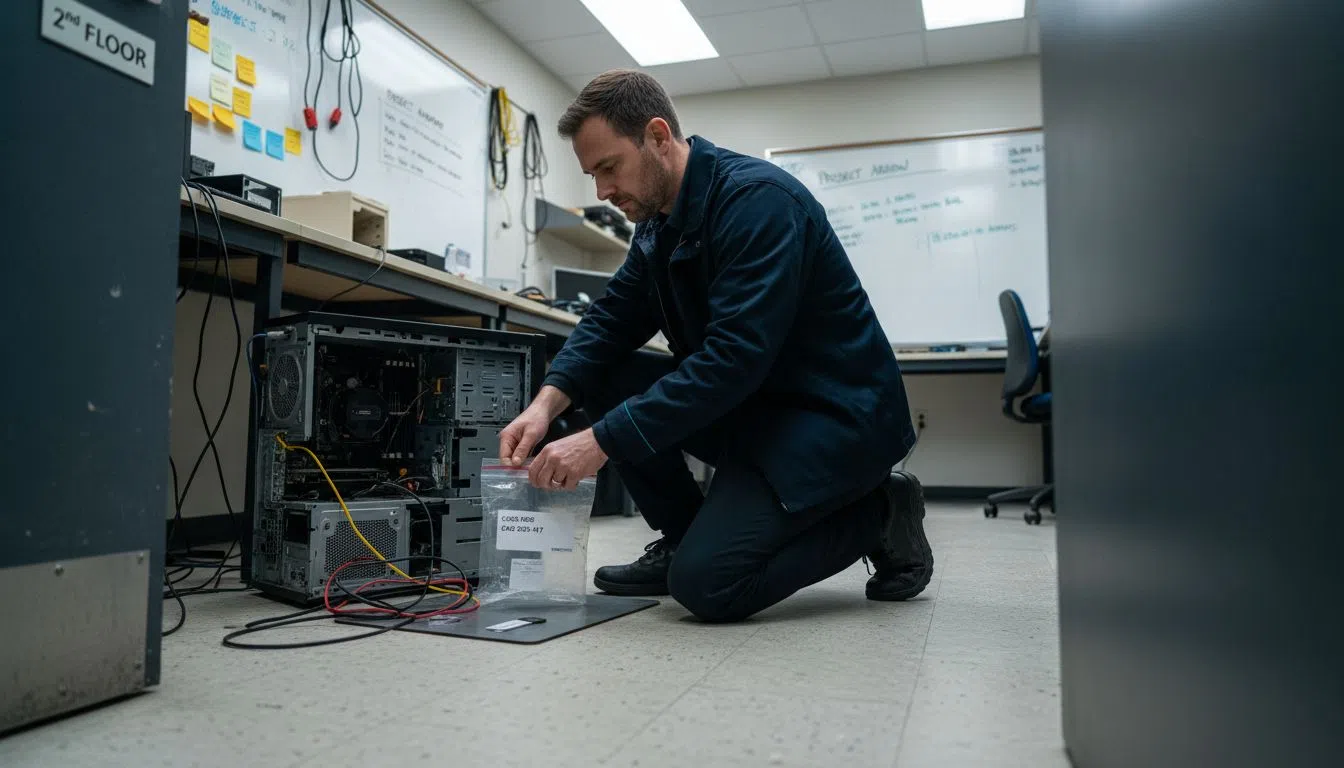
Procedural errors cause 35% of cybercrime investigations to fail before reaching prosecution. Evidence contamination, delayed volatile data capture, and broken chains of custody turn what should be solid cases into inadmissible submissions. This guide delivers a practical, step-by-step process aligned with UK legal standards to help you conduct investigations that withstand rigorous legal scrutiny and support successful prosecutions.
Table of Contents
- Prerequisites And Initial Evidence Preservation
- Step 1: Digital Evidence Collection And Chain Of Custody
- Step 2: Data Analysis Techniques And Tools
- Step 3: Handling Complex Data Sources Like Cloud And Social Media
- Step 4: Reporting, Expert Witness, And Legal Compliance
- Common Pitfalls And Troubleshooting In Cybercrime Investigations
- Expected Timelines, Outcomes, And Success Metrics
- Enhance Your Cybercrime Investigations With Expert Digital Forensics Services
Key takeaways
| Point | Details |
|---|---|
| Structured procedures optimise evidence reliability | Following standardised, legally compliant steps ensures evidence admissibility and reduces procedural errors that jeopardise prosecutions. |
| Volatile data requires immediate capture | 60% of volatile data can be lost if not preserved within minutes of incident discovery. |
| Combining manual and AI analysis enhances accuracy | Integrated analysis improves detection by 25%, identifying malware and anomalies human review alone might miss. |
| Cloud and social media data demand extra care | Legal authorisations and technical complexity extend timelines and require specialised handling to preserve data integrity. |
| Expert reports uphold admissibility | Detailed documentation, maintained chain of custody, and expert witness involvement increase convictions by 20%. |
Prerequisites and initial evidence preservation
Starting a cybercrime investigation without proper preparation guarantees failure. Your first minutes determine whether evidence survives or vanishes forever.
Volatile data stored in RAM, active network connections, and running processes disappear the moment a device powers off or reboots. Research shows 60% of volatile data is lost if not captured immediately after incident discovery. You must act within five minutes to preserve this critical evidence.
Before touching any device, secure proper legal authority. The Investigatory Powers Act 2016 mandates lawful authorisation before evidence seizure. Operating without appropriate warrants or permissions renders your evidence inadmissible regardless of its probative value. Understanding UK legal considerations for digital forensics prevents costly legal challenges later.
Essential tools for initial preservation include:
- Forensic imaging hardware capable of bit-by-bit copying without altering source data
- Write blockers preventing accidental modification during acquisition
- Secure storage with encryption meeting UK government standards
- Volatile data capture tools for RAM and live system analysis
- Documentation templates for chain of custody tracking
Your team needs specialised training before handling volatile evidence. Proper technique prevents contamination and ensures reproducible results. Practice capturing volatile data in controlled environments until the process becomes automatic.
Document every action from the moment you arrive at the scene. Record who accessed what, when, and why. Photograph device states before and after intervention. This meticulous record keeping forms the foundation of your chain of custody and demonstrates you followed proper procedure.
Pro tip: Create a standard evidence preservation checklist covering volatile data capture, legal authority verification, tool preparation, and initial documentation. Following this checklist under pressure prevents critical oversights that compromise investigations.
Complete step-by-step evidence collection for digital investigations requires systematic preparation before touching any device.
Step 1: digital evidence collection and chain of custody
Once you’ve preserved volatile data, formal evidence collection begins. This phase determines whether your evidence reaches court or gets dismissed on procedural grounds.
Forensic imaging creates bit-by-bit copies of storage media without altering original data. Industry-standard tools like EnCase and FTK perform this imaging whilst generating cryptographic hashes proving data integrity. These hash values become your proof that evidence remained unchanged from collection through analysis.

Chain of custody documentation tracks every person who touches evidence and every action performed. Each handover requires signatures, timestamps, and purpose statements. A single undocumented transfer can render months of investigative work worthless. Courts demand proof that evidence couldn’t have been tampered with between collection and presentation.
Follow these steps for legally sound evidence collection:
- Verify legal authority before proceeding with any seizure or imaging
- Photograph devices in situ showing their original state and connections
- Use write blockers during all imaging operations to prevent modifications
- Generate and record cryptographic hashes immediately after imaging
- Package evidence in tamper-evident bags with unique serial numbers
- Complete chain of custody forms before evidence leaves the scene
- Store evidence in secure facilities with access logs and environmental controls
Proper documentation and chain of custody prevent evidence dismissal under the Investigatory Powers Act 2016. Courts scrutinise handling procedures intensely, looking for any break in the chain that suggests possible tampering.
Standard operating procedures eliminate contamination risks. Clean tools between uses. Document which tools contacted which evidence. Never work on original evidence directly. These practices seem obvious but 35% of forensic errors stem from lapses in basic procedure.
Labelling standards matter more than you might expect. Each evidence item needs unique identifiers, collection dates, collector names, and case references. Ambiguous labelling creates confusion months later when preparing court submissions.
Pro tip: Photograph your evidence labels in place on their containers. This photographic record resolves any later disputes about what label was attached to which item.
Mastering digital evidence collection techniques and understanding why documenting digital evidence matters prevents the procedural failures that sink prosecutions.
Step 2: data analysis techniques and tools
Collecting evidence means nothing if you can’t extract meaningful intelligence from it. Analysis transforms raw data into actionable findings that support or refute your case theory.
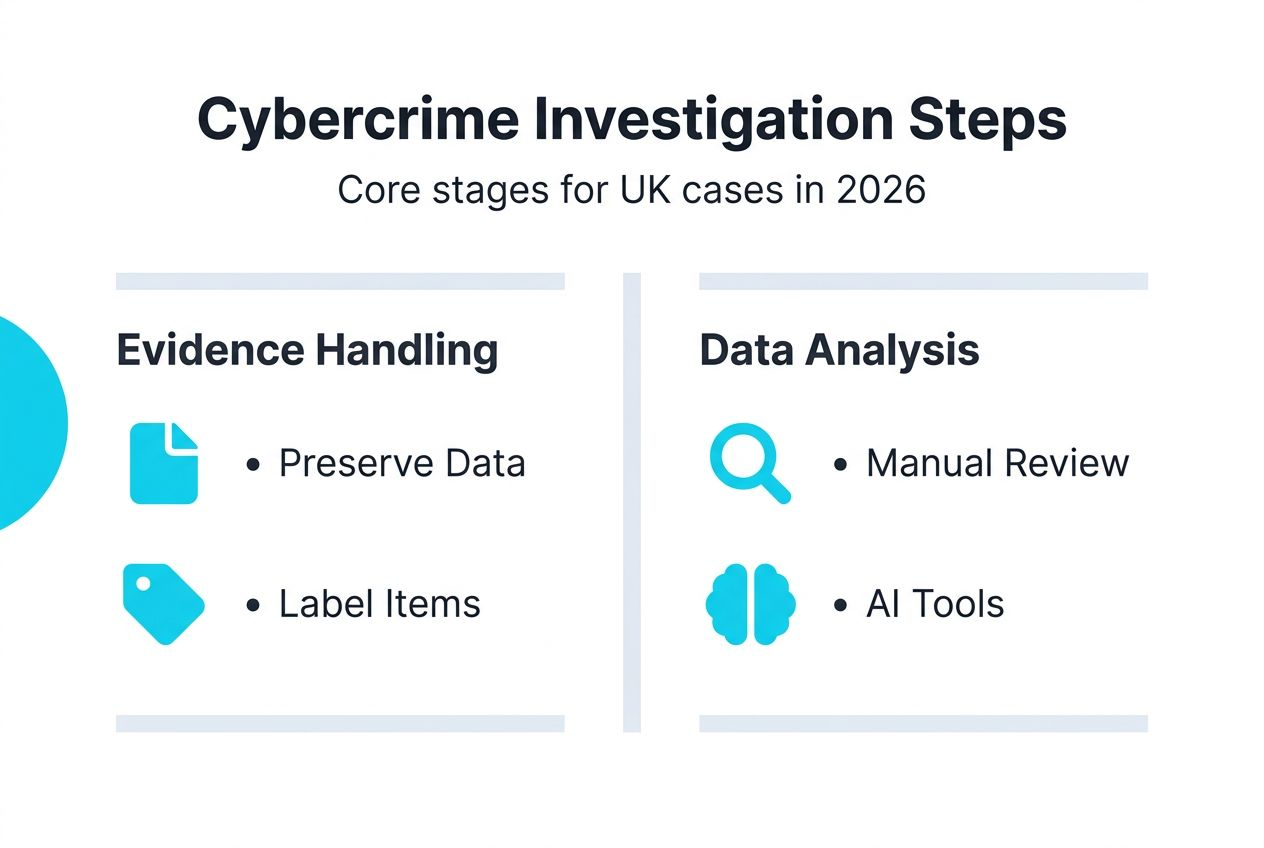
Manual review provides contextual understanding no algorithm can match. Human analysts spot patterns, identify suspicious communications, and understand nuanced behaviours within their broader context. You recognise when an email thread indicates planning versus innocent discussion.
AI-enabled tools excel at scale and speed. They process terabytes of data hunting for malware signatures, detecting anomalies in network traffic, and flagging suspicious file modifications. Combining manual review with AI improves detection accuracy by 25% compared to either approach alone.
Modern investigations face three particularly challenging data sources:
- Mobile devices: Encrypted messaging apps, diverse operating systems, and proprietary storage formats complicate extraction
- Cloud storage: Data distributed across jurisdictions with varying legal requirements and technical access methods
- Social media: Volatile content that disappears, privacy settings limiting visibility, and platform-specific data formats
Effective analysis integrates human judgement with computational power. Let AI tools perform initial triage, flagging potentially relevant items for human review. Analysts then examine flagged content, providing context and determining actual relevance to the investigation.
| Analysis Approach | Strengths | Limitations |
|---|---|---|
| Manual review | Contextual understanding, pattern recognition, nuanced interpretation | Time-intensive, limited scale, potential for human error |
| AI automation | Rapid processing, malware detection, anomaly identification | Lacks context, generates false positives, requires training data |
| Integrated method | Combines speed and scale with contextual judgement | Requires skilled analysts and appropriate tools |
Data encryption presents ongoing challenges. You might image a device perfectly but find crucial files protected by strong encryption. Legal routes for obtaining passwords exist but require proper authorisation and cooperation.
Volume overwhelms even experienced teams. A single investigation might involve dozens of devices generating hundreds of gigabytes of data. Prioritisation based on likely evidentiary value focuses limited resources on high-impact analysis.
Pro tip: Develop keyword lists and filter criteria before starting analysis. These pre-defined search parameters keep you focused on relevant evidence rather than drowning in data noise.
Exploring forensic data analysis techniques and understanding what is forensic data analysis builds expertise in extracting actionable intelligence from digital evidence.
Step 3: handling complex data sources like cloud and social media
Cloud environments and social media platforms introduce legal and technical complexities absent from traditional device forensics. These distributed, dynamic data sources require specialised approaches.
Legal authorisation becomes more complicated when data resides in cloud infrastructure. You need proper warrants or production orders directed at service providers, not just device owners. The Investigatory Powers Act 2016 establishes requirements for lawfully compelling cloud data disclosure. Cloud data requests can extend timelines up to 15 days as providers verify authorisation and locate requested information.
Technical challenges multiply in cloud investigations:
- Data distributed across multiple servers in different jurisdictions
- Encryption protecting data in transit and at rest
- Shared infrastructure where target data mingles with other users’ information
- Dynamic content that changes or disappears without notice
- Limited direct access requiring provider cooperation
Social media evidence presents unique preservation concerns. Posts, messages, and profiles can vanish instantly if suspects delete accounts or content. You must capture this volatile evidence quickly using platform-specific tools and techniques.
Best practices for cloud and social media investigations include:
- Identify data location and controlling jurisdiction before requesting access
- Obtain appropriate legal authorisation covering cloud and platform data
- Submit preservation requests immediately to prevent data deletion
- Coordinate with platform legal teams who handle disclosure requests
- Document data acquisition methods proving authenticity and integrity
- Maintain secure storage for cloud data meeting original security standards
Extended investigation timelines require careful client management. Explain why cloud data requests take longer than imaging physical devices. Set realistic expectations about multi-week turnarounds for comprehensive cloud data collections.
Provider cooperation varies dramatically. Major platforms have established law enforcement response teams handling disclosure requests. Smaller services might lack resources or expertise to respond effectively. Build relationships with provider contacts before emergencies arise.
Authenticity concerns plague cloud and social media evidence. Courts question whether data you present actually came from the claimed source and wasn’t altered. Detailed documentation of acquisition methods, provider authentication, and chain of custody addresses these concerns.
Understanding cybercrime investigation steps in legal cases helps navigate the complex intersection of cloud technology and legal requirements.
Step 4: reporting, expert witness, and legal compliance
Your investigation culminates in formal reporting that presents findings clearly whilst meeting stringent legal standards. Poor reporting undermines even excellent investigative work.
Forensic reports must include these essential components:
- Executive summary stating key findings in plain language for non-technical readers
- Detailed methodology describing tools used, procedures followed, and standards met
- Complete findings with supporting evidence and analysis
- Conclusions directly addressing investigative questions
- Appendices containing technical details, tool outputs, and supporting documentation
Expert witnesses bridge the gap between technical evidence and legal proceedings. They explain complex digital forensic concepts to judges and juries, defend methodologies under cross-examination, and provide opinions on evidence interpretation. Expert witness involvement increases conviction rates by 20% by making technical evidence accessible and credible.
UK legal compliance isn’t optional. Compliance with Investigatory Powers Act 2016 and Data Protection Act 2018 is mandatory for all digital investigations. These laws govern data collection, storage, and disclosure whilst protecting individual privacy rights.
Your reports face intense legal scrutiny. Defence teams will challenge your qualifications, question your methodology, and search for procedural errors undermining evidence validity. Thorough documentation throughout the investigation provides ammunition defending against these challenges.
Pro tip: Engage legal teams early in investigations, not just when preparing final reports. Early collaboration ensures you collect evidence meeting specific legal requirements and address potential admissibility concerns proactively.
Key compliance considerations include:
- Obtaining proper authorisation before collecting personal data
- Limiting data collection to what’s necessary and proportionate for the investigation
- Securing data according to sensitivity and regulatory requirements
- Documenting legal basis for all collection and processing activities
- Respecting data subject rights where they don’t conflict with investigation integrity
Timeliness matters for both investigations and reporting. Courts expect reasonable turnaround times. Unexplained delays raise questions about evidence handling and create opportunities for defence challenges.
Collaborating with legal professionals throughout investigations improves outcomes. Lawyers understand what evidence courts need and how to frame technical findings persuasively. This partnership between technical and legal expertise produces stronger cases.
Exploring digital forensics in UK courts and understanding legal compliance for digital forensics ensures your evidence withstands legal scrutiny.
Common pitfalls and troubleshooting in cybercrime investigations
Even experienced investigators make mistakes that compromise cases. Recognising these common errors helps you avoid them.
Delayed volatile data capture represents the most critical failure point. 60% of volatile evidence is lost when investigators fail to act within minutes of incident discovery. RAM contents, active network connections, and running process details vanish forever. No amount of later analysis recovers this lost intelligence.
Chain of custody documentation lapses create immediate admissibility problems. Missing signatures, undocumented transfers, or gaps in storage records allow defence teams to argue evidence tampering. Courts dismiss evidence when chains of custody contain unexplained breaks.
Inadequate training causes procedural mistakes and evidence contamination. Investigators lacking proper instruction accidentally modify evidence, use incorrect tools, or skip critical documentation steps. 35% of forensic examination errors stem from inadequate training or SOP lapses, representing entirely preventable failures.
Solutions to these common pitfalls include:
- Implementing mandatory volatile data capture protocols activated immediately upon incident notification
- Using standardised chain of custody forms with mandatory fields preventing documentation gaps
- Requiring regular training updates and competency assessments for all investigators
- Conducting peer reviews of evidence handling procedures before finalising collections
- Maintaining detailed audit trails of every evidence interaction
Legal authorisation timing creates another frequent problem. Investigators sometimes begin evidence collection before obtaining proper warrants or permissions, invalidating everything collected during unauthorised activity. Always verify authorisation before proceeding.
“The best technical investigation becomes worthless when procedural errors render evidence inadmissible. Strict adherence to established protocols and continuous training represent your strongest defence against preventable failures.”
Tool selection mistakes compromise results when investigators use inappropriate software or hardware for specific evidence types. Research tool capabilities and limitations before deploying them in active investigations.
Reviewing digital forensics legal pitfalls helps identify and avoid the procedural errors that sink investigations.
Expected timelines, outcomes, and success metrics
Realistic expectations about investigation duration and measurable success indicators help you plan resources and assess performance.
Typical forensic acquisition lasts 2-10 days depending on data volume and device complexity. Analysis extends this timeline significantly, sometimes requiring weeks or months for comprehensive examinations of multiple devices with extensive data.
Key success metrics for cybercrime investigations include:
- Chain of custody completeness with zero gaps or undocumented transfers
- Volatile data preservation timing measured in minutes from incident discovery
- Evidence integrity verified through cryptographic hashing at multiple stages
- Report delivery meeting agreed timelines and quality standards
- Expert witness availability and testimony effectiveness in court proceedings
Outcome improvements flow from standardised procedures and appropriate tools. Teams following established protocols produce more reliable evidence. Investing in quality forensic software and hardware reduces analysis time whilst improving accuracy.
| Investigation Phase | Typical Duration | Critical Success Factors |
|---|---|---|
| Initial preservation | Minutes to hours | Rapid volatile data capture, legal authority verification |
| Evidence collection | 2-10 days | Proper imaging, chain of custody documentation, tool selection |
| Data analysis | 1-12 weeks | Skilled analysts, appropriate tools, quality assurance review |
| Report preparation | 1-3 weeks | Clear writing, legal compliance, comprehensive documentation |
| Court proceedings | Variable | Expert witness preparation, evidence admissibility, testimony effectiveness |
Conviction rate improvements of 20% result from expert witness involvement, demonstrating the value of investing in qualified forensic experts who communicate technical concepts effectively.
Client satisfaction depends on managing expectations throughout investigations. Explain why comprehensive examinations take time. Provide regular updates on progress and preliminary findings. Transparency builds trust and reduces frustration over extended timelines.
Quality assurance processes catch errors before evidence reaches court. Peer review of imaging procedures, analysis methods, and report content identifies mistakes whilst you can still correct them.
Learning from digital evidence collection timelines helps set realistic expectations and plan resource allocation effectively.
Enhance your cybercrime investigations with expert digital forensics services
Conducting thorough, legally compliant cybercrime investigations requires specialised expertise, advanced tools, and meticulous attention to procedural detail. Professional digital forensics services provide the technical capability and legal knowledge ensuring your investigations withstand rigorous scrutiny.
Expert teams bring years of experience handling complex evidence across multiple device types, cloud platforms, and social media environments. They maintain current knowledge of evolving legal requirements whilst operating cutting-edge forensic tools. This combination of expertise and resources produces reliable results supporting successful prosecutions.
Accessing comprehensive support from digital evidence collection specialists ensures proper handling throughout the investigation lifecycle. Professional services cover volatile data preservation, forensic imaging, detailed analysis, expert reporting, and court testimony.
Understanding how digital forensics data reveals crucial evidence helps you appreciate the depth of expertise required for effective cybercrime investigations.
FAQ
What is the importance of capturing volatile data quickly in cybercrime investigations?
Volatile data stored in RAM, active network connections, and running processes disappears when devices power off or reboot. Research demonstrates 60% of this crucial evidence is lost if not captured within minutes of incident discovery. This transient information often contains the most valuable intelligence about attacker activities and system compromise.
How does the Investigatory Powers Act 2016 affect digital evidence handling?
This legislation establishes strict legal requirements for lawful evidence acquisition and handling in UK investigations. Investigators must obtain proper authorisation before collecting digital evidence, and non-compliance renders evidence inadmissible in court regardless of its probative value. Understanding UK legal considerations for digital forensics prevents costly procedural failures.
What are common mistakes that cause cybercrime investigations to fail?
The three most critical errors are delayed volatile data capture leading to permanent evidence loss, poor chain of custody documentation creating admissibility challenges, and inadequate investigator training causing contamination or procedural mistakes. These entirely preventable failures account for 35% of forensic examination errors. Implementing standardised protocols and requiring regular training dramatically reduces these risks.