TL;DR:
- Intellectual property theft forensics involves collecting and analyzing digital and physical evidence to prove misappropriation. Effective investigations rely on disciplined techniques like forensic imaging, hash validation, and evidence source correlation, all guided by strict legal and chain of custody standards. A multidisciplinary response team and comprehensive evidence sources, including overlooked data like browser databases and physical access logs, are crucial for building admissible court cases.
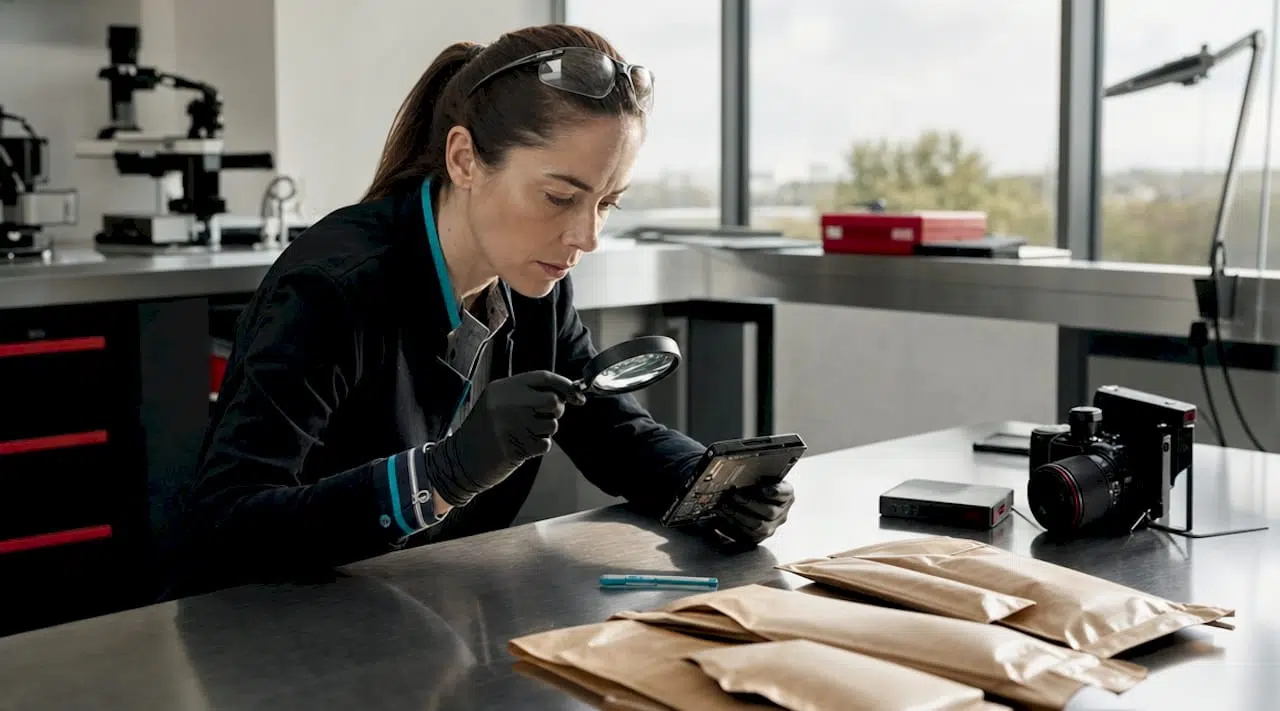
Intellectual property theft forensics is the scientific process of collecting, preserving, and analysing digital and physical evidence to prove the unlawful misappropriation of proprietary information. For legal professionals, compliance officers, and business owners, the quality of forensic evidence gathered in the first hours of an investigation determines whether civil or criminal proceedings succeed or collapse. This guide covers the core forensic techniques, legal frameworks, response team structures, and overlooked evidence sources that define effective IP theft investigations, drawing on established practice from digital forensic experts, litigation counsel, and corporate security specialists.
What are the core forensic techniques in IP theft investigations?
Intellectual property theft forensics rests on a set of disciplined, repeatable methods that produce court-admissible evidence. Each technique serves a specific purpose in reconstructing what was taken, by whom, and when.
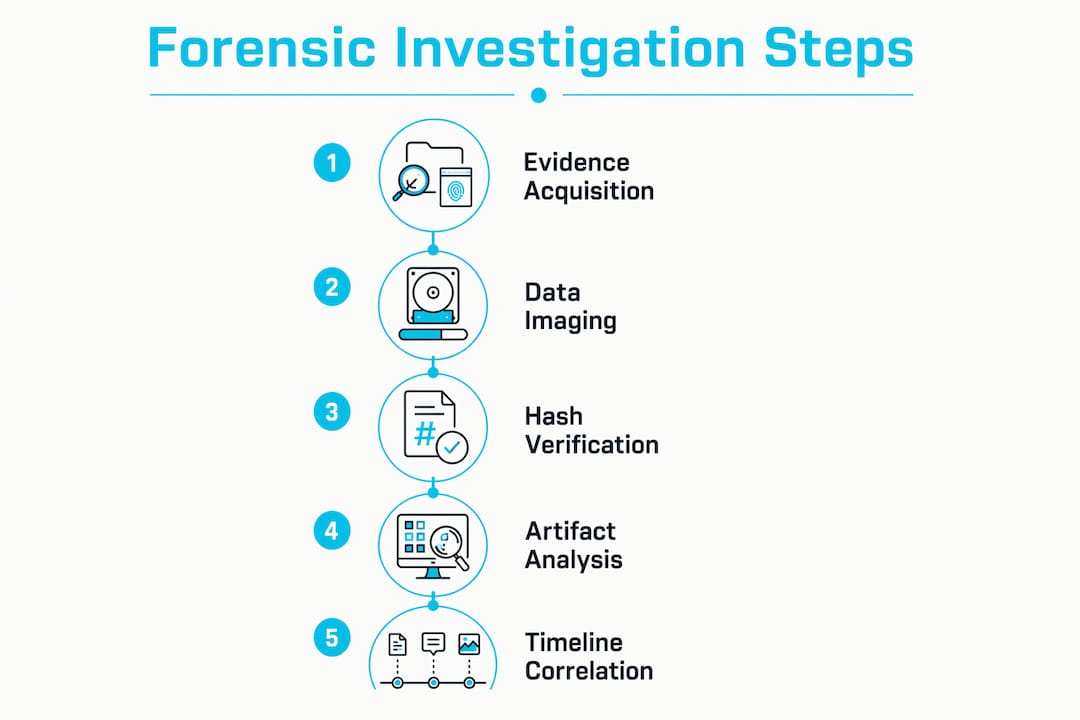
Forensic imaging is the foundation of every investigation. A forensic image is a bit-for-bit copy of a storage device, created without altering any metadata or file timestamps. Opening files changes access times, which is why imaging must occur before any other examination. Tools such as FTK Imager and Cellebrite UFED create verified copies that allow analysts to work on the duplicate while the original remains untouched and legally defensible.
Cryptographic hashing validates that evidence has not been modified at any point after collection. A SHA-256 or MD5 hash of the forensic image is calculated immediately upon acquisition and recorded in the case file. Any subsequent alteration to the image, however minor, produces a different hash value, making tampering immediately detectable. This step is not optional. It is the technical backbone of chain of custody.

Browser artefact analysis goes far beyond viewing a list of recently visited websites. Chrome’s local databases contain granular, timestamped records of visited URLs, file downloads, and search keywords, all stored in SQLite format. The visits table records every navigation event with microsecond precision. The downloads table captures file paths, including synchronisation locations pointing to cloud storage services such as OneDrive or Google Drive. These records frequently reveal patterns of data exfiltration that a superficial review of browser history would miss entirely.
USB and peripheral device connection logs are equally revealing. Windows registry entries and event logs record the serial numbers, connection timestamps, and device names of every USB storage device ever connected to a machine. Smartphone connections via MTP (Media Transfer Protocol) are also logged, showing when a personal device was attached and for how long. This data directly links physical hardware to specific moments of potential data transfer.
Timeline correlation ties all individual artefacts together into a coherent narrative. Analysts map browser activity, USB connections, cloud sync events, and email attachment downloads against a single chronological timeline. Patterns that appear innocent in isolation, such as a USB connection followed by a cloud upload followed by a personal email with an attachment, become compelling evidence of deliberate exfiltration when correlated.
Pro Tip: Never allow internal IT staff to examine a suspect device before a forensic image has been created. Even viewing a file explorer window can alter last-accessed timestamps, potentially invalidating key evidence.
How does the legal framework shape a forensic IP theft investigation?
The legal context of an investigation determines which forensic steps are mandatory and what standards the resulting evidence must meet. Two statutes dominate civil IP theft litigation in jurisdictions where UK-based businesses operate internationally: the Defend Trade Secrets Act (DTSA) in the United States and the UK’s own Trade Secrets (Enforcement, etc.) Regulations 2018.
Under both frameworks, the burden of proof requires the claimant to demonstrate that reasonable measures were taken to protect the secrecy of the information. Forensic experts provide evidence of restricted access controls, encryption, and audit logs, which collectively satisfy this requirement. Without that forensic foundation, a claim can fail before it reaches the question of whether theft occurred at all.
The chain of custody is the legal mechanism that connects physical evidence to courtroom testimony. Failure to preserve electronically stored information correctly can result in court sanctions, including terminating sanctions that dismiss the entire lawsuit. Every person who handles evidence must be documented, every transfer must be recorded, and every copy must be hash-verified.
Emergency legal remedies are available when speed is critical. The options include:
- Temporary Restraining Order (TRO). A TRO compels the suspected thief to stop using or distributing the stolen material immediately. TROs preserve economic value by halting harm before it becomes irreversible, and courts can grant them within 24 to 48 hours of application.
- Ex parte seizure order. Available under the DTSA, this allows law enforcement to seize property without prior notice to the defendant, preventing destruction of evidence.
- Cease-and-desist letters. Used tactically before formal proceedings, these create a documented record that the defendant was notified of the alleged misappropriation.
- Criminal referral. Where the theft involves trade secrets, referral to the National Crime Agency (NCA) in the UK or the FBI in the United States can trigger criminal investigation and prosecution.
“Digital evidence preservation demands legal counsel involvement upfront to ensure all forensic steps comply with admissibility requirements.” — Responding to trade secret misappropriation
Detailed, verifiable forensic reporting that specifies tools, commands, and metadata details allows opposing experts to replicate analyses in court, which is the standard required for expert testimony to carry weight.
What is the right response team structure for an IP theft investigation?
Effective IP theft investigations do not succeed through individual effort. They require a coordinated, multidisciplinary team assembled quickly and operating under strict confidentiality. The key response team includes a senior executive, HR, IT or cybersecurity personnel, outside forensic experts, and both in-house and litigation counsel.
The roles within that team are distinct and must not overlap carelessly:
- Senior executive. Authorises the investigation, controls communications, and makes decisions on legal escalation.
- HR representative. Manages employment law considerations, including whether the suspect remains in post during the investigation and what disciplinary procedures apply.
- IT or cybersecurity lead. Provides access to system logs, network records, and device inventories, but does not conduct forensic examination independently.
- Outside forensic experts. Conduct all device imaging, evidence analysis, and reporting. Their independence is what makes the evidence defensible in court.
- Legal counsel. Advises on every step before it is taken. Legal counsel involvement before forensic actions is recommended by NIST guidelines and is the single most important safeguard against evidence spoliation.
The principle of need-to-know must govern all internal communications about the investigation. Alerting the suspect, even inadvertently, can trigger rapid deletion of evidence or the transfer of data to locations outside the organisation’s reach.
Pro Tip: Instruct legal counsel to issue a litigation hold notice to all relevant custodians before any forensic work begins. This creates a documented obligation to preserve evidence and protects your organisation from spoliation sanctions.
Cease-and-desist letters, when deployed, should be timed strategically. Sending one too early can alert a suspect to destroy evidence. Sending one after forensic imaging is complete, however, creates leverage without sacrificing the evidentiary record.
Which digital evidence sources are most overlooked in IP theft forensics?
Many investigations focus on the obvious: email inboxes and recently deleted files. The most valuable evidence in tracing intellectual property theft is frequently found elsewhere.
| Evidence source | What it reveals | Why it is overlooked |
|---|---|---|
| Chrome SQLite databases | Granular visit timing, download paths, search keywords | Analysts rely on exported history rather than raw database queries |
| USB registry entries | Device serial numbers, connection timestamps, device names | Requires registry forensics knowledge beyond basic IT skills |
| Cloud sync metadata | Files synchronised to personal accounts, sync timestamps | Cloud providers require legal process to obtain; local logs are missed |
| Email attachment records | Download paths, timestamps, recipient addresses | Often treated as secondary to email content |
| Physical security logs | Badge access times, visitor records, help desk tickets | Considered non-digital and excluded from digital forensic scope |
Correlating cloud storage access, USB device connections, and email attachment downloads builds a timeline that is far more persuasive than any single data point. A Dropbox sync event at 11:47 PM, followed by a USB connection at 11:52 PM, followed by a Gmail attachment sent at 11:59 PM, tells a story that is difficult to explain away.
Physical security data deserves particular attention in insider theft cases. Badge access data and employee exit timelines corroborate digital evidence by confirming physical presence at the time of suspected exfiltration. A suspect who claims they were not in the building when files were copied is contradicted immediately by access control records.
The role of forensics in legal cases extends well beyond recovering deleted files. It encompasses the reconstruction of intent, opportunity, and method from dozens of data sources that, individually, appear mundane.
Key takeaways
Effective intellectual property theft forensics requires forensic imaging, chain of custody discipline, legal counsel involvement from the outset, and correlation of multiple digital and physical evidence sources to build a court-admissible case.
| Point | Details |
|---|---|
| Forensic imaging is non-negotiable | Create a verified bit-for-bit copy before any examination to preserve metadata and timestamps. |
| Legal counsel must lead from the start | Involving litigation counsel before forensic steps protects against evidence spoliation and court sanctions. |
| Browser databases outperform history exports | Chrome’s SQLite files reveal download paths, search terms, and granular timing invisible in standard history views. |
| Multi-source correlation builds the strongest cases | Combining USB logs, cloud sync metadata, and physical access records produces a timeline that withstands cross-examination. |
| Emergency injunctions can stop harm immediately | A TRO can compel cessation of stolen data use within 24 to 48 hours, preserving commercial value before trial. |
What I have learned from investigating IP theft cases
Having worked on IP theft investigations across sectors ranging from financial services to software development, the pattern that stands out most is how often organisations underestimate the first 48 hours. The instinct is to investigate quietly using internal IT resources. That instinct is understandable, but it is also the most common way a strong case becomes an inadmissible one.
Internal IT teams are skilled at keeping systems running. They are not trained in forensic evidence handling, and the distinction matters enormously. The moment an IT administrator opens a suspect’s file explorer to “have a look,” they have potentially altered access timestamps on dozens of files. That single action can give a defence counsel enough to challenge the integrity of the entire evidence set.
The cases I find most instructive are those involving multi-vector exfiltration. A departing employee does not typically copy files to a single USB drive and walk out. They use a combination of personal cloud accounts, smartphone connections, and personal email, often over several weeks before their notice period begins. Detecting this requires correlating evidence sources that no single tool surfaces automatically. It requires an analyst who knows where to look and a legal team that understands what the evidence means once it is found.
The other lesson is about reporting. A forensic report that lists findings without specifying the tools used, the commands run, and the metadata examined is not a forensic report. It is an opinion. Courts require replicable methodology, and opposing experts will test every claim. The forensic consultancy in digital litigation that produces defensible, detailed reports is the one whose evidence survives cross-examination.
Speed and rigour are not in conflict. They are both required, and the organisations that achieve both are the ones that retain specialist forensic support before an incident occurs, not after.
— Computerforensicslab
How Computerforensicslab supports IP theft investigations
Computerforensicslab provides specialist digital forensic investigations for IP theft cases, covering forensic imaging of computers, mobile devices, and cloud accounts, with full chain of custody documentation at every stage. The team works directly alongside litigation counsel to produce expert witness reports that meet court admissibility standards. Whether you are responding to a suspected insider threat or pursuing a civil claim against a former employee or competitor, Computerforensicslab’s digital forensics services provide the technical foundation your legal team needs. Contact Computerforensicslab to discuss your case and receive expert guidance on the immediate steps required to preserve and secure your evidence.
FAQ
What is intellectual property theft forensics?
Intellectual property theft forensics is the disciplined process of collecting, preserving, and analysing digital and physical evidence to prove the unlawful misappropriation of proprietary information. It combines forensic imaging, metadata analysis, and chain of custody protocols to produce court-admissible evidence.
How quickly should forensic evidence be preserved after suspected IP theft?
Evidence preservation should begin within hours of suspicion being raised. Delays risk metadata alteration, file deletion, or cloud account deactivation, all of which can destroy the evidentiary record and expose the organisation to spoliation sanctions.
Can internal IT staff conduct an IP theft forensic investigation?
Internal IT staff should not conduct forensic examinations independently. Interacting with files before forensic imaging alters timestamps and can invalidate evidence. Outside forensic experts with verified chain of custody procedures are required for legally defensible results.
What legal remedies are available alongside a forensic investigation?
A Temporary Restraining Order is the most immediate remedy, compelling the suspect to stop using stolen material within 24 to 48 hours. Ex parte seizure orders and criminal referrals to agencies such as the NCA are also available depending on the severity of the theft.
What makes a forensic report admissible in an IP theft case?
An admissible forensic report must specify the tools used, the commands executed, and the metadata examined, allowing opposing experts to replicate the analysis. Vague findings without documented methodology are routinely challenged and frequently excluded by courts.