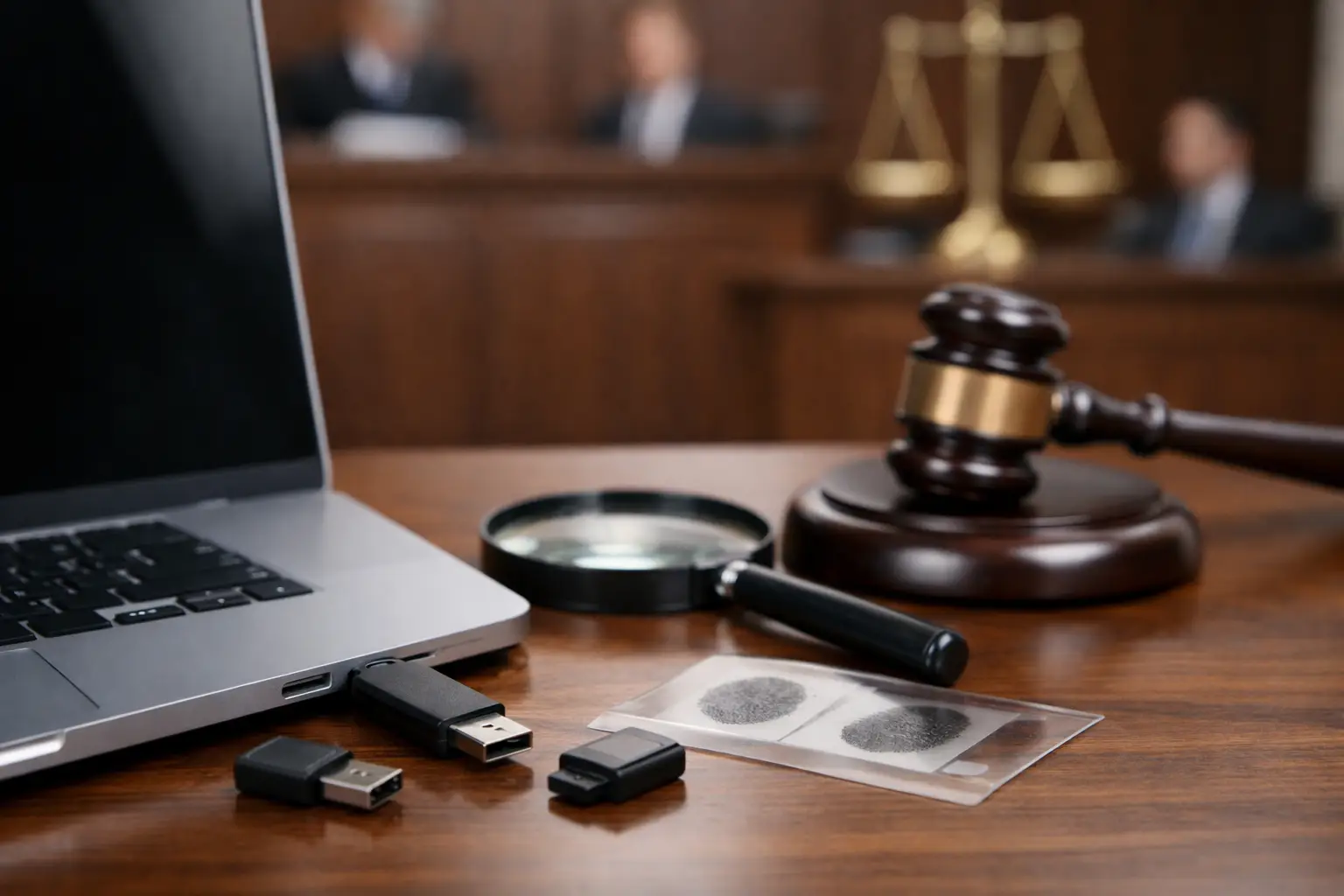
A USB device can be small enough to conceal in a pocket, yet it may sit at the centre of an allegation of data theft, unauthorised disclosure or suspicious file transfer. USB activity forensic evidence helps establish what device was connected, when it was used, which user account was active and, in some circumstances, whether relevant files were accessed or copied. For solicitors and investigators, the distinction between suspicion and defensible digital evidence is decisive.
A record that a USB drive was connected does not, by itself, prove that confidential material left an organisation. Equally, the absence of an obvious file-copy log does not prove that nothing happened. A proper forensic examination considers the available artefacts together, preserves them correctly and reports both the supporting evidence and its limitations.
What USB activity forensic evidence can establish
Windows computers commonly retain traces when removable storage is connected. These traces may identify the make, model, serial number and first or last recorded connection of a USB device. They can also assist in linking a particular drive to a particular computer, rather than merely showing that an unspecified removable device was used.
The evidential value becomes stronger where device records can be correlated with user log-on events, file-system timestamps, recent-file information, shortcut files, jump lists, security logs, cloud synchronisation records or endpoint monitoring data. A coherent timeline may show that a named user logged into a workstation, connected a specific USB device, opened a sensitive folder and accessed documents shortly before the device was removed.
That is materially different from a bare assertion that an employee had the opportunity to copy data. It can provide an evidence-led basis for enquiries, disciplinary action, civil disclosure or criminal investigation.
The questions a forensic examination should answer
The scope should be driven by the issues in dispute. In an alleged insider data theft matter, the relevant questions may include whether a device was connected during the employee’s notice period, whether it had previously been used by others and whether business records were accessed at the same time.
In a criminal case, the focus may instead be on attribution, timing and whether a device recovered from a suspect can be associated with a seized computer. In a family or civil dispute, the issue may be whether documents, photographs or communications were transferred from one party’s computer without authority.
A forensic expert should avoid overstating the evidence. USB artefacts can often demonstrate connection and usage history, but their ability to prove a file transfer depends on the operating system, the application used, system configuration, available logs and the condition of the media. The correct conclusion may be that copying is consistent with the evidence, not that it is conclusively proved.
Where USB evidence is found
USB investigations are rarely confined to one registry entry or one log. On a Windows system, an examiner may assess system configuration information, device installation records, registry artefacts, event logs and records of mounted volumes. These can reveal how the operating system recognised and assigned a removable device.
File-related artefacts are equally significant. Shortcut files and jump lists can indicate that a file was opened from, or saved to, removable media. Recent document records may help establish a user’s interaction with material. File-system metadata can show creation, modification and access activity, subject to the known limitations of timestamps and the potential effects of copying tools or system processes.
The removable drive itself may be critical. If recovered, it can contain the transferred material, deleted files, volume information and artefacts that associate it with the host computer. However, it must be preserved before casual inspection alters its contents. Connecting a drive to an ordinary computer can change metadata, create operating system files or otherwise complicate the evidence.
Mac and Linux systems require a different approach. Their logs, mount records and user artefacts differ from Windows, and the absence of Windows-style registry data is not a gap in the investigation. It is a reason to use methods appropriate to the operating system and device involved.
Why preservation comes before analysis
A rushed internal response can undermine a strong case. An employee’s laptop may be switched on, searched by IT staff, or returned to service before a forensic image is taken. A USB drive may be plugged in to see what is on it. These actions can change evidence and make later attribution more difficult.
Forensically sound handling begins with documenting the circumstances of seizure or collection: who obtained the device, when, where it was held and every subsequent transfer. The original media should be protected, while examination takes place on a verified forensic copy wherever possible. Cryptographic hash values provide a means of demonstrating that the acquired image has not changed during analysis.
Chain of custody is not paperwork added after the event. It is the record that enables a court, tribunal or opposing expert to understand how the evidence was controlled. Where an organisation has already handled a device, that fact should be recorded transparently. It does not automatically make the evidence unusable, but it may affect the weight that can be placed upon particular findings.
Building a timeline that withstands challenge
The most persuasive USB activity forensic evidence is usually a timeline, not an isolated artefact. A connection time may be compared against active user sessions, building access records, remote-working logs, email activity and relevant CCTV where lawfully available. This can test whether the apparent activity fits the known facts.
Time evidence requires care. Devices may record time in local time, UTC or a mixture of both. Daylight saving changes, incorrect system clocks, sleep and hibernation, log retention and automatic background processes can all affect interpretation. An expert report should state the time basis used and explain any adjustment made.
Alternative explanations must also be tested. A USB device may have been connected by an IT administrator, a colleague using a shared workstation or an automated backup process. A file may have been opened without being copied. A named device can sometimes be identified by serial number, but lower-quality or older devices may expose only a generic identifier. Proper examination considers these possibilities rather than selecting the explanation that best suits one party’s case.
Presenting USB findings for litigation and investigations
Technical output alone is seldom useful to a legal team. Hundreds of log entries and screenshots do not explain what happened, how reliable the conclusion is or what remains uncertain. A court-ready report should set out the instructions received, the devices examined, acquisition methods, integrity checks, artefacts identified, findings and limitations.
It should distinguish clearly between fact and opinion. For example, it may be a factual finding that a USB device bearing a particular serial number was recorded by a computer at a stated time. The opinion may be that, when considered with user log-on and file-access artefacts, the activity is consistent with the user transferring specified data. The basis for that opinion must be open to scrutiny.
Early expert involvement is particularly valuable where devices may be overwritten, encryption is present or an urgent injunction, preservation request or employment process is contemplated. It allows the scope to be targeted, relevant devices to be secured and proportionate collection to take place before material is lost.
A proportionate response to suspected USB misuse
Not every USB alert justifies a full-scale examination of every employee device. The appropriate response depends on the sensitivity of the material, the credibility of the allegation, the available retention period and the potential legal consequences. A limited triage may identify whether urgent preservation is necessary; a fuller examination may then be required if the facts warrant it.
Where the matter may proceed to court, disciplinary proceedings or regulatory scrutiny, independence matters. Computer Forensics Lab approaches USB investigations with evidential preservation, transparent methodology and impartial reporting at the forefront. The objective is not to confirm a preferred narrative, but to uncover what the available digital evidence can reliably show.
If a USB device may hold the answer to a disputed event, preserve the computer and media before routine use, document every handover and obtain expert advice early. The first careful decision can protect evidence that may later prove decisive.