
A single misstep in handling digital evidence can derail even the strongest legal case. For legal professionals and criminal lawyers in London, access to forensic consultancy in digital investigations is crucial for navigating cybercrime and data breach litigation. With expert support in data acquisition, analysis, and courtroom presentation, you gain clear insights and robust evidence protection, helping you drive effective case strategies and deliver results that stand up to intense judicial scrutiny.
Table of Contents
- Defining Forensic Consultancy In Digital Investigations
- Types Of Forensic Consulting Services Explained
- Legal Standards And Regulatory Requirements
- Expert Witness Role In Litigation Proceedings
- Risks, Pitfalls And Common Mistakes To Avoid
Key Takeaways
| Point | Details |
|---|---|
| Forensic Consultancy’s Role | Forensic consultants bridge technology and legal processes, providing expertise in digital evidence handling, analysis, and courtroom presentation. |
| Diverse Forensic Services | Various specialisations exist, including Computer Forensics, Mobile Device Forensics, and Cloud Forensics, each focusing on specific data domains to support legal investigations. |
| Importance of Documentation | Maintaining comprehensive documentation is crucial for preserving the integrity of digital evidence and ensuring its admissibility in court. |
| Risks in Forensic Investigations | Common pitfalls include evidence contamination and inadequate documentation; employing strict protocols is essential to mitigate these risks. |
Defining Forensic Consultancy in Digital Investigations
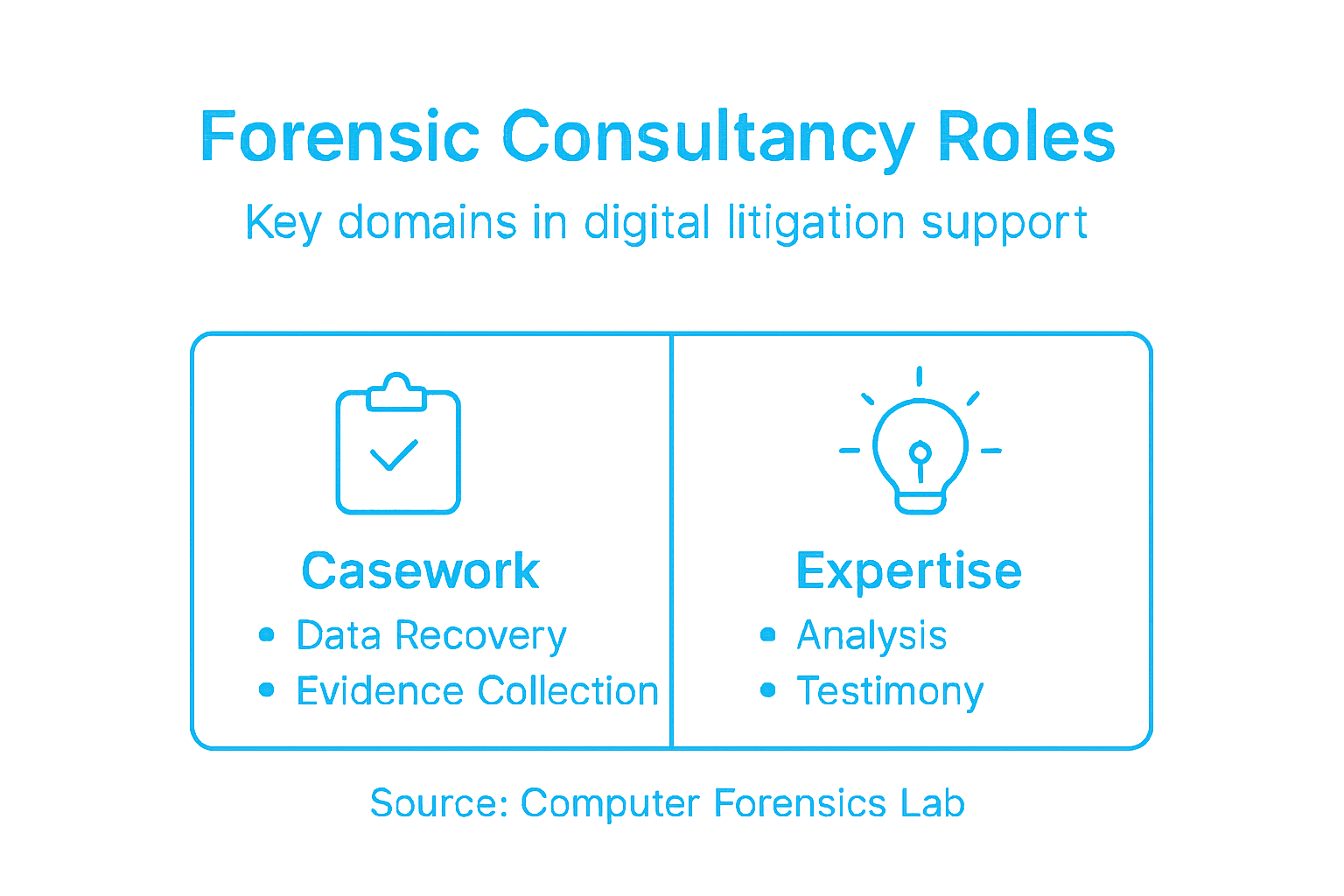
Forensic consultancy in digital investigations represents a specialised professional service bridging technology and legal proceedings. These professionals provide critical expertise in handling and interpreting complex digital evidence for legal contexts. Forensic consultants assist attorneys by offering specialised knowledge about digital data collection, preservation, and presentation.
The core function of digital forensic consultants involves several critical elements:
- Identifying and acquiring electronic evidence
- Processing and analysing digital data
- Maintaining strict chain of custody protocols
- Preparing comprehensive forensic reports
- Serving as expert witnesses during legal proceedings
Digital forensics operates as a rigorous scientific discipline with established methodological standards. Forensic analysis follows precise computer science methods that ensure evidence reliability and legal admissibility. These professionals must navigate complex technological landscapes while maintaining meticulous documentation and evidentiary standards.
Forensic consultants typically work across multiple domains, including criminal investigations, corporate litigation, intellectual property disputes, and cybercrime cases. Their expertise transforms raw digital data into structured, legally defensible evidence that can withstand intense judicial scrutiny.
Pro tip: Always document every step of digital evidence handling to maintain forensic integrity and ensure courtroom admissibility.
Types of Forensic Consulting Services Explained
Forensic consulting services encompass a wide range of specialised digital investigation techniques designed to support legal and corporate investigations. Digital forensics services provide comprehensive operational support across multiple technological domains, addressing complex digital evidence challenges in various professional contexts.
The primary types of forensic consulting services include:
- Computer Forensics: Investigating digital evidence from desktop and laptop systems
- Mobile Device Forensics: Extracting and analysing data from smartphones and tablets
- Network Forensics: Examining digital communications and network traffic patterns
- Cloud Forensics: Investigating digital evidence stored in cloud infrastructure
- Blockchain Forensics: Tracing and analysing cryptocurrency transactions
Forensic investigations require meticulous methodologies that ensure legal admissibility and comprehensive evidence collection. Forensic consulting addresses threats like data theft and unauthorized access, supporting organisations through complex investigative processes across criminal, corporate, and regulatory landscapes.
These services extend beyond simple data recovery, providing critical insights through advanced technological analysis. Forensic consultants leverage sophisticated tools and techniques to transform raw digital information into structured, legally defensible evidence that can withstand intense judicial scrutiny and support comprehensive legal strategies.
Here’s a quick overview of key differences between the main types of digital forensic consulting services:
| Service Type | Primary Focus | Typical Use Cases | Specialist Tools/Techniques |
|---|---|---|---|
| Computer Forensics | Desktop/laptop data evidence | Fraud, IP theft, dispute support | Disk imaging, file recovery |
| Mobile Device Forensics | Smartphone/tablet analysis | Criminal cases, employer issues | SIM extraction, app data mapping |
| Network Forensics | Network traffic examination | Data breaches, cyberattacks | Packet capture, flow analysis |
| Cloud Forensics | Cloud data investigation | Data leaks, remote storage audit | API logging, virtual snapshotting |
| Blockchain Forensics | Cryptocurrency tracing | Financial crime, crypto fraud | Ledger analytics, transaction mapping |
Pro tip: Engage forensic consultants early in an investigation to preserve critical digital evidence and maintain chain of custody.
Legal Standards and Regulatory Requirements
Digital forensic investigations operate within a complex framework of legal standards and regulatory requirements that ensure the reliability and admissibility of electronic evidence. Forensic readiness policies establish critical protocols for collecting and preserving digital evidence, maintaining strict guidelines that prevent potential legal challenges.
Key regulatory compliance requirements include:
- Chain of Custody: Documenting every interaction with digital evidence
- Evidence Preservation: Maintaining original data integrity
- Forensic Methodology: Following standardised investigation procedures
- Ethical Considerations: Protecting individual privacy rights
- Technical Validation: Ensuring forensic tools and techniques meet legal standards
Forensic investigations must adhere to comprehensive digital forensic readiness frameworks that emphasise transparency, governance, and international legal compliance. These standards require investigators to demonstrate rigorous methodological approaches that can withstand intense judicial scrutiny and protect the evidentiary value of digital materials.
Professionals in this field must navigate intricate legal landscapes, balancing technological expertise with precise procedural requirements. This involves understanding jurisdictional variations, maintaining meticulous documentation, and ensuring that every aspect of the digital forensic process meets the highest standards of legal and ethical conduct.
Pro tip: Develop comprehensive documentation protocols that track every step of digital evidence handling to ensure legal admissibility.
Expert Witness Role in Litigation Proceedings
In digital litigation, the expert witness plays a crucial role in translating complex technological evidence into comprehensible legal narratives. Expert witness testimony provides critical legal insights by bridging the gap between technical complexities and judicial understanding, offering authoritative interpretations of digital evidence.
Key responsibilities of a forensic expert witness include:
- Providing impartial and objective technical analysis
- Explaining complex digital evidence in clear, accessible language
- Presenting forensic findings through comprehensive written reports
- Testifying under oath about digital evidence integrity
- Withstanding cross-examination and rigorous legal scrutiny
Technical expertise demands more than just technological knowledge. Expert witnesses must demonstrate exceptional communication skills, maintaining professional credibility while explaining intricate digital forensic processes to judges, lawyers, and juries who may lack technical backgrounds.

The forensic expert witness serves as a critical translator, transforming raw digital data into meaningful legal context. Their testimony can often determine the trajectory of legal proceedings, providing authoritative insights that help judicial systems understand the nuanced technological evidence underlying complex digital investigations.
Pro tip: Maintain comprehensive documentation and be prepared to explain technical processes in simple, unambiguous terms during legal proceedings.
Risks, Pitfalls and Common Mistakes to Avoid
Digital forensic investigations are fraught with potential risks that can compromise entire legal proceedings. Digital forensics requires careful avoidance of investigative pitfalls to maintain evidence integrity and ensure legal admissibility.
Common critical mistakes in digital forensic investigations include:
- Evidence Contamination: Improper handling that alters original digital data
- Inadequate Documentation: Failing to record comprehensive investigation steps
- Procedural Inconsistencies: Deviating from established forensic protocols
- Technical Incompetence: Insufficient understanding of digital forensic tools
- Ethical Boundary Violations: Breaching privacy and legal investigation standards
Forensic investigations demand meticulous attention to detail. Forensic professionals must maintain strict compliance guidelines to prevent critical errors that could render evidence inadmissible or compromise entire legal proceedings.
Professionals must continuously update their skills and understanding of emerging technological landscapes. Overlooking subtle technological nuances or failing to adapt to rapidly evolving digital environments can create significant vulnerabilities in forensic investigations, potentially undermining the entire evidentiary process.
The table below summarises common risks in digital forensic investigations and practical mitigation strategies:
| Risk Area | Example Impact | Mitigation Strategy |
|---|---|---|
| Evidence contamination | Data inadmissible in court | Use strict handling protocols |
| Inadequate documentation | Investigation process challenge | Employ sequential activity logs |
| Procedural inconsistency | Flawed conclusions | Standardise all investigative steps |
| Technical incompetence | Misinterpreted evidence | Invest in ongoing technical training |
| Ethical violations | Breach of privacy, legal issues | Adhere to legal and professional codes |
Pro tip: Implement rigorous quality control protocols and maintain continuous professional development to mitigate investigative risks.
Enhance Your Digital Litigation with Expert Forensic Consultancy
Understanding the complex role of forensic consultancy in digital litigation is vital when facing challenges like preserving chain of custody, preparing detailed forensic reports, and providing clear expert witness testimony. If you are striving to ensure your digital evidence withstands legal scrutiny and to navigate the demanding legal standards with confidence, expert support can make all the difference. Our team specialises in bridging the gap between intricate technological evidence and courtroom clarity.
Partner with Computer Forensics Lab for trusted, professional digital forensics services that address your critical needs. From maintaining rigorous Chain of Custody Tracking to delivering compelling insight as an Expert Witness, we empower legal professionals to succeed. Act now to secure your evidence integrity and gain authoritative support by visiting us today and taking the first step towards expert forensic consultation.
Frequently Asked Questions
What is the role of forensic consultancy in digital litigation?
Forensic consultancy plays a crucial role in digital litigation by providing expertise in handling and interpreting digital evidence. They assist legal professionals in collecting, preserving, and presenting electronic evidence in a manner that is legally admissible.
How do forensic consultants ensure the integrity of digital evidence?
Forensic consultants maintain the integrity of digital evidence by following strict chain of custody protocols, documenting every interaction with the evidence, and using standardised forensic methodologies to ensure that the original data remains unaltered.
What types of digital evidence can forensic consultants analyse?
Forensic consultants can analyse various types of digital evidence, including data from computers, smartphones, cloud storage, network traffic, and even cryptocurrency transactions through blockchain forensics.
Why is expert witness testimony important in forensic digital investigations?
Expert witness testimony is vital as it translates complex digital evidence into understandable terms for judges, lawyers, and juries. An expert witness provides objective analysis and assurance about the integrity of the evidence, influencing the outcome of legal proceedings.
Recommended
- The Essential Guide to Digital Forensics in Litigation
- Role of Forensics in Litigation: Ensuring Reliable Evidence
- Role of Forensic Consultants – Impact on Legal Outcomes
- Expert Witness Role in Digital Forensics – Legal Impact
- Protéger et transmettre son patrimoine numérique – Hexa patrimoine
- How Real Estate Agents Can Leverage Technology in the Post-NAR Settlement Landscape – Bold Street AI