
Most advice about digital forensics overlooks how much trust UK businesses and legal teams place in expert consultants. With cybercrime rising fast, the need for specialists who can transform digital chaos into admissible evidence has soared. In fact, more than 80 percent of modern legal cases now involve electronic data reviews. Discover what sets forensic consultants apart and why their unique expertise shapes investigations across the United Kingdom.
Table of Contents
- Defining Forensic Consultants In Digital Investigations
- Core Functions And Expertise Areas In Practice
- Types Of Digital Forensic Consultancy Services
- Legal Framework And Compliance Standards
- Expert Witness Testimony And Reporting Responsibilities
- Risks, Challenges, And Common Pitfalls For Clients
Key Takeaways
| Point | Details |
|---|---|
| Expertise and Methodology | Forensic consultants utilise advanced technological skills to extract and interpret digital evidence for legal purposes. |
| Adherence to Protocols | Maintaining strict evidence preservation protocols is essential for ensuring the admissibility of digital evidence in court. |
| Cross-Functional Collaboration | Digital forensic investigators must collaborate with law enforcement, legal teams, and organisations to address complex investigative challenges. |
| Documentation and Reporting | Comprehensive documentation of investigative procedures and findings is critical for supporting the validity of forensic analysis in legal contexts. |
Defining Forensic Consultants in Digital Investigations
Forensic consultants represent specialised professionals who provide critical analytical and investigative expertise in digital environments. These experts utilise advanced technological skills to uncover, preserve, and interpret electronic data for legal proceedings. Their primary objective is transforming complex digital information into comprehensible evidence that can withstand rigorous legal scrutiny.
Digital forensics involves a meticulous scientific process of identifying and collecting electronic evidence through structured investigative techniques. Forensic consultants work across multiple domains including criminal investigations, civil litigation, corporate compliance, and cybersecurity incident response. They employ sophisticated tools and methodologies to extract data from various electronic devices such as computers, mobile phones, cloud storage systems, and network infrastructure.
The role of forensic consultants extends beyond mere technical analysis. These professionals must maintain strict protocols for evidence preservation, ensuring digital artifacts remain unaltered and legally admissible. Their investigative processes involve creating comprehensive event timelines, recovering deleted information, tracing digital communications, and providing expert testimony in judicial proceedings. Digital forensic techniques require a combination of technical expertise, analytical thinking, and an understanding of legal standards.
Pro Investigator Tip: Always maintain a comprehensive chain of digital evidence documentation, recording every step of your forensic investigation to ensure the integrity and admissibility of your findings in legal contexts.
Core Functions and Expertise Areas in Practice
Digital forensic investigators operate within a complex landscape of technological and legal responsibilities, addressing critical challenges across multiple investigative domains. Their primary function involves identifying and capturing cyber evidence through systematic and scientifically rigorous methodologies, ensuring the preservation of digital artifacts for potential legal proceedings.

The expertise areas encompass several specialised domains including criminal investigations, corporate compliance, cybersecurity incident response, and intellectual property protection. Forensic consultants must navigate intricate technical challenges such as retrieving deleted data, examining user account activities, tracing digital communication patterns, and reconstructing complex digital event timelines. These professionals employ advanced technological tools to extract and analyse electronic information from diverse sources including computers, mobile devices, cloud storage systems, and network infrastructures.
Digital forensic investigators collaborate extensively with law enforcement agencies, legal teams, corporate security departments, and judicial systems. Their work requires a sophisticated blend of technical skills, analytical thinking, and comprehensive understanding of legal standards. Forensic consultants must meticulously document their investigative processes, maintain strict evidence integrity protocols, and prepare comprehensive reports that can withstand intense legal scrutiny.
Pro Investigator Tip: Develop a systematic documentation workflow that records every investigative step, ensuring your digital evidence remains verifiable, traceable, and legally admissible throughout the entire forensic analysis process.
Types of Digital Forensic Consultancy Services
Digital forensic consultancy services represent a specialised domain of investigative support with multifaceted applications across various legal and organisational contexts. Digital forensic practitioners systematically identify, preserve, and extract evidence from complex technological environments, addressing critical investigative challenges across different sectors.
The primary types of digital forensic consultancy services include computer forensics, mobile device forensics, network forensics, cloud forensics, and forensic data analysis. Each specialisation involves unique methodological approaches tailored to specific technological platforms. Computer forensics focuses on retrieving and analysing data from desktop and laptop systems, while mobile device forensics explores evidence extraction from smartphones, tablets, and portable electronic devices. Network forensics examines digital communications, tracking potential security breaches and malicious activities across interconnected systems.
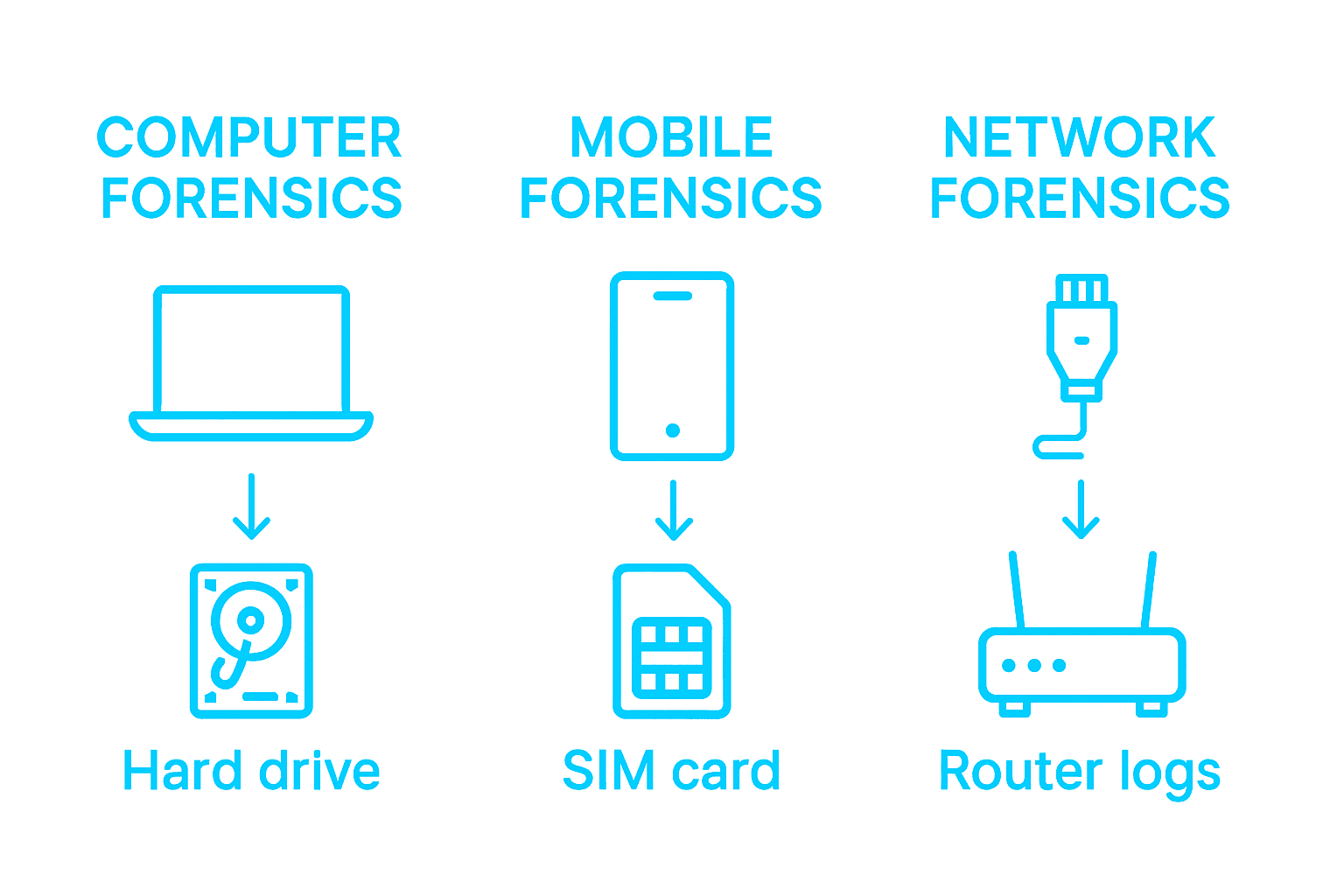
Digital forensic experts create comprehensive mirror images of digital media, conducting intricate keyword searches and reconstructing complex digital event timelines. Their services extend beyond technical analysis to include expert witness testimony, litigation support, and detailed forensic reporting. Specialised consultancy services also cover areas such as intellectual property investigations, employee misconduct analysis, cybercrime investigations, and regulatory compliance assessments.
Here is a summary of key digital forensic consultancy service specialisations and their distinct focus areas:
| Specialisation | Primary Focus | Typical Evidence Sources |
|---|---|---|
| Computer Forensics | Analysing computers and storage | Desktops, laptops, external drives |
| Mobile Device Forensics | Extracting data from portable devices | Smartphones, tablets, SIM cards |
| Network Forensics | Tracking digital communications | Routers, network logs, email archives |
| Cloud Forensics | Investigating cloud environments | Cloud storage accounts, SaaS platforms |
| Forensic Data Analysis | Interpreting large datasets | Databases, transaction logs, spreadsheets |
Pro Investigator Tip: Develop a robust understanding of multiple digital forensic domains, as cross-platform expertise significantly enhances your ability to provide comprehensive investigative support across diverse technological environments.
Legal Framework and Compliance Standards
Digital forensic investigations operate within a complex legal landscape that demands rigorous adherence to established professional standards and regulatory guidelines. Forensic practitioners must follow precise principles to ensure the admissibility and integrity of digital evidence in legal proceedings, with comprehensive protocols governing every stage of investigation.
Key compliance standards include the Association of Chief Police Officers (ACPO) digital evidence guidelines, which establish critical frameworks for evidence collection and preservation. These standards emphasise fundamental principles such as maintaining original evidence integrity, creating comprehensive audit trails, and demonstrating transparent investigative methodologies. Forensic consultants must document each investigative step meticulously, ensuring that digital evidence can withstand intense judicial scrutiny and meet stringent legal requirements across criminal and civil litigation contexts.
Digital forensic investigators develop sophisticated policies aligned with regulatory frameworks and ethical guidelines. These policies encompass multiple dimensions including data protection regulations, privacy laws, chain of custody protocols, and professional conduct standards. Forensic experts must navigate complex legal environments, balancing technological capabilities with strict legal constraints, ensuring that their investigative techniques respect individual rights while providing robust evidentiary support for legal proceedings.
Pro Investigator Tip: Continuously update your understanding of evolving legal frameworks and compliance standards, as technological advancements constantly reshape the legal landscape for digital forensic investigations.
Expert Witness Testimony and Reporting Responsibilities
Digital forensic expert witnesses play a critical role in translating complex technological evidence into comprehensible legal narratives. Forensic investigators document detailed technical findings that transform intricate digital data into clear, accessible explanations for legal professionals, judges, and juries.
The reporting responsibilities of forensic experts extend far beyond simple data compilation. These professionals must construct comprehensive reports that not only present factual evidence but also provide contextual interpretation, methodological transparency, and rigorous analytical insights. Each report must meticulously outline the investigative process, demonstrate scientific integrity, and withstand potential cross-examination by presenting evidence in a manner that is both technically precise and legally defensible.
Forensic analysts produce clear summaries of investigative methods and findings, serving as crucial intermediaries between complex technological evidence and legal decision-making processes. Their testimony can significantly influence judicial outcomes by providing authoritative explanations of digital evidence, breaking down technical complexities, and helping legal professionals understand the nuanced implications of digital forensic investigations. Expert witnesses must maintain absolute objectivity, presenting findings without bias while remaining prepared to defend their methodological approach under intense legal scrutiny.
Pro Investigator Tip: Develop a systematic approach to report writing that balances technical depth with clarity, ensuring your documentation can be understood by both technical and non-technical audiences while maintaining absolute scientific rigour.
Risks, Challenges, and Common Pitfalls for Clients
Digital forensic investigations present numerous complex challenges that clients must carefully navigate. Rapid technological advances and sophisticated cybercriminal methods create an increasingly complex landscape where digital evidence can be fragile, easily compromised, or challenging to interpret accurately.
Clients frequently encounter significant risks related to evidence preservation and legal admissibility. These challenges include potential data contamination, improper evidence handling, inadequate documentation, and insufficient chain of custody protocols. Technical complexities can undermine investigative efforts, particularly when digital artifacts are time-sensitive or require specialised extraction techniques. Organisations must recognise that digital forensic investigations demand precision, with even minor procedural errors potentially rendering critical evidence inadmissible in legal proceedings.
Maintaining strict chain-of-custody protocols represents a fundamental requirement for successful digital forensic investigations. Common pitfalls include insufficient metadata tracking, incomplete forensic imaging, lack of comprehensive documentation, and failure to preserve original digital evidence in its unaltered state. Clients must understand that forensic investigations require meticulous attention to detail, with forensic experts needing to demonstrate transparent, reproducible methodologies that can withstand intense legal scrutiny.
The following table outlines common digital forensic investigation risks, their impacts, and prevention measures:
| Risk | Possible Impact | Prevention Strategy |
|---|---|---|
| Evidence Contamination | Data becomes inadmissible in court | Employ strict handling protocols |
| Incomplete Documentation | Challenges in legal defence | Maintain detailed step-by-step records |
| Chain-of-Custody Breach | Reduced evidence credibility | Track all evidence transfers meticulously |
| Data Loss During Extraction | Loss of critical information | Use reliable forensic imaging techniques |
| Lack of Metadata Tracking | Limited traceability for evidence | Record metadata during every forensic action |
Pro Investigator Tip: Establish clear communication protocols with your forensic team from the outset, ensuring complete transparency about investigation procedures, potential limitations, and expected outcomes to mitigate risks and manage expectations effectively.
Unlock the True Impact of Forensic Consultants on Legal Outcomes
The challenge of transforming complex digital evidence into clear and credible legal support requires not only advanced technical skills but also a deep understanding of legal standards like maintaining chain of custody and expert testimony. The article highlights key pain points such as ensuring evidence integrity and preparing reports that withstand scrutiny. If you are seeking reliable assistance to navigate these demanding processes, our team at Computer Forensics Lab offers professional digital forensic consultancy tailored to support your legal and investigative goals.
Benefit from our expertise in Forensic Science, including data recovery, mobile device analysis, and cloud investigation, all designed to provide robust evidence that strengthens your case. Our Expert Witness services translate technical findings into compelling courtroom narratives. Don’t leave critical digital evidence to chance. Visit Computer Forensics Lab today to take the next decisive step in securing trustworthy forensic support and improving your legal outcomes.
Frequently Asked Questions
What are the primary roles of forensic consultants in legal cases?
Forensic consultants are specialised professionals who analyse and interpret digital evidence for legal proceedings. Their primary roles include data extraction, evidence preservation, and providing expert testimony in court to ensure that the digital information is legally admissible.
How do forensic consultants ensure the integrity of digital evidence?
Forensic consultants maintain strict protocols for evidence preservation, employing methods that prevent any alteration of digital artifacts. They document the chain of custody meticulously and use accepted forensic tools and techniques to ensure the integrity and admissibility of evidence in legal contexts.
What types of digital devices do forensic consultants typically examine?
Forensic consultants examine a range of digital devices, including computers, mobile phones, cloud storage systems, and network infrastructure. Each type of device requires specific methodologies tailored to extract and analyse data effectively.
How does expert testimony from forensic consultants impact legal outcomes?
Expert testimony from forensic consultants can significantly influence legal outcomes by clarifying complex technical evidence for judges and juries. Their ability to articulate findings in an understandable manner ensures that the evidence presented is accurately interpreted, which can be crucial in legal decision-making.
Recommended
- Role of Forensic Labs: Complete Guide for Legal Cases
- Expert Witness Role in Digital Forensics – Legal Impact
- The Role of Computer Expert Witness Services Supporting Legal Professionals
- 7 Essential Forensic Expert Witness Tips for Legal Success
- Rôle de l’expert immobilier – Impact sur vos droits – Avocat Immobilier Paris