
TL;DR:
- Conducting a digital misconduct investigation requires prompt, legally compliant evidence collection and analysis by certified forensic specialists. Proper procedures, device seizure, and unbiased reporting ensure the investigation remains defensible in court and protects organizational integrity. Cross-department collaboration and adherence to legal boundaries are essential for producing credible, admissible findings and mitigating legal risks.
An employee misconduct digital investigation is the process of systematically collecting, preserving, and analysing digital evidence related to workplace wrongdoing to establish facts impartially and comply with legal standards. For HR professionals and corporate leaders, getting this process right is not optional. Courts scrutinise investigation quality, and a poorly handled case can expose your organisation to discrimination claims, retaliation suits, and regulatory penalties. This guide covers the critical steps, forensic methods, legal boundaries, and interview strategies that make the difference between a defensible outcome and a costly procedural failure.
What are the critical steps in a digital misconduct investigation?
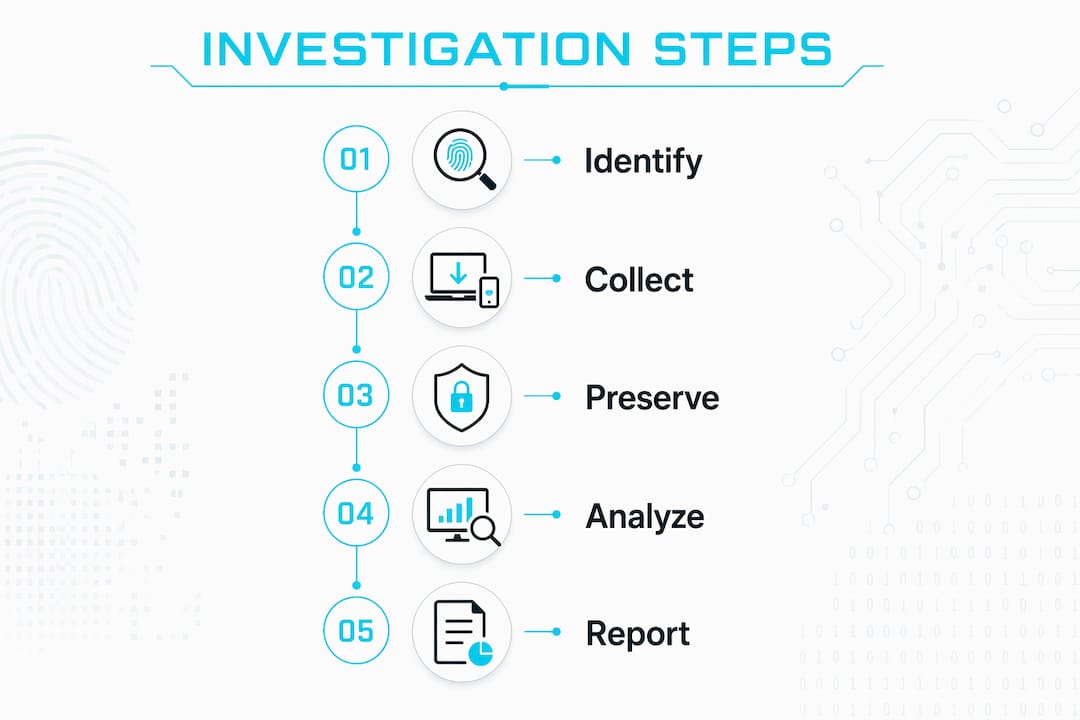
A structured sequence of steps is the foundation of every legally sound employee misconduct digital investigation. Skipping or reordering these steps is the most common reason investigations unravel under legal scrutiny.
-
Acknowledge the complaint within 24 hours. Prompt acknowledgement is the baseline standard courts use to assess timeliness. This does not mean resolving the complaint. It means confirming receipt, assigning an investigator, and setting expectations for the complainant.
-
Take real-time, verbatim intake notes. Factual, timestamped notes that capture exact quotes are the evidentiary foundation of the case. Separate observed facts from your impressions in a clearly labelled section. Notes written from memory hours later are far weaker in arbitration.
-
Seize company devices immediately. Delay in securing devices gives the employee a window to delete, overwrite, or encrypt evidence. Coordinate with IT to physically remove and secure the device before the employee is notified of the investigation.
-
Engage a certified forensic examiner, not IT. Your IT department uses tools designed for maintenance and troubleshooting, not evidence preservation. Standard IT actions can wipe or overwrite critical artefacts. A certified forensic examiner creates a forensic image of the device, preserving every file, deleted item, and access log without altering the original.
-
Maintain a documented chain of custody. Every person who handles a piece of evidence must be logged, along with the date, time, and purpose of access. This documentation is what makes evidence admissible in court or employment tribunal.
-
Interview witnesses using the concentric circle method. Begin with the person who reported the incident, then move outward to neutral witnesses, and interview the accused last. This sequence prevents the accused from coaching witnesses or deleting digital evidence before you have secured it.
-
Draft a factual, objective investigation report. The report must separate evidence from conclusions, and conclusions from disciplinary recommendations. Impartiality in the report is what distinguishes a fact-finding process from a predetermined outcome.
Pro Tip: Assign the investigation to someone with no prior working relationship with either the complainant or the accused. Perceived bias is as damaging as actual bias when a case reaches tribunal.
How do digital forensics tools support misconduct investigations?
Digital forensics is not simply about recovering deleted files. The discipline covers the lawful extraction, authentication, and analysis of digital evidence across devices, cloud platforms, and communication tools. Understanding which tools apply to which evidence types is critical for HR and legal teams commissioning forensic work.
-
Enterprise-grade archiving and eDiscovery platforms. For investigations involving Slack, Microsoft Teams, or Google Workspace, eDiscovery tools via APIs are the only reliable method. Screenshots and manual exports lack metadata, making them vulnerable to authentication challenges in tribunal. Platforms such as Mimecast and Microsoft Purview Compliance Portal provide legally defensible exports with full audit trails.
-
Forensic imaging software. Tools such as FTK Imager and EnCase create bit-for-bit copies of storage devices. These images preserve deleted files, browser history, USB connection logs, and file access timestamps that standard copying destroys.
-
Mobile device forensic tools. Cellebrite UFED and Oxygen Forensic Detective extract data from smartphones and tablets, including deleted messages, app data, and location history. These are particularly relevant in cases involving harassment or data exfiltration via personal devices.
-
Metadata analysis. Every digital file carries metadata recording when it was created, modified, and accessed, and by which account. Photo or manual copying strips this metadata, removing the authentication layer that courts rely on.
-
Cloud and email forensics. Recoverable evidence includes emails, calendar entries, shared drive activity, and login records from cloud services. Forensic examiners can often recover items the employee believed were permanently deleted.
The collaboration model matters as much as the tools. Cross-functional teams comprising HR, legal counsel, and forensic specialists produce faster, more compliant investigations than any single department working alone. HR understands the employment context, legal counsel manages privilege and disclosure risk, and forensic examiners handle the technical extraction without contaminating evidence.
Pro Tip: Before any device is reimaged, reset, or returned to the asset pool, confirm in writing that forensic extraction is complete. A single premature reset has ended more than one otherwise solid case.
What legal and ethical boundaries govern digital misconduct investigations?
The legal framework governing digital investigations in the UK and internationally is specific, and breaching it can invalidate evidence or expose the organisation to counter-claims. HR and corporate leaders must understand these boundaries before commissioning any forensic work.
-
GDPR compliance is non-negotiable. Under the UK GDPR, processing employee data for investigation purposes must be proportionate, documented, and limited to what is necessary. Accessing an employee’s personal email account, even on a company device, without explicit policy authority and legal advice is a serious overreach.
-
Device and acceptable use policies must be in place and signed. Without a signed policy stating that company devices are subject to monitoring and forensic examination, your legal position is significantly weaker. These policies should be reviewed annually and updated to cover cloud storage, messaging apps, and remote working tools.
-
Legal privilege protects investigation communications. When legal counsel directs the investigation, communications between counsel and the investigation team may attract legal professional privilege. This protection does not apply if HR conducts the investigation independently without legal oversight.
-
Communication scripts prevent procedural errors. Avoid promising outcomes to the complainant or any witness. Statements such as “we will make sure this is dealt with” create implied commitments that can be used against the organisation if the outcome does not match expectations.
-
Anti-retaliation monitoring must follow the investigation. Closing a case without monitoring for retaliatory behaviour is a common and costly oversight. Document any changes in the complainant’s working conditions, performance reviews, or team dynamics in the weeks following the investigation.
-
Conflict of interest must be identified and removed. If the investigator has a prior relationship with either party, or a reporting line that creates a perceived interest in the outcome, reassign the case. The role of forensics in employee misconduct cases is to produce objective findings, and that objectivity starts with the investigator.
How to handle interviews and evidence to build a defensible case
The quality of your interviews and evidence handling determines whether your investigation findings hold up under challenge. Both require discipline and consistency.

| Stage | Best practice | Common failure |
|---|---|---|
| Complainant interview | Capture verbatim quotes with timestamps; ask open questions | Paraphrasing responses, leading questions |
| Witness interviews | Start with those closest to the incident; document independently | Interviewing witnesses together or sharing notes between them |
| Accused interview | Conduct last; present specific evidence; allow full response | Interviewing too early, tipping off the accused |
| Evidence handling | Log every item with date, handler, and purpose | Informal handoffs with no documentation |
| Report drafting | Separate facts, analysis, and recommendations clearly | Mixing evidence with disciplinary conclusions |
Cross-checking digital evidence against witness accounts is where investigations gain or lose credibility. If a witness states that a message was sent at a specific time, the forensic log either corroborates or contradicts that claim. Discrepancies must be documented and explained, not ignored.
Comparator analysis of past disciplinary outcomes is a step many HR teams overlook. If a similar offence resulted in a written warning for one employee and dismissal for another, and the only material difference is a protected characteristic, the organisation faces a discrimination claim. Review comparable cases before finalising any disciplinary recommendation.
The final report should follow a clear structure: summary of the complaint, investigation methodology, evidence reviewed, factual findings, credibility assessments, and a separate section for disciplinary recommendations. Evidence collection standards applied throughout the process are what make this report defensible in tribunal or court.
Key takeaways
A legally defensible employee misconduct digital investigation requires prompt action, certified forensic expertise, and strict separation of evidence from disciplinary decisions throughout every stage.
| Point | Details |
|---|---|
| Acknowledge complaints within 24 hours | Courts use prompt acknowledgement as the baseline measure of a timely, credible investigation. |
| Use certified forensic examiners | IT departments risk overwriting evidence; certified examiners preserve chain of custody and produce court-ready reports. |
| Secure devices before notifying the accused | Delay gives employees the opportunity to delete or alter digital evidence before extraction begins. |
| Apply eDiscovery tools for messaging platforms | Screenshots lack metadata and are legally unreliable; API-based exports from Slack and Teams are the defensible standard. |
| Separate facts from disciplinary decisions | The investigation report must be a factual record; disciplinary outcomes must be decided separately to preserve impartiality. |
What I have learned from years of digital misconduct cases
The most damaging mistake I see organisations make is treating an investigation as a process to confirm what they already believe. The moment an investigator starts looking for evidence to support a conclusion rather than to establish facts, the entire process becomes legally fragile. Every decision made from that point forward is tainted by the original bias.
Process discipline is what protects organisations, not intent. I have seen cases where the underlying misconduct was genuine and serious, but the investigation was thrown out because a device was not properly seized, or because the accused was interviewed before witnesses. The misconduct did not change. The procedural failure changed the outcome entirely.
The other pattern I observe consistently is under-investment in cross-departmental collaboration. HR professionals are skilled at managing people and process, but digital forensics is a specialist discipline. Bringing in certified examiners from a firm like Computerforensicslab early, before any internal IT action is taken, is the single most effective way to protect the integrity of digital evidence. The cost of a forensic examiner is trivial compared to the cost of a tribunal case built on compromised evidence.
The evolving nature of workplace communication adds complexity that did not exist five years ago. Investigations now routinely involve WhatsApp groups, personal cloud storage accessed on company devices, and AI-generated content. The legal and technical frameworks for handling these evidence types are still developing, which makes early legal consultation and specialist forensic support more important than ever.
— Computer
How Computerforensicslab supports your misconduct investigations
When an employee misconduct case involves digital evidence, the quality of your forensic process determines the strength of your legal position. Computerforensicslab provides certified forensic investigation services for HR teams and corporate legal departments across the UK, covering device examination, cloud data recovery, email forensics, and court-ready expert witness reports. Every case is handled by certified examiners who maintain strict chain of custody from seizure to reporting. If your organisation is managing a live investigation or building an internal digital evidence framework, Computerforensicslab works directly alongside your HR and legal teams to deliver findings that stand up to scrutiny.
FAQ
What is an employee misconduct digital investigation?
An employee misconduct digital investigation is the structured process of collecting, preserving, and analysing digital evidence from devices, email, messaging platforms, and cloud services to establish facts about alleged workplace wrongdoing. The process must comply with data protection law and maintain chain of custody to produce legally admissible findings.
Why must IT departments not conduct forensic examinations?
Standard IT tools are designed for maintenance and can modify or overwrite the very artefacts an investigation depends on. Certified forensic examiners use write-blocking hardware and validated imaging software to extract evidence without altering the original data.
When should devices be seized during a misconduct investigation?
Devices should be seized immediately upon the decision to investigate, before the employee is informed. Delay creates a window for the deletion or alteration of digital evidence, which can permanently compromise the investigation.
How does GDPR affect digital investigations into employee misconduct?
Under UK GDPR, processing employee data for investigation purposes must be proportionate, necessary, and documented. Accessing personal accounts or data beyond what is covered by a signed device policy is an overreach that can invalidate evidence and expose the organisation to regulatory action.
What makes an investigation report legally defensible?
A defensible report separates factual findings from disciplinary recommendations, documents every piece of evidence reviewed, records credibility assessments for each witness, and applies a consistent methodology throughout. Impartial, fact-based reporting is the standard courts and employment tribunals apply when assessing investigation quality.