
In the heart of the British legal system, the quality of forensic reports can shape the outcome of cybercrime cases and civil litigation. Over 60 percent of digital evidence is rejected due to flawed documentation or unclear methodology. For digital forensic professionals and legal consultants in London, understanding the structure, standards, and admissibility requirements of a forensic report is not optional—it is a professional necessity. This guide explains the key principles and practical strategies needed to produce robust, defensible reports that hold up under judicial scrutiny.
Table of Contents
- Defining A Forensic Report In Digital Investigations
- Types Of Forensic Reports And Key Differences
- Essential Elements And Preparation Standards
- Legal Admissibility In UK Litigation
- Risks, Pitfalls And Safeguarding Integrity
Key Takeaways
| Point | Details |
|---|---|
| Forensic Reports as Comprehensive Documentation | A forensic report documents the entire investigative process, ensuring all findings are verifiable and legally sound. |
| Importance of Tailoring Reports | Different types of forensic reports require distinct methodologies and presentations to effectively suit their legal contexts. |
| Adherence to International Standards | Forensic reports must follow global guidelines to ensure reliability, repeatability, and legal admissibility throughout various jurisdictions. |
| Managing Risks in Digital Forensics | Investigators should implement robust protocols for evidence preservation and tool validation to mitigate risks and maintain report integrity. |
Defining a forensic report in digital investigations
A forensic report represents the critical final product of a comprehensive digital investigation, serving as an authoritative documentation of technical findings, methodologies, and evidentiary analysis. Forensic documentation follows a structured process that transforms raw digital evidence into a legally admissible narrative capable of withstanding rigorous legal scrutiny.
The report itself functions as a meticulous record detailing the entire investigative journey, from initial evidence collection through systematic analysis to final conclusions. Digital forensic professionals craft these documents with extraordinary precision, ensuring every technical detail, investigative step, and substantive finding can be independently verified and professionally explained. Each report typically encompasses several core components: an executive summary, detailed methodology description, chronological evidence presentation, technical analysis, and conclusive findings.
In legal contexts, forensic reports serve multiple critical purposes. They provide a transparent account of digital investigations, establish a clear chain of evidence, and present technical findings in a manner comprehensible to legal professionals who may lack advanced technical expertise. The report must demonstrate not just what was discovered, but precisely how it was discovered, preserving the integrity and reliability of digital evidence throughout the investigative process.
Expert Insight: Always maintain comprehensive documentation during your investigation, as your final report will only be as robust as the notes and evidence collected throughout the forensic examination process.
Types of forensic reports and key differences
Digital forensic investigations generate multiple report types with distinct characteristics and legal implications. Forensic documentation varies significantly across different investigative contexts, ranging from criminal proceedings to civil litigation and intelligence gathering. Each report type demands unique methodological approaches and adheres to specific evidentiary standards.
The primary categories of forensic reports include criminal forensics, civil litigation forensics, electronic discovery (e-discovery), and intelligence gathering reports. Criminal forensic reports typically require the highest level of technical precision and legal scrutiny, focusing on establishing conclusive evidence suitable for prosecution. Civil litigation reports, by contrast, often concentrate on documenting digital evidence for dispute resolution, intellectual property conflicts, or workplace misconduct investigations.
Technical variations between report types emerge not just in content, but in presentation and evidentiary requirements. Network forensics reports differ markedly from mobile device forensics reports, with each specialisation demanding specific analytical techniques and documentation protocols. Forensic method documentation must consistently demonstrate rigorous investigative processes, regardless of the specific investigative domain or report classification.
Professional Recommendation: Always tailor your forensic report’s technical depth and presentation style to the specific legal context and intended audience, ensuring maximum clarity and evidentiary credibility.
Below is a comparison of the main types of digital forensic reports and their distinct characteristics:
| Report Type | Primary Focus | Legal Implications | Typical Methodologies |
|---|---|---|---|
| Criminal Forensics | Prosecution and criminal cases | High evidentiary standard | In-depth technical analysis |
| Civil Litigation | Dispute resolution | Documentation for legal claims | Detailed evidence inventory |
| E-Discovery | Information review and retrieval | Compliance, disclosures | Data filtering and validation |
| Intelligence Gathering | Threat analysis | Informing operational decision | Strategic evidence synthesis |
Essential elements and preparation standards
Forensic reports require meticulous preparation and adherence to rigorous international standards. Comprehensive digital evidence documentation follows specific global guidelines that ensure reliability, repeatability, and legal admissibility across different jurisdictional contexts.
The essential elements of a forensic report typically encompass several critical components. These include a detailed methodology section explaining investigative techniques, a comprehensive evidence inventory, precise chronological documentation of discovery and analysis, scientifically validated tool references, and an unbroken chain of custody tracking. Standardised forensic documentation frameworks mandate structured reporting processes that enable independent verification and maintain evidentiary integrity throughout the investigative workflow.

International standards such as ISO/IEC 27037 provide explicit guidance on report preparation, emphasising the importance of objective reporting, transparent methodology, and clear articulation of technical findings. Digital forensic professionals must demonstrate not only technical competence but also the ability to translate complex technical information into comprehensible narrative formats that withstand rigorous legal and scientific scrutiny.
Professional Insight: Develop a consistent, standardised report template that incorporates all mandatory elements while allowing flexibility for case-specific nuances and technical complexities.
Legal admissibility in UK litigation
In the United Kingdom, digital forensic reports face stringent legal scrutiny to ensure their admissibility in court proceedings. The Forensic Science Regulator Act 2021 establishes critical standards for evidence reliability, creating a comprehensive framework that judges use to assess the credibility of digital forensic evidence.
The admissibility of forensic reports depends on multiple critical factors, including the methodology’s scientific validity, the investigator’s professional credentials, and the ability to demonstrate a clear, reproducible investigative process. Courts evaluate whether the forensic report meets the fundamental principles of evidence: relevance, reliability, and scientific rigour. This assessment involves examining the technical procedures used, the qualifications of the forensic expert, and the potential for bias or contamination in the evidence collection and analysis stages.
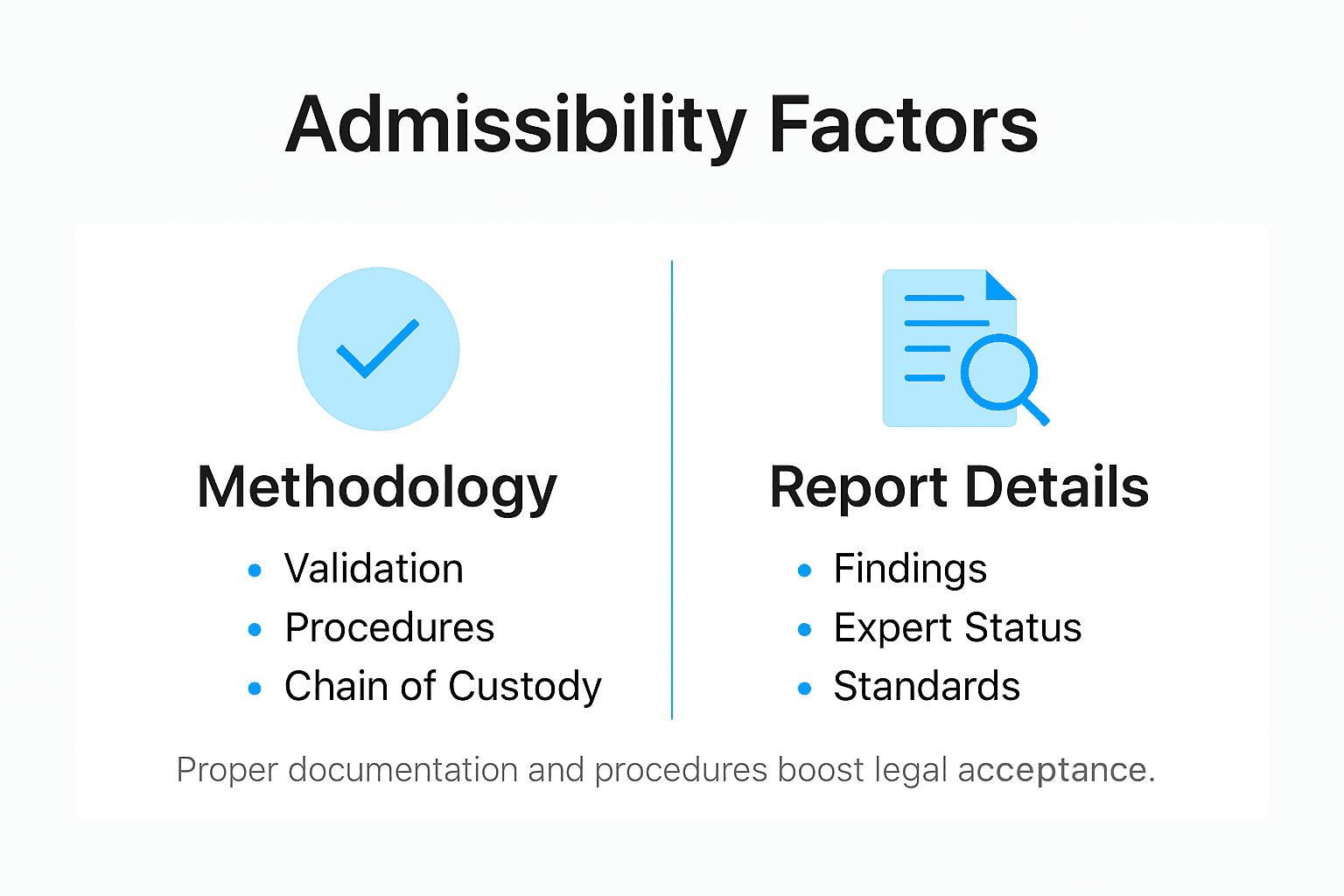
Official expert report guidance provides detailed procedural requirements that forensic professionals must follow to enhance the likelihood of court acceptance. These guidelines emphasise the importance of transparent documentation, clear explanation of methodologies, and the ability to withstand cross-examination. Digital forensic experts must not only collect and analyse evidence with precision but also communicate their findings in a manner that is comprehensible to legal professionals who may lack technical expertise.
Professional Strategy: Anticipate potential legal challenges by meticulously documenting every step of your forensic investigation, ensuring your report can withstand the most rigorous judicial scrutiny.
Risks, pitfalls and safeguarding integrity
Digital forensic investigations face numerous potential risks that can critically compromise evidence reliability and report integrity. Systematic identification and mitigation of forensic risks are fundamental to maintaining professional standards, with forensic professionals required to navigate complex technological and procedural challenges.
The primary risks in digital forensic work encompass evidence contamination, inadequate tool validation, incomplete evidence recovery, and potential technological limitations. Investigators must be acutely aware of these vulnerabilities, implementing robust safeguarding protocols that prevent accidental data modification, ensure comprehensive evidence preservation, and maintain an unbroken chain of custody. Structured validation processes and regular forensic tool testing are critical for mitigating potential investigative risks, reducing the likelihood of technical errors that could undermine legal proceedings.
Technological complexity introduces significant challenges, with rapid digital innovation constantly reshaping forensic investigation methodologies. Forensic professionals must remain adaptable, continuously updating their technical skills, understanding emerging technologies, and developing sophisticated validation techniques. This requires not just technical expertise, but a systematic approach to documentation, transparent reporting, and rigorous self-assessment that allows for independent verification of investigative processes.
Professional Insight: Develop a comprehensive risk management checklist that addresses potential technological, procedural, and evidential vulnerabilities before commencing any digital forensic investigation.
The table below summarises key risks in digital forensic investigations and effective safeguarding strategies:
| Risk Type | Example Scenario | Mitigation Strategy |
|---|---|---|
| Evidence Contamination | Accidental data alteration | Strict chain of custody protocols |
| Tool Validation Failure | Outdated software vulnerabilities | Regular testing and certification |
| Incomplete Evidence Recovery | Missing deleted files | Use multiple forensic techniques |
| Technological Complexity | Emerging encryption methods | Continuous professional training |
Secure Your Digital Evidence with Expert Forensic Reporting
Navigating the complexities of digital forensic reports can be overwhelming. Ensuring your report meets the highest standards of legal admissibility, maintains an unbroken chain of custody, and clearly documents investigative methodologies is essential for successful litigation. Key concerns such as evidence contamination, rigorous tool validation, and transparent documentation are critical to safeguard the integrity of your case. If you are seeking to transform complex digital data into compelling, court-ready reports that withstand scrutiny, expert assistance is invaluable.
At Computer Forensics Lab, we specialise in comprehensive digital investigations and forensic reporting designed to support legal professionals, law enforcement, and businesses throughout the UK. Our dedicated team applies advanced techniques in Computer Forensics and strict Chain of Custody Tracking to deliver trusted evidence and expert witness reports. Don’t let uncertainties around digital evidence put your case at risk. Partner with us today to secure clear, meticulously prepared forensic reports and bolster your litigation strategy.
Frequently Asked Questions
What is a forensic report in digital investigations?
A forensic report is a detailed document that presents the findings, methodologies, and evidentiary analysis from a digital investigation. It transforms raw digital evidence into an authoritative narrative that can withstand legal scrutiny.
What types of forensic reports are commonly used in litigation?
Common types of forensic reports include criminal forensics, civil litigation reports, e-discovery reports, and intelligence gathering reports. Each type has specific focuses and legal implications, necessitating different methodologies.
How can I ensure my forensic report meets legal admissibility standards?
To ensure legal admissibility, your forensic report should adhere to established methodologies, demonstrate scientific validity, include the credentials of the investigator, and maintain clear documentation of the investigative process to negate any potential bias or contamination.
What are some risks associated with digital forensic investigations?
Risks in digital forensics include evidence contamination, inadequate tool validation, incomplete evidence recovery, and technological complexities. Implementing robust safeguarding protocols and maintaining a strict chain of custody can mitigate these risks.