
Most british court cases involving digital evidence hinge on the smallest details, yet research shows that even minor mishandling can jeopardize an entire legal process. The increasing complexity of electronic data means forensic protocols must be exceptionally rigorous for every case in the United Kingdom. From preserving original files to presenting a defensible final report, this guide walks through practical steps used by british forensic experts to keep digital evidence intact and legally sound at every stage.
Table of Contents
- Stage 1: Gather and Preserve Digital Evidence
- Stage 2: Analyse Data and Identify Key Findings
- Stage 3: Structure and Draft the Expert Witness Report
- Stage 4: Review for Accuracy and Legal Compliance
- Stage 5: Present and Submit the Finalised Report
Quick Summary
| Key Point | Explanation |
|---|---|
| 1. Establish a digital evidence strategy | Create a chain of custody record to ensure evidence integrity and legal admissibility during collection. |
| 2. Use forensic tools for data imaging | Employ write-blockers and specialised imaging tools to capture unaltered copies of digital data. |
| 3. Maintain meticulous documentation | Log each forensic image with timestamps and procedures to uphold the integrity of evidence analysis. |
| 4. Follow structured reporting standards | Craft reports with clear sections that connect findings to legal questions, avoiding jargon while maintaining accuracy. |
| 5. Conduct thorough reviews for compliance | Validate all findings, ensure adherence to legal standards, and correct inconsistencies before final submission. |
Stage 1: Gather and Preserve Digital Evidence
Gathering digital evidence requires precision and systematic documentation to ensure legal admissibility and maintain forensic integrity. When collecting digital materials, forensic professionals must follow rigorous protocols that protect the original data while creating verifiable documentation of the entire process.
The first critical step involves establishing a comprehensive digital evidence preservation strategy, which begins with creating a detailed chain of custody record. Digital evidence requires meticulous handling different from physical evidence, as electronic data can be easily altered or corrupted. Forensic experts must use write-blocking technologies and specialised forensic imaging tools that capture exact byte-level copies of digital storage devices without modifying the original data. This approach ensures that every piece of digital evidence remains pristine and legally defensible.
Professional forensic investigators recommend creating multiple forensic images with cryptographic hash verification to prove data integrity. Each forensic image should be carefully logged, including precise timestamps, device identifiers, and the specific procedures used during acquisition. By maintaining rigorous documentation and following standardised evidence collection methodologies, forensic experts can build a robust foundation for legal proceedings that withstands intense scrutiny.
Warning: Always obtain proper legal authorisation before collecting any digital evidence, such as search warrants or explicit consent from relevant parties. Failure to secure appropriate permissions can render even the most carefully collected evidence inadmissible in court.
Stage 2: Analyse Data and Identify Key Findings
Analysing digital evidence requires a systematic and methodical approach that transforms raw data into actionable investigative insights. Forensic experts must employ sophisticated techniques to uncover hidden patterns, trace digital footprints, and construct a comprehensive narrative from complex electronic information.
Workflow management automation frameworks have revolutionised the digital investigation process by streamlining evidence analysis and reducing time spent on repetitive tasks. Investigators begin by categorising digital evidence according to its source type such as emails, system logs, network traffic records, or device metadata. Each data category requires specialised forensic tools and analytical techniques designed to extract maximum intelligence while maintaining strict evidence integrity protocols.
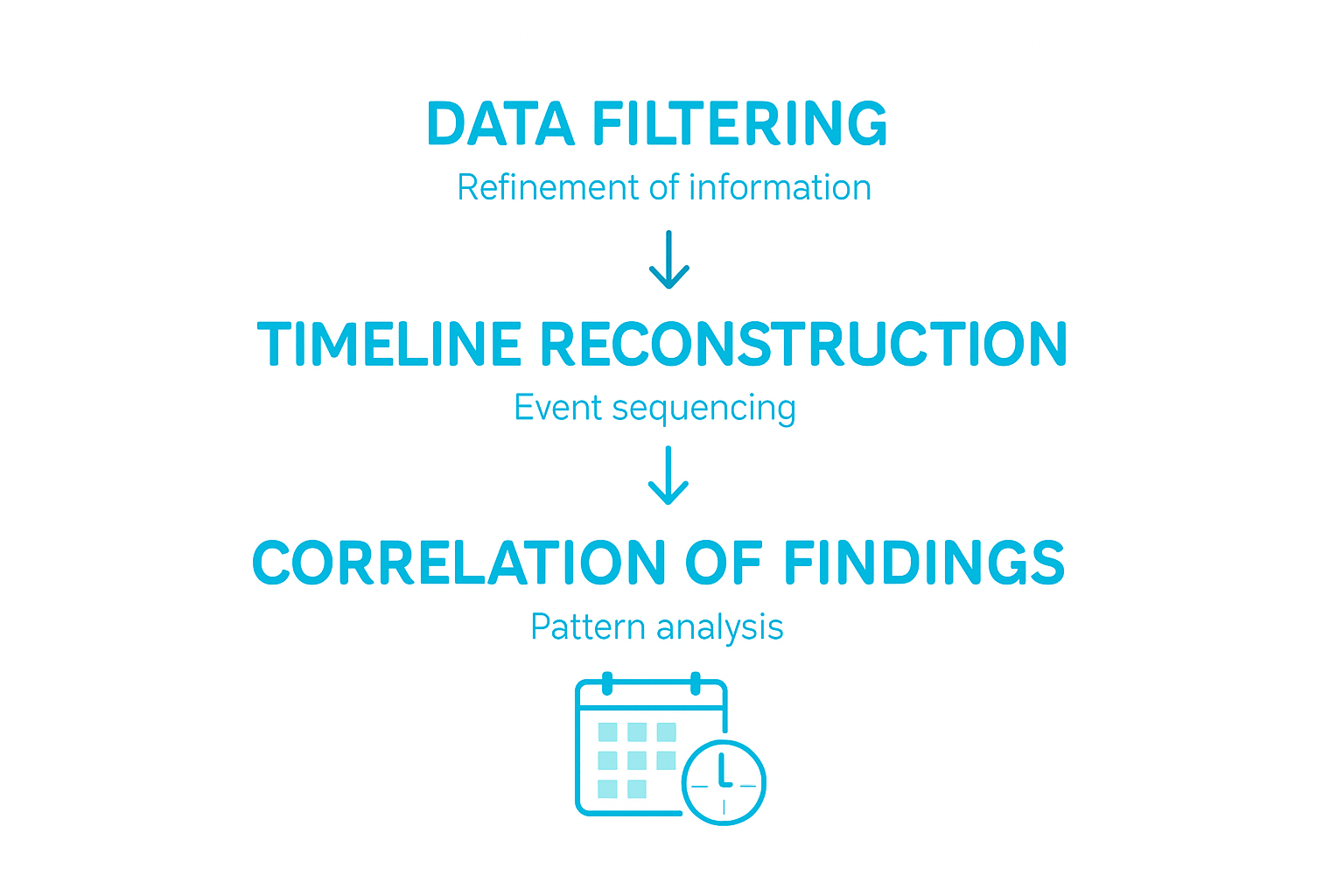
The analysis process involves multiple critical stages including data filtering, timeline reconstruction, correlation of evidence across different sources, and identifying potential anomalies or suspicious patterns. Professional forensic analysts use advanced correlation techniques to link seemingly unrelated digital artefacts, revealing complex relationships that might otherwise remain hidden. By applying structured analytical frameworks and leveraging sophisticated forensic software, investigators can transform raw digital data into compelling legal evidence that withstands rigorous courtroom scrutiny.
Warning: Always maintain strict documentation of every analytical step and preserve the original evidence in its untouched state. Any modifications or interpretative interventions must be meticulously recorded to ensure the evidence remains legally admissible.
Stage 3: Structure and Draft the Expert Witness Report
Crafting a compelling expert witness report requires meticulous attention to detail, scientific precision, and clear communication that translates complex technical findings into legally comprehensible language. The report serves as a critical document that will ultimately help legal professionals understand the intricate digital evidence and its significance in the case.

Forensic documentation standards provide a crucial framework for structuring expert witness reports with rigorous scientific integrity. Typically, the report should include several key sections: an executive summary, methodology description, detailed findings, forensic analysis conclusions, and comprehensive appendices containing technical evidence. Each section must be written with extreme clarity, avoiding technical jargon while maintaining scientific accuracy.
Professional forensic experts recommend developing a report structure that follows a logical narrative flow, presenting evidence chronologically and explaining technical processes in a manner accessible to legal professionals who may not have specialised technological background. This approach involves breaking down complex digital forensic procedures into straightforward explanations, providing context for each piece of digital evidence, and directly connecting technological findings to the specific legal questions at hand.
Warning: Always ensure that your expert witness report maintains absolute objectivity. Any perception of bias or subjective interpretation can potentially undermine the credibility of your findings in legal proceedings.
Stage 4: Review for Accuracy and Legal Compliance
Reviewing an expert witness report is a critical final stage that ensures the scientific integrity and legal admissibility of digital forensic findings. This meticulous process demands a comprehensive examination of every technical detail and legal consideration to safeguard the report’s credibility in potential court proceedings.
Digital evidence preservation protocols provide a rigorous framework for conducting a systematic review of forensic documentation. Experts must carefully validate each section of the report, confirming that all technical methodologies are accurately described, evidence collection procedures are transparently documented, and analytical conclusions are objectively presented without speculation or unsubstantiated claims.
The review process involves multiple layers of scrutiny including cross-referencing technical findings with original evidence, verifying the chain of custody documentation, and ensuring that all forensic analysis adheres to recognised legal and scientific standards. Professional forensic analysts typically employ a multi stage review approach that includes independent peer review, technical verification of analytical methods, and a final legal compliance check to confirm that the report meets all jurisdictional requirements for expert testimony.
Warning: Any inconsistencies discovered during the review process must be immediately addressed and corrected. Even minor discrepancies can potentially compromise the entire report’s legal standing and undermine the expert’s professional credibility.
Stage 5: Present and Submit the Finalised Report
Submitting a forensic expert witness report represents the culmination of extensive investigative work, transforming complex digital evidence into a legally comprehensible narrative. This final stage requires precision, professionalism, and strategic communication to effectively convey technical findings to legal professionals who may not have specialised technological expertise.
Digital evidence documentation guidelines emphasise the importance of clear, structured presentation when submitting forensic reports. Forensic experts must prepare multiple copies of the report including both printed and digital versions, ensuring each document is identically formatted, properly paginated, and accompanied by comprehensive supporting documentation such as forensic imaging logs, evidence inventories, and chain of custody records.
The submission process involves careful coordination with legal counsel, typically involving a formal handover that includes a comprehensive briefing on the report’s key findings. Professional forensic analysts recommend scheduling a preliminary consultation to walk through the technical details, allowing legal teams to understand the nuanced interpretations of digital evidence and anticipate potential lines of questioning during future legal proceedings. This proactive approach helps ensure that the report will be effectively understood and strategically utilised within the broader legal context.
Warning: Always maintain a complete, secure copy of the submitted report and all supporting documentation. Forensic experts must be prepared to provide additional clarification or supplementary evidence if requested during legal proceedings.
Elevate Your Legal Case with Expert Forensic Witness Reports
Preparing forensic expert witness reports that command respect in court requires more than technical skill. The article highlights the importance of accuracy, clear communication, and legal compliance to turn complex digital evidence into powerful legal testimony. At Computer Forensics Lab, we understand the challenges you face when assembling meticulous reports that maintain chain of custody and meet rigorous forensic standards.
Our team of Forensic Computing Experts specialises in delivering precise digital investigations, including data recovery, malware analysis, and detailed documentation. With extensive experience supporting lawyers, law enforcement, and businesses, we craft transparent, unbiased expert witness reports designed to withstand scrutiny. Don’t risk weakened evidence or credibility—partner with professionals who ensure your digital evidence tells the true story.
Take the first step towards legal success by consulting our Expert Witness services today. Visit Computer Forensics Lab to learn how we can help you transform forensic findings into compelling, court-ready reports. Act now and gain the confidence you need to support your case with certainty.
Frequently Asked Questions
What steps should I follow to prepare a forensic expert witness report?
To prepare a forensic expert witness report, first gather and preserve digital evidence methodically. Then, analyse the data to identify key findings, draft the report with clarity, review it for accuracy and legal compliance, and finally, present and submit the finalised report.
How can I ensure that the digital evidence I collect is legally admissible?
To ensure legal admissibility, always obtain proper legal authorisation before collecting digital evidence. Use write-blocking technology and maintain a detailed chain of custody documentation throughout the collection process.
What should be included in a forensic expert witness report?
A forensic expert witness report should include an executive summary, methodology description, detailed findings, conclusions, and appendices with technical evidence. Structure the report logically and provide clear explanations to make complex findings accessible to legal professionals.
How can I maintain objectivity in my expert witness report?
To maintain objectivity in your report, avoid personal bias and subjective interpretations. Focus solely on the facts and evidence, ensuring that all conclusions are supported by empirical data and well-documented procedures.
What is the importance of a multi-stage review process for my report?
A multi-stage review process is crucial for validating the technical details and ensuring compliance with legal standards. It helps identify inconsistencies or errors before submission, thereby enhancing the report’s credibility in court.
How should I communicate my findings before submitting my report?
Before submitting your report, schedule a preliminary consultation with legal counsel to walk through the key findings. This discussion allows you to clarify complex interpretations and prepare for potential questions during legal proceedings.
Recommended
- Expert Witness Role in Digital Forensics – Legal Impact
- Why Hire a Computer Forensics Expert: Complete Guide
- Computer Forensics Expert Witness in Criminal and Civil Cases
- 7 Top Digital Forensics Techniques Every Legal Team Must Know
- Master Your Estate Planning Workflow: Step-by-Step Guide – Future Family Office