
TL;DR:
- Forensic triage quickly assesses digital devices to identify valuable evidence before full examination. It offers rapid investigation leads, reduces lab backlogs, and guides resource allocation. Proper procedures, training, and documentation are essential for legal defensibility and effective use.
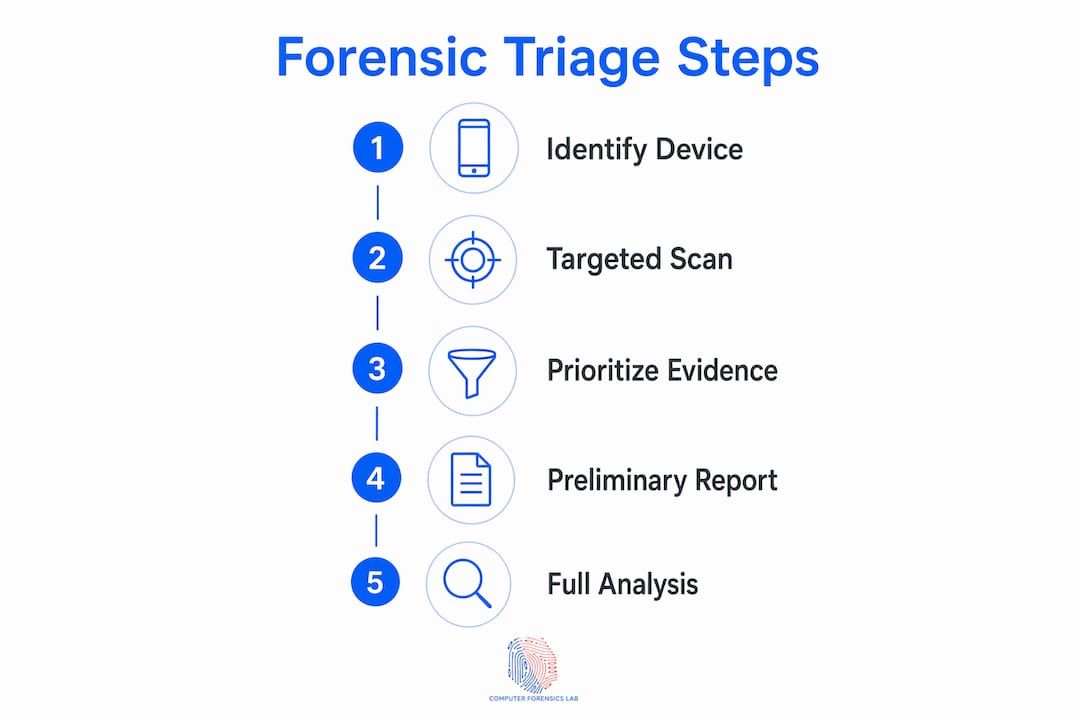
Forensic triage is defined as the rapid, targeted assessment of digital devices to identify and prioritise evidence before committing to a full forensic examination. The process sits at the front end of any digital investigation, giving law enforcement officers and legal professionals an early read on which devices hold relevant material and which can be set aside. Rather than imaging every hard drive seized at a scene, triage focuses on high-value artefacts such as user logs, running processes, and startup items. This targeted approach cuts through data volume quickly and keeps investigations moving at the pace that courts and victims require.
What is forensic triage and how does it differ from full forensic analysis?
Forensic triage is the structured process of scanning a device for specific, pre-defined indicators rather than capturing a complete bit-for-bit image. Full forensic imaging preserves every sector of a storage device and is the gold standard for court-ready evidence. Triage, by contrast, is designed for speed. It answers one question fast: does this device contain material worth examining in depth?
The distinction matters enormously in practice. A full forensic image of a modern laptop can take several hours and requires specialist laboratory conditions. Triage takes minutes per device, focusing on a fixed set of artefacts rather than the entire drive. That speed difference determines whether an investigator can make an operational decision at the scene or must wait weeks for a lab report.
The industry term used by practitioners is DFIR triage, short for Digital Forensics and Incident Response triage. Both phrases describe the same methodology. Legal professionals will encounter both terms in expert witness reports and court submissions, so understanding the equivalence avoids confusion during proceedings.
How does the forensic triage process work?
The forensic triage process follows a structured sequence designed to collect the most evidentially significant data first while minimising interference with the device.
-
Scene assessment. The investigator identifies all devices present and records their physical state, connectivity, and power status. Powered-on devices receive priority because volatile data such as running processes and active network connections disappears the moment power is cut.
-
Artefact targeting. The investigator runs a triage tool against a defined artefact list. Common targets on Windows systems include Amcache entries, Prefetch files, and EVTX event logs. These artefacts reveal recently executed programs, user login history, and system activity without requiring a full image.
-
Filter application. Canonical filters narrow the output to suspicious indicators. The unsigned PE in user-writable path filter is widely used in Windows triage. It returns a manageable set of executable files that lack a valid digital signature and sit in locations where standard software does not normally reside. The signed/unsigned PE filter can reduce the review set to fewer than 50 suspicious executables, making analyst review time far more efficient.
-
Output review and decision. The investigator reviews the filtered results and decides whether to seize the device for full lab analysis, release it, or flag it for further on-scene steps.
-
Documentation. Every action, tool version, and file accessed is recorded immediately. This documentation forms the foundation of the chain of custody.
Pro Tip: Always record the triage tool version number and the exact filter set applied. Courts have challenged triage results where the methodology could not be precisely reproduced. A one-line entry in your log can prevent a lengthy admissibility argument.
Distinguishing triage from full analysis is not merely technical. It is a legal point. Triage output is preliminary intelligence. It informs decisions but does not replace the validated, court-ready findings that emerge from a full forensic examination.
What are the benefits and limitations of forensic triage?
Forensic triage delivers measurable operational advantages, but it carries risks that practitioners must manage carefully.
The core benefits are speed and proportionality. On-scene triage enables investigative leads in hours or days rather than weeks or months. In missing persons cases and child sexual abuse material investigations, that time difference directly affects victim outcomes. Triage also reduces unnecessary device seizures. When a device shows no relevant indicators at the scene, it can be returned immediately, reducing collateral impact on individuals who are not suspects.
Lab backlogs are a persistent problem for law enforcement digital forensics units. Digital forensic triage reduces that backlog by eliminating irrelevant devices from the queue before they ever reach the laboratory. Investigators can then direct full analysis resources at the devices most likely to yield evidence.
The limitations are equally real and must not be underestimated.
- False confidence. Incorrect triage execution can produce misleading results that go undetected until full lab review weeks later. An investigator who treats triage output as conclusive may pursue the wrong line of enquiry.
- Filter dependency. Triage is only as good as the filters applied. A poorly configured filter set will miss relevant artefacts or flag irrelevant ones.
- Training gaps. Triage tools are not self-operating. An untrained operator applying the wrong methodology can compromise both the device and the investigation.
- Evidential weight. Triage output alone rarely satisfies the evidential threshold for prosecution. It must be followed by validated laboratory analysis to carry full weight in court.
“Triage changes the investigative order of operations by scoring, filtering, and prioritising devices to ensure the most relevant reach the lab first, speeding victim protection and prosecution. The risk is that speed, without rigour, produces false confidence that can derail a case.”
The importance of forensic triage lies in balancing its speed advantage against the procedural discipline required to keep its output legally defensible.
How does forensic triage fit into broader digital forensic workflows?
Forensic triage sits between initial device seizure and full laboratory examination. It does not replace either stage. It makes both stages more efficient.
| Workflow stage | Role of forensic triage |
|---|---|
| On-scene device seizure | Triage determines which devices warrant seizure and which can be released |
| Incident response | Triage feeds rapid indicators into SIEM and EDR platforms for immediate containment decisions |
| Laboratory examination | Triage output guides analysts toward the highest-priority artefacts, reducing examination time |
| Legal proceedings | Documented triage methodology supports chain of custody and admissibility arguments |
Digital triage acts as a bridge between the scene and the laboratory, cutting through irrelevant data volumes to produce usable intelligence quickly. In incident response contexts, triage findings feed directly into Security Information and Event Management (SIEM) systems and Endpoint Detection and Response (EDR) platforms. This integration means that a triage finding on a seized laptop can trigger containment actions on a corporate network within the same operational window.
The layered approach works as follows. Rapid on-scene triage produces a preliminary picture. That picture informs suspect interviews, search warrant applications, and resource allocation. Full laboratory analysis then validates or refines the triage findings. The two stages are complementary, not competing. Treating triage as a replacement for laboratory work is the single most common mistake practitioners make.
Computerforensicslab applies this layered methodology across its digital forensic investigations, ensuring that triage findings are properly contextualised within a full evidential framework before any report reaches a court.
What are best practices for forensic triage in legal and law enforcement work?
Implementing forensic triage correctly requires procedural discipline as much as technical skill. The following practices define the standard that courts and oversight bodies expect.
Develop and follow a documented SOP. Legally defensible triage requires a written Standard Operating Procedure that specifies which tools to use, which artefacts to target, and how to document each step. A checklist completed at the scene is not optional. It is the audit trail that demonstrates procedural compliance if the methodology is challenged in court.
Pro Tip: Build your SOP checklist into the triage tool’s output report where possible. Some enterprise-grade platforms allow custom fields that auto-populate with tool version, operator ID, and timestamp. This removes the risk of a handwritten log being lost or disputed.
The remaining best practices are equally non-negotiable:
- Train investigators before deployment. Triage operators must understand both the tools and the legal implications of their output. Rigorous training prevents the filter misapplication that produces false positives and negatives.
- Maintain chain of custody from the first touch. Every device interaction, including the triage scan itself, must be logged with time, operator identity, and tool details. A gap in the chain of custody can render subsequent laboratory findings inadmissible.
- Choose tools that minimise device impact. Write-blocking hardware or software must be in place before any triage tool accesses a storage device. Any modification to the device’s data state, however minor, must be documented and justified.
- Apply ethical and privacy standards. Triage tools can surface personal data that falls outside the scope of the investigation. Investigators must apply the same data minimisation principles during triage that govern full forensic examinations. The digital evidence checklist published for UK legal cases provides a practical reference for scope management.
- Review and update filter sets regularly. Threat actors and criminal methodologies evolve. A filter set that was effective six months ago may miss current indicators. Scheduled reviews of triage configurations are a professional obligation, not a discretionary task.
Key takeaways
Forensic triage is the critical first filter in any digital investigation, and its legal value depends entirely on the procedural rigour applied at the scene.
| Point | Details |
|---|---|
| Triage definition | Forensic triage is the rapid, targeted assessment of devices to prioritise evidence before full laboratory examination. |
| Speed advantage | Triage produces investigative leads in hours rather than weeks, directly benefiting time-sensitive cases. |
| Legal defensibility | Documented SOPs, checklists, and audit trails are mandatory for triage output to be admissible in court. |
| Key risk | Incorrect filter application creates false confidence and can derail an investigation before the error is detected. |
| Workflow position | Triage sits between seizure and laboratory analysis, informing both stages without replacing either. |
The case for taking forensic triage more seriously
The resistance I see most often is institutional. Agencies that have operated with a “seize everything, image later” approach for years treat triage as an unnecessary complication rather than an efficiency gain. That view is wrong, and it costs investigations time they cannot recover.
The cases where triage has made the clearest difference are the ones nobody wants to talk about publicly: missing children, active threats, time-critical fraud. In those situations, waiting three weeks for a lab report is not a procedural inconvenience. It is a failure with human consequences. Triage, applied correctly, compresses that window to hours.
The training gap is real and underestimated. Deploying a triage tool without proper operator training is worse than not triaging at all, because it produces output that looks authoritative but may be fundamentally flawed. The forensic triage techniques that hold up in court are not the ones applied fastest. They are the ones applied most carefully.
Automation will change this field significantly over the next few years. Machine learning models are already being tested against artefact sets to flag anomalies that human analysts miss. But automation does not remove the need for documented methodology. If anything, it raises the bar, because courts will demand to understand exactly how an algorithm reached its conclusion. The procedural discipline that makes manual triage defensible today is the same discipline that will make automated triage defensible tomorrow.
— Computerforensicslab
How Computerforensicslab supports forensic triage and digital investigations
Computerforensicslab provides digital forensics services to law enforcement agencies, legal teams, and corporate clients across the UK. The team applies documented triage methodologies that meet the evidential standards required by UK courts, maintaining full chain of custody from first device contact through to expert witness report. Where triage identifies devices requiring deeper examination, Computerforensicslab’s laboratory analysis follows the same rigorous procedural framework. Legal professionals and investigators who need case-specific guidance on triage scope, tool selection, or evidential presentation can contact the team directly to discuss the specifics of their matter.
FAQ
What is the forensic triage definition in digital investigations?
Forensic triage is the rapid, structured assessment of digital devices to identify high-value artefacts and prioritise evidence before full forensic imaging. It enables investigators to make operational decisions at the scene rather than waiting for laboratory results.
What does forensic triage involve in practice?
Forensic triage involves targeting specific artefacts such as Amcache entries, Prefetch files, and event logs, then applying canonical filters to isolate suspicious indicators. Every action is documented to preserve chain of custody and support court admissibility.
How does forensic triage reduce lab backlogs?
Triage eliminates irrelevant devices from the laboratory queue by identifying at the scene which devices contain material worth examining in depth. This focuses full forensic resources on the highest-priority cases and reduces overall processing time.
Can forensic triage results be used directly in court?
Triage output is preliminary intelligence and does not replace validated laboratory findings. Courts require full forensic analysis, documented methodology, and a clear chain of custody before triage-derived evidence carries full evidential weight.
What are the biggest risks in forensic triage?
The primary risk is false confidence from misapplied filters, which can produce misleading results that go undetected until full laboratory review. Proper training, documented SOPs, and regular filter set reviews are the controls that prevent this outcome.