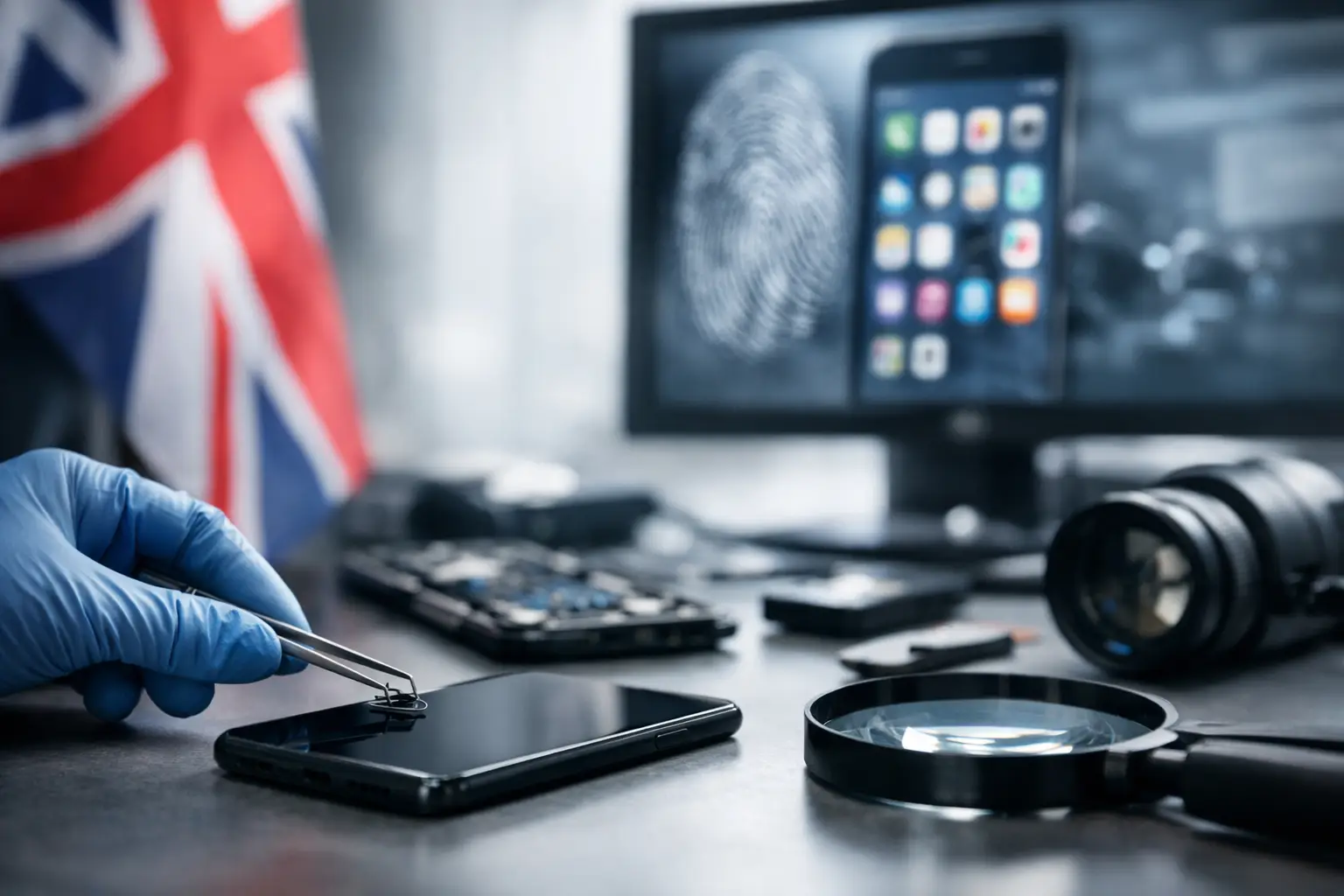
A single handset can decide the direction of a case. One message thread, one deleted image, one location trail, or one app login can support an account, expose a false timeline, or show that critical evidence has been altered or concealed. That is why mobile phone forensics is now central to many civil disputes, criminal matters, internal investigations, and family proceedings.
For solicitors, businesses, and private clients, the issue is rarely just whether data exists. The real question is whether that data can be identified, preserved, examined, and presented in a way that will withstand scrutiny. A screenshot on its own may be persuasive to a lay person. It is rarely enough for contested proceedings. Courts, regulators, and opposing experts will want to know where the evidence came from, how it was handled, whether it is complete, and whether the interpretation is sound.
What mobile phone forensics actually involves
Mobile phone forensics is the forensic examination of data held on or accessible through a mobile device. That includes not only the handset itself, but also associated app data, communications, media, system records, usage logs, and, where relevant, cloud-linked material connected to the device.
The work begins with preservation. If a phone is powered on, connected to networks, or handled casually, data can change quickly. Messages may sync, apps may refresh, and temporary records may be overwritten. A proper forensic process seeks to minimise alteration from the outset. That is one reason forensic handling differs sharply from ordinary IT support or informal data extraction.
The examination may then involve acquiring data from the device using methods suited to the model, operating system, security state, and condition of the handset. In some cases a logical extraction is appropriate. In others, a more advanced approach may be needed to recover a wider set of artefacts. What is possible depends on the device, its encryption, whether it is damaged, and whether relevant data remains present.
Why evidential handling matters as much as extraction
In high-stakes matters, the method is often as important as the result. If chain of custody is weak, if handling is undocumented, or if the examiner cannot explain the process clearly, useful data can become difficult to rely upon. An opponent may argue that the phone was interfered with, that evidence was omitted, or that findings are incomplete.
A disciplined forensic approach addresses those risks. That means documenting receipt, recording identifiers, isolating the device where necessary, preserving acquired data, maintaining audit trails, and reporting in a way that is transparent and repeatable. The goal is not simply to recover information. It is to produce evidence that is defensible.
This point matters particularly where parties dispute authenticity. Allegations of fabricated messages, backdated activity, hidden communications, or selective disclosure are common. A proper examination can often test those claims against underlying records rather than surface-level screenshots or exports.
What evidence can be recovered from a phone?
The answer depends on the device and the circumstances, but mobile examinations commonly identify text and app-based messages, call records, contacts, photographs, videos, notes, browser history, search activity, location-related artefacts, saved files, and account information. Deleted material may sometimes be recoverable, though not in every case.
It is also important to understand that modern evidence is often fragmented across the handset, installed apps, backups, and cloud services. A WhatsApp conversation, for example, may leave traces in more than one place. A photograph may carry metadata relevant to timing or location. A login event may help place a user in control of a device at a key moment. Small artefacts can have large evidential value when considered together.
That said, forensic reality is rarely as simple as television portrays it. Encryption, secure messaging design, device resets, app updates, and elapsed time can all limit recovery. An honest expert should explain both the opportunities and the constraints.
Mobile phone forensics in litigation and investigations
For legal professionals, mobile phone evidence is often most useful when tied to a specific issue in dispute. In criminal defence, it may assist with timeline reconstruction, rebuttal of allegations, contact analysis, geolocation issues, or review of prosecution disclosure. In civil litigation, it may be relevant to breaches of confidence, employee misconduct, harassment, contract disputes, and evidencing who knew what, and when.
In family and matrimonial matters, phones may hold relevant communications, images, location evidence, or records linked to financial or relationship disputes. In corporate settings, they can be central to insider threat investigations, data exfiltration concerns, policy breaches, and post-incident enquiries.
The strongest instructions are usually focused. A broad request to “look through the phone” is less effective than a defined forensic question. Was a message sent from this handset on a particular date? Can deleted communications between named parties be identified? Was company information transferred via messaging or cloud apps? Was the device used at a location inconsistent with the account given? Specific questions produce clearer examination plans and more useful reports.
Common problems when evidence is handled by non-specialists
Many evidential problems arise long before an expert is instructed. A client may scroll through the phone, take ad hoc screenshots, forward material to themselves, or ask a local repair shop or IT consultant to “recover everything”. Those actions can alter data, lose context, and create arguments about contamination.
Another common issue is overreliance on visible content alone. Two screenshots may show a conversation, but not whether messages are missing, whether timestamps reflect the device clock, whether the thread is complete, or whether the images themselves have been edited. Equally, exported data without proper context may be misunderstood.
For businesses, delay can be costly. A device tied to suspected misconduct may continue syncing, deleting, or receiving new data. If there is a need to preserve evidence for disciplinary action, civil recovery, or reporting obligations, early forensic intervention is usually the safer course.
How reporting should support UK proceedings
A useful forensic report does more than state technical findings. It should explain the scope of instruction, the materials examined, the methods used, the limitations encountered, and the basis for any opinions offered. The reader may be a solicitor, barrister, judge, investigator, or opposing expert. Each needs clarity.
That is especially important in UK proceedings, where expert evidence must be independent and properly reasoned. Overstatement is a risk. So is ambiguity. A careful report distinguishes between fact, inference, and technical possibility. It will say when data confirms a point, when it merely suggests one, and when no safe conclusion can be drawn.
This impartiality is not a weakness. It is what gives forensic evidence weight. An expert who appears to advocate rather than assist the court may damage the value of otherwise useful findings.
When to instruct a mobile phone forensic expert
The best time is usually earlier than clients expect. If there is a live dispute, a risk of deletion, or a need to preserve evidence before disclosure battles begin, prompt instruction can protect material that may later become central. That does not mean every case needs a full examination at once. Sometimes an early preservation step, followed by scoped analysis, is the proportionate route.
There are also cases where not examining the phone creates more risk than examining it. If allegations turn on communications, location, app use, or digital chronology, assumptions can harden quickly. A properly conducted examination can confirm a case theory, narrow the issues, or reveal that a different line of enquiry is needed.
For organisations, the same principle applies in cyber and internal matters. If a compromised or suspect handset may contain evidence of unauthorised access, data theft, or collusion, the window for reliable collection may be short.
Computer Forensics Lab approaches these matters with the procedural discipline they require – preserving evidence carefully, analysing it methodically, and reporting with the independence expected in contested cases.
The practical value of mobile phone forensics is not just that it can recover data. It is that it can turn uncertain digital material into evidence that can be tested, explained, and relied upon. When the facts matter and the handling will be scrutinised, that difference is often decisive.