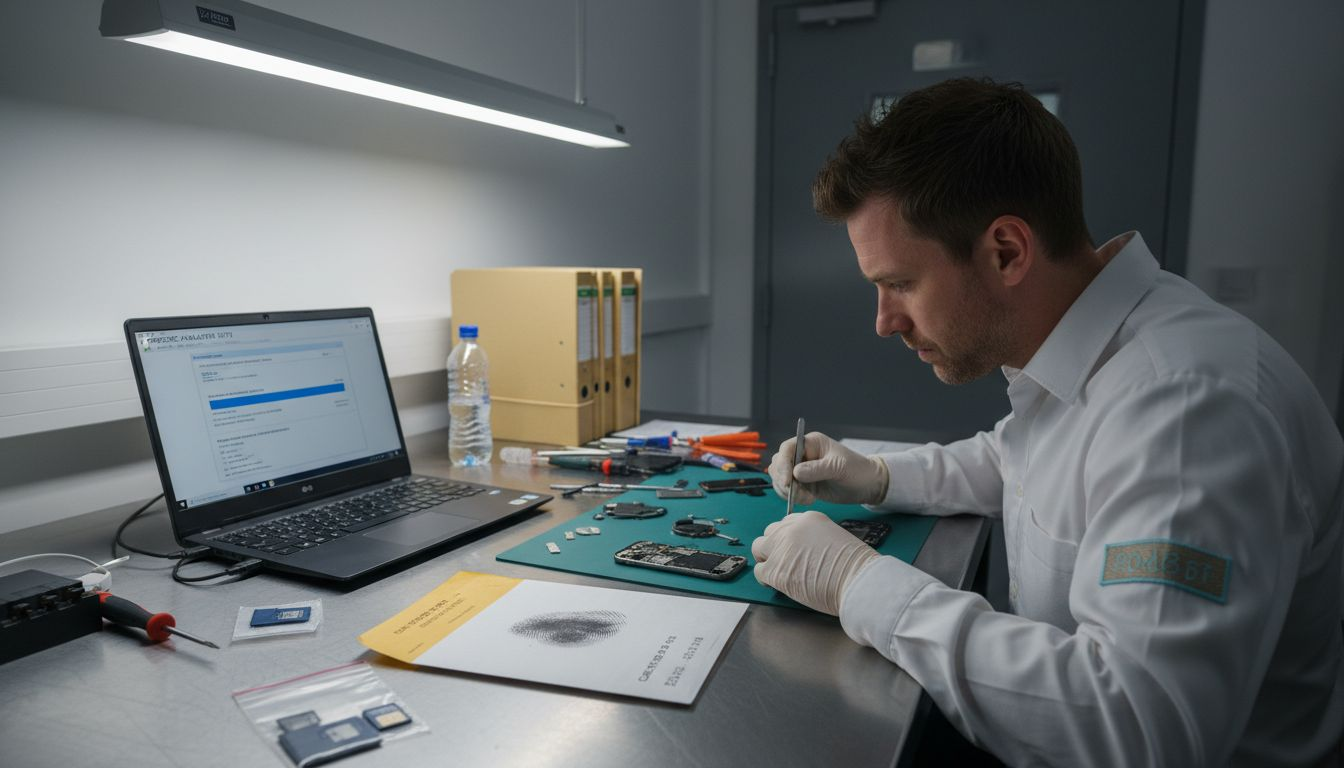
Nearly 95 percent of criminal and civil investigations in the British legal system now involve mobile device evidence. In London, digital forensics professionals and legal aides face growing pressure to accurately extract, preserve, and present critical data from devices that drive the outcome of many cases. This article delivers actionable insight into advanced mobile device data extraction, highlighting best practices and legal safeguards to help you maximise the reliability and admissibility of digital evidence in your British caseload.
Table of Contents
- Defining Mobile Device Data Extraction
- Key Methods Used in Data Extraction
- Types of Data Recovered from Mobiles
- Legal Standards and Chain of Custody
- Risks, Challenges and Common Pitfalls
- Ensuring Admissibility of Digital Evidence
Key Takeaways
| Point | Details |
|---|---|
| Mobile Device Data Extraction | Critical for retrieving digital evidence from mobile devices in legal and investigative contexts, maintaining strict forensic standards is essential for admissibility. |
| Extraction Techniques | Various methodologies, such as Logical, Physical, and Chip-Off extractions, cater to different levels of device accessibility and data recovery depth. |
| Legal Standards | A comprehensive chain of custody and meticulous documentation are vital to ensure the reliability and integrity of extracted evidence in legal proceedings. |
| Challenges in Forensics | Technological diversity and evolving device security present challenges that require ongoing adaptation and methodical precision from forensic professionals. |
Defining Mobile Device Data Extraction
Mobile device data extraction is a sophisticated digital forensic technique designed to retrieve and analyse electronic information from mobile devices such as smartphones and tablets. This critical investigative process enables legal professionals, law enforcement agencies, and digital forensic experts to uncover crucial digital evidence that can be pivotal in criminal investigations, legal proceedings, and corporate cybersecurity assessments.
The core objective of mobile device data extraction involves systematically acquiring, preserving, and examining digital artefacts while maintaining strict forensic standards. These digital artefacts can include text messages, call logs, emails, location data, application metadata, and deleted content. Forensic specialists employ various extraction techniques such as logical extraction, physical imaging, and advanced decryption methods to navigate complex technological barriers like device encryption, data fragmentation, and proprietary file systems.
Professional mobile device data extraction encompasses several sophisticated methodologies. These typically include:
- Logical Extraction: Accessing device data through the standard file system interface
- Physical Extraction: Creating bit-by-bit copies of entire device storage
- Chip-Off Extraction: Directly reading data from the device’s memory chips
- Microread Extraction: Recovering data from damaged or encrypted storage media
Pro tip: Always maintain a strict chain of custody and document every step of the data extraction process to ensure forensic evidence remains admissible in legal proceedings.
Key Methods Used in Data Extraction
Mobile device data extraction employs multiple sophisticated techniques designed to retrieve digital evidence across different technological environments. Forensic investigators utilise several critical methodologies to access and analyse data from mobile devices, each suited to specific investigative requirements and device characteristics.
Logical Extraction represents the most common and least invasive method, where forensic tools connect directly to the device’s operating system and extract accessible files and data. In procedural terms, this extraction begins with careful device seizure and preservation to prevent potential data corruption or tampering. This technique works effectively for most modern smartphones and tablets with standard file system interfaces.
The primary data extraction methods include:
- Manual Extraction: Physically examining and manually recording device contents
- Logical Extraction: Accessing device data through standard file system interfaces
- Physical Extraction: Creating complete bit-by-bit copies of device storage
- Chip-Off Extraction: Directly reading data from device memory chips
- Hex Dump Extraction: Retrieving raw hexadecimal data from device memory
These methods vary in complexity, invasiveness, and the depth of data recovery possible. Factors such as device security, encryption levels, and operating system restrictions significantly influence the choice of extraction technique. Professional forensic teams must adapt their approach based on the specific device and investigative requirements.
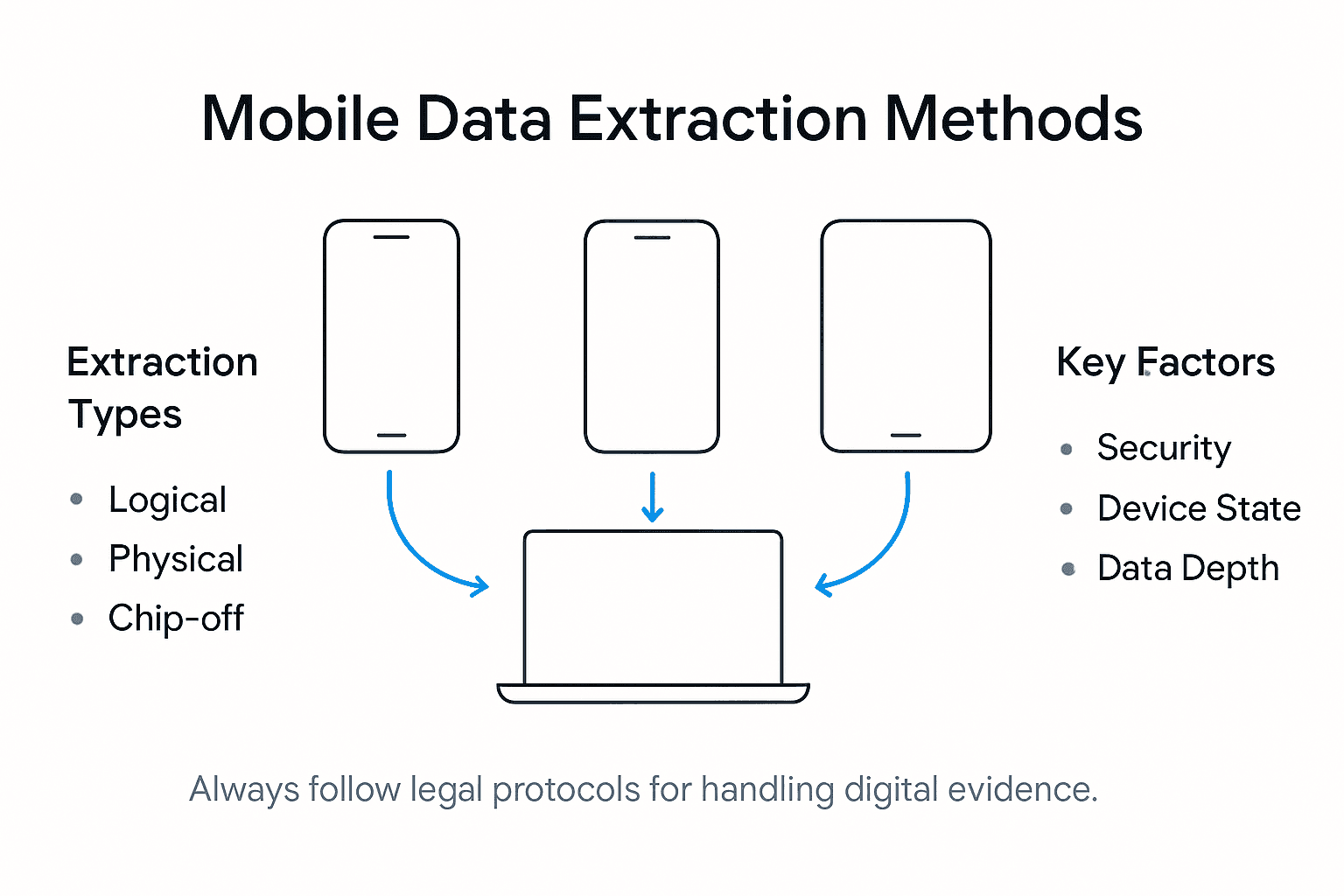
Here is a comparison of mobile device data extraction methods and their typical forensic uses:
| Extraction Method | Level of Invasiveness | Suitable Device State | Evidence Recovery Depth |
|---|---|---|---|
| Manual Extraction | Low | Unlocked, undamaged | Basic user-visible data |
| Logical Extraction | Low | Unlocked, accessible OS | Standard files and metadata |
| Physical Extraction | Moderate | Locked or damaged | Entire storage, including deleted data |
| Chip-Off Extraction | High | Severely damaged/non-booting | Most complete, including raw memory |
| Hex Dump Extraction | Moderate | Technical access to memory | Raw hexadecimal device data |
Pro tip: Always document the chosen extraction method meticulously and verify the forensic tools’ compatibility with the specific mobile device to ensure comprehensive and legally admissible evidence collection.
Types of Data Recovered from Mobiles
Mobile device forensic investigations uncover an extensive range of digital evidence that provides unprecedented insights into an individual’s personal and professional activities. The data recovered extends far beyond simple communication records, encompassing a comprehensive digital footprint that can be crucial in legal, criminal, and corporate investigations.

The primary categories of data typically recovered include communication records, such as call logs, text messages, emails, and instant messaging conversations. Forensic analysts can extract not just active data, but also deleted messages and communication histories, which can often provide critical evidence that might otherwise remain hidden.
Comprehensive mobile data extraction typically reveals:
- Personal Communications
- Call logs and duration
- SMS and multimedia messages
- Email contents
- Instant messaging transcripts
- Multimedia Content
- Photographs
- Video recordings
- Audio files
- Location and Movement Data
- GPS coordinates
- Location history
- Travel patterns
- Application and System Information
- Installed application details
- Application usage logs
- System metadata
- Browser history
The depth and breadth of data recovery depend on multiple factors, including device type, operating system, security settings, and the specific forensic tools employed. Sophisticated extraction techniques can often recover data that has been intentionally deleted or hidden, providing investigators with a comprehensive digital narrative.
Pro tip: Ensure you have proper legal authorisation before attempting mobile device data extraction, as privacy laws and consent requirements vary significantly across jurisdictions.
Legal Standards and Chain of Custody
Legal standards governing mobile device data extraction represent a complex framework designed to protect individual privacy while enabling legitimate forensic investigations. These standards establish critical guidelines that ensure digital evidence remains admissible, reliable, and ethically obtained, balancing the needs of law enforcement and individual rights.
The chain of custody is a fundamental legal concept that tracks the movement and handling of digital evidence from initial collection through final presentation. Forensic professionals must meticulously document every interaction with the mobile device, recording details such as who accessed the device, when, and under what circumstances. This documentation prevents potential challenges to the evidence’s authenticity and integrity during legal proceedings.
Key components of maintaining a legally sound chain of custody include:
- Proper Authorization
- Obtaining valid search warrants
- Ensuring legal consent for device examination
- Documenting jurisdictional permissions
- Evidence Preservation
- Creating forensic duplicates without altering original data
- Using write-blockers to prevent unintended modifications
- Maintaining bitwise exact copies of device contents
- Detailed Documentation
- Comprehensive logs of device handling
- Timestamps for each evidence interaction
- Identification of all personnel involved
- Forensic Integrity
- Using validated forensic tools
- Demonstrating reproducibility of extraction methods
- Protecting against potential tampering
Courts increasingly scrutinise digital evidence collection methods, requiring forensic experts to follow rigorous protocols that protect both investigative objectives and individual privacy rights. The complexity of mobile device technologies demands exceptional precision and transparency throughout the evidence collection process.
Pro tip: Always maintain a comprehensive, timestamped log of every action taken during mobile device forensic examination, as this documentation can be crucial in establishing the evidence’s legal credibility.
Risks, Challenges and Common Pitfalls
Mobile device data extraction presents numerous complex challenges that require forensic professionals to maintain exceptional technical expertise and methodological precision. The rapidly evolving technological landscape means investigators must constantly adapt to new device architectures, encryption methods, and security protocols that can impede successful digital evidence retrieval.
The primary risks in mobile device forensics stem from technological diversity and potential evidence contamination. Different mobile operating systems, hardware configurations, and security mechanisms create significant obstacles for forensic analysts. Each device presents unique challenges, from proprietary encryption algorithms to specialised system architectures that can prevent standard extraction techniques from functioning effectively.
Key risks and challenges include:
- Technological Barriers
- Complex device encryption
- Varied operating system architectures
- Rapidly changing mobile technologies
- Data Integrity Risks
- Potential unintended data modification
- Incomplete data retrieval
- Loss of forensic reliability
- Legal and Ethical Challenges
- Privacy protection requirements
- Jurisdictional legal constraints
- Consent and authorization complexities
- Technical Limitations
- Device damage prevention
- Maintaining forensic tool effectiveness
- Managing evolving technological landscapes
Successful mobile device forensics requires a multidisciplinary approach that combines technical skill, legal knowledge, and meticulous documentation. Forensic professionals must continuously update their methodologies and tools to address the dynamic challenges presented by modern mobile technologies.
The following table summarises challenges in mobile device forensics and strategies to overcome them:
| Challenge Type | Example Risk | Effective Mitigation Strategy |
|---|---|---|
| Technology Evolution | New encryption methods | Continuous tool updates |
| Data Integrity | Evidence contamination | Use forensic duplicates and write-blockers |
| Legal Compliance | Lack of authorisation | Obtain search warrants and proper consent |
| Device Damage | Physical loss of data | Advanced chip-off and microread techniques |
Pro tip: Regularly calibrate and validate your forensic tools against the latest mobile device models to ensure consistent and reliable evidence extraction.
Ensuring Admissibility of Digital Evidence
Legal standards for digital evidence admissibility demand rigorous protocols that protect the integrity and reliability of mobile device data. Forensic professionals must navigate complex legal requirements to ensure that digital evidence can withstand intense judicial scrutiny and remain acceptable in legal proceedings.
The foundation of evidence admissibility rests on maintaining an unimpeachable chain of custody and demonstrating the forensic extraction’s scientific reliability. Forensic examiners must follow standardised procedures that preserve original data without alteration, meticulously documenting every step of the investigation process.
Key requirements for ensuring digital evidence admissibility include:
- Forensic Methodology
- Using court-approved extraction techniques
- Employing validated forensic tools
- Maintaining reproducible investigation methods
- Documentation Standards
- Comprehensive chain of custody logs
- Detailed extraction process reports
- Clear provenance of digital evidence
- Technical Integrity
- Cryptographic hash verification
- Bit-level data preservation
- Prevention of data contamination
- Expert Testimony Preparation
- Readiness to explain extraction methods
- Technical competence demonstration
- Clear communication of forensic processes
Courts increasingly require forensic experts to provide transparent, scientifically rigorous explanations of their digital evidence collection methods. This demands not just technical expertise, but also the ability to articulate complex forensic processes in a manner comprehensible to legal professionals.
Pro tip: Develop a comprehensive documentation protocol that includes timestamped logs, tool validation records, and detailed methodology descriptions to strengthen the legal standing of your digital evidence.
Unlock the Full Potential of Mobile Device Data Extraction with Expert Support
The article highlights the intricate challenges of retrieving and securing critical digital evidence from mobile devices. Whether you face issues with encrypted data, diverse extraction methods, or maintaining a scrupulous chain of custody, achieving reliable and legally admissible results can be daunting. Key pain points include navigating complex technologies, preserving data integrity, and overcoming legal hurdles to uncover vital information that can impact investigations or litigation.
At Computer Forensics Lab, our Mobile Phone Forensic Experts specialise in advanced mobile device data extraction techniques tailored to your needs. We understand the importance of thorough documentation and chain of custody to ensure your digital evidence withstands scrutiny. Benefit from our proven experience, including work on high-profile media projects, to confidently advance your case or investigation.
Discover how our Mobile Phone Forensics services provide comprehensive data recovery and expert witness reports designed to make your evidence stand strong in court. Don’t let technical challenges or legal concerns delay your progress. Visit Computer Forensics Lab today and secure trusted digital forensic support that empowers you to extract, analyse, and protect essential mobile data with precision and credibility.
Frequently Asked Questions
What is mobile device data extraction?
Mobile device data extraction is a digital forensic technique that retrieves and analyses electronic information from mobile devices like smartphones and tablets. It helps uncover critical digital evidence for criminal investigations, legal proceedings, and cybersecurity assessments.
What are the main methods used in data extraction from mobile devices?
The main methods include logical extraction, physical extraction, chip-off extraction, and hex dump extraction. Each method has its level of invasiveness and effectiveness based on the condition of the device and the data being retrieved.
What types of data can be recovered through mobile device data extraction?
Mobile device data extraction can recover various types of data, including personal communications (call logs, SMS, emails), multimedia content (photos, videos), location data (GPS coordinates), and application/system information (installed apps, usage logs).
Why is the chain of custody important in mobile device data extraction?
The chain of custody is crucial as it ensures that the digital evidence remains admissible in legal proceedings. It tracks the movement and handling of the evidence, preventing tampering and maintaining its integrity throughout the investigation.