
Bold advances in British digital forensics have transformed how London legal teams approach cybercrime investigations and evidence discovery. As cyber threats accelerate, the ability to recover and authenticate electronic data is vital for securing defensible outcomes in litigation. With specialized methods now reconstructing complex digital histories and recovering evidence from even encrypted or damaged devices, this guide offers practical insights and proven strategies to help legal professionals and forensic experts meet the exacting standards demanded in British courtrooms.
Table of Contents
- Defining Data Recovery In Modern Forensics
- Key Data Recovery Methods And Distinctions
- Types Of Devices And Data Recovered
- Legal Standards For Evidence Admissibility
- Maintaining Integrity And Chain Of Custody
- Risks, Limitations, And Common Mistakes
Key Takeaways
| Point | Details |
|---|---|
| Data Recovery in Forensics | It involves systematic extraction of digital evidence while maintaining forensic integrity, requiring advanced technical expertise and strict procedural protocols. |
| Recovery Methods | Forensic data recovery distinguishes between logical and physical recovery approaches, tailored based on the type of device and storage medium. |
| Legal Standards | Rigorous chain of custody protocols are essential to ensure the credibility and admissibility of digital evidence in legal proceedings. |
| Risks and Pitfalls | Common errors in forensic investigations can compromise evidence integrity; therefore, adherence to meticulous documentation and verification processes is critical. |
Defining data recovery in modern forensics
Digital forensics represents a complex scientific discipline where electronic evidence is systematically recovered, analysed, and preserved for legal proceedings. The field has dramatically evolved from basic file retrieval to sophisticated investigative techniques capable of reconstructing digital narratives across multiple electronic platforms.
At its core, data recovery in forensics involves systematic extraction of digital evidence from various electronic devices while maintaining strict forensic integrity. This process requires specialised methodologies that go far beyond simple file restoration, involving intricate techniques such as sector-level analysis, deleted data reconstruction, and metadata preservation. Forensic experts must navigate complex technological landscapes, understanding how data fragments can be reassembled without compromising their legal admissibility.
The technological complexity demands profound technical expertise and precise procedural protocols. Modern forensic data recovery involves multiple critical stages: evidence identification, secure acquisition, forensic imaging, data preservation, analysis, and expert reporting. Each stage requires meticulous documentation and adherence to stringent legal standards that ensure the electronic evidence remains legally defensible. Advanced forensic methodologies now incorporate machine learning algorithms and sophisticated data carving techniques that can recover information from seemingly unrecoverable digital sources.
Pro tip: Always maintain a comprehensive chain of custody documentation during digital evidence recovery to ensure legal admissibility and prevent potential challenges in court proceedings.
Key data recovery methods and distinctions
Forensic data recovery encompasses a range of sophisticated techniques designed to extract and preserve digital evidence across diverse technological environments. These methods are critically distinguished by their approach to handling different types of electronic storage media, each requiring specialised interventions to ensure maximum data integrity and legal admissibility.
Primary data recovery strategies include file system forensic analysis which systematically examines the underlying file allocation structures to reconstruct deleted or hidden digital records. This method involves intricate processes such as sector-level scanning, metadata reconstruction, and timestamp analysis. Professionals must carefully navigate complex file system architectures across Windows, macOS, and Linux platforms, understanding the unique storage mechanisms that govern data preservation and retrieval.
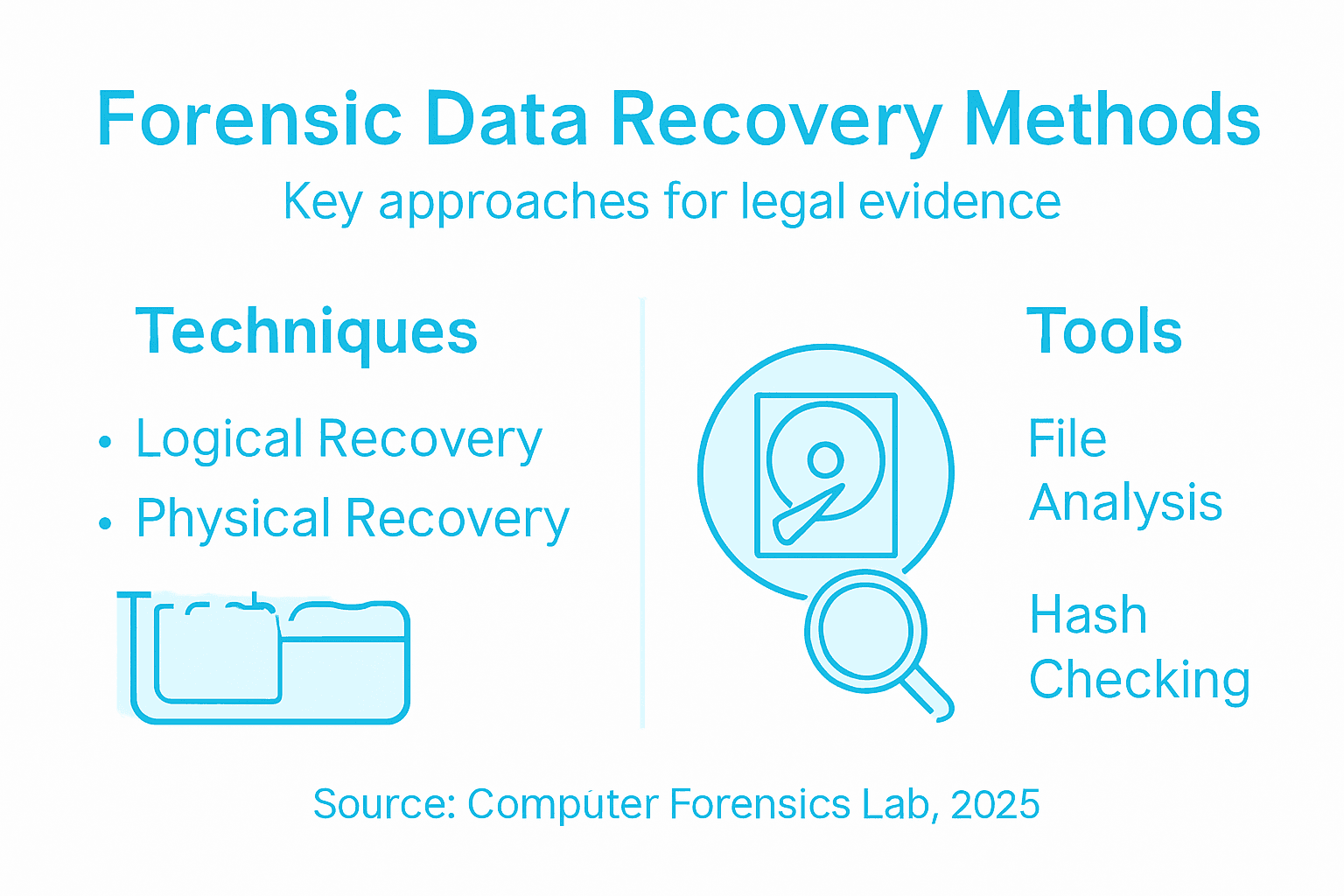
Advanced forensic practitioners employ multiple complementary techniques including physical data recovery, live data acquisition, and memory forensics. Comprehensive forensic methodologies distinguish between logical and physical recovery approaches, recognising that each digital device presents unique challenges. Physical recovery focuses on extracting data directly from damaged hardware components, while logical recovery concentrates on reconstructing file structures and recovering information from intact but potentially compromised digital storage systems.
To clarify the distinctions between key forensic data recovery methods, see the comparison below:
| Method | Main Purpose | Typical Usage Scenario | Level of Data Access |
|---|---|---|---|
| Logical Recovery | Restore files from readable media | Retrieving deleted files, basic losses | File system and metadata |
| Physical Recovery | Extract data from damaged hardware | Salvage after hardware failure | Raw disk sectors and bytes |
| Live Data Acquisition | Recover real-time, volatile data | Memory dumps, running systems | RAM and active processes |
| Memory Forensics | Analyse computer’s memory | Detecting malware or intrusions | Volatile memory and cache |
Pro tip: Always document every step of the data recovery process with precise technical notes and capture forensic hash values to maintain the evidentiary chain of custody and ensure legal credibility.
Types of devices and data recovered
Digital forensic investigations now encompass an expansive array of electronic devices, each presenting unique challenges for data extraction and preservation. Electronic evidence recovery has evolved beyond traditional computing platforms to include complex storage technologies spanning mobile devices, cloud infrastructures, and embedded systems.

Modern forensic professionals routinely encounter diverse device categories requiring specialised recovery approaches. These include solid-state drives (SSDs), mobile phones, tablets, cloud storage platforms, network-attached storage (NAS) systems, and emerging Internet of Things (IoT) devices. Each device type demands specific forensic techniques, with storage mechanisms ranging from NAND flash memories to complex distributed cloud architectures presenting intricate data retrieval challenges. Forensic data extraction methods must adapt to increasingly sophisticated encryption protocols and proprietary filesystem structures that protect digital information.
The scope of recoverable data extends far beyond simple document files, encompassing complex digital artifacts such as communication logs, geolocation data, application metadata, system configuration records, and fragmented digital footprints. Forensic experts must navigate intricate technological landscapes, understanding how seemingly innocuous digital fragments can reconstruct comprehensive narratives crucial for legal proceedings. Critical data types include deleted messages, cached internet browsing history, temporary files, system logs, and communication records that might provide pivotal evidence in criminal investigations or civil litigation.
For a quick reference of device types and typical forensic data collected, consult the following table:
| Device Type | Common Data Recovered | Special Recovery Challenge |
|---|---|---|
| Mobile phone | Messages, call logs, location | Encrypted partitions, proprietary OS |
| SSD | Files, system logs, metadata | Wear levelling, TRIM effects |
| Cloud storage | Documents, access records | Distributed data, remote access |
| Network storage (NAS) | Backups, user activity logs | Multiple access points, RAID arrays |
| IoT device | Device logs, sensor data | Diverse hardware, firmware limits |
Pro tip: Maintain a comprehensive device compatibility matrix documenting forensic extraction capabilities for different device models and operating systems to streamline your investigative workflow.
Legal standards for evidence admissibility
Digital forensic evidence requires stringent legal standards to ensure its credibility and admissibility within judicial proceedings. Chain of custody represents the fundamental principle governing the preservation and tracking of electronic evidence, demanding meticulous documentation of every interaction with digital materials from initial collection through final presentation in court.
Digital forensics compliance protocols mandate comprehensive procedural frameworks that protect the integrity of electronic evidence. Forensic professionals must demonstrate a clear, unbroken documentation trail showing exactly how digital materials were acquired, preserved, analysed, and transferred. This process involves creating detailed forensic logs, maintaining original evidence in pristine condition, using write-blocking technologies during evidence acquisition, and generating cryptographically verifiable hash values that prove no alterations occurred during examination.
Legal admissibility hinges on multiple critical factors beyond mere technical collection. Courts require explicit proof that forensic methodologies follow scientifically validated procedures, that evidence extraction techniques do not modify original data, and that expert witnesses can comprehensively explain their investigative processes. This demands not just technical expertise but also the ability to communicate complex digital forensic procedures in language comprehensible to legal professionals who may lack advanced technological understanding. Forensic experts must be prepared to demonstrate that their methodologies meet established judicial standards of reliability, reproducibility, and objectivity.
Pro tip: Develop a standardised evidence documentation template that captures every technical detail and decision point during digital forensic investigations to streamline courtroom testimony and evidence presentation.
Maintaining integrity and chain of custody
Maintaining the integrity of digital evidence represents a critical cornerstone of forensic investigations, requiring meticulous documentation and precise technical protocols. Forensic evidence preservation techniques demand comprehensive strategies that protect electronic data from potential contamination or inadvertent modification throughout the investigative process.
The chain of custody documentation involves creating an unbreakable audit trail that tracks every interaction with digital evidence. Forensic professionals must implement rigorous procedural safeguards, including forensic imaging best practices that involve creating exact bit-for-bit copies of original storage media. These copies must be cryptographically verified using hash values, ensuring that the digital evidence remains unchanged and legally admissible. Each step of evidence handling requires precise logging, including details such as the examiner’s identity, timestamp, specific actions performed, and the tools or methodologies employed during analysis.
Successful evidence integrity management extends beyond technical procedures to comprehensive documentation and expert testimony preparation. Forensic investigators must be prepared to demonstrate the scientific validity of their methodologies, explaining how each step of the evidence collection and analysis process maintains the original data’s integrity. This involves creating detailed reports that transparently outline the forensic workflow, demonstrating that no alterations occurred and that all investigative techniques follow established legal and scientific standards.
Pro tip: Implement a standardised digital evidence handling protocol that includes mandatory documentation templates, multi-factor authentication for evidence access, and comprehensive audit logging to ensure unimpeachable chain of custody.
Risks, limitations, and common mistakes
Digital forensic investigations are fraught with complex challenges that can potentially compromise evidence integrity and investigation outcomes. Forensic data recovery risks encompass multiple technical and procedural vulnerabilities that require sophisticated mitigation strategies.
Common mistakes in digital forensics frequently stem from improper handling techniques and inadequate technical understanding. Forensic investigation pitfalls include critical errors such as failing to create forensic duplicates before analysis, inadvertently modifying original data, overlooking volatile memory evidence, and neglecting comprehensive documentation. These mistakes can render potentially crucial digital evidence inadmissible, dramatically undermining legal proceedings and investigative efforts. Practitioners must remain vigilant about potential data contamination, understanding that even minor procedural deviations can invalidate months of meticulous investigative work.
Risks extend beyond technical errors into complex technological landscapes where digital evidence can be deliberately obscured or destroyed. Sophisticated perpetrators may employ advanced techniques like encrypted storage, fragmented data distribution, and deliberate anti-forensic strategies designed to frustrate digital investigators. Forensic experts must anticipate these challenges, developing robust methodological approaches that can penetrate sophisticated data obfuscation techniques while maintaining strict evidentiary standards. This requires continuous training, technological adaptability, and a profound understanding of emerging digital concealment strategies.
Pro tip: Develop a comprehensive pre-examination checklist that mandates verification of forensic tools, systematic documentation protocols, and multiple independent evidence verification steps to mitigate potential investigative risks.
Protect Your Legal Evidence with Expert Forensic Data Recovery
The article highlights the critical challenge of safeguarding digital evidence through meticulous data recovery and maintaining an unbroken chain of custody to ensure legal admissibility. If you are facing complexities such as recovering deleted files, extracting data from damaged devices, or preserving volatile memory, these issues demand both technical precision and strict procedural documentation. Key terms like “forensic imaging,” “metadata preservation,” and “forensic hash values” emphasise how fragile digital evidence can be without expert handling.
At Computer Forensics Lab, we understand the emotional and legal pressures involved in securing digital evidence that can make or break a case. Our Forensic Data Recovery specialists combine advanced forensic techniques with comprehensive documentation to guarantee integrity and legal defence. Whether you require expertise with mobile devices, enterprise storage, or cloud data, our team applies proven methodologies aligned with the highest standards outlined in the article. Do not let evidence risks undermine your investigation.
Act now to protect your digital evidence with trusted professionals who stand by your side throughout the process. Visit Computer Forensics Lab to learn more about our Forensic Data Specialists and secure your evidence with confidence today.
Frequently Asked Questions
What is data recovery in the context of digital forensics?
Data recovery in digital forensics involves systematically extracting digital evidence from electronic devices while ensuring that the integrity of the evidence is preserved for legal proceedings. This process includes advanced techniques like sector-level analysis and deleted data reconstruction.
What are the common methods used for forensic data recovery?
Common methods for forensic data recovery include logical recovery, physical recovery, live data acquisition, and memory forensics. Each method approaches data extraction differently, depending on the nature of the device and the integrity of the data.
How do legal standards affect the admissibility of digital evidence?
Legal standards for digital evidence require a clear chain of custody, rigorous documentation, and adherence to scientifically validated methodologies. Evidence must be collected and preserved in a manner that demonstrates it has not been altered, ensuring its admissibility in court.
What risks and limitations should be considered during digital forensic investigations?
Risks in digital forensics include improper handling techniques, technical errors leading to data modification, and challenges posed by sophisticated hiding methods employed by perpetrators. These factors can compromise evidence integrity, making thorough training and procedural adherence essential.