Forensic IT services identify, preserve and analyse digital evidence from computers, phones, servers and cloud accounts to produce a court-ready report and, where needed, expert testimony. Legal teams, corporate counsel and law enforcement typically instruct a specialist lab following litigation, a data breach, suspected intellectual property theft, employee misconduct or a ransomware incident, where the integrity of the evidence and the speed of preservation directly affect the outcome.
TL;DR:
- Digital evidence preservation can take days to weeks, depending on data volume, encryption, and whether evidence is stored locally or in the cloud.
- Chain of custody and hashing are essential for evidentiary integrity, with accredited labs following strict procedures to maintain admissibility.
- Remote analysis is possible using verified copies, but secure transfer protocols and jurisdictional considerations greatly affect case timelines.
- Laboratories should be able to provide accreditation proof, past reports, and detailed documentation of fixation checks before instruction.
- Engaging a forensic provider early in cases involving potential deletion, tampering, or encryption helps ensure evidence integrity and legal compliance.
Table of Contents
- What forensic IT teams do and the evidence they examine
- When to instruct a forensic IT provider: common use cases and immediate steps
- Practical workflow: intake, acquisition, analysis and reporting
- Chain of custody, admissibility and standards to request from a lab
- Remote, cloud and encrypted-evidence: secure options and constraints
- How to choose and instruct a forensic IT provider: checklist and questions to ask
- Publisher perspective: how Computer Forensics Lab approaches investigation and evidence handling
- How to instruct Computer Forensics Lab and next steps
- FAQ
- Sources
What forensic IT teams do and the evidence they examine
A forensic IT provider matches its technical approach to the device or data source in question, since a mobile handset, a corporate server and a cloud account each demand different acquisition methods and legal considerations.
Typical services include:
- Forensic imaging and data acquisition from computers, laptops and storage media.
- Mobile phone forensics, including extraction from locked or damaged handsets.
- Data recovery from deleted, corrupted or formatted drives.
- Cloud and social media forensics covering emails, messaging platforms and account activity.
- Malware analysis and attribution following a suspected intrusion.
- Electronic discovery (e-discovery) support for civil litigation.
- Expert witness reports and courtroom testimony.
Most engagements also cover CCTV footage, network logs and metadata embedded in documents or photographs. Some cases, particularly those involving encrypted devices, require specialist hardware such as chip-off or JTAG extraction, and others exceed a private lab’s remit entirely where only law enforcement holds the legal power to compel access.
When to instruct a forensic IT provider: common use cases and immediate steps
Deciding whether to instruct a forensic provider usually comes down to whether digital evidence exists that could be altered, deleted or lost before it is properly preserved. Common triggers include criminal proceedings, civil disclosure obligations, data breaches, internal misconduct investigations and ransomware attacks.
- Isolate the affected device or account immediately rather than continuing to use it.
- Preserve access credentials and system logs without attempting your own analysis.
- Record who touched the device, when and why, to protect the chain of custody from the outset.
- Contact legal counsel or a forensic lab before taking further action.
- Escalate to law enforcement when the matter involves a suspected crime that requires statutory powers; otherwise, a private lab can usually begin preservation and analysis faster.
INTERPOL’s guidance for first responders warns that remote wipes and automatic synchronisation can destroy volatile evidence within minutes of a device being seized, which is why isolation has to happen before anything else.
Practical workflow: intake, acquisition, analysis and reporting
A forensic engagement generally follows four stages, each with its own documentation requirements.
- Intake and scoping: the lab records the legal authority for the examination, the devices or accounts in question and the specific questions the investigation needs to answer.
- Acquisition: investigators create a forensic image of the original media and generate a cryptographic hash, typically MD5 or SHA‑256, to prove the copy matches the source bit for bit.
- Analysis: examiners reconstruct timelines, recover deleted or hidden artefacts, examine malware behaviour and cross-reference findings against system and network logs.
- Reporting and testimony: the lab produces a written report setting out methodology, findings and exhibits, and may provide expert testimony if the matter reaches court.
According to NIST, preserving digital evidence requires forensic imaging, fixity checking and documented acquisition and storage procedures, since digital evidence is uniquely vulnerable to accidental alteration compared with physical exhibits.
Timescale and cost depend heavily on data volume, encryption and whether evidence sits on local media or behind a cloud provider’s access controls. A single laptop with no encryption might take days; a large corporate server estate with encrypted volumes can take considerably longer.
Chain of custody, admissibility and standards to request from a lab
Chain of custody is the documented record of who has handled a piece of evidence, when, and what was done to it. Hashing and fixity checks confirm that a forensic image has not changed since it was captured, and an audit trail ties every analytical step back to the original acquisition.
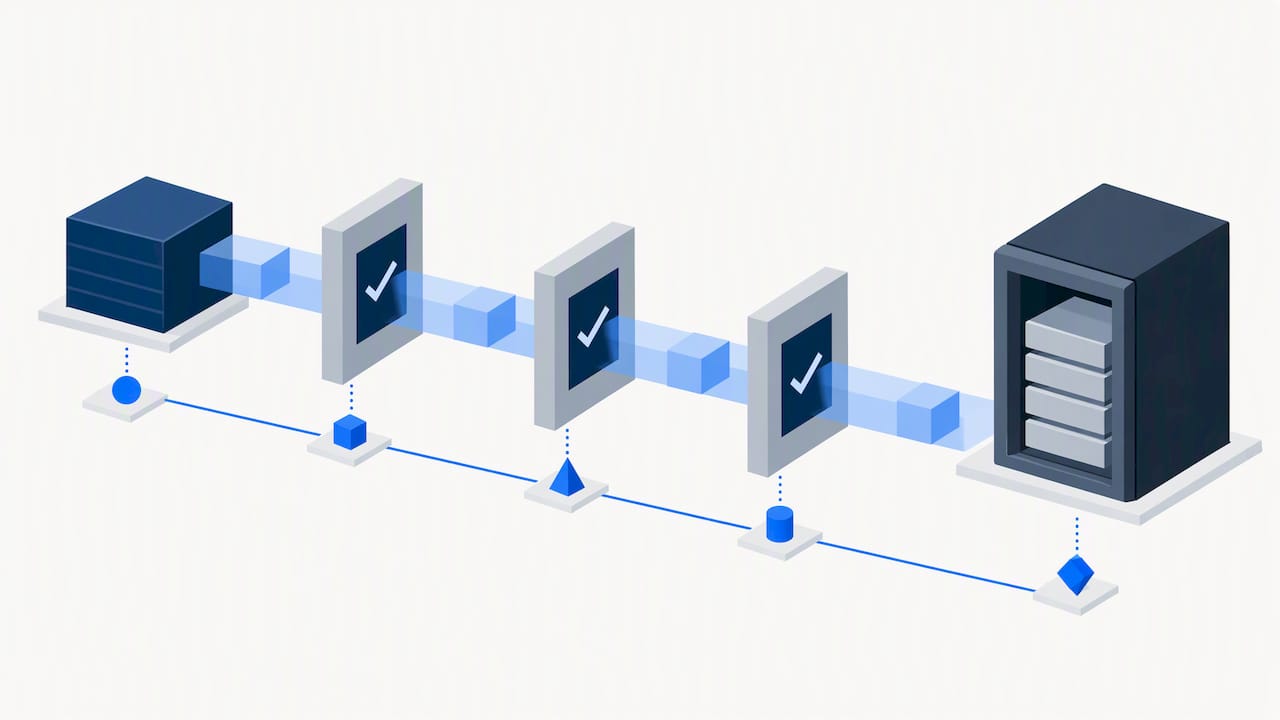
INTERPOL’s guidelines for digital forensics laboratories set out core case-management steps, including registering a case and documenting acquisition methods, because a weak link anywhere in that chain can undermine admissibility. Laboratories accredited to ISO 17025 follow externally audited procedures for exactly this reason.
Before instructing a provider, ask to see:
- Proof of accreditation or an equivalent quality framework.
- A sample report showing methodology and exhibit presentation.
- Evidence of hashing and chain-of-custody documentation on past engagements.
- CVs and prior expert-witness experience of the examiner assigned to the case.
Pro Tip: Ask the lab how it documents fixity checks at every stage of acquisition, not just at the point of imaging; gaps usually appear mid-process, not at the start.
Remote, cloud and encrypted-evidence: secure options and constraints
Remote examination is often feasible, provided the lab works from a verified working copy rather than the original media and uses properly controlled equipment. NIST’s guidance on offsite examination notes that this approach preserves the integrity of the original while allowing flexibility in where analysis happens.
Secure transfer should rely on:
- Encrypted containers or SFTP rather than email attachments.
- VPN or remote desktop access through enterprise-controlled equipment.
- Never a personal device or an unsecured public network.
Cross-border cases add complexity, since cloud providers’ own policies, local warrants and jurisdictional rules can all affect how quickly evidence becomes accessible, and encrypted devices may need specialist extraction before analysis can even begin. Our cloud data forensics workflow guide covers this in more detail for legal teams handling remote evidence.
How to choose and instruct a forensic IT provider: checklist and questions to ask
Procurement moves faster when solicitors and corporate counsel know exactly what to ask at first contact.
- Does the lab hold ISO 17025 accreditation or follow equivalent documented standard operating procedures?
- Can it provide a sample report and chain-of-custody documentation from a comparable case?
- What is the realistic turnaround for imaging, analysis and reporting given your data volume?
- Will any part of the work be subcontracted, and if so, to whom?
- Has a conflict check been run against opposing parties?
- Is pricing hourly, fixed per engagement, or subject to an emergency uplift for urgent instructions?
Our digital evidence preservation guidance sets out the preservation steps a lab should expect you to have already taken before formal instruction.
Pro Tip: Treat vague answers on subcontracting or turnaround as a warning sign; a lab confident in its process will give specific figures, not ranges with no explanation.
Publisher perspective: how Computer Forensics Lab approaches investigation and evidence handling
A forensic lab builds every engagement around documented chain of custody, verified imaging and reporting structured for court use, since a finding that cannot withstand cross-examination is of limited value to a client. Such labs support legal teams through complex extractions, including encrypted devices, and prepare their experts to give testimony that stands up to scrutiny.
— Computer
How to instruct Computer Forensics Lab and next steps
A forensic service provider may provide a range of services such as mobile phone and computer forensics, cloud forensics, malware analysis, data recovery, e-discovery support and expert witness reporting, for solicitors, corporate clients and law enforcement. A typical engagement begins with a scoping conversation about evidence and legal objectives, followed by formal instruction and acquisition.
Visit our primary services page to discuss your case and arrange immediate instruction. For businesses reviewing wider incident response planning alongside a forensic investigation, this disaster recovery planning guide offers useful background on continuity measures to run in parallel.
This article is general information, not a substitute for advice from a qualified lawyer. Consult a qualified legal professional about your own circumstances before acting on anything here.
FAQ
What is forensics in a Big 4 firm?
Within large accountancy and advisory firms, forensic services usually refer to forensic accounting and digital forensics teams that investigate fraud, financial irregularities and data breaches for corporate clients. The scope and methodology can differ from a dedicated digital forensics lab, so it is worth confirming exactly what technical capability sits behind the service offered.
What do forensic IT services actually do?
Forensic IT services identify, acquire, analyse and report on digital evidence from devices, servers and cloud accounts to support litigation, criminal investigations or corporate inquiries. The process follows documented standards such as INTERPOL’s digital forensics guidance to keep findings admissible in court.
Why did the Forensic Science Service close?
The UK’s Forensic Science Service was a government-owned body that closed after sustained financial losses, with forensic work subsequently shifting to private providers and police in-house units. It mainly covered traditional forensic science rather than the digital forensics services described in this guide.
What does a forensic computer analyst earn?
Salaries for forensic computer analysts vary considerably by country, employer type and seniority, and no single figure applies across the private, corporate and law enforcement sectors. Prospective candidates are better served checking current recruitment listings for their own region and specialism.
When should a company involve a forensic IT provider rather than its own IT team?
A company should bring in a specialist once the matter could end up in litigation, regulatory scrutiny or a criminal complaint, since in-house IT staff rarely follow forensically sound acquisition methods. Engaging a provider early protects the chain of custody and avoids evidence being inadvertently altered during an internal response.
Sources
- INTERPOL — Guidelines for digital forensics first responders
- NIST IR 8387 — Digital evidence preservation: considerations for evidence handlers
- NIST guidance on non-routine offsite examination of digital/multimedia evidence