
TL;DR:
- Proper evidence management relies on maintaining a strict chain of custody to ensure evidence integrity and admissibility. Digital and physical evidence require specific collection, storage, and transportation procedures, with detailed documentation verifying every handling step. Adhering to recognized forensic standards and proactive protocols prevents evidence gaps, protecting cases in court.
Best practices for evidence handling are defined as the protocols and techniques that preserve the integrity, authenticity, and admissibility of evidence throughout its entire lifecycle. In legal and investigative contexts, the recognised industry term is forensic evidence management, and it governs everything from the moment evidence is collected to the point it is presented in court. Chain of custody sits at the heart of every credible forensic evidence guideline, from NIST recommendations to the UK Forensic Science Regulator’s published standards. Whether you are a solicitor preparing for litigation, a law enforcement officer at a crime scene, or a corporate investigator responding to a data breach, getting these procedures right is not optional. A single gap in documentation can render otherwise compelling evidence inadmissible.
How do chain of custody procedures ensure evidence integrity?
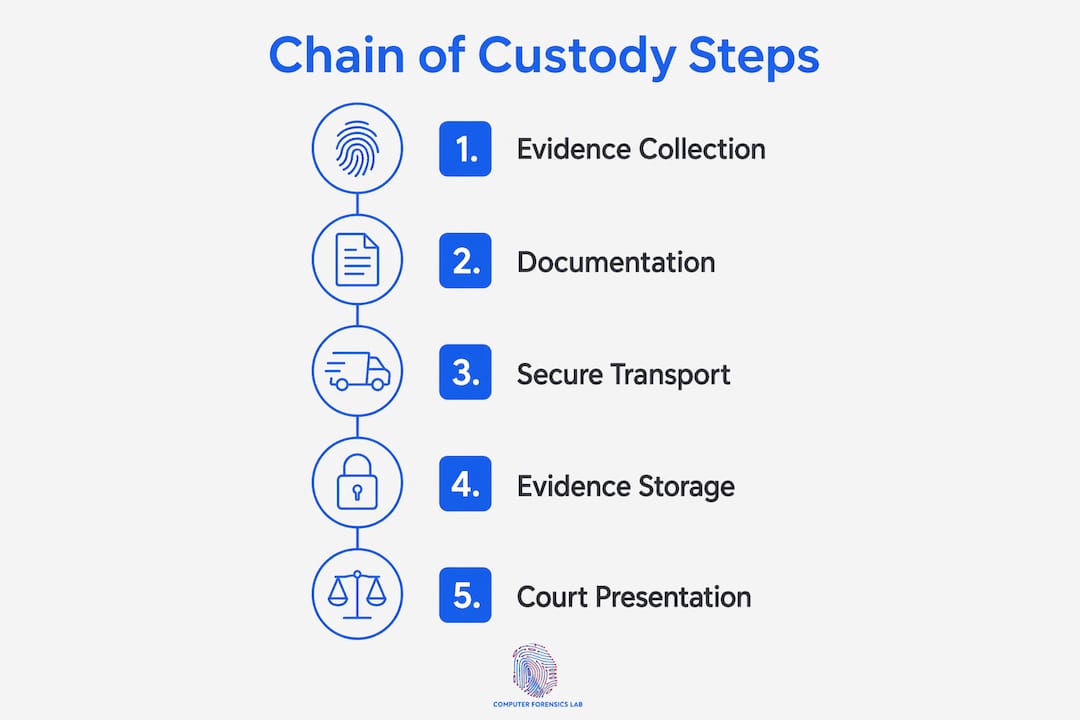
Chain of custody is the chronological documented record that tracks evidence handling from collection through to court presentation, proving no tampering or alteration occurred. Every person who touches a piece of evidence must be recorded, along with the time, date, and purpose of that contact. Without this record, opposing counsel has grounds to challenge the entire evidential chain.
For digital evidence, the chain of custody requirement is more demanding than many investigators expect. Audit trails must capture not only who accessed a device or file, but also what actions were taken and when. Metadata preservation is non-negotiable. Access logs, timestamps, and file hash values all form part of the documented record that courts scrutinise.
Key documentation requirements for a defensible chain of custody include:
- Unique evidence identifier: assigned at the point of collection and carried through every subsequent record entry.
- Chronological log entries: each transfer, examination, or storage event recorded with a signed entry and timestamp.
- Hash verification: SHA-256 or equivalent hash values recorded at collection and re-verified at each stage to confirm data integrity.
- Controlled access records: a log of every individual who accessed the evidence, including the reason and duration.
- Tamper-evident packaging: seals and impressions recorded to confirm physical evidence has not been opened between transfers.
Audit trails and controlled workflows strengthen the defensibility and admissibility of both physical and digital evidence. This means chain of custody is a proactive strategy, not a retrospective paperwork exercise.
Pro Tip: Start your chain of custody log before you touch anything. Photograph the scene, note the time, and assign an evidence number before the first item is bagged. Retrospective documentation is always weaker under cross-examination.
What are the essential evidence collection techniques?
Evidence collection techniques differ significantly depending on whether you are dealing with physical specimens or digital devices. Applying the wrong method to either category causes irreversible damage.
Collecting physical and biological evidence
Biological evidence requires specific environmental controls from the moment of collection. Biological evidence must be air-dried at room temperature, away from heat and direct sunlight, then packed in paper or breathable cotton. Plastic packaging traps moisture and destroys DNA rapidly. For blood samples destined for DNA analysis, storage at 4°C is required once the specimen is dry.
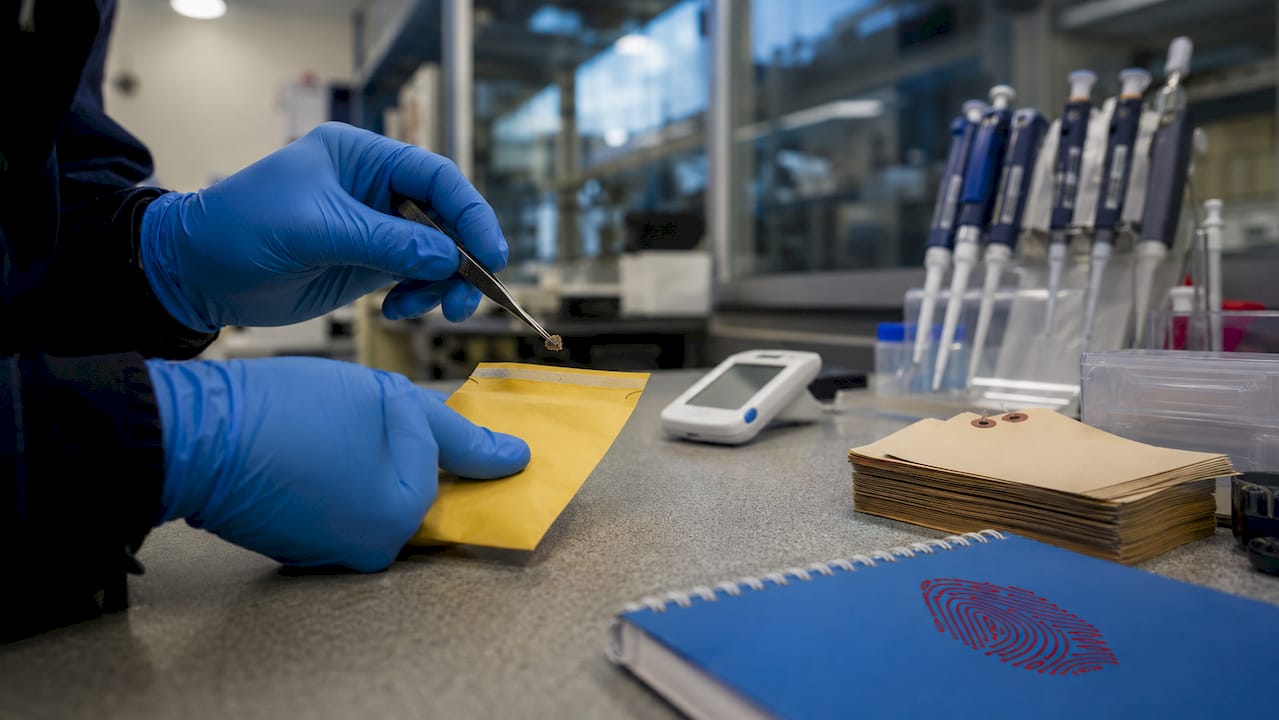
Physical packaging must also meet legal standards. Tamper-evident tags and preserved seal impressions verify evidential integrity at every transfer point. A broken seal without a corresponding log entry is a fatal break in the chain.
Collecting digital evidence
Digital evidence collection follows a strict sequence to prevent data modification:
- Photograph the device in situ before touching it, capturing screen state, connections, and surrounding environment.
- Isolate the device from networks immediately. Switch to flight mode or place in an RF-shielded bag to prevent remote access or remote wipe.
- Create a bitwise forensic image of the storage media using validated imaging tools. A bitwise copy captures every sector, including deleted files and unallocated space.
- Verify the image with a hash value (SHA-256 is the current standard). Record the hash in the chain of custody log before proceeding.
- Store the original device separately from the working copy. Never conduct analysis on the original.
- Label every item with a unique evidence identifier, the collector’s name, date, time, and case reference.
| Evidence type | Packaging standard | Storage condition |
|---|---|---|
| Biological specimens | Paper or breathable cotton, tamper-evident seal | Air-dried; 4°C for DNA samples |
| Physical objects | Rigid containers, tamper-evident tags | Ambient, away from heat and moisture |
| Digital devices | RF-shielded bags or metal containers | Away from radio frequency sources |
| Forensic image files | WORM media or hardware-locked drives | Two copies, separate physical locations |
Pro Tip: Always use write-blockers when connecting a suspect drive to your forensic workstation. A write-blocker is a hardware or software device that prevents any data being written to the original media during imaging.
How should digital evidence be stored, transported, and preserved?
Digital evidence storage demands more than a locked cabinet. The risk of data loss, corruption, or remote alteration requires layered technical and physical safeguards.
Long-term storage of digital forensic images requires at least two copies on separate physical media held in distinct locations. This protects against localised hazards such as fire, flood, or hardware failure. Each copy must be independently verified via SHA-256 hash and tracked individually in the chain of custody.
WORM media or hardware-locked drives that prevent modification after the initial write are the preferred storage format for forensic image files. Each storage medium receives its own evidence identifier and is tracked independently. This prevents any question of post-collection alteration arising at trial.
Transport introduces additional risks that many investigators underestimate:
- RF shielding is mandatory for hard drives and mobile devices in transit. P25 digital radios transmit at 1–5 watts in the 700–800 MHz band, creating a genuine risk of wireless data modification when drives are exposed nearby.
- Shielded metal containers must be used rather than standard evidence bags when transporting digital storage media.
- Evidence must never be left unattended during transport. Each movement or transfer must be documented with a signed chain of custody entry, and no informal transports are permitted.
- Locked containers or vehicle boots are required for securing evidence during road transport.
Pro Tip: If you are transporting a live device that cannot be powered down without data loss, document the decision, the reason, and the steps taken to prevent network access. Courts accept operational necessity when it is properly recorded.
What are the recognised forensic standards governing evidence handling?
Several national and international frameworks define the legal standards for evidence handling. Knowing which apply to your jurisdiction is not optional for practitioners preparing evidence for court.
The key frameworks include:
- NIST guidelines: The National Institute of Standards and Technology publishes detailed guidance on digital forensics, including IR 8387, which addresses cloud forensics and the challenges of preserving evidence in distributed environments.
- UK Forensic Science Regulator: The Regulator’s published principles require that all expert forensic interpretations be balanced, transparent, and logical, distinguishing prosecution and defence propositions to present a complete evidential picture. Experts must include limitations and reasoning to enable scrutiny and cross-examination.
- BNSS 2023: The Bharatiya Nagarik Suraksha Sanhita 2023 includes specific legal provisions requiring documented chain of custody at every transfer node, reflecting the global direction of travel towards codified custody requirements.
- ISO/IEC 27037: This international standard provides guidelines for the identification, collection, acquisition, and preservation of digital evidence, and is widely referenced in UK corporate investigations.
“The UK Forensic Science Regulator requires expert evidence to be balanced and transparent, presenting all relevant interpretations to ensure fair judicial consideration.” — UK Forensic Science Regulator, FSR-GUI-0004
Documented policies aligned to these standards do more than satisfy regulators. They create a defensible audit trail that withstands challenge from opposing expert witnesses in legal proceedings. Organisations that operate without written evidence handling policies routinely lose admissibility arguments that well-prepared teams win.
What practical steps help teams implement sound evidence management?
The gap between knowing the standards and applying them consistently is where most investigations fail. Practical implementation requires clear processes, assigned responsibilities, and the right tools.
Follow this sequence to build a defensible evidence management workflow:
- Assign a single evidence custodian for each case. One named individual holds accountability for the chain of custody log from collection to court. Shared responsibility creates gaps.
- Use a digital case management platform that automatically logs every action taken on a piece of evidence. Automatic logging removes the human error that manual records introduce.
- Create contemporaneous records at every stage. Notes written hours after an event are weaker than records made at the time. Courts notice the difference.
- Conduct pre-collection planning before attending a scene. Know what evidence types you expect, what packaging you need, and what imaging tools are required. Improvisation at scene leads to procedural errors.
- Train all personnel who handle evidence, not just forensic specialists. A solicitor’s clerk who mishandles a USB drive can compromise an entire case.
- Review and audit your chain of custody logs before disclosure. Identify any gaps, unexplained transfers, or missing signatures and address them with supplementary documentation before they are raised by opposing counsel.
The digital evidence handling guide published by Computerforensicslab sets out the UK-specific legal requirements in detail, covering collection through to disclosure. For corporate investigators, aligning internal policies to these standards before an incident occurs is far less costly than remedying procedural failures after the fact.
Key takeaways
Effective evidence management requires chain of custody documentation, technically sound collection methods, and alignment with recognised forensic standards from the moment evidence is identified.
| Point | Details |
|---|---|
| Chain of custody is foundational | Every transfer, access, and examination must be signed, timestamped, and logged without exception. |
| Biological evidence needs specific packaging | Air-dry specimens and use breathable materials; plastic packaging destroys DNA rapidly. |
| Digital images require WORM media | Store forensic images on write-once media with two copies in separate physical locations, each hash-verified. |
| RF shielding protects devices in transit | Place digital devices in shielded metal containers during transport to prevent wireless data modification. |
| Standards set the legal baseline | NIST, ISO/IEC 27037, and the UK Forensic Science Regulator’s guidelines define the minimum acceptable standard for court-ready evidence. |
What I have learned from years of forensic evidence work
The most common failure I see is not technical. It is the assumption that good intentions are a substitute for good documentation. Investigators who handle evidence carefully but record it poorly lose cases they should win. Courts do not reward effort. They reward proof.
Pre-planning is the single highest-return investment in any investigation. Arriving at a scene without the right packaging, imaging tools, or custody forms forces improvisation. Improvisation creates gaps. Gaps create challenges. I have seen strong digital evidence excluded because a transfer was not signed, or because a device was transported in a standard evidence bag rather than an RF-shielded container. These are not obscure technicalities. They are predictable failures that preparation eliminates.
The evolution of digital evidence has made the technical side harder, but the principles have not changed. Preserve the original. Document everything. Verify with hashes. The challenge now is applying those principles to cloud data, encrypted devices, and distributed storage environments where the evidence may exist across multiple jurisdictions. That requires interdisciplinary collaboration between legal teams and forensic specialists, not just technical competence in isolation.
One thing I would push back on is the idea that chain of custody is primarily a legal formality. It is a quality control mechanism. When you maintain a rigorous custody log, you force yourself to handle evidence carefully at every stage. The documentation and the handling discipline reinforce each other. Teams that treat custody records as a box-ticking exercise tend to handle evidence carelessly too.
— Computerforensicslab
How Computerforensicslab supports rigorous evidence handling
Computerforensicslab provides professional digital forensics services to legal professionals, law enforcement, and corporate investigators across the UK. The team specialises in secure evidence collection, forensic imaging, chain of custody documentation, and expert witness reporting that meets the standards required by UK courts. Every case is handled with independently verified hash values, documented custody logs, and analysis conducted on forensic copies rather than original media. For complex cases involving encrypted devices, cloud data, or multi-jurisdictional evidence, Computerforensicslab provides specialist support from initial collection through to court-ready reporting. Contact the team directly to discuss your case requirements.
FAQ
What is chain of custody and why does it matter?
Chain of custody is the chronological documented record of who handled evidence, when, and why, from collection to court presentation. It proves no tampering or alteration occurred, making it the primary test of evidential admissibility.
How should digital devices be packaged for transport?
Digital devices must be placed in RF-shielded metal containers during transport to prevent wireless data modification or remote wipe. They must never be left unattended, and every transfer must be recorded with a signed custody entry.
What storage format is recommended for forensic image files?
WORM media or hardware-locked drives are the preferred format for storing forensic images, as they prevent modification after the initial write. At least two copies should be held on separate physical media in distinct locations, each verified by SHA-256 hash.
Which standards govern evidence handling in the UK?
The UK Forensic Science Regulator’s guidelines, ISO/IEC 27037, and NIST publications set the primary standards for evidence handling in UK legal and investigative contexts. Expert forensic interpretations must be balanced, transparent, and logical under the Regulator’s published principles.
What is the most common evidence handling mistake?
The most common mistake is failing to document transfers and access events contemporaneously. Retrospective records are weaker under cross-examination and courts routinely treat documentation gaps as evidence of procedural failure.