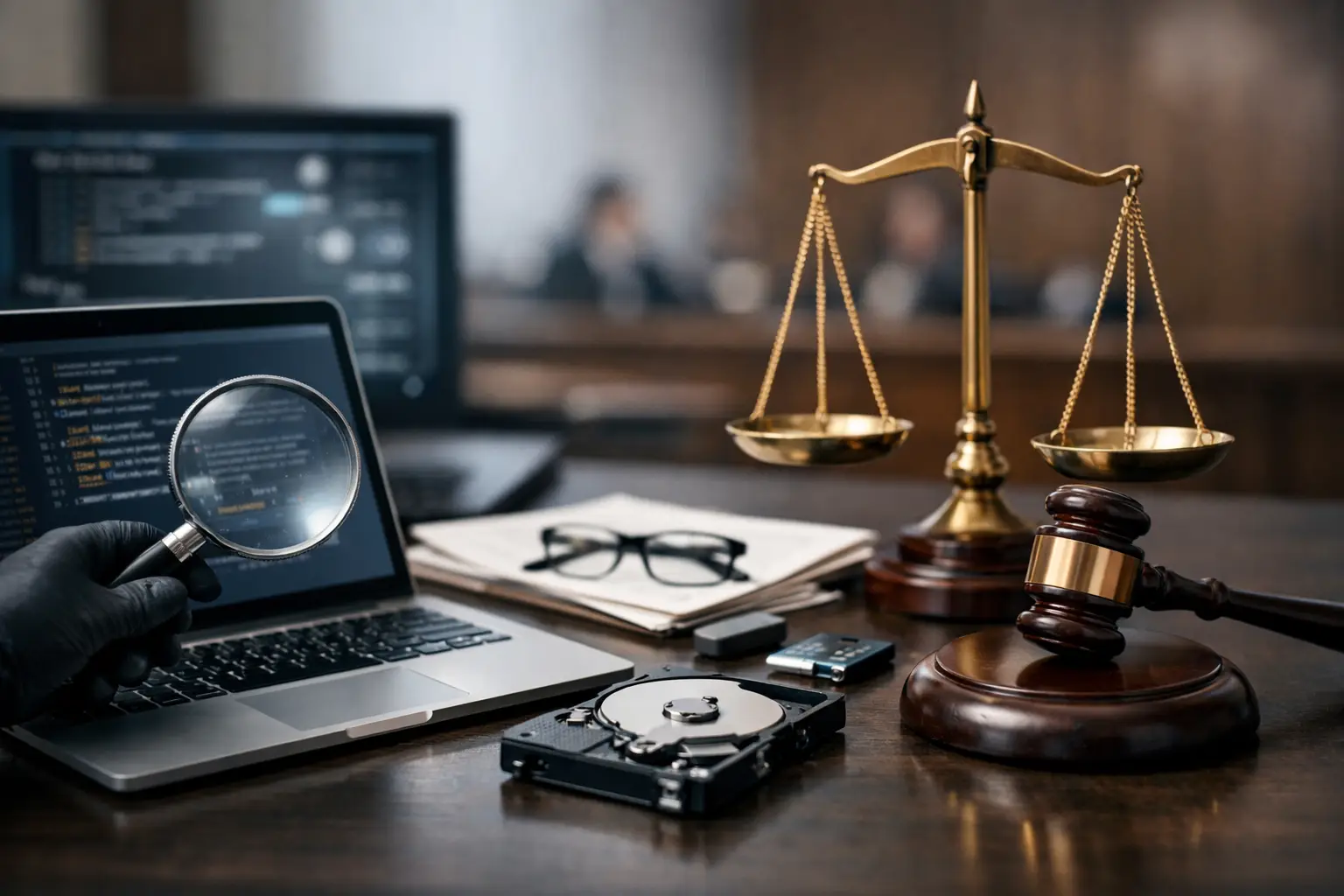
A disputed document timestamp, a deleted folder, an employee’s unexplained file transfer, a laptop used shortly before a key event – these are often the points where a case turns. Computer forensics is not simply about looking through a device. It is a disciplined evidential process for identifying, preserving, examining and reporting digital material in a way that can withstand scrutiny in court, in regulatory proceedings, or within a serious internal investigation.
For solicitors, businesses and private clients, the distinction matters. A general IT review may tell you that data exists. Computer forensics is concerned with whether that data can be recovered properly, interpreted accurately and presented with a clear chain of custody. When the facts are contested, procedure is often as important as the findings themselves.
What computer forensics actually involves
At its core, computer forensics deals with digital evidence held on desktops, laptops, servers, removable media and, in some cases, cloud-linked environments accessible through those devices. The work usually begins with preservation. If a device is handled casually, key artefacts may be altered, metadata may change, and the defence or opposing party may later challenge the reliability of the examination.
A proper forensic process is therefore designed to minimise contamination. Devices are documented, secured and imaged using methods that preserve the underlying data. That image, rather than the live original wherever possible, becomes the basis for examination. This is how an investigator can later explain what was done, when it was done and why the evidence should be regarded as reliable.
The examination itself may cover far more than visible files. Depending on the issues in dispute, it can include deleted material, user activity, internet history, login records, file access times, connected devices, application usage, system logs and traces of data movement. Sometimes the critical point is not what a file says, but whether it was opened, copied, renamed, printed or transmitted at a particular time.
Why computer forensics matters in legal matters
Digital evidence now appears in a wide range of civil and criminal cases. In employment disputes, it may show whether confidential information was taken before resignation. In shareholder or partnership disputes, it may help establish access to records, document manipulation or concealed communications. In family proceedings, device evidence can become relevant where there are allegations involving communications, location data or account use. In criminal matters, the evidential handling of a computer may affect disclosure, defence strategy and the weight attached to recovered material.
In each of these settings, the same problem arises. Digital material is easy to alter, misread or take out of context. A screenshot alone rarely answers the right questions. Nor does a witness simply saying that a file was present on a machine. Courts and legal teams need to know how the material was obtained, whether it remained intact, what the limitations are, and whether alternative explanations have been considered.
That is why impartiality is central. A forensic examiner is not there to force the evidence into a client’s theory of the case. The role is to examine methodically, report transparently and distinguish between what can be said with confidence and what remains uncertain. That restraint is not a weakness. It is often what makes findings defensible.
The difference between IT support and forensic examination
This is one of the most important distinctions for clients under pressure. If a business suspects insider misconduct or data theft, there is often a temptation to ask internal IT staff to inspect the machine quickly. That may feel efficient, but it can create evidential problems later.
IT teams are there to keep systems running. They may need to access accounts, reset permissions, move devices or remediate issues fast. Those actions can be entirely reasonable from an operational perspective, yet harmful from an evidential one. Once metadata changes or artefacts are overwritten, some lines of enquiry may be lost permanently.
A forensic examination is slower by design because it prioritises preservation, repeatability and clear reporting. That does not mean it is impractical. It means the work is done with the expectation that findings may later be tested by opposing experts, challenged in correspondence or examined in the witness box.
What can be recovered and analysed
A common misunderstanding is that computer forensics only helps when a device is obviously damaged or when files have been deleted. In reality, the value is often broader. Examinations may reveal the presence of deleted documents, remnants of USB device usage, synchronisation with cloud services, browser-based activity, evidence of external storage use, or patterns showing when a user account was active.
That said, recovery is never unlimited. It depends on the device, the operating system, whether data has been overwritten, whether encryption is in place, and whether the machine has continued to be used since the relevant events. Older assumptions about being able to restore everything from a hard drive no longer hold true in every case, particularly with modern solid-state storage, encrypted environments and cloud-first workflows.
This is where expectation management matters. A credible forensic report should explain not only what was found, but also the constraints of the examination. If relevant data is absent, the reason may be innocent, technical or suspicious. Distinguishing between those possibilities requires care rather than speculation.
Computer forensics in internal investigations and cyber incidents
Outside formal litigation, computer forensics is regularly used to investigate ransomware events, suspected unauthorised access, business email compromise, employee misconduct and intellectual property theft. In these matters, speed matters, but so does judgement.
A rushed response can worsen the damage. Pulling the plug on a machine may preserve some evidence but lose volatile data. Leaving a system untouched may allow harmful activity to continue. There is rarely a single rule that fits every incident. The right approach depends on the threat, the network environment, the legal obligations in play and whether criminal, regulatory or employment proceedings are likely to follow.
For corporate clients, the strongest forensic support often combines technical examination with a clear understanding of disclosure risk, privilege boundaries and reporting needs. Senior stakeholders do not only need an answer to what happened. They need findings that can support disciplinary action, insurer engagement, regulator contact or subsequent legal proceedings.
Reporting, admissibility and expert evidence
The examination is only part of the job. If the findings cannot be explained clearly, their value diminishes quickly. Good computer forensics reporting should set out the instructions received, the materials examined, the methods used, the relevant findings, and any limitations or assumptions. It should be comprehensible to lawyers and the court without sacrificing technical accuracy.
This is where many weaker investigations fail. They produce screenshots, exports or technical notes, but not a structured evidential report. That may be enough for internal awareness, yet it is often inadequate where formal reliance is anticipated.
In contentious matters, peer review and procedural discipline can be just as important as technical skill. An expert may later need to justify why a particular artefact was relied upon, why an alternative interpretation was rejected, or why certain acquisition steps were taken. Precision at the reporting stage protects the integrity of the work done earlier.
When to instruct a specialist
The best time to seek forensic input is usually earlier than clients expect. If there is a realistic prospect of litigation, dismissal, police involvement, injunctive relief or expert challenge, delay can be costly. Continued use of the device may alter the evidence. Well-meaning attempts to search it may contaminate the record. Key opportunities for targeted preservation may pass.
Early instruction does not always mean a full examination is required immediately. In some matters, an initial scoping exercise is enough to identify what devices exist, what data sources are likely to matter, and what urgent preservation steps should be taken. In others, full imaging and analysis are necessary from the outset.
The right course depends on the dispute, the available material and the questions that actually need answering. A disciplined specialist will say so plainly rather than proposing unnecessary work. Computer Forensics Lab approaches these matters on that basis – evidence first, method second, opinion only where the data supports it.
When digital evidence may shape the outcome of a case, the issue is not simply whether data can be found. It is whether the facts can be uncovered, preserved and presented in a way that others cannot easily dismantle. That is where careful computer forensics earns its value.