
TL;DR:
- Digital footprints include all online data linked to individuals or businesses, both shared and passively collected. Managing these footprints reduces risks of identity theft, reputational damage, and legal exposure while safeguarding privacy and professional reputation. Ongoing audits, technical controls, and deliberate content strategies are essential for effective footprint management.
A digital footprint is the traceable record of every online action linked to a person or business, covering both actively shared content and passively collected data. Understanding why digital footprints matter is no longer optional. Employers screen candidates using online data, insurers use behavioural profiles, and cybercriminals exploit exposed records for identity theft and phishing. Your online presence shapes outcomes across hiring, legal proceedings, and business relationships. Managing it deliberately is the difference between controlling your narrative and having others define it for you.
Why understand digital footprints: the core case
A digital footprint includes all traceable online information linked to a person or business, impacting privacy, trust, and security. That definition matters because most people underestimate the scope. They think of social media posts and emails. The reality includes location data, device identifiers, browser cookies, app metadata, and public records held by data brokers. Each fragment alone seems minor. Combined, they form a detailed profile that third parties can access, purchase, and act upon without your knowledge.

The importance of digital footprints extends beyond personal privacy. Businesses face reputational and legal exposure when employee or corporate data trails are unmanaged. Legal professionals increasingly rely on digital footprint evidence in litigation, making the ability to analyse digital evidence a standard part of case preparation. Understanding your footprint is the first step toward protecting it.
What actually composes a digital footprint?
Digital footprints divide into two categories: active and passive. Active data is what you deliberately share: social media posts, forum comments, email sign-ups, and published reviews. Passive data is collected without direct action on your part. Cookies track your browsing across sites. IP logs record your location and device. App permissions harvest contacts, microphone access, and movement data in the background.
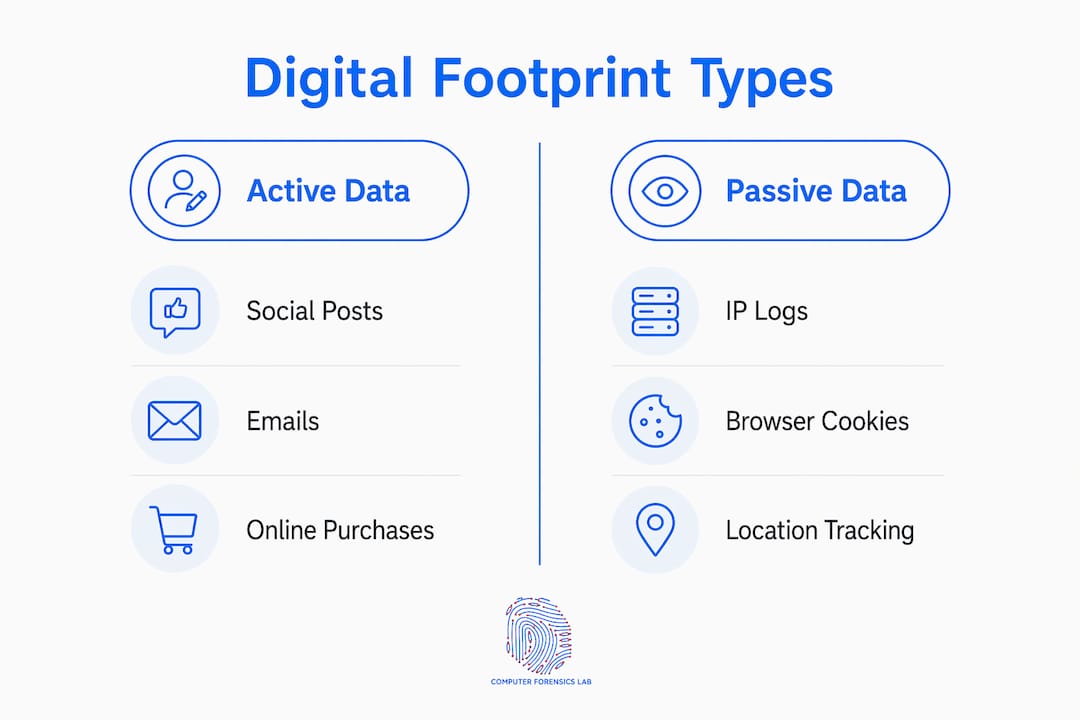
The passive category is the larger and more dangerous of the two. Passive data collection occurs across websites, apps, and connected services without deliberate user involvement. Most people have no idea how much data accumulates this way. A single afternoon of browsing can generate hundreds of data points spread across dozens of third-party trackers.
Data brokers sit at the centre of this system. They aggregate passive and active data from multiple sources, build detailed profiles, and sell them to advertisers, insurers, and employers. The largest volume of footprint data comes from these secondary sources, not from the user’s own posts. Managing this layer requires active removal requests to data broker registries, not just deleting your social accounts.
- Social media profiles: Public posts, likes, shares, and tagged photos
- Cookies and trackers: Cross-site behavioural data collected by advertising networks
- IP and device logs: Location, device type, and connection history recorded by websites and apps
- App metadata: Permissions granted to mobile applications, including contacts and location
- Data broker records: Aggregated profiles built from public records, purchase history, and browsing data
Pro Tip: Search your full name in quotation marks on Google, then check data broker sites such as Whitepages and similar registries. The results will show you what a recruiter, journalist, or criminal can find about you in under five minutes.
How do digital footprints create privacy and security risks?
Unmanaged digital footprints are a persistent attack surface. Cybercriminals use exposed data for identity theft, phishing campaigns, and social engineering. A name, employer, and rough location, all publicly visible, give an attacker enough to craft a convincing impersonation. The risk is not theoretical. Criminals exploit exposed records as a matter of routine.
“Digital footprints are commoditised assets. Users must treat privacy as a managed risk, auditing their data trail the way they would audit physical assets.” — NordPass
The passive footprint creates specific dangers that most people miss. Deleting accounts does not erase the passive data already collected. Device IDs, IP logs, and cookies continue feeding data brokers even after you close a profile. Technical protections such as VPNs, anti-tracking browser extensions, and privacy-focused DNS services reduce this exposure, but they do not eliminate it entirely.
The risks break down into three clear categories:
- Identity theft: Personal data aggregated from multiple sources enables fraudulent account creation and financial crime
- Phishing and social engineering: Publicly visible job titles, colleagues, and interests make targeted attacks far more convincing
- Reputational exposure: Outdated posts or misinterpreted content can resurface during background checks or legal proceedings, causing lasting damage
Digital footprint awareness is not just a personal concern. Businesses face regulatory exposure under the UK GDPR when employee data is mishandled or when corporate systems generate uncontrolled data trails. The legal applications of digital forensics increasingly involve footprint data as primary evidence in employment disputes, fraud cases, and data breach investigations.
What is the impact of digital footprints on reputation?
Employers and clients use digital footprint screening as a standard part of vetting. A well-managed positive presence is a career asset. A neglected or negative one closes doors before a conversation begins. The impact on professional reputation is direct: a curated digital presence increases visibility and connects individuals to clients, investors, and opportunities.
The mechanism is more complex than most people realise. Employers do not simply search for embarrassing photos. They piece together a mosaic of behaviours from timestamps, public profiles, and activity patterns. This context collapse means a single post is rarely the problem. The pattern of behaviour inferred across multiple sources is what shapes a professional reliability assessment. Repairing that pattern is far harder than deleting one post.
Four practical steps to protect and build your reputation through your digital footprint:
- Audit your current presence. Search your name, business name, and associated email addresses across Google and social platforms. Note what appears on the first three pages of results.
- Claim and complete professional profiles. A complete LinkedIn profile, a professional website, or a published portfolio pushes negative or irrelevant content down in search rankings.
- Review privacy settings regularly. Platform settings change without notice. Quarterly reviews of Facebook, Instagram, and LinkedIn privacy controls are a minimum standard.
- Request data broker removal. Submit removal requests to major UK and international data broker registries. This reduces the profile available to third parties conducting background checks.
Pro Tip: Treat your digital presence as a living document, not a set-and-forget profile. A quarterly review of your name in search results takes fifteen minutes and can prevent months of reputational repair work.
Poor digital literacy compounds these risks. Individuals without the knowledge or resources to manage their footprints face digital inequality, losing access to opportunities that a well-managed presence would open. This is not a niche concern. It affects job seekers, small business owners, and anyone subject to professional vetting.
How to manage and leverage your digital footprint effectively
Effective management combines monitoring, technical controls, and deliberate content creation. The goal is not invisibility. Complete invisibility online raises its own red flags for employers and clients. The goal is control: knowing what exists, reducing what is harmful, and building what is useful.
Monitoring your footprint
Regular audits are the foundation. Manual Google searches using your name in quotation marks reveal what is publicly indexed. Setting up a Google Alert for your name or business name delivers ongoing notifications when new content appears. For businesses, monitoring brand mentions across social media platforms and review sites is equally important.
Technical controls that reduce passive exposure
| Control | What it does | Limitation |
|---|---|---|
| VPN | Masks IP address and location from websites and trackers | Does not prevent cookie tracking or data broker records |
| Anti-tracking browser extension | Blocks third-party cookies and advertising trackers | Effectiveness varies by browser and extension |
| Privacy-focused DNS | Prevents DNS-level tracking of browsing habits | Does not address data already collected |
| Data broker removal requests | Removes your profile from aggregator databases | Requires repeat requests as data re-aggregates over time |
Building a positive presence
Publishing professional content, whether articles, case studies, or portfolio work, creates indexed material that shapes how search results represent you. Social media reputation management follows the same principle for businesses: consistent, professional output builds a positive record that outweighs isolated negative content. A positive digital presence is not vanity. It is risk management.
The legal compliance dimension of footprint management matters for businesses operating under UK GDPR. Organisations must understand what data they generate, where it is stored, and who can access it. Failing to manage this creates regulatory liability as well as reputational risk.
Key takeaways
Understanding and managing your digital footprint is the most direct way to protect your privacy, security, and professional reputation in a world where data is routinely harvested and sold.
| Point | Details |
|---|---|
| Active vs passive data | Passive data, collected without your action, forms the majority of your digital footprint. |
| Data brokers are the main risk | Most footprint data comes from secondary sources, not your own posts, and requires active removal requests. |
| Reputation is a mosaic | Employers assess patterns of behaviour across multiple sources, not single posts. |
| Account deletion is insufficient | Passive footprints persist after account deletion; VPNs and anti-tracking tools are needed to reduce exposure. |
| Management is ongoing | Quarterly audits, privacy setting reviews, and broker removal requests are the minimum standard. |
The uncomfortable truth about digital footprints
Working in digital forensics, I see the consequences of unmanaged footprints regularly. The cases that surprise clients most are not the ones involving obvious oversharing. They are the ones where passive data, collected silently over years, surfaces in a legal dispute or a background check and tells a story the individual never intended to tell.
The common assumption is that digital footprint management is about cleaning up embarrassing content. That is the smallest part of the problem. The real issue is the invisible layer: device IDs, metadata, broker profiles, and behavioural patterns that exist entirely outside your control unless you actively intervene. Most people have never submitted a single data broker removal request. Most businesses have never audited the data trails their systems generate.
I have seen individuals lose employment opportunities because of a digital profile they did not know existed. I have seen businesses face legal exposure because employee activity left a data trail that contradicted their stated policies. The forensic investigation process makes these trails visible. The lesson is always the same: what you do not know about your footprint can hurt you far more than what you do know.
Treat digital footprint management as ongoing risk management. Schedule it. Review it. Do not wait for a legal dispute or a failed background check to find out what your data trail says about you.
— Computer
How Computerforensicslab supports digital footprint investigations
Computerforensicslab provides professional digital footprint analysis for individuals, businesses, and legal teams across the UK. The team examines social media activity, device data, IP logs, and cloud records to build a clear picture of what a digital trail contains and what it reveals. This service supports privacy protection, legal compliance, and reputational due diligence. Whether you need to understand your own exposure or gather evidence for a legal matter, the digital footprint investigation service delivers forensically sound results. For broader investigative needs, the full range of digital forensics services covers data recovery, malware analysis, and expert witness reporting.
FAQ
What is a digital footprint?
A digital footprint is all traceable online information linked to a person or business, including social media posts, location data, IP logs, cookies, and data broker records. It covers both actively shared content and passively collected data.
Why do digital footprints matter for privacy?
Digital footprints are harvested by data brokers and used in advertising, insurance underwriting, and background checks. Unmanaged footprints expose individuals to identity theft, phishing, and reputational damage.
Does deleting social media accounts remove your digital footprint?
Deleting accounts removes active content but does not erase passive data. Device IDs, IP logs, and data broker profiles persist after account deletion and require separate technical and administrative action to reduce.
How do employers use digital footprints?
Employers piece together a mosaic of behaviours from public profiles, timestamps, and activity patterns to assess professional reliability. A single post is rarely decisive; the overall pattern of online behaviour shapes the assessment.
How can businesses manage their digital footprint?
Businesses should conduct regular audits of their online presence, review data handling practices under UK GDPR, submit data broker removal requests, and publish consistent professional content to build a positive, controlled digital record.