
A single misstep in recording digital evidence can jeopardise months of complex investigation in London’s cybercrime cases. For legal professionals and forensic specialists, forensic documentation is more than meticulous paperwork. It is a disciplined approach that preserves the reliability of vital evidence from the moment of collection to its final presentation in court. This guide clarifies how rigorous documentation and scientific procedures support the integrity, transparency, and admissibility of both digital and physical evidence in high-stakes investigations.
Table of Contents
- Defining Forensic Documentation And Its Purpose
- Types Of Forensic Documentation In Practice
- Legal Standards And Chain Of Custody Protocols
- Ensuring Evidence Admissibility In Court
- Risks Of Poor Documentation And Common Pitfalls
Key Takeaways
| Point | Details |
|---|---|
| Importance of Forensic Documentation | Forensic documentation is essential for preserving the integrity of evidence and ensuring its admissibility in legal settings. |
| Types of Forensic Documentation | Different types of documentation, including physical and digital records, are crucial for validating various forms of evidence. |
| Chain of Custody | Maintaining an unbroken chain of custody is vital for ensuring the reliability and integrity of evidence throughout legal proceedings. |
| Risks of Poor Documentation | Incomplete records and cognitive biases can lead to significant legal consequences, including wrongful convictions. |
Defining forensic documentation and its purpose
Forensic documentation represents the systematic process of recording, preserving, and analysing evidence through rigorous scientific methodologies. This critical practice serves as the foundational backbone of legal investigations, ensuring that digital and physical evidence maintains its integrity and reliability throughout judicial proceedings.
In the realm of forensic science, documentation transcends mere note-taking. Forensic document examination involves meticulously capturing every aspect of evidence analysis, from initial collection to final interpretation. Legal professionals rely on these comprehensive records to establish the authenticity, origin, and potential manipulation of documents. The process requires forensic experts to create detailed reports that can withstand intense scrutiny in courtrooms.
The fundamental purpose of forensic documentation extends beyond record-keeping. Scientific evidence preservation ensures transparency, reproducibility, and accountability in legal investigations. By maintaining precise documentation, forensic specialists create an auditable trail that allows independent experts to verify findings, validate methodologies, and potentially replicate investigative processes. This approach not only supports current legal proceedings but also establishes a robust framework for future reference and potential re-examination.
Pro tip: Always maintain a chronological, timestamped log of all evidence handling procedures to enhance the credibility and admissibility of your forensic documentation.
Types of forensic documentation in practice
Forensic documentation encompasses a wide range of specialised record-keeping techniques designed to capture and validate different types of evidence. Forensic document examination involves systematically documenting various evidence types, including handwritten documents, signatures, printed materials, and digital records.
The primary categories of forensic documentation include detailed analysis of physical characteristics such as handwriting, ink composition, paper quality, and document structure. Practitioners meticulously document signature comparisons, evaluate potential alterations, and assess the chronological integrity of documents. Forensic document analysis extends to complex investigations involving legal documents, financial records, identification papers, and electronic printouts.
Digital forensic documentation has emerged as a critical subspecialty, requiring sophisticated techniques to capture and preserve electronic evidence. This includes comprehensive logging of digital file metadata, tracking electronic document modifications, preserving digital signatures, and creating detailed chain of custody reports. Forensic experts must document every step of digital evidence collection, ensuring that electronic records can withstand rigorous legal scrutiny and maintain their evidentiary value.
Pro tip: Develop a standardised documentation template that captures critical metadata, time stamps, and examination steps to ensure consistent and legally defensible forensic records.
Here is a comparative summary of main types of forensic documentation and their focus:
| Documentation Type | Primary Focus | Common Applications |
|---|---|---|
| Physical Documentation | Handwriting, ink, paper traits | Analysing signatures, contracts |
| Digital Documentation | Metadata, digital signatures | Email forensics, digital archives |
| Chain of Custody Reports | Evidence handling timelines | Courtroom evidence presentation |
Legal standards and chain of custody protocols
Chain of custody represents a critical legal framework that ensures the integrity and admissibility of forensic evidence throughout investigative and judicial processes. Legal standards for evidence preservation mandate meticulous documentation of every interaction with physical and digital evidence, creating an unbroken record of evidence handling from initial collection to courtroom presentation.
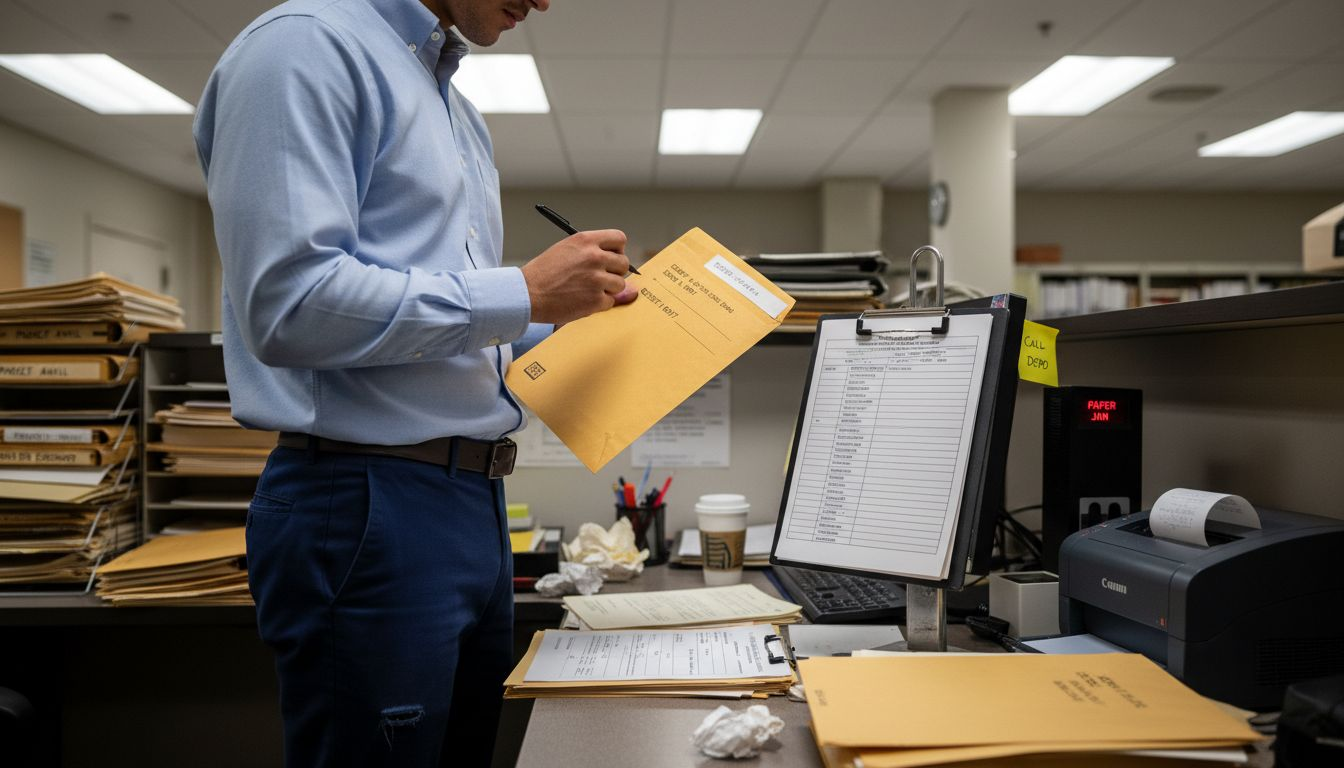
The protocols governing chain of custody involve comprehensive tracking mechanisms that document each individual who handles evidence, the precise time and location of transfer, and the specific conditions of evidence storage. These stringent requirements protect against potential contamination, tampering, or accidental modification. Forensic evidence management has evolved to incorporate advanced technological solutions, including digital tracking systems and blockchain technologies that provide transparent and verifiable evidence trails.
Legal professionals must adhere to increasingly complex standards that address the unique challenges of digital forensics. This includes maintaining detailed logs of electronic evidence acquisition, implementing secure storage protocols, and ensuring that digital forensic techniques meet rigorous judicial scrutiny. The documentation must not only prove the authenticity of evidence but also demonstrate that established procedural standards have been meticulously followed throughout the investigative process.
Pro tip: Implement a standardised digital tracking system that automatically logs every interaction with forensic evidence, creating an immutable and transparent chain of custody record.
Ensuring evidence admissibility in court
Evidence admissibility represents a critical legal threshold that determines whether forensic findings can be presented and considered during judicial proceedings. Legal standards for forensic evidence require rigorous scientific validation, focusing on relevance, reliability, and methodological integrity to protect the fundamental principles of fair judicial process.
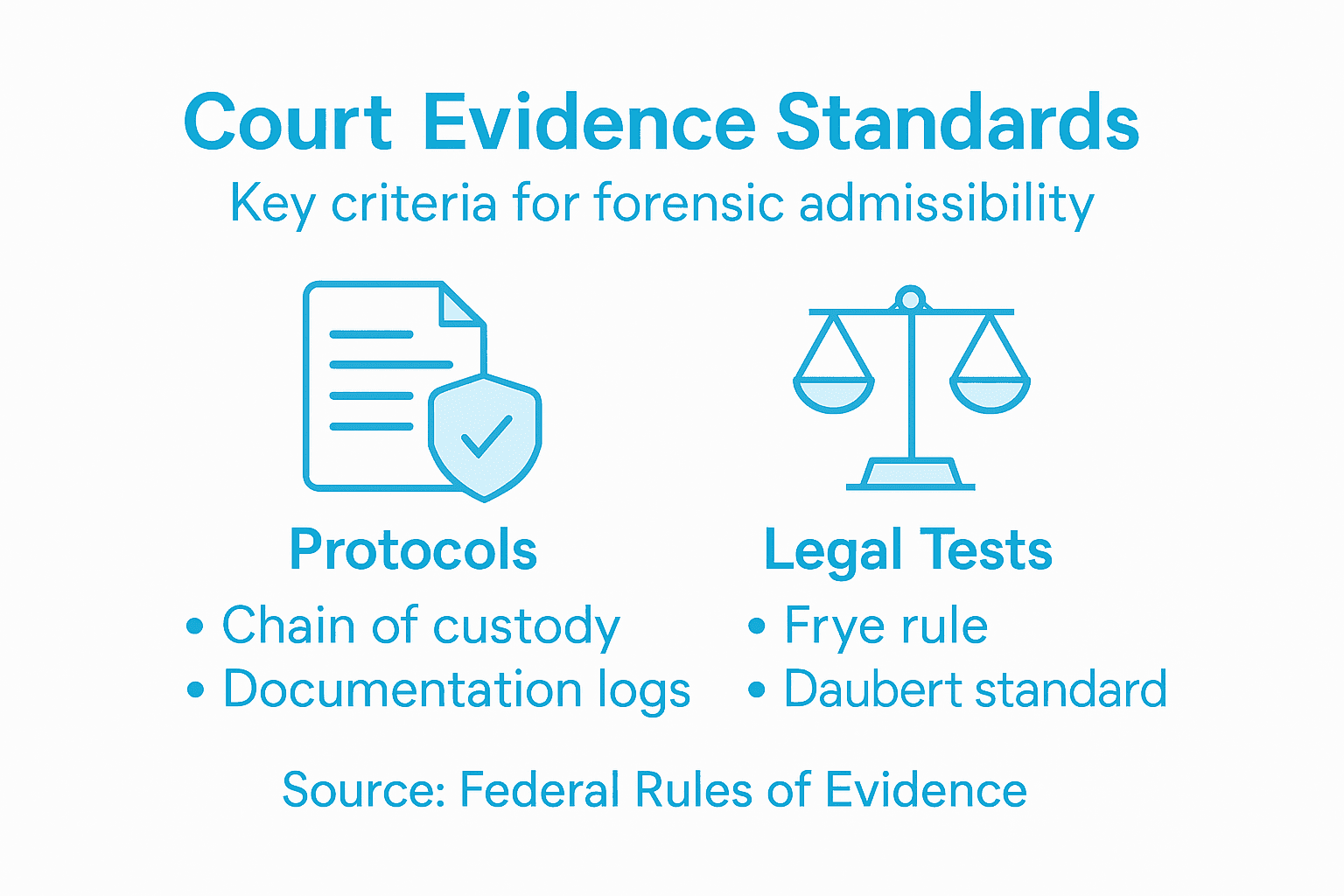
Courts employ specific evaluation frameworks, most notably the Frye and Daubert standards, to assess the scientific credibility of forensic evidence. These frameworks mandate that expert testimony and scientific methodologies meet stringent criteria of general acceptance within the scientific community and demonstrate empirical reliability. Forensic evidence evaluation involves comprehensive scrutiny of methodological error rates, potential bias, and the underlying scientific principles supporting forensic conclusions.
Forensic professionals must meticulously document their investigative processes, ensuring that every procedural step can withstand intense legal examination. This includes maintaining comprehensive records of evidence collection, preservation techniques, analytical methodologies, and potential limitations. The burden of proof rests on forensic experts to demonstrate that their techniques represent accepted scientific practices and can provide objective, reproducible results that meet judicial standards of credibility.
Pro tip: Develop a robust documentation protocol that anticipates potential legal challenges by comprehensively recording methodology, equipment calibration, and potential sources of investigative uncertainty.
Risks of poor documentation and common pitfalls
Documentation failures in forensic investigations can have catastrophic legal consequences, potentially undermining entire judicial proceedings. Forensic evidence documentation risks represent a critical vulnerability that can lead to wrongful convictions, compromised investigations, and significant miscarriages of justice.
The most prevalent pitfalls include incomplete case notes, inconsistent record-keeping, and inadequate chain of custody documentation. Forensic investigation challenges often stem from cognitive biases, organisational deficiencies, and insufficient professional training. These weaknesses can introduce critical errors that render evidence inadmissible, potentially allowing critical information to be dismissed or challenged in court.
Cognitive biases pose a particularly insidious risk in forensic documentation. Investigators might unconsciously interpret evidence through preconceived assumptions, leading to selective reporting, confirmation bias, and unintentional misrepresentation of scientific findings. Such biases can manifest in subtle ways, such as selectively emphasising certain data points, omitting contradictory information, or failing to document alternative interpretations that might challenge primary hypotheses.
The following table outlines major risks of poor documentation and their legal impacts:
| Pitfall | Legal Consequence | Example Scenario |
|---|---|---|
| Incomplete Case Notes | Evidence ruled inadmissible | Missing chain of custody entry |
| Cognitive Biases | Investigative errors in court | Selective evidence reporting |
| Ineffective Peer Review | Unverified conclusions | No cross-check of expert findings |
Pro tip: Implement a mandatory peer-review process for all forensic documentation, requiring independent verification of findings and meticulous cross-examination of investigative methodologies.
Secure Your Legal Case With Expert Forensic Documentation Support
Understanding the critical role of forensic documentation in preserving evidence integrity and ensuring admissibility in court highlights the challenges legal professionals face. From maintaining an unbroken chain of custody to defending against cognitive bias and documentation errors, these complexities demand precise digital forensic expertise. If you seek to avoid pitfalls like incomplete records or unverifiable findings, the stakes could not be higher.
At Computer Forensics Lab, we specialise in providing comprehensive digital document forensic services that align perfectly with the rigorous legal standards and chain of custody protocols described. Our team delivers thorough evidence collection, analysis, and expert witness reports to support your case with clarity and authority. Explore our Digital Document Forensics solutions designed to enhance transparency and reliability.
Don’t let inadequate forensic documentation jeopardise your case. Act now to secure professional assistance that upholds the integrity of your evidence and withstands judicial scrutiny. Visit Computer Forensics Lab to discover how our tailored Digital Forensics services can provide the trusted foundation your legal process needs.
Frequently Asked Questions
What is the purpose of forensic documentation?
Forensic documentation serves to systematically record, preserve, and analyse evidence throughout legal investigations, ensuring the integrity and reliability of both digital and physical evidence.
How does chain of custody impact the legal process?
Chain of custody is crucial as it establishes an unbroken record of evidence handling, which protects against contamination or tampering, ultimately ensuring that evidence is admissible in court.
What are the risks of poor documentation in forensic investigations?
Poor documentation can lead to severe legal consequences, such as wrongful convictions, compromised cases, and evidence being deemed inadmissible due to incomplete or inconsistent record-keeping.
How can forensic professionals ensure evidence admissibility in court?
Forensic professionals can ensure admissibility by adhering to rigorous scientific methodologies, maintaining thorough documentation of the evidence collection and analysis processes, and ensuring compliance with judicial standards for reliability and credibility.
Recommended
- Why Document Digital Evidence Matters for Legal Integrity
- Digital Document Forensics -How to tell a digital document is genuine?
- Preparing Forensic Expert Witness Reports for Legal Success
- 7 Top Digital Forensics Techniques Every Legal Team Must Know
- Prisoner Legal Aid – Professional Legal Document Preparation Services