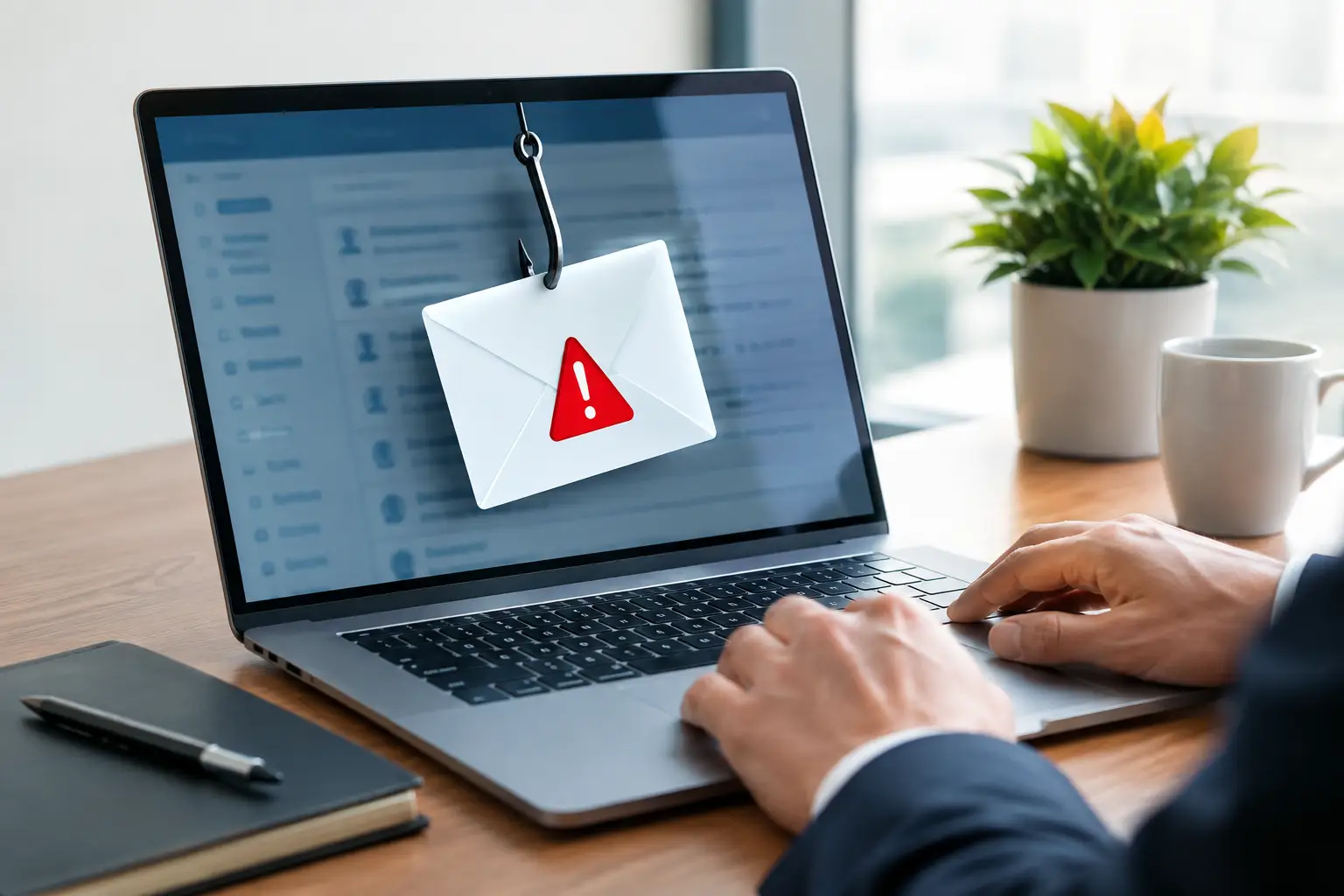
A disputed email can sit at the centre of a fraud allegation, a data breach, an employee misconduct enquiry or a civil claim. Proper phishing email analysis does more than identify suspicious wording. It establishes what was received, how it travelled, whether it was altered, what technical infrastructure was involved, and whether the available evidence can support a defensible finding.
For solicitors, businesses and private clients, the distinction matters. An IT team may be able to remove a malicious message quickly. A forensic investigation must also preserve the original evidence, document each action taken and explain the findings in language that withstands scrutiny.
Why phishing emails require forensic examination
Phishing is commonly described as an attempt to induce a recipient to disclose credentials, transfer funds, open malicious content or provide sensitive information. That description is useful, but it is rarely enough for a legal or investigative matter.
The key questions are usually more specific. Did the message genuinely originate from the apparent sender? Was it sent through a compromised legitimate account? Did the recipient interact with a link or attachment? Did the message lead to unauthorised access, loss, disclosure or further communications? Can the source and timeline be evidenced rather than assumed?
A convincing-looking display name, corporate logo or familiar signature proves very little. Attackers routinely impersonate suppliers, colleagues, banks and professional advisers. Equally, a message that appears suspicious at first glance may be a genuine email sent through an unfamiliar third-party platform. Findings must follow the evidence, not the initial suspicion.
Phishing Email Analysis: What the Evidence Can Show
The email header is often the starting point. Headers contain technical routing information generated as a message moves between mail systems. They can reveal the sending infrastructure, recipient servers, timestamps, message identifiers and authentication results. However, they must be interpreted carefully.
Some header fields can be forged by a sender, particularly visible fields such as the From name and Reply-To address. Other fields, including server-added Received entries, may offer a more reliable route through the delivery chain. A forensic examiner assesses the sequence as a whole, looking for inconsistencies, unexpected relays and evidence of spoofing or account compromise.
Authentication records can also be material. SPF, DKIM and DMARC results may indicate whether a sending server was authorised to send for a particular domain and whether a message has passed integrity checks. They are valuable indicators, not automatic proof. A message can pass authentication while still being malicious if an attacker has gained control of a legitimate mailbox or used a genuine service that has been abused for fraud.
The message body and embedded content require separate assessment. An examiner may identify deceptive URLs, lookalike domains, hidden redirectors, tracking parameters, malicious attachments or requests designed to create urgency. Particular attention is paid to the actual destination of a link rather than the text displayed to the recipient. A hyperlink labelled as a trusted website may direct the user elsewhere entirely.
Attachments can be examined for file type, metadata, embedded scripts, macros, payloads and indicators of compromise. Their presence does not, by itself, establish that execution occurred. That question may require evidence from the recipient device, endpoint security logs, browser artefacts, cloud audit records or network data.
Preserve First, Then Investigate
A common evidential failure occurs when a suspicious message is forwarded repeatedly, copied into a document, printed, deleted or opened in an uncontrolled environment before anyone considers preservation. Each step may lose metadata or change the available evidence.
Where litigation, regulatory action, disciplinary proceedings or criminal investigation may follow, the original message should be preserved in its native form wherever possible. The relevant mailbox, device or cloud account may also need to be secured. The appropriate approach depends on the circumstances, the systems involved and the urgency of containing an active threat.
Forensic handling should record where the evidence came from, who collected it, when it was acquired and how it has been stored. Hash values may be used to demonstrate that a forensic copy has not changed. A clear chain of custody does not make weak evidence stronger, but it helps show that the evidence examined is the same evidence originally obtained.
Containment and preservation can create tension. A business facing an active compromise may need to reset passwords, block domains and isolate devices immediately. Those are sensible protective measures. Before making changes, it is often possible to capture relevant logs, preserve mailboxes and record the existing state of affected systems. Fast action and evidential discipline are not competing objectives when they are properly coordinated.
Establishing What Happened After Delivery
The email itself may establish an attempted deception, but it may not answer what happened next. This is particularly significant in cases involving invoice fraud, compromised accounts, unauthorised payments or suspected data loss.
A wider investigation can correlate the message with mailbox audit data, sign-in logs, deleted items, forwarding rules, browser history, downloaded files and communications with third parties. It may identify whether credentials were entered on a fraudulent site, whether an account was accessed from an unfamiliar location, or whether the attacker created mailbox rules to conceal replies and intercept correspondence.
Timing is critical. Server times may use different time zones, and logs may record events in Coordinated Universal Time while a witness refers to local time. A forensic report should make the time basis clear and distinguish between an event that is directly evidenced and an inference drawn from surrounding data.
The scope should remain proportionate. In a straightforward impersonation attempt, a detailed examination of every endpoint may be unnecessary. In a disputed payment or allegation that an employee deliberately engaged with a malicious email, a wider examination may be essential. The investigative question should define the work, not the volume of data available.
Turning Technical Findings Into Usable Evidence
Raw headers, IP addresses and authentication results are not, on their own, a court-ready case. Legal teams and decision-makers need a transparent explanation of what the artefacts show, their limitations and how firmly a conclusion can be stated.
A sound forensic report separates fact from opinion. It should identify the materials examined, the method used, the relevant findings and the basis for any conclusion. If evidence is missing or has been altered before acquisition, that should be stated plainly. Independence is strengthened when an examiner records findings that do not assist the instructing party as well as those that do.
This is especially relevant where attribution is sought. An IP address may identify an internet connection, hosting provider or virtual private server, but it does not necessarily identify the individual who sent a message. A compromised account can send genuine-looking emails; a shared device can have multiple users; infrastructure may be rented anonymously. Attribution requires careful corroboration and should not be overstated.
For matters likely to proceed to court, expert evidence must be clear enough for a non-technical reader while retaining the technical detail needed for challenge and review. That balance is central to forensic practice. A conclusion that cannot be traced back to preserved artefacts and documented methodology is vulnerable, however plausible it may appear.
When Specialist Assistance Is Needed
Specialist phishing email examination is particularly valuable where there is a disputed transaction, suspected account takeover, employee or supplier impersonation, alleged deletion of communications, extortion, harassment, intellectual property theft or a need to determine whether a message has been fabricated.
Computer Forensics Lab can examine relevant email evidence alongside devices, cloud-linked accounts and associated digital artefacts, producing impartial findings suitable for legal and corporate investigations. Early instruction can help prevent avoidable loss of evidence and ensure that urgent containment work is properly documented.
If a phishing email may become evidence, treat it as more than an unwanted message. Preserve the original, avoid unnecessary interaction, record the surrounding circumstances and obtain advice before critical data is overwritten or accounts are changed. The facts available in the first hours can determine whether the truth remains capable of being proved.