
Most advice about digital forensics overlooks a key reality—over 80 percent of legal cases rely on properly preserved digital evidence. For any British investigator or technical specialist, handling network data with absolute precision is crucial to stand up in court. This guide takes you step by step through proven techniques for gathering, safeguarding, and documenting network evidence so nothing gets lost in translation or mishandled along the way.
Table of Contents
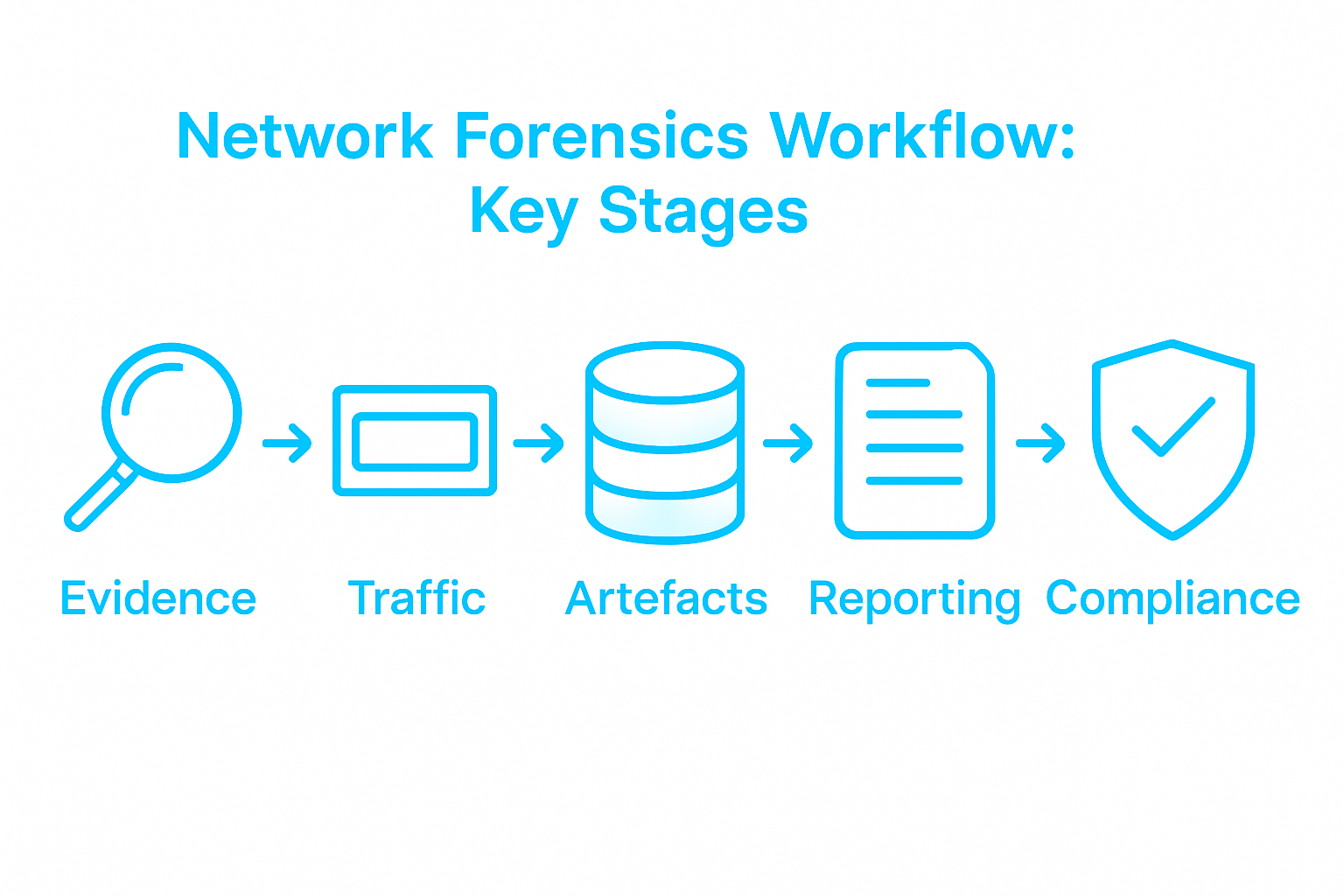
- Stage 1: Prepare and Preserve Network Evidence
- Stage 2: Capture and Analyse Network Traffic
- Stage 3: Extract and Correlate Digital Artefacts
- Stage 4: Document Findings and Maintain Chain of Custody
- Stage 5: Verify Results and Ensure Compliance
Quick Summary
| Key Point | Explanation |
|---|---|
| 1. Preserve Network Evidence Carefully | Use forensic tools and write blockers to capture traffic while maintaining data integrity and admissibility in legal contexts. |
| 2. Analyse Traffic Methodically | Extract insights using appropriate capture tools and advanced techniques, focusing on anomalous patterns and known threat signatures. |
| 3. Document Findings Thoroughly | Maintain a comprehensive record of investigative actions and evidence handling to support legal validation and transparency. |
| 4. Verify Results Rigorously | Implement multiple validation techniques and ensure compliance with industry standards for accurate and reliable forensic findings. |
| 5. Maintain Chain of Custody | Keep detailed records of evidence handling to prevent contamination and ensure the legal integrity of the investigation. |
Stage 1: Prepare and Preserve Network Evidence
Preparing and preserving network evidence represents the foundation of any successful digital forensic investigation. Your primary objective is to capture and protect network data with forensically sound techniques that maintain its integrity and admissibility in legal proceedings.
The initial preservation process demands meticulous attention to detail. Begin by creating comprehensive network traffic captures using specialised forensic tools that support full packet logging. Network trace collection methods outlined in contemporary research demonstrate critical strategies for capturing comprehensive evidence without compromising original data. Utilise write blockers and forensically validated network monitoring software to ensure zero alterations occur during evidence collection. This means capturing complete packet streams including metadata, timestamps, source and destination addresses, protocol information, and payload content.
Evidence preservation requires establishing an unbroken chain of custody. Document every single action systematically recording who accessed the evidence, when, and under what circumstances. Generate cryptographic hash values immediately after initial capture using standardised algorithms like SHA256 to create tamper evident digital signatures. These hash values serve as mathematical proof that network evidence remains unchanged from its original state. Store multiple independent copies in secure, write protected storage environments with restricted access protocols. Always work from forensic copies rather than original evidence captures to prevent potential contamination or accidental modification.
Pro tip: Never underestimate the importance of detailed documentation. Every forensic action must be recorded with precision tracking tool versions, system configurations, and exact capture parameters.
Stage 2: Capture and Analyse Network Traffic
Capturing and analysing network traffic forms the critical investigative core of network forensics, transforming raw data into actionable intelligence. Your goal is to extract meaningful insights from complex network interactions while maintaining forensic integrity and evidentiary standards.
Start by selecting appropriate network capture tools with robust forensic capabilities. Advanced traffic analysis techniques demonstrate sophisticated graph-based deep learning approaches for extracting network behavioural patterns that go beyond traditional packet inspection. Utilise specialised software like Wireshark to perform comprehensive packet captures across multiple network interfaces. Configure your capture settings to record full packet details including protocol headers, payload contents, timestamps, and source destination metadata. Pay special attention to filter configurations that allow targeted capture of specific traffic types without overwhelming storage resources.
During analysis, methodically deconstruct network traces to identify anomalous patterns, potential security breaches, or suspicious communication flows. Examine packet sequences for indicators of malicious activity such as unusual port communications, unexpected protocol interactions, or repetitive connection attempts. Cross reference captured traffic against known threat signatures and network baseline behaviours. Employ forensically validated decoding techniques to extract embedded information from packet payloads while preserving original evidence states. Generate detailed logs documenting every analytical step to ensure transparency and potential courtroom reproducibility.

Pro tip: Always maintain a pristine copy of original network captures. Work exclusively on forensic duplicates to prevent accidental evidence contamination and preserve the integrity of your investigative process.
Stage 3: Extract and Correlate Digital Artefacts
Extracting and correlating digital artefacts represents the investigative stage where complex network data transforms into meaningful forensic intelligence. Your objective is to methodically uncover hidden connections, trace digital footprints, and construct a comprehensive narrative from fragmented network evidence.
Innovative forensic approaches combining packet capture data with advanced social network analysis techniques enable sophisticated digital artefact extraction beyond traditional methods. Begin by systematically parsing captured network traces, identifying unique identifiers such as IP addresses, MAC addresses, user credentials, and communication timestamps. Employ specialised forensic tools capable of reconstructing communication patterns and tracking digital interactions across multiple protocol layers. Focus on extracting metadata embedded within network packets including application layer information, user agent strings, authentication tokens, and potential communication anomalies that might indicate malicious activity.
Correlation becomes crucial in transforming isolated digital fragments into a coherent investigative framework. Cross reference extracted artefacts against multiple data sources to establish contextual relationships and validate potential connections. Utilise forensic correlation techniques that map communication flows, identify potential interaction points, and reconstruct temporal sequences of digital events. Pay particular attention to seemingly unrelated artefacts that might reveal underlying patterns of systemic behaviour or coordinated digital interactions. Develop comprehensive digital timelines that document precise sequence of events, allowing investigators to understand the broader context of network communications.
Pro tip: Always document your extraction and correlation methodology meticulously. Each digital artefact should be traceable back to its original source with precise contextual information to maintain forensic credibility.
Stage 4: Document Findings and Maintain Chain of Custody
Documenting findings and maintaining chain of custody represents the critical final stage in network forensic investigations that transforms technical evidence into legally admissible documentation. Your objective is to create a comprehensive, transparent record that preserves the integrity of digital evidence and supports potential legal proceedings.
Comprehensive documentation strategies are fundamental to ensuring the legal validity of forensic investigation findings, requiring meticulous attention to every investigative detail. Create a structured forensic report that chronologically documents each investigative action, including precise timestamps, tool versions, system configurations, and specific methodologies employed during evidence collection and analysis. Include detailed metadata for every digital artefact captured, recording source location, extraction method, hash values, and contextual information that validates the evidence’s authenticity and provenance.
Maintaining an unbroken chain of custody demands rigorous tracking of evidence handling from initial collection through final reporting. Document every individual who accessed or interacted with digital evidence, recording their credentials, access timestamps, and specific actions performed. Implement secure, auditable evidence management protocols that restrict access, log all interactions, and prevent potential contamination or unauthorized modifications. Generate cryptographically signed logs that provide immutable records of evidence handling, ensuring that each forensic artefact can be traced back to its original source with complete transparency.
Pro tip: Consider creating multiple redundant documentation sets stored in separate secure locations. This approach provides additional safeguards against potential data loss or tampering and reinforces the credibility of your forensic investigation.
Stage 5: Verify Results and Ensure Compliance
Verifying results and ensuring compliance represent the final critical validation phase of network forensic investigations. Your objective is to systematically confirm the accuracy, reliability, and legal admissibility of your forensic findings through rigorous analytical techniques and standardised verification protocols.
Advanced verification methodologies using graph-based deep learning models provide sophisticated mechanisms for validating network forensic analysis results, enabling investigators to cross reference and authenticate digital evidence with unprecedented precision. Implement comprehensive verification strategies that include multiple independent validation techniques such as cross referencing extracted artefacts against known baseline behaviours, conducting repeated analysis using different forensic tools, and comparing results against established industry standards. Systematically validate each digital trace by reconstructing communication sequences, checking metadata consistency, and identifying potential anomalies that might indicate manipulation or incomplete evidence collection.
Ensuring regulatory compliance demands a methodical approach to documenting and validating forensic processes. Align your investigation methodology with established legal and technical standards such as ISO 27037, ACPO Guidelines, and relevant jurisdiction specific forensic protocols. Generate comprehensive validation reports that demonstrate each investigative step meets required forensic integrity standards, including detailed provenance tracking, tool certification, and explicit documentation of analytical methodologies. Pay particular attention to maintaining strict chain of custody documentation, cryptographic verification of digital artefacts, and transparent reporting of all investigative actions.
Pro tip: Develop a standardised verification checklist that covers technical accuracy, legal compliance, and forensic integrity to ensure consistent and defensible investigation outcomes.
Master Network Forensics with Expert Support from Computer Forensics Lab
Effective network forensic investigations hinge on meticulous evidence preservation, detailed analysis, and maintaining a solid chain of custody. If you are striving to overcome challenges such as capturing authentic network traffic, extracting crucial digital artefacts, or ensuring the legal admissibility of your findings, it is vital to work with experienced professionals who understand these complexities. Ensuring forensic integrity and compliance while creating a transparent investigative timeline is no small task.
At Computer Forensics Lab, we specialise in comprehensive Digital Forensics services that include advanced data recovery, expert witness reporting, and robust chain of custody management. Our dedication to precision is reflected in our Chain of Custody Tracking solutions which guarantee your evidence remains uncontaminated and legally sound throughout the investigative process. Whether you are tackling cybercrime, data breaches, or intellectual property theft, take the next step today by consulting with us at Computer Forensics Lab where expert guidance and forensic excellence come together to secure your critical network evidence.
Frequently Asked Questions
What are the essential steps to prepare and preserve network evidence?
Preparing and preserving network evidence involves creating comprehensive traffic captures using forensically sound methods. Start by using specialised tools for full packet logging and document every action to maintain a detailed chain of custody.
How do I capture and analyse network traffic effectively?
To effectively capture and analyse network traffic, select appropriate tools that provide robust forensic capabilities. Configure your settings to record full packet details, and methodically examine captured traffic to identify any anomalous patterns or potential malicious activities.
What techniques are used to extract and correlate digital artefacts from network evidence?
Extracting and correlating digital artefacts involves systematically parsing network traces for unique identifiers and communication patterns. Use forensic tools to reconstruct interactions, ensuring that each artefact is traceable back to its original source for complete context.
How can I ensure my documentation meets legal standards during a forensic investigation?
To meet legal standards, create structured forensic reports that chronologically document each action taken during the investigation. Include detailed metadata for all digital artefacts and maintain an unbroken chain of custody for every piece of evidence.
What verification methods should I use to confirm the accuracy of my forensic findings?
Employ multiple independent verification methods, such as cross-referencing extracted artefacts and conducting repeated analyses with different forensic tools. Document each step thoroughly to demonstrate the integrity and reliability of your findings.
What should I include in a standardised verification checklist for network forensic investigations?
Your verification checklist should cover technical accuracy, legal compliance, and forensic integrity. Include items like provenance tracking, cryptographic verification of artefacts, and explicit documentation of analytical methodologies to ensure a consistent investigation process.
Recommended
- Complete Guide to Computer Forensics Workflow
- 7 Top Digital Forensics Techniques Every Legal Team Must Know
- What Is Forensic Analysis Process? Complete Guide
- 7 Essential Types of Forensic Analysis for Legal Cases
- Forensic Engineering Investigation Guide for Accurate Results – FloridaLicensedEngineers.com