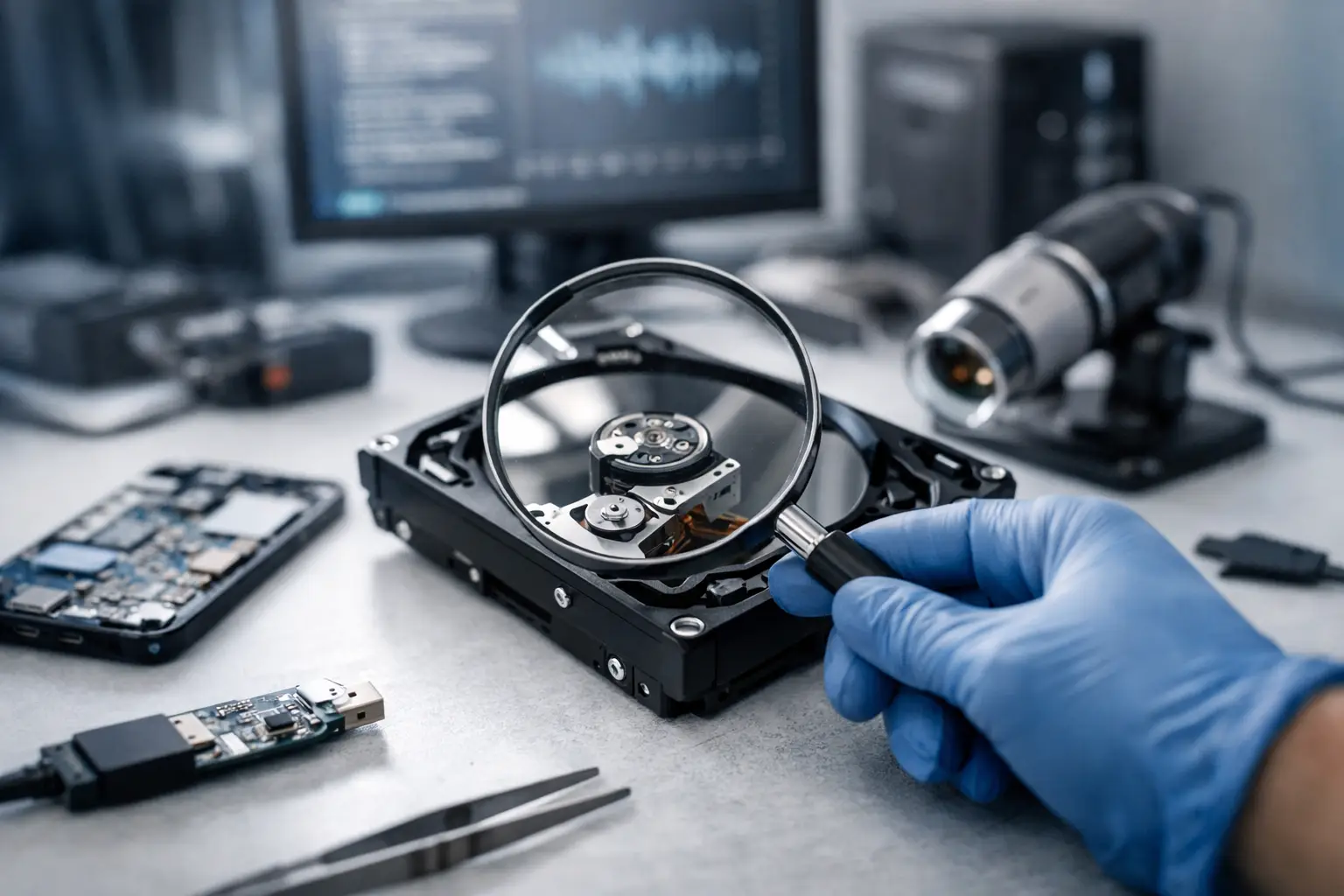
A device arrives after a dismissal dispute, fraud allegation, or suspected data theft, and the first question is usually the wrong one. It is not simply whether the files can be recovered. In legal and investigative matters, the real question is whether forensic data recovery services can recover that material in a way that preserves evidential integrity, withstands scrutiny, and supports a credible finding.
That distinction matters. Standard IT recovery may retrieve data, but if the process alters metadata, breaks chain of custody, or leaves no transparent record of what was done, the result may be of little value in court or a formal investigation. For solicitors, businesses, and private clients dealing with contested facts, recovery alone is not enough. The method matters as much as the outcome.
What forensic data recovery services actually involve
Forensic data recovery services sit at the point where technical recovery and evidential procedure meet. The purpose is not just to restore access to deleted, damaged, hidden, or inaccessible data, but to do so under controlled conditions that protect the integrity of the evidence.
That often begins with preservation. Before any meaningful examination takes place, the device or storage media must be secured, documented, and handled in a way that maintains continuity. A forensic examiner will typically create a verifiable forensic image where possible, rather than working directly on the original data source. This allows analysis and recovery work to proceed while reducing the risk of altering the source evidence.
The scope can be wide. Recovery may involve hard drives, solid-state drives, USB media, memory cards, mobile phones, tablets, external storage, and in some cases cloud-linked artefacts accessible through a device. The work may concern deleted documents, missing messages, damaged file systems, user activity records, application data, or remnants of material that a party believed had been removed.
Why this is different from ordinary data recovery
Many providers can attempt to retrieve lost files. Far fewer can do so in a manner suitable for litigation, internal disciplinary proceedings, regulatory matters, or criminal defence. The difference is procedural discipline.
A forensic approach requires full documentation of the condition of the device, the acquisition method used, the tools applied, and the results obtained. It also requires independence. In a disputed matter, findings need to be impartial and capable of being explained clearly, including the limits of what can and cannot be concluded.
There is also a practical difference in reporting. A legal team does not need a vague statement that data was found. It needs a clear account of what was recovered, where it was recovered from, whether the data is complete or fragmentary, what time and date information exists, and whether the artefacts support or contradict a particular account. If expert evidence is likely to be challenged, the reporting must be detailed enough to withstand that challenge.
When forensic recovery becomes necessary
The need for forensic recovery usually arises when digital evidence is central to a disputed narrative. In employment matters, this may involve allegations that an employee copied confidential files before departure. In matrimonial or family disputes, it may concern deleted communications or disputed device usage. In commercial litigation, it may involve concealed documents, altered records, or attempts to destroy evidence.
Businesses often need this service after a cyber incident or internal misconduct allegation. A compromised device may contain traces of unauthorised access, exfiltration, account misuse, or anti-forensic behaviour. In those cases, recovering deleted or hidden artefacts can help establish what happened, when it happened, and whether the activity was external, internal, or staged.
For criminal defence and prosecution work, the stakes are even higher. A recovery exercise may reveal exculpatory material, missing communications, user-generated content, internet history, or application data relevant to timing and intent. Equally, it may show that expected material is not recoverable, which is itself an important evidential finding.
The process behind forensic data recovery services
Although every case turns on its facts, the process is usually structured and methodical. The first stage is assessment. This involves identifying the device type, storage architecture, operating environment, damage profile, and likely evidential value. At this point, urgency matters, but haste without control can be costly. Continued use of a device, repeated powering on, failed repair attempts, or improvised recovery software can all reduce the prospect of preserving meaningful evidence.
The next stage is preservation and acquisition. Depending on the device, that may involve write-blocked imaging, chip-level work, logical or physical extraction, or targeted collection of relevant artefacts. The examiner must make decisions that are proportionate to the case. A full physical extraction may be justified in one matter and unnecessary in another. That is where experience matters.
Recovery and analysis follow. Deleted files may be reconstructed from unallocated space, file system records, application databases, backups, temporary locations, or synchronised data remnants. On a mobile device, relevant material may sit not only in obvious user folders but in app caches, system logs, message databases, thumbnail stores, and account traces. On a computer, evidential value may come as much from usage artefacts as from the underlying documents themselves.
Finally, the findings must be reported. A proper report does more than list recovered items. It explains the methodology, identifies the source material, records any limitations, and sets out the significance of the findings in plain language. If the matter proceeds to court, that report may need to support expert evidence.
Trade-offs, limits, and why certainty is not always possible
Clients often want a yes-or-no answer at the outset. Can the data be recovered or not. The honest position is that it depends on the device, the type of deletion or damage, the elapsed time, any encryption in place, and whether the media has been overwritten or physically degraded.
Solid-state storage is a good example. Modern SSDs and mobile devices may use processes that remove deleted data quickly, making recovery far less straightforward than on older magnetic media. Encryption can also change the picture entirely. If encrypted data exists but the key material is unavailable, the practical ability to recover readable content may be severely limited.
That does not mean the exercise lacks value. Even where full file recovery is not possible, forensic examination may still identify artefacts showing that files existed, that external media was connected, that accounts were accessed, or that particular actions occurred. In many cases, those surrounding facts are as important as the missing files themselves.
Why chain of custody and admissibility matter
Where evidence is likely to be contested, poor handling can become its own problem. A device passed informally between managers, a well-meaning attempt to search it internally, or the use of consumer recovery tools can create avoidable challenges. Opponents may question contamination, selective handling, or unexplained changes to the data.
A defensible forensic process reduces that risk. Chain of custody records who handled the exhibit, when it was received, how it was stored, and what actions were taken. Verification methods help demonstrate that forensic copies are accurate. Peer review and transparent reporting strengthen confidence in the findings. These are not administrative extras. They are central to whether the evidence carries weight.
This is one reason legal teams and organisations in sensitive disputes turn to specialist providers rather than general IT support. The goal is not simply retrieval. It is recovery that can be relied upon.
Choosing the right forensic data recovery service
Not every case needs the same level of intervention, but every case benefits from clarity at the start. A suitable provider should understand the legal context, define the scope carefully, preserve evidence properly, and explain the realistic prospects of recovery without overstating certainty.
It also helps to ask how the results will be presented. If the answer is a spreadsheet of file names with no methodology, that may be inadequate for contentious matters. If the provider can explain acquisition methods, evidential safeguards, reporting standards, and expert witness support where required, the service is more likely to meet the demands of litigation or formal investigation.
For clients instructing Computer Forensics Lab or a comparable specialist, the value lies in combining recovery capability with court-aware procedure. That combination is often what turns inaccessible data into usable evidence.
When digital material may decide a case, the safest course is to treat the device as evidence from the outset. Recovery is only part of the task. What matters is recovering the truth in a form that can be tested, explained, and relied upon when it counts.