Computer forensics is the scientific process of identifying, preserving, analysing and presenting digital evidence so it holds up in legal, corporate or regulatory proceedings. Investigations typically move through preparation, evidence assessment, acquisition, examination and reporting. The realistic outcome is a documented, reproducible account of what the evidence shows, alongside a clear statement of what it cannot confirm.
TL;DR:
- Lawful authority and clear scope are essential before beginning any digital forensic investigation, with different legal requirements for public and private sectors.
- Prioritize capturing volatile data, scene documentation, and logs early to prevent evidence loss, especially from RAM, active sessions, and remote accounts.
- Use a bit-for-bit forensic image with cryptographic hashing and write blockers to ensure evidence integrity and court acceptance.
- Cloud and encrypted devices often limit data access, requiring timely provider log requests and honest reporting on recovered file completeness.
- Professional forensic labs become necessary for litigation, malware analysis, or encryption challenges, and preparation should include device details and case context.
Table of Contents
- What happens during preparation, policy and scoping?
- How do examiners triage evidence at the scene?
- What methods keep digital evidence forensically sound?
- How do investigators turn raw data into a case narrative?
- How should findings be documented and reported?
- Can you always trust a forensic conclusion?
- When should you instruct a professional forensic lab?
- How do investigators deal with encryption and deleted files?
- What do practitioners get wrong most often?
- How to instruct Computer Forensics Lab and what to prepare
- Where to read more on forensic standards
- Sources
- FAQ
What happens during preparation, policy and scoping?
No competent investigation starts with plugging in a device. It starts with authority. Who has the legal or contractual right to examine this data, and under what basis?
Public sector investigations generally require a warrant or statutory power; private and corporate investigations rely instead on company policy, employment contracts, or civil disclosure rules, which is why public and private inquiries follow different legal tracks from the outset. Getting this wrong doesn’t just risk admissibility. It can expose the instructing party to a separate claim for unlawful data access.
Once authority is settled, the objective needs defining. Preservation for a future dispute, active litigation support, and an internal disciplinary review each demand different scope, urgency and reporting standards.
Before any device is touched, a few things need recording:
- A device inventory noting make, model, serial number and condition on receipt.
- The exact time, date and person who took custody, starting the chain-of-custody log.
- Photographs of the scene and device state (screen on or off, cables attached, storage media present).
- A decision on whether the situation calls for on-site triage or full removal to a laboratory.
That last point matters more than it sounds. On-site triage suits time-critical scenarios, such as an employee suspected of exfiltrating data before resignation. Full lab seizure suits complex matters where volatile evidence and deep storage analysis are both likely to matter.
How do examiners triage evidence at the scene?
Not all data survives equally long. Some evidence disappears the moment power is lost; other evidence sits patiently on a hard drive for years. Triage exists to sort one from the other before it’s too late.
The general order of priority runs:
- Volatile data first: RAM contents, active network connections and any encrypted sessions currently unlocked, because these vanish on shutdown.
- Scene documentation: photograph the live state, note running applications, and record whether the screen is locked.
- Lawful password capture: where legally permitted, note visible credentials or unlock states rather than force a shutdown that triggers encryption.
- Mobile and cloud artefacts: prioritise these next, since remote wipe commands or automatic sync can alter or delete data quickly.
- Log preservation: request server, firewall and authentication logs early, before automatic rotation overwrites them.
Every one of these decisions carries a cost implication, so early scam and virus protection and cyber security measures can reduce incident severity. Deep forensic analysis of a single laptop can take days; extending that across a corporate network of logs, cloud accounts and mobile devices multiplies both timeline and budget. Clients are usually better served by an honest early conversation about which sources genuinely need full analysis, rather than examining everything by default.
What methods keep digital evidence forensically sound?
Acquisition is where reputations are made or lost. An image taken carelessly can be challenged and thrown out regardless of what it later reveals, so the acquisition step earns disproportionate scrutiny in court.
The baseline standard is a bit-for-bit forensic image, taken using a hardware or software write blocker that physically prevents any write command reaching the original media, which is standard practice. This produces an exact copy without altering a single bit on the source device, which is what separates forensic imaging from simply copying files.
Integrity then has to be provable, not assumed:
- Generate a cryptographic hash (cryptographic hash algorithms commonly used include MD5 or SHA256) of the source device immediately after acquisition.
- Re-hash the image after creation and confirm the values match exactly.
- Document every hash value, timestamp and operator in the case file.
- Store the original media securely and work only from verified copies from that point on.
Mobile devices complicate this further. A logical extraction pulls accessible files and databases; a physical extraction captures the full raw storage, including some deleted content, but isn’t always achievable on modern locked or encrypted handsets. Cloud data adds another layer again, since preservation often depends on formal requests to the provider for account logs and stored content before retention periods expire. Mobile device forensics has its own legal and technical constraints worth understanding before evidence is requested.
Pro Tip: Request provider logs the same day you identify a cloud or messaging platform as relevant. Most retention windows are shorter than legal teams expect, and a delayed request is often an unrecoverable one.
How do investigators turn raw data into a case narrative?
Acquisition produces a copy. Examination produces meaning. This is the stage where an image full of bytes becomes a timeline of what someone did, when, and in what order.
Common analytic tasks include:
- Timeline reconstruction, correlating file creation, modification and access times across multiple sources to build a sequence of events.
- Keyword searching, scanning allocated and unallocated space for relevant terms, names or phrases.
- Hash filtering, using known-file databases to quickly exclude standard operating system files and focus on user-generated content.
- Data carving, recovering file fragments from unallocated space where the original file system entry has been deleted.
- Memory forensics, capturing and analysing RAM to reveal running processes, open connections and encryption keys not present on disk.
Malware analysis becomes necessary whenever the working theory involves external compromise rather than user action alone, and it typically runs alongside, not instead of, standard file system analysis.
None of these techniques work in isolation. A browser history entry means little on its own; correlated against an email attachment, a login log and a social media message sent minutes later, it becomes part of a coherent account. This cross-referencing is genuinely the skilled part of the job, and it’s where automated tools stop being sufficient on their own.
It’s worth being honest about a limitation here too: recovered deleted material often includes false positives, fragments that look relevant but aren’t, or duplicate content from backups and caches. A credible examiner documents uncertainty explicitly rather than presenting a partial recovery as a complete one. Common forensic activities in this phase, including timeline analysis, hash filtering and web artefact extraction, are standard enough that most established methodologies name them specifically.
How should findings be documented and reported?
A technically brilliant examination is worthless if the report can’t be understood by the person who needs to act on it, whether that’s a judge, a solicitor or a company director.
A credible report generally includes:
- Scope and instructions, stating exactly what was asked and what wasn’t covered.
- Methodology, describing tools and techniques used in plain enough language for a non-specialist to follow the logic.
- Findings, presented as a chronology or annotated exhibit set rather than raw technical output.
- Limitations, stated explicitly rather than buried in a footnote.
- Exhibits, referenced clearly and retained in their original, verifiable form for potential disclosure or peer review.
Expert witness work carries additional obligations around disclosure and impartiality, and reports intended for court use should be written with that scrutiny in mind from the first draft, not retrofitted later.
Can you always trust a forensic conclusion?
Confidence in a finding isn’t binary, and treating it that way is a common misreading of forensic work.
Digital forensic methodology broadly follows preservation, collection, validation, analysis, interpretation and presentation, and reliable practice means verifying methods on an ongoing basis rather than treating any tool as permanently proven.
That’s the core of what a scientific review of digital forensic methods actually recommends. Tool validation isn’t a one-off certificate; it’s a continuous, documented practice, and studies of forensic tool reliability consistently recommend labs verify key functions like carving and hashing under their own conditions rather than assuming vendor claims hold universally.
Common limitations include incomplete recovery of overwritten data, artefact meanings shifting between operating system versions, and genuine variation in examiner skill and interpretation. Trust signals worth checking include a documented chain of custody, evidence of local tool verification, and adherence to recognised European forensic examination standards.
When should you instruct a professional forensic lab?
Certain situations outgrow DIY effort quickly: active or anticipated litigation, suspected malware compromise, catastrophic data loss on damaged media, or any case requiring evidence a court will scrutinise. Some professional labs have supported cases requiring forensic imaging, advanced data recovery, malware analysis and expert reporting, including work connected to Discovery+’s “999 Murder Calling”. When you first make contact, be ready to describe the devices involved, the suspected issue, and whether litigation is already underway or anticipated.
How do investigators deal with encryption and deleted files?
Encryption is now the default state of most consumer and business devices, not the exception, and it’s often the single biggest obstacle in a modern investigation. Full-disk encryption on a locked device without a known password can make a physical extraction technically impossible, regardless of the tools available. Where lawful access exists, such as a company-owned device covered by an IT policy, obtaining the passphrase or a management-console unlock before acquisition saves enormous time. Where it doesn’t, examiners are limited to what’s accessible through logical extraction, cloud backups, or synced data on a second, unencrypted device.
Deleted data sits on a spectrum rather than being simply gone or recoverable. When a file is deleted, most operating systems remove the file system pointer, not the underlying data, which is why carving can often recover fragments from unallocated space. But that recovery degrades over time as new data overwrites the same disk sectors, and solid-state drives complicate matters further through background garbage collection routines that actively erase marked-as-deleted blocks. The practical result is that some deleted material comes back complete, some comes back as unusable fragments, and some is genuinely gone.
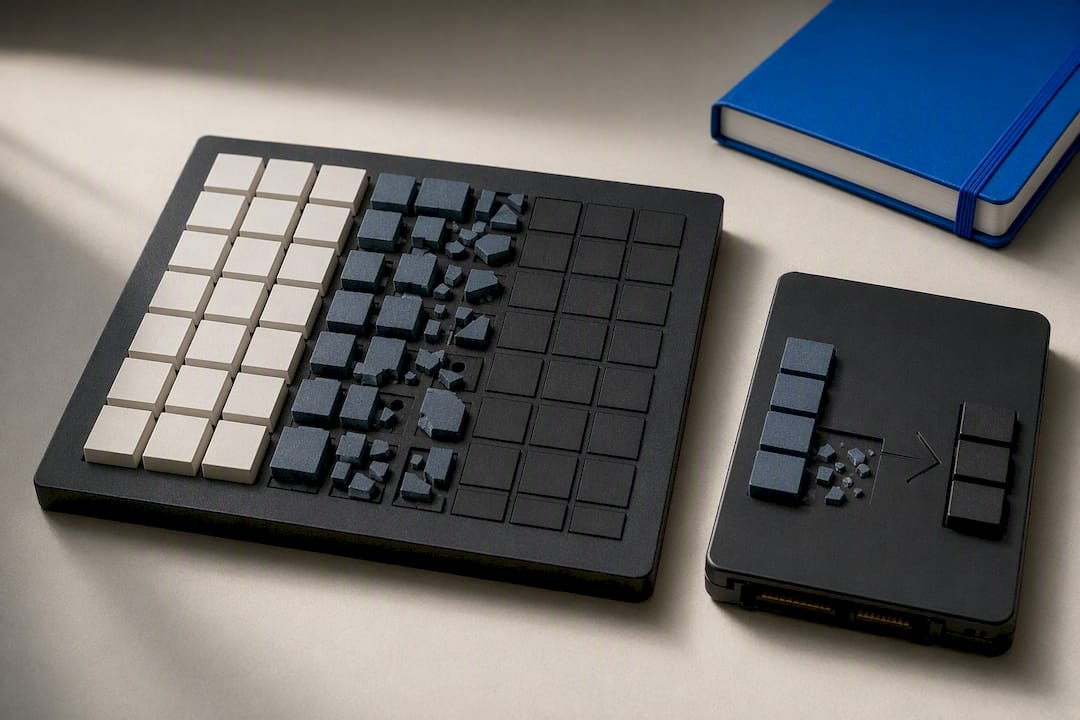
Examiners have to communicate that spectrum honestly. Reporting a “recovery” without noting whether it’s a complete file, a partial fragment, or reconstructed metadata misleads whoever reads the final report. The best guidance treats every recovered artefact as provisional until corroborated by a second, independent source, whether that’s a log entry, a backup, or a witness account.
What do practitioners get wrong most often?
The recurring mistakes are rushed imaging before scoping is settled, undocumented steps that break the chain of custody, and blind faith in a tool’s output. Verify methods, log every action, and keep expectations realistic.
— Computer
How to instruct Computer Forensics Lab and what to prepare
A London-based practice offers digital forensics investigations, forensic data recovery, and expert witness reporting under one instruction, with chain of custody and reporting standards built in from the first device intake. That matters most when the case might end up in front of a judge, because retrofitting a defensible process onto evidence collected informally is far harder than getting it right from day one.
Before making contact, have ready: a description of the devices or accounts involved, a summary of the suspected issue, whether litigation is live or anticipated, and any existing documentation of how the evidence has been handled so far. For matters likely to involve formal disclosure or courtroom testimony, the specialist computer forensics services page outlines the full range of investigative and reporting support available. Get in touch to discuss your case and the next steps.
Where to read more on forensic standards
For deeper technical grounding, consult the NIST review of digital forensic methods, the ENFSI Best Practice Manual, FBI guidance on cyber investigations, and academic texts such as Fundamentals of Digital Forensics for hands-on exercises.
This article is general information, not a substitute for advice from a qualified lawyer. Consult a qualified legal professional about your own circumstances before acting on anything here.
Sources
- NIST publishes review of digital forensic methods
- Best Practice Manual for the Forensic Examination of Digital Technology
- Experimental study: validity and reliability of digital forensics tools
FAQ
What is a computer forensics investigation?
It’s the structured process of identifying, preserving, analysing and presenting digital evidence for legal, regulatory or corporate purposes. The common methodology moves through preservation, collection, analysis and reporting, with each stage documented for later scrutiny.
What qualifications do you need for computer forensics?
There’s no single mandatory qualification worldwide, but most practitioners hold a background in computer science, cybersecurity or digital forensics, often combined with vendor-specific tool certifications and, for court work, experience giving expert testimony. Law enforcement backgrounds are common among senior examiners, particularly those handling criminal matters.
How difficult is computer forensics?
Technically demanding and constantly changing, since artefact meanings shift with each operating system and application update. The genuine difficulty lies less in running tools and more in correlating fragmented evidence into a defensible narrative while documenting every limitation honestly.
How do you become a computer forensics investigator?
Most paths combine formal study in computing or forensics with practical experience, often starting in IT security, law enforcement, or a forensic lab’s junior examiner role. Building courtroom credibility typically takes years of casework alongside continuous tool and methodology training, since tool validation is an ongoing requirement, not a one-time certification.
Do I need a professional lab or can I investigate myself?
Simple internal checks may not need one, but anything involving potential litigation, encrypted devices, or evidence a court might examine benefits from a professional examiner. Professional services handle digital evidence acquisition, analysis and reporting for exactly these higher-stakes situations, with current pricing available directly on request.