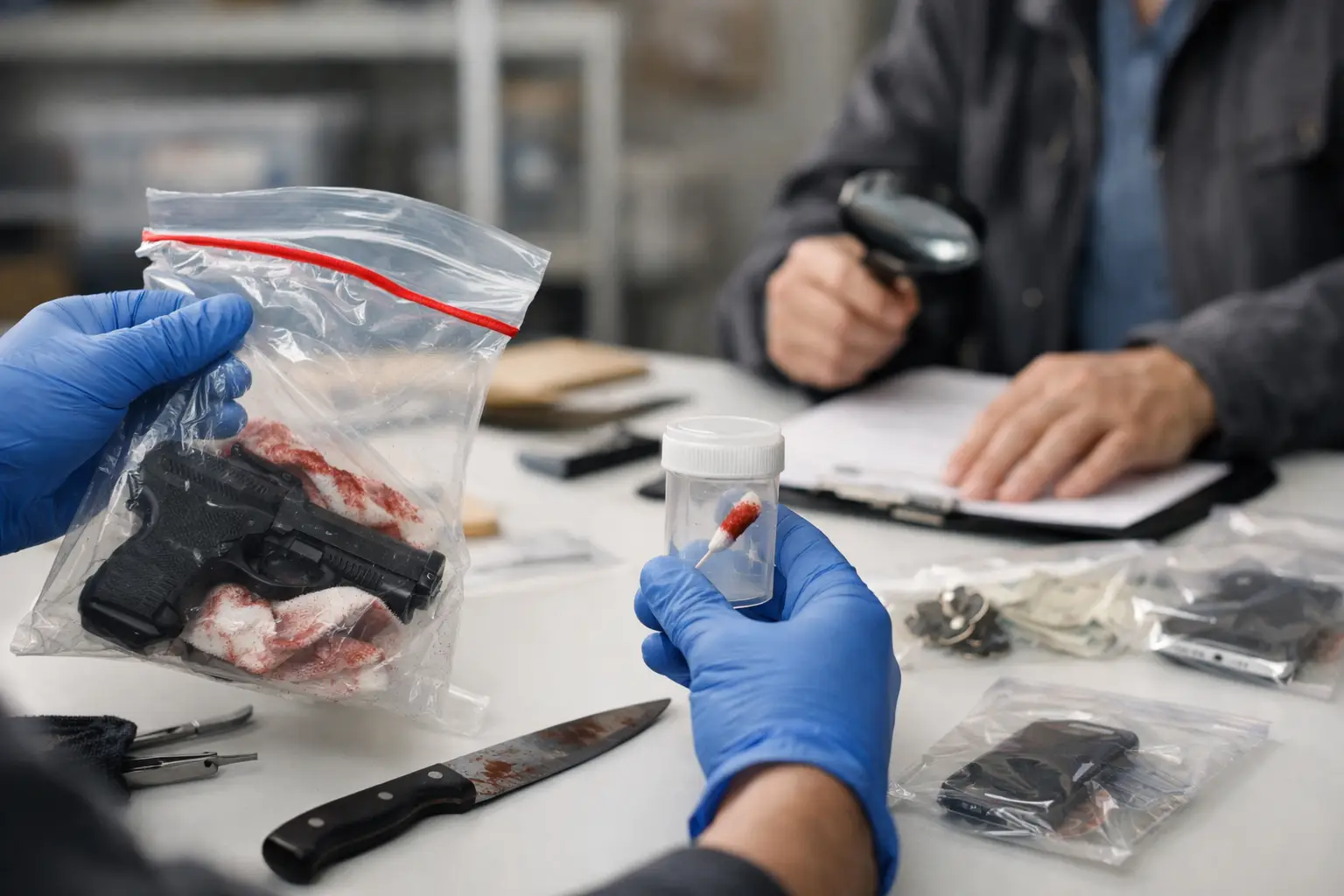
A strong case can be damaged long before anyone reaches a courtroom. In digital matters, the best evidence handling mistakes are often the most ordinary ones: a well-meaning employee opening a disputed laptop, a solicitor asking for screenshots instead of a forensic image, or a device being left powered on and connected to the network while key data changes in the background.
These errors are rarely malicious. They are usually caused by urgency, internal pressure, or a mistaken belief that digital evidence can be treated like routine IT material. It cannot. Once altered, overwritten, contaminated, or poorly documented, the evidential value of a device or dataset may be reduced permanently. That affects disclosure strategy, expert opinion, and ultimately the weight a court is willing to place on the material.
Why evidence handling mistakes matter so much
Digital evidence is unusually fragile. A mobile phone can change state simply by receiving new messages. A computer may update logs, rotate temporary files, or trigger remote synchronisation as soon as it is switched on. Cloud-linked accounts can alter content across multiple devices in seconds. What looks stable to a lay person may in fact be changing continuously.
That is why evidential handling is not just an administrative concern. It goes directly to integrity, authenticity, and admissibility. If the provenance of data is unclear, if the chain of custody is broken, or if there is no reliable record of what was done and when, the other side has obvious room to challenge the material. In some cases, the issue is not whether relevant evidence existed, but whether anyone can still prove what it originally showed.
The best evidence handling mistakes seen in real digital matters
1. Turning devices on, or off, without a forensic plan
This is one of the most common and most costly errors. People assume a device should either be powered down immediately or opened to “have a quick look”. The correct approach depends on the facts.
If a computer is live, there may be volatile evidence worth preserving, such as active sessions, running processes, encryption status, or unsaved communications. If it is shut down carelessly, that material may be lost. On the other hand, if it is powered on and allowed to connect to systems, files and timestamps may change. The point is not that one option is always right. It is that both actions carry risk unless guided by forensic judgment.
2. Relying on screenshots, exports, or forwarded messages
Screenshots can be useful as intelligence. They are usually weak as primary evidence. They strip away context, rarely preserve full metadata, and can be selective without showing what lies before or after the captured moment.
The same problem arises with forwarded emails, chat exports, and copied folders. They may help identify an issue, but they are not a substitute for proper acquisition. If authenticity becomes disputed, the absence of underlying artefacts and system metadata can become a serious weakness.
3. Failing to preserve chain of custody from the outset
Many evidence problems begin in the first hour. A phone is passed between managers. A laptop is left in an unlocked drawer. Someone writes the wrong serial number on a collection note. No one records who handled the device or when.
Chain of custody is not a formality added later for presentation purposes. It is the documentary backbone that allows a court, regulator, or opposing expert to follow the evidence from collection to examination. If there are gaps, unexplained transfers, or inconsistent records, confidence in the material drops quickly.
4. Allowing ordinary IT staff to “check” the device
Internal IT teams are vital for business continuity, but their role is not the same as that of a forensic examiner. Their instinct is understandably operational: restore access, investigate quickly, get the user back online, remove malicious software, or recover files. Those actions may be sensible for support purposes, yet they can overwrite evidence, alter logs, and compromise later analysis.
This is particularly risky in employee misconduct, IP theft, unauthorised access, and harassment matters. Once a non-forensic review has taken place, it may be impossible to distinguish original user activity from later intervention.
5. Ignoring cloud and account-linked evidence
A device is often only part of the evidential picture. Messages may be stored partly on the handset, partly in backups, and partly in cloud services. Documents may exist locally, in collaboration platforms, in version histories, and in deleted account areas. If the response focuses only on the physical device, crucial material may be missed.
Equally, hasty password resets or account changes can affect preservation. Organisations sometimes lock down accounts in a way that protects security but disrupts evidence capture. The balance between containment and preservation needs careful handling, especially during cyber incidents and internal investigations.
Mistakes that weaken admissibility and expert reporting
6. Collecting data without documenting method and scope
A recurring problem in litigation is the vague statement that data was “downloaded”, “copied”, or “backed up”. That tells the court very little. From where? By whom? Using what process? Was the copy complete? Were hash values recorded? Was any filtering applied? Were system files excluded?
Without a clear methodology, there is limited basis for an expert to assess integrity. It also makes proportionality arguments more difficult, because the scope of preservation and review cannot be shown with precision.
7. Mixing original evidence with working copies
Original material should be preserved, and examination should take place on controlled forensic copies wherever possible. Yet in practice, parties still work directly on source devices or on ad hoc copies with no verification trail.
This creates avoidable problems. Metadata changes. File access dates move. Deleted data may be lost. Later, when someone asks whether the working set is identical to the original, there may be no reliable answer. In disputed proceedings, that uncertainty can become more damaging than the underlying content.
8. Delaying expert instruction until after internal handling
By the time a forensic expert is instructed, some cases have already been shaped by avoidable intervention. Devices have been accessed, cloud accounts altered, users interviewed without preserving their systems, and relevant logs allowed to expire.
Early instruction does not always mean a full forensic exercise on day one. It may simply mean obtaining immediate advice on preservation, scoping likely sources, and deciding what should not be touched. That early discipline often prevents expensive arguments later.
9. Treating digital evidence as self-explanatory
Even where data is preserved correctly, interpretation can still go wrong. A timestamp may reflect sync activity rather than user action. A deleted file may remain recoverable but not prove who deleted it. A message on a handset may not show whether it was sent from that device, another linked device, or a web session.
This is where evidence handling and analysis meet. The material must be preserved in a way that allows proper interpretation, not simply gathered in volume. More data does not equal better evidence if its source, timing, and context are unclear.
How to avoid the best evidence handling mistakes
The practical answer is discipline at the start. Preserve first, inspect later. Identify the likely evidence sources, isolate devices appropriately, record every handover, and avoid informal reviews that cannot be reconstructed. Where cloud services or business systems are involved, act quickly enough to preserve logs and account data before retention periods or system activity change the picture.
For legal teams, it helps to think in terms of defensibility rather than convenience. Ask whether each handling decision could be explained clearly under challenge. If the answer is no, it needs to be reconsidered. A fast internal workaround may save an afternoon and cost a case.
For businesses, the answer is not to freeze every incident into paralysis. Some matters require urgent containment. Some require employee access to be suspended immediately. Some require systems to remain live for operational reasons. The key is to make those decisions consciously, with the evidential consequences understood and documented.
In higher-stakes matters, independent forensic support is often the difference between usable evidence and disputed material of limited value. A specialist laboratory such as Computer Forensics Lab will focus not only on what can be recovered, but on whether it can be presented with integrity, transparency, and proper evidential footing.
When digital evidence may affect litigation, regulatory exposure, dismissal, or criminal defence, the safest assumption is simple: if a device, account, or dataset matters, do not let convenience dictate the handling. The first decisions are often the ones that matter most.