
More than 80 percent of criminal cases in British courts depend on the effective presentation of forensic evidence. For digital forensics experts working in London law firms, mastering the scientific foundations behind forensic procedures is vital for building airtight legal strategies and meeting strict compliance demands. This article brings clarity to the essential principles, types, and admissibility standards that drive forensic success in British legal proceedings.
Table of Contents
- Defining Forensics In Legal Proceedings
- Core Types Of Forensic Evidence Explained
- Legal Standards And Admissibility Requirements
- Expert Witness Reporting And Testimony
- Chain Of Custody And Evidence Integrity
- Risks, Challenges And Common Pitfalls
Key Takeaways
| Point | Details |
|---|---|
| Forensic Science Integration | Forensic science blends scientific principles with legal frameworks to provide objective insights that support judicial processes. |
| Types of Forensic Evidence | Forensic evidence is categorised into physical and testimonial types, each providing distinct insights that aid in linking individuals to events or locations. |
| Admissibility Standards | Legal frameworks like the Frye and Daubert Standards assess the reliability and relevance of forensic evidence, ensuring integrity in legal proceedings. |
| Expert Witness Role | Forensic experts must translate complex scientific findings into accessible narratives for judges and juries, maintaining clarity and objectivity. |
Defining forensics in legal proceedings
Forensic science represents a systematic approach to applying rigorous scientific principles within legal frameworks, transforming complex technical evidence into comprehensible judicial insights. By methodically analysing physical, digital, and biological traces, forensic experts provide critical investigative intelligence that supports legal decision making.
At its core, forensics operates as a bridge between scientific methodology and judicial processes. Forensic science applies scientific principles to legal proceedings to ensure objective truth and contribute to justice. The discipline encompasses multiple specialised domains – from DNA analysis and fingerprint comparison to digital evidence examination and ballistic investigations.
Understanding forensic practices requires recognising their fundamental purpose: converting scientific observations into legally admissible evidence. Forensic experts meticulously document their findings, maintain strict chain of custody protocols, and prepare comprehensive reports that withstand intense judicial scrutiny. This approach ensures that scientific insights can be reliably presented in courtrooms, enabling judges and juries to make informed determinations based on empirical data rather than subjective interpretations.
Expert Forensic Strategy Always document every stage of evidence collection using standardised protocols to maintain forensic integrity and legal admissibility.
Core types of forensic evidence explained
Forensic evidence represents a critical mechanism for translating scientific observations into legal insights, serving as the foundational framework for investigative processes. Forensic evidence comes in diverse forms, including file data, biological samples, chemical substances, and physical traces, each offering unique investigative perspectives and potential legal implications.
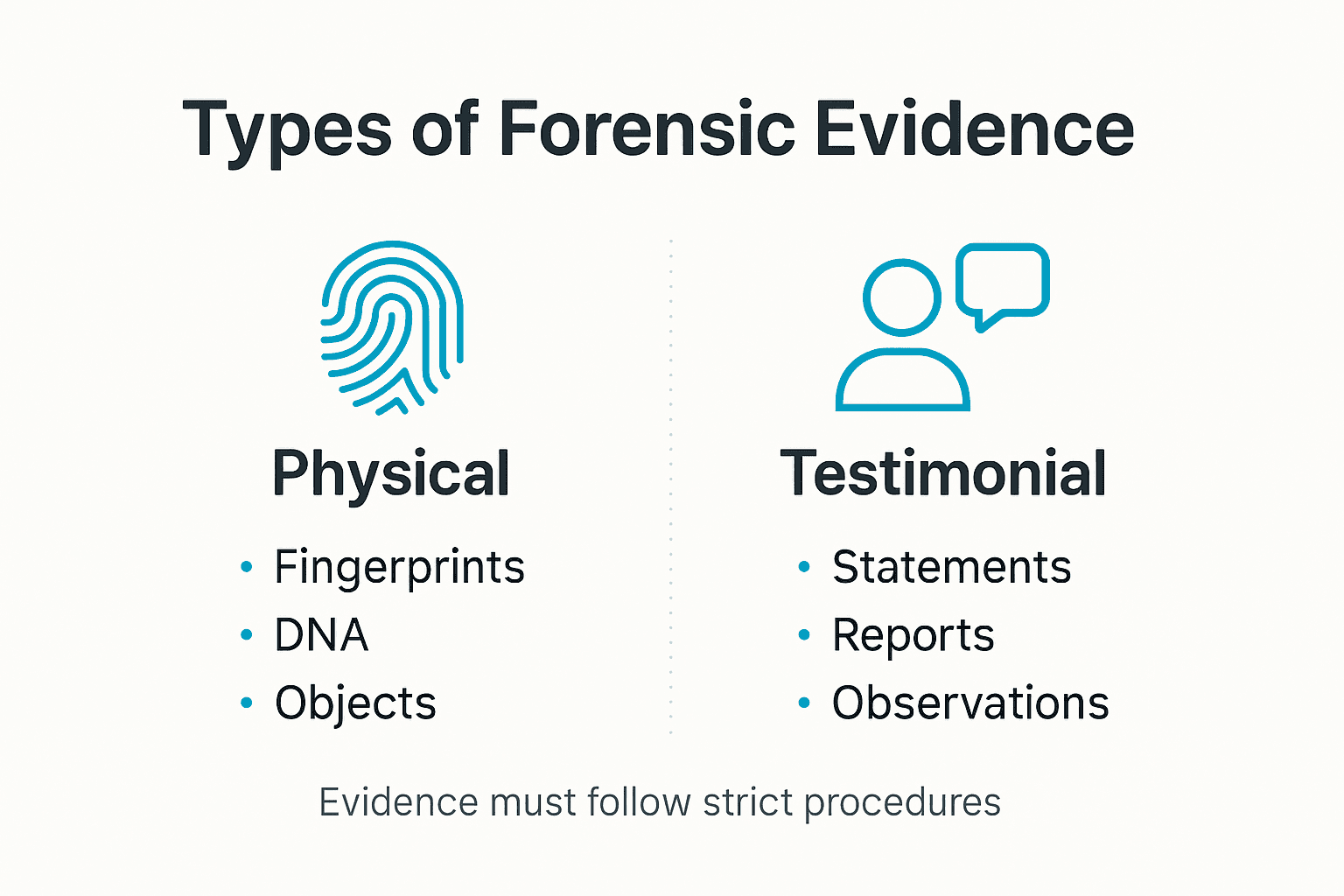
The discipline broadly categorises evidence into two primary domains: physical evidence and testimonial evidence. Physical evidence encompasses tangible artifacts such as fingerprints, bloodstains, fibres, and digital records. These scientific traces provide objective, quantifiable information that can directly link individuals to specific events or locations, offering powerful judicial insights beyond subjective witness testimonies.
Understanding the nuanced classification of forensic evidence is paramount for legal professionals. Digital forensic artifacts, biological samples, trace materials, and physical impressions each contribute distinctive investigative value. By meticulously analysing these evidence types, forensic experts can reconstruct complex narratives, validate or challenge hypotheses, and provide scientifically robust support for legal proceedings.
Here is a summary of common types of forensic evidence and their typical investigative roles:
| Evidence Type | Example | Main Investigative Role |
|---|---|---|
| Biological | Blood, saliva, DNA | Identifying or excluding individuals |
| Physical | Fingerprints, fibres | Linking suspects to crime scenes |
| Chemical | Drugs, toxins, explosives | Determining substances involved |
| Digital | Email, mobile data, logs | Tracing activity or digital presence |
| Impression/Earprints | Tool marks, shoe imprints | Reconstructing events or actions |
Forensic Evidence Strategy Always document the precise collection methodology and maintain rigorous chain of custody to ensure the scientific credibility and legal admissibility of forensic artifacts.
Legal standards and admissibility requirements
Forensic evidence undergoes rigorous scrutiny before being deemed admissible in legal proceedings, with courts implementing sophisticated evaluation mechanisms to ensure scientific integrity. Legal admissibility standards carefully assess the reliability, relevance, and methodological precision of forensic evidence, establishing critical gatekeeping protocols that protect judicial processes from potentially unreliable scientific claims.
Two primary legal frameworks dominate forensic evidence assessment: the Frye Standard and the Daubert Standard. The Frye Standard requires scientific techniques to demonstrate general acceptance within the relevant scientific community, while the Daubert Standard empowers judges to act as more nuanced scientific gatekeepers. Under Daubert, courts examine multiple dimensions including error rates, peer-reviewed methodologies, established scientific protocols, and the qualitative reputation of expert witnesses.
This table compares key legal standards for admissibility of forensic evidence:
| Standard | Main Criterion | Role of Judge |
|---|---|---|
| Frye Standard | General acceptance in science field | Minimal gatekeeping |
| Daubert Standard | Reliability, peer review, error rates | Active gatekeeper |
The international legal landscape reveals significant variations in evidence admissibility, with different jurisdictions maintaining unique interpretative approaches. These disparities underscore the complexity of integrating scientific methodologies into legal frameworks. Forensic experts must navigate intricate procedural requirements, ensuring that their investigative techniques not only meet scientific standards but also align with specific judicial expectations of evidentiary reliability and contextual relevance.
Forensic Evidence Insight Always maintain comprehensive documentation of scientific methodologies, ensuring transparent traceability that can withstand intense judicial scrutiny.
Expert witness reporting and testimony
Forensic expert witnesses play a pivotal role in translating complex scientific findings into comprehensible legal narratives, bridging the gap between technical analysis and judicial understanding. Effective expert witness reporting involves clear communication of forensic scientific findings beyond mere expression of evidential strength, requiring professionals to articulate their analytical processes with precision and clarity.
The process of expert witness testimony demands extraordinary levels of technical expertise, communicative skill, and procedural knowledge. Experts must not only demonstrate scientific competence but also possess the ability to explain intricate methodologies in ways that judges and juries can readily comprehend. This requires a delicate balance between maintaining scientific rigour and presenting information in an accessible, straightforward manner that withstands intense cross-examination.
Navigating the complex landscape of forensic expert testimony involves understanding both scientific protocols and legal requirements. Witnesses must meticulously document their investigative processes, maintain absolute objectivity, and be prepared to defend their methodologies under rigorous scrutiny. This demands comprehensive preparation, including anticipating potential challenges, understanding the broader context of the case, and presenting evidence with unwavering professional credibility.
Expert Testimony Strategy Develop a clear, concise narrative that translates technical findings into understandable insights, and always anticipate potential cross-examination questions.
Chain of custody and evidence integrity
Forensic evidence management represents a critical judicial safeguard, ensuring the reliability and credibility of scientific investigations through meticulously documented handling procedures. The chain of custody is a critical forensic process that documents and preserves the handling of evidence from collection to court presentation, creating an unbroken documentary trail that validates the authenticity and integrity of investigative materials.
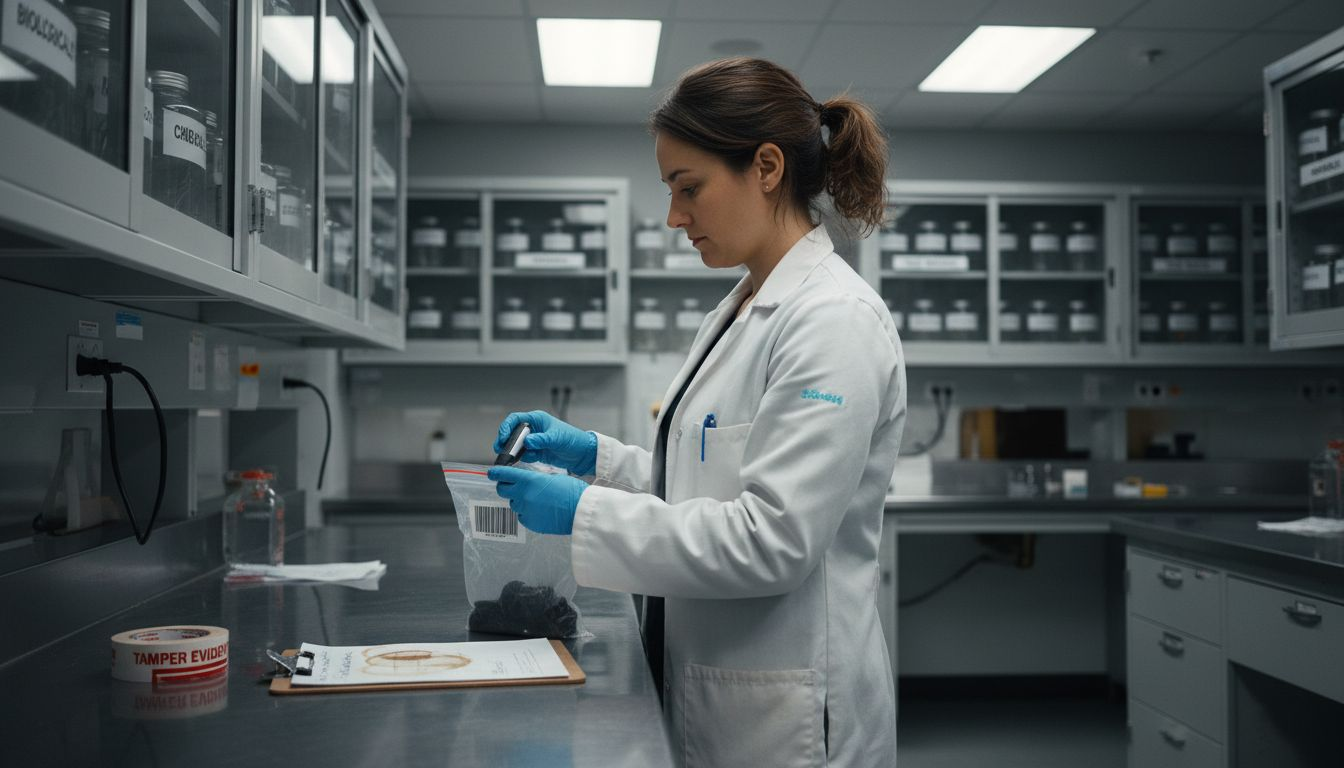
The fundamental objective of chain of custody protocols is to prevent evidence tampering, contamination, or unauthorized manipulation. Every interaction with forensic evidence must be comprehensively recorded, including precise details of who handled the evidence, when, where, and under what circumstances. This systematic documentation creates a transparent chronological narrative that allows legal professionals to trace the evidence’s entire investigative journey, ensuring its admissibility and reliability in judicial proceedings.
Digital forensics introduces unique challenges to traditional chain of custody methodologies, requiring sophisticated technological approaches to evidence preservation. Forensic experts must implement robust digital tracking mechanisms, cryptographic verification techniques, and secure storage protocols that can withstand intense legal scrutiny. This involves creating immutable logs, maintaining strict access controls, and developing forensically sound procedures that protect digital evidence’s integrity throughout the investigative process.
Evidence Protection Strategy Implement a comprehensive digital logging system that records every single interaction with forensic evidence, including precise timestamps, personnel details, and specific handling procedures.
Risks, challenges and common pitfalls
Forensic investigations confront numerous complex challenges that can potentially compromise the integrity and reliability of scientific evidence. Forensic evidence analysis faces significant risks including human error, contamination, variability in laboratory practices, and ethical concerns, which can critically undermine the credibility of investigative processes and judicial outcomes.
The digital forensics landscape introduces particularly nuanced risks, with technological complexity creating multiple potential points of vulnerability. Forensic experts must navigate intricate challenges such as data preservation, encryption complexities, rapid technological evolution, and the potential for sophisticated digital tampering. These challenges demand continuous professional development, advanced technological expertise, and meticulous attention to emerging cybersecurity threats that could compromise forensic investigations.
Human factors represent another significant risk domain in forensic science. Cognitive biases, inadequate training, insufficient standardisation of procedures, and potential unconscious influences can inadvertently distort scientific analysis. Forensic professionals must implement rigorous quality control mechanisms, systematic peer review processes, and ongoing training programmes to mitigate these inherent human limitations and maintain the highest standards of investigative objectivity.
Risk Mitigation Strategy Develop comprehensive standard operating procedures that include multiple independent verification steps and maintain detailed documentation of every analytical decision and methodology.
Strengthen Your Legal Case with Expert Digital Forensics Support
Forensic evidence plays a crucial role in legal cases by providing objective and scientifically backed insights that influence judicial outcomes. If you face the challenge of ensuring rigorous chain of custody, reliable digital evidence analysis, or expert witness testimony, it is essential to partner with a trusted team that understands both the scientific and legal demands. At Computer Forensics Lab, we specialise in converting complex digital data into credible evidence that withstands intense court scrutiny.
Benefit from our professional Forensic Science services which include thorough data recovery, malware analysis, and comprehensive digital investigations tailored for legal proceedings. We also uphold the highest standards in Chain of Custody Tracking to guarantee your evidence remains uncontaminated and legally admissible. Do not let flawed digital evidence compromise your case. Take the decisive step now to secure expert forensic services you can trust by visiting Computer Forensics Lab and safeguard your legal interests today.
Frequently Asked Questions
What is the role of forensic science in legal proceedings?
Forensic science applies rigorous scientific principles to analyse physical, digital, and biological evidence, transforming complex data into comprehensible insights that support legal decision-making.
How does forensic evidence contribute to legal cases?
Forensic evidence serves as a critical mechanism by providing objective, quantifiable information that links individuals to events or locations, thus enhancing the reliability of judicial determinations.
What are the main types of forensic evidence?
Forensic evidence is categorised into physical evidence (e.g., fingerprints, blood) and testimonial evidence. It includes biological samples, chemical substances, digital artefacts, and physical traces, each offering unique investigative value.
What are the standards for admissibility of forensic evidence in court?
Forensic evidence must meet legal admissibility standards, primarily the Frye Standard, which requires general scientific acceptance, and the Daubert Standard, which emphasizes reliability, error rates, and peer-reviewed methodologies.