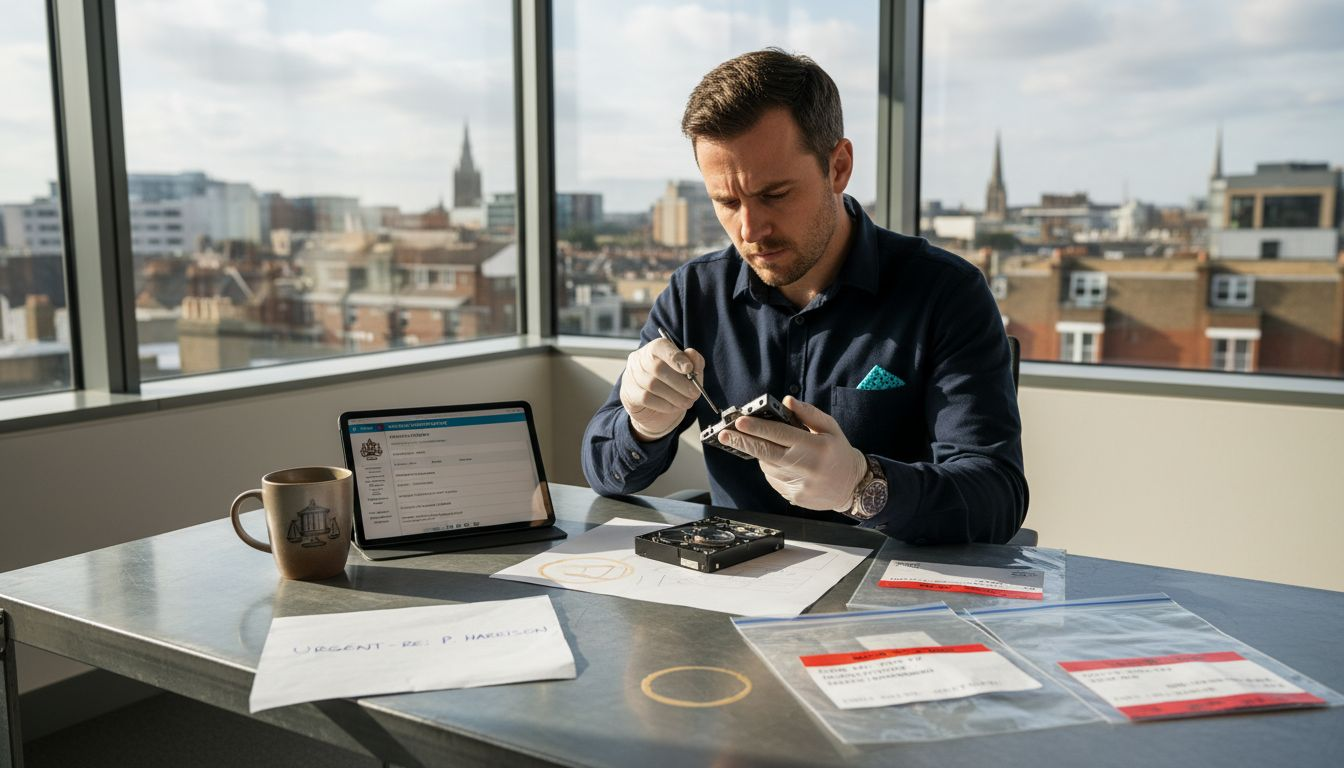
Recovering digital evidence from damaged or suspect devices brings its own set of challenges. One wrong move can lead to accidental data alteration or even the loss of crucial information. As a legal professional, you need steps that are both reliable and legally robust.
This guide walks you through key digital forensic techniques used to uncover and preserve valuable electronic evidence. You will learn how to spot potential data loss risks, use proven methods for imaging and recovery, and protect the integrity of every discovery for court.
Ready to see how experts tackle the toughest data recovery tasks? Each insight ahead is practical and directly applicable, giving you a clear path from scene assessment to evidence handling you can trust.
Table of Contents
- Understanding Data Loss And Initial Assessment
- Utilising Forensic Imaging For Evidence Preservation
- Employing Logical Data Recovery Methods
- Applying Physical Data Recovery For Damaged Devices
- Extracting Hidden And Deleted Data Effectively
- Ensuring Chain Of Custody During Data Handling
- Using Specialist Tools For Encrypted Data Recovery
Quick Summary
| Takeaway | Explanation |
|---|---|
| 1. Conduct a thorough initial assessment | Identify and preserve potential electronic evidence through systematic examination of devices and data sources. |
| 2. Prioritise forensic imaging techniques | Create exact replicas of digital media to analyse them without altering original evidence, ensuring legal integrity. |
| 3. Utilise advanced software for data recovery | Employ forensic tools to recover deleted or hidden data from digital storage, maintaining forensic standards throughout the process. |
| 4. Maintain a strict chain of custody | Document every interaction with digital evidence to uphold its integrity and admissibility in legal proceedings. |
| 5. Develop strategies for encrypted data access | Use specialised techniques to navigate encryption barriers, ensuring technical precision while recovering data without compromising evidence. |
1. Understanding Data Loss and Initial Assessment
Navigating digital forensic investigations requires a strategic approach to identifying and preserving potential electronic evidence. The initial assessment phase represents a critical moment where legal professionals determine the scope and potential of digital data sources.
When conducting a digital forensic examination, understanding data loss mechanisms becomes paramount. Electronic information can disappear rapidly due to system processes, accidental overwrites, or intentional deletion. International forensic standards recommend a structured methodology for recognising and prioritising evidence based on its volatility and potential investigative value.
The initial assessment involves systematically examining devices like computers, mobile phones, cloud storage, and network logs. Legal professionals must focus on identifying potential evidence sources while preventing data alteration. This means creating forensic images, documenting device conditions, and establishing a clear chain of custody for all digital materials.
Key elements of a robust initial assessment include:
- Device Inventory: Catalogue all potential electronic storage devices
- Preservation Protocols: Implement write blocking techniques to prevent data modification
- Risk Evaluation: Assess the fragility and potential loss of digital evidence
- Documentation: Create detailed logs of device conditions and examination processes
Digital forensic processes require meticulous attention to detail. Investigators must understand that every digital interaction potentially impacts available evidence. Careful, methodical approaches prevent inadvertent data destruction and maintain the integrity of potential legal proof.
Pro Tip: Always create forensic duplicates of digital devices before beginning any investigative work to protect original evidence and maintain legal admissibility.
2. Utilising Forensic Imaging for Evidence Preservation
Forensic imaging represents a pivotal technique in digital evidence preservation, allowing legal professionals to create exact replicas of digital storage media without compromising the original data. This meticulous process ensures investigators can conduct thorough analyses while maintaining the integrity of potential legal evidence.
The core principle of forensic imaging involves creating bit-by-bit digital copies that precisely mirror the original electronic device. Investigators use specialised write blocking hardware and software to prevent any accidental modifications during the imaging process. This approach guarantees that the original evidence remains untouched and legally admissible.
Key Components of Forensic Imaging:
- Bit Level Replication: Capturing every single bit of data from the source device
- Write Protection: Preventing any inadvertent changes to the original media
- Cryptographic Verification: Using hash algorithms to confirm image integrity
- Comprehensive Metadata Capture: Recording device details and forensic acquisition parameters
Professional forensic experts understand that digital evidence preservation requires extraordinary precision. The imaging process must document every detail about the device state, including timestamp information, file system structures, and hidden data partitions.
Practical implementation involves selecting appropriate forensic imaging tools that support multiple file formats and provide robust verification mechanisms. Legal professionals should prioritise tools that generate court admissible documentation and maintain strict chain of custody protocols.
Pro Tip: Always create multiple forensic images and store them in geographically separate secure locations to protect against potential data loss or technological failures.
3. Employing Logical Data Recovery Methods
Logical data recovery represents a sophisticated approach to retrieving digital evidence without physically disrupting electronic storage devices. This method enables legal professionals to extract crucial information from functional digital media through advanced software techniques.
Forensic software tools play a critical role in logical recovery by systematically scanning file systems and reconstructing deleted or hidden data. Unlike physical recovery methods, logical approaches focus on retrieving accessible information through intelligent software algorithms that understand complex file system structures.
Key Components of Logical Data Recovery:
- File Carving: Reconstructing files based on their unique signatures
- Metadata Analysis: Examining file system index entries and reference data
- Deleted File Reconstruction: Recovering information from unallocated storage space
- Signature Based Detection: Identifying file types through unique byte patterns
Professional investigators understand that data acquisition strategies require precision and comprehensive understanding of digital storage architectures. The logical recovery process involves carefully navigating file system complexities while maintaining strict forensic protocols to ensure evidence authenticity.
Successful logical data recovery demands technical expertise and sophisticated software tools capable of penetrating complex digital environments. Practitioners must possess deep knowledge of file system structures across various operating systems and storage technologies.
Pro Tip: Always work on a forensically duplicated image rather than the original media to prevent potential evidence contamination during logical recovery processes.
4. Applying Physical Data Recovery for Damaged Devices
Physical data recovery represents a sophisticated forensic technique for retrieving critical information from severely compromised electronic storage devices. When digital evidence appears irretrievable, specialised physical recovery methods offer legal professionals a last opportunity to extract crucial information.
Specialized hardware restoration techniques involve intricate processes that go beyond standard software solutions. These methods require extraordinary precision and technical expertise to disassemble damaged storage media without further compromising potential evidence.
Core Components of Physical Data Recovery:
- Cleanroom Environment: Controlled spaces preventing microscopic contamination
- Component Level Repair: Replacing or reconstructing damaged circuit boards
- Magnetic Platter Restoration: Careful handling of delicate storage surfaces
- Mechanical Head Assembly Replacement: Precision mechanical interventions
Forensic experts understand that hardware damage scenarios demand an exceptionally methodical approach. Each physical recovery attempt requires meticulous documentation to maintain legal admissibility and preserve the chain of evidence.
Successful physical data recovery demands extraordinary skill. Practitioners must possess deep knowledge of electronic storage architectures, microscopic repair techniques, and forensic preservation protocols. The process involves carefully navigating complex hardware challenges while maintaining strict forensic standards.
Pro Tip: Always document every physical intervention during device recovery and maintain comprehensive photographic records to ensure potential court admissibility of recovered evidence.
5. Extracting Hidden and Deleted Data Effectively
Digital forensic investigations often require penetrating beyond surface level information to uncover critical hidden evidence. Extracting deleted and concealed data represents a sophisticated technique that can transform seemingly lost information into pivotal legal proof.
Forensic tools capable of deep scanning enable investigators to recover data fragments that ordinary searches would miss. These advanced techniques go far beyond simple file restoration by exploring complex digital landscapes where crucial evidence might be deliberately obscured.
Key Strategies for Hidden Data Extraction:
- Signature Based File Carving: Reconstructing files from binary fragments
- Slack Space Recovery: Examining unused storage areas for residual information
- Metadata Artifact Analysis: Decoding system level information traces
- Encrypted Data Decryption: Penetrating obfuscated digital repositories
Professional forensic experts understand that digital investigative approaches require methodical and comprehensive examination. Each digital storage device contains multiple layers of potentially recoverable information beyond what is immediately visible.
Successful hidden data extraction demands profound technical expertise and sophisticated software capabilities. Investigators must possess nuanced understanding of file system architectures, data storage mechanisms, and advanced recovery protocols to navigate complex digital environments.
Pro Tip: Always work on forensically duplicated images and maintain strict documentation of every recovery attempt to preserve legal admissibility of extracted evidence.
6. Ensuring Chain of Custody During Data Handling
Chain of custody represents the forensic gold standard for preserving digital evidence’s legal integrity. This meticulous documentation process tracks every interaction with electronic information from initial discovery through final analysis.
International forensic guidelines mandate comprehensive tracking of digital evidence to maintain its admissibility in legal proceedings. Each handling event must be precisely recorded to demonstrate the evidence remains uncompromised.
Critical Chain of Custody Components:
- Detailed Logging: Documenting every person who accessed evidence
- Timestamp Verification: Recording exact times of interactions
- Access Control Protocols: Restricting evidence handling to authorised personnel
- Forensic Image Creation: Generating verified duplicate copies
- Secure Storage Procedures: Maintaining evidence in controlled environments
Professional investigators understand that digital evidence handling requires extraordinary precision. Even minor documentation gaps can potentially invalidate critical legal evidence.
Successful chain of custody management demands systematic approach. Legal professionals must implement rigorous tracking mechanisms that create an unbroken narrative of evidence movement and examination.
Pro Tip: Implement a standardised digital log with mandatory fields for each evidence interaction including handler name, timestamp, purpose of access, and specific actions performed.
7. Using Specialist Tools for Encrypted Data Recovery
Encrypted data recovery represents one of the most sophisticated challenges in digital forensic investigations. Legal professionals require advanced methodologies to penetrate complex encryption barriers while maintaining evidentiary integrity.
Data acquisition techniques for encrypted systems demand extraordinary technical precision. Forensic experts must navigate intricate cryptographic landscapes using specialised tools designed to address multiple encryption scenarios.
Key Strategies for Encrypted Data Recovery:
- Password Cracking: Utilising dictionary and brute force techniques
- Cryptanalysis Methods: Identifying potential decryption pathways
- Live Data Acquisition: Capturing encrypted data during active system states
- Metadata Examination: Extracting potential decryption clues from system artifacts
Professional investigators understand that forensic cryptographic workflows require comprehensive understanding of encryption technologies. Successful recovery demands systematic approaches that balance technical sophistication with legal admissibility standards.
Navigating encrypted data recovery requires practitioners to possess deep technical knowledge across multiple encryption protocols. This involves understanding sophisticated decryption algorithms, forensic tool capabilities, and maintaining strict chain of evidence protocols.
Pro Tip: Always document every decryption attempt comprehensively and preserve original encrypted data to ensure potential court admissibility of recovered evidence.
Below is a comprehensive table summarising the key concepts, methodologies, and recommendations presented in the article.
| Topic | Description | Key Considerations |
|---|---|---|
| Understanding Data Loss | Recognising the risks and mechanisms of data loss in digital environments during forensic investigations. | Implement rigorous preservation protocols to mitigate risks. |
| Initial Assessment | Assessing digital devices to identify potential evidence while ensuring data integrity. | Maintain device inventories and establish chain of custody. |
| Forensic Imaging | Creating exact replicas of digital storage to analyse data without affecting originals. | Use cryptographic verification and store images securely. |
| Logical Data Recovery | Employing software-driven techniques to retrieve deleted or hidden data. | Work with forensically duplicated images to avoid evidence alteration. |
| Physical Data Recovery | Deploying hardware-level methods to extract data from damaged storage devices. | Operate in controlled environments and document all interactions. |
| Extracting Hidden Data | Recovering critical information concealed within digital systems. | Explore slack spaces and utilise sophisticated recovery algorithms. |
| Chain of Custody | Ensuring the legal traceability of evidence handling. | Log all interactions meticulously to maintain admissibility. |
| Encrypted Data Recovery | Retrieving information protected by encryption. | Apply systematic cryptography techniques and document decryption attempts. |
Unlock Powerful Data Recovery Solutions for Legal Investigations
The challenge of recovering critical digital evidence without compromising its integrity requires expertise in sophisticated techniques such as forensic imaging, logical and physical data recovery, and encrypted data decryption. This article highlights essential strategies that legal professionals must navigate carefully to preserve authenticity and maintain a strict chain of custody. If you face complexities around data loss or require advanced recovery methods ensuring legal admissibility, understanding how to safeguard and extract hidden information can be the turning point your case needs.
At Computer Forensics Lab, our Forensic Data Recovery specialists combine cutting-edge technology with meticulous practices to reclaim lost or deleted digital evidence securely. Whether dealing with damaged devices or encrypted files, our team provides trusted support tailored to your investigation. Explore our Forensic Data Specialists to benefit from unmatched expertise in evidence preservation and analysis. Don’t risk missing vital information. Contact us today through Computer Forensics Lab and ensure your digital evidence withstands scrutiny with confidence.
Frequently Asked Questions
What are the top data recovery techniques for legal investigations?
The top data recovery techniques include forensic imaging, logical data recovery, physical data recovery, hidden data extraction, and encrypted data recovery. Each technique focuses on retrieving specific types of data from various storage media, addressing both accessible and compromised information.
How can I ensure the integrity of digital evidence during a recovery process?
To ensure the integrity of digital evidence, implement a robust chain of custody protocol throughout the recovery process. Document every interaction with the evidence, including timestamps and handler details, to maintain legal admissibility.
What steps should I take for effective forensic imaging?
Begin by creating a bit-by-bit replica of the original device using write blocking techniques to prevent data modification. Ensure comprehensive documentation of the imaging process, including timestamps and device metadata, to uphold evidentiary standards.
How do I recover deleted data using logical recovery methods?
Utilise forensic software tools to systematically scan file systems, focusing on reconstructed deleted files and probing unallocated storage. Work on a forensically duplicated image rather than the original to prevent any potential evidence contamination.
What precautions should I take when performing physical data recovery?
When conducting physical data recovery, always work in a cleanroom environment to prevent contamination of delicate storage components. Document every step taken during the recovery process, including any repairs conducted, to ensure potential court admissibility of the recovered evidence.
How can I approach encrypted data recovery effectively?
To approach encrypted data recovery, use methods such as password cracking and cryptanalysis to find potential decryption pathways. Be meticulous in documenting every attempt and preserve the original encrypted data to facilitate legal processes.