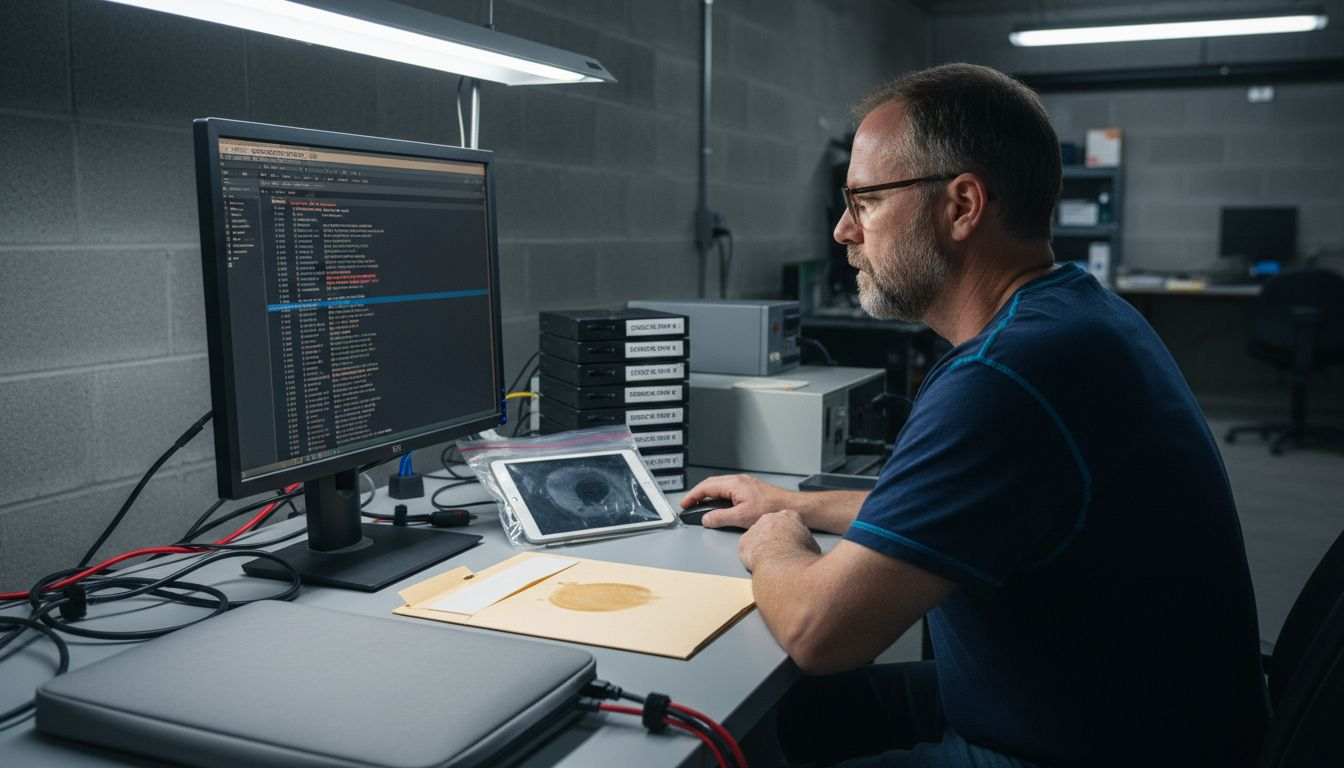
More than 60 percent of british businesses believe digital forensics is simply about recovering deleted files, but the reality is far more complex. In today’s digital age, understanding the true scope of digital forensics is crucial for anyone seeking to protect sensitive information or support legal cases. This article unpacks the fundamentals and exposes common myths, offering clear guidance on what digital forensics really involves and why it matters.
Table of Contents
- Digital Forensics Explained And Common Myths
- Types Of Digital Evidence And Investigation Methods
- Core Processes In Digital Forensic Analysis
- Legal Standards And Evidence Admissibility
- Managing Risks And Avoiding Investigation Errors
Key Takeaways
| Point | Details |
|---|---|
| Importance of Expert Involvement | Engage certified digital forensic professionals to ensure technical expertise and legal compliance during investigations. |
| Evidence Preservation is Critical | Always preserve original digital evidence in its unaltered state to maintain integrity and admissibility in court. |
| Adherence to Legal Standards | Follow stringent legal protocols and chain of custody requirements to validate the authenticity of digital evidence. |
| Continuous Training Required | Forensic experts must stay updated with technological advancements and evolving methodologies to ensure robust investigative practices. |
Digital Forensics Explained and Common Myths
Digital forensics represents a sophisticated scientific discipline focused on collecting, preserving, and analysing electronic evidence from computing devices, networks, and digital storage systems. Unlike traditional investigative methods, digital forensics requires specialised technical expertise and meticulous procedural standards to ensure legal admissibility and evidential integrity.
The field encompasses multiple investigative techniques designed to extract crucial information from electronic sources. Comprehensive digital forensic methodologies have evolved significantly, moving beyond simple data retrieval to complex analytical processes that can uncover hidden digital traces. Forensic experts utilise advanced technological tools to recover deleted files, analyse network traffic, examine metadata, and reconstruct digital activities with remarkable precision.
Numerous myths surround digital forensics that can undermine public understanding. Contrary to popular belief, digital forensic investigations are not instantaneous hacking procedures, but systematic, methodical approaches that require substantial technical skill and legal compliance. Forensic specialists must follow strict chain of custody protocols, ensuring that digital evidence remains unaltered and legally defensible. Many individuals mistakenly believe digital evidence can be easily manipulated or fabricated, when in reality, professional forensic techniques include multiple verification steps to guarantee authenticity.
Pro Tip: Always engage certified digital forensics professionals who understand both technical intricacies and legal requirements when seeking electronic evidence for legal proceedings.
Types of Digital Evidence and Investigation Methods
Digital evidence encompasses a wide range of electronic data sources that can provide critical insights during legal investigations. Comprehensive forensic methodologies categorise digital evidence into several key types, each requiring specialised extraction and analysis techniques. These include storage media evidence, network-based evidence, communication records, and device-specific digital artifacts.
Storage media forensics represents a fundamental investigative approach, involving detailed examination of hard drives, solid-state drives, USB devices, and other digital storage systems. Forensic investigators employ sophisticated tools to recover deleted files, analyse file system structures, and reconstruct digital timelines. Network forensics explores electronic communication patterns, tracking data transmission, identifying network intrusions, and examining email communications, server logs, and internet activity records.
Device-specific investigation methods vary significantly across different electronic platforms. Mobile device forensics involves extracting data from smartphones, tablets, and wearable technologies, while cloud forensics addresses digital evidence stored in remote online environments. Investigators must navigate complex technological landscapes, ensuring preservation of digital evidence through specialised techniques that maintain chain of custody and legal admissibility.
Pro Tip: Always preserve original digital evidence in its unaltered state and work exclusively with forensically duplicated copies to maintain evidential integrity during investigations.
Here is a comparison of common types of digital evidence and the primary forensic techniques used:
| Type of Evidence | Example Sources | Main Forensic Techniques |
|---|---|---|
| Storage Media | Hard drives, USB sticks | File recovery, timeline analysis |
| Network-Based | Email, web logs, packets | Traffic analysis, intrusion tracing |
| Communication Records | SMS, instant messages | Metadata extraction, content recovery |
| Cloud Artifacts | Online drives, backups | Remote data acquisition, credential tracing |
Core Processes in Digital Forensic Analysis
Digital forensic analysis follows a structured methodology designed to systematically collect, preserve, and examine electronic evidence with scientific precision. Comprehensive forensic investigation processes encompass multiple critical stages that ensure the integrity and admissibility of digital evidence in legal proceedings.

The initial phase involves careful evidence identification and preservation, where forensic experts create forensically sound bit-by-bit copies of digital media, ensuring the original evidence remains unaltered. Sophisticated write-blocking technologies prevent any modification during the imaging process, maintaining the evidentiary chain of custody. Subsequent analysis involves detailed examination of digital artifacts, recovering deleted files, reconstructing digital timelines, and extracting metadata that can provide crucial insights into electronic communications, user activities, and potential criminal behaviour.
Advanced forensic methodologies integrate complex technological tools with rigorous scientific protocols. Investigators employ specialised software to decrypt encrypted files, analyse system logs, recover fragmented data, and cross-reference digital evidence across multiple platforms. Process flow models for digital evidence extraction emphasise the importance of creating comprehensive, repeatable, and legally defensible documentation throughout the investigation, ensuring that every step can withstand intense judicial scrutiny.
Pro Tip: Document every single action during digital forensic analysis, recording precise timestamps, specific tools used, and exact methodological steps to maintain absolute evidential transparency.
Legal Standards and Evidence Admissibility
Legal admissibility represents the critical threshold for digital forensic evidence, determining whether electronic information can be presented and considered within judicial proceedings. Blockchain-based chain of custody systems have emerged as innovative approaches to ensuring the integrity and traceability of digital evidence, addressing fundamental challenges in maintaining evidentiary standards.
Courts impose stringent requirements for digital evidence to be deemed admissible, demanding meticulous documentation, preservation of original data integrity, and transparent forensic methodologies. Forensic experts must demonstrate that electronic evidence has been collected using scientifically validated techniques, without contamination or unauthorized modifications. This involves maintaining precise logs of evidence handling, using write-blocking technologies, creating forensically sound bit-by-bit copies, and establishing clear provenance for all digital artifacts.
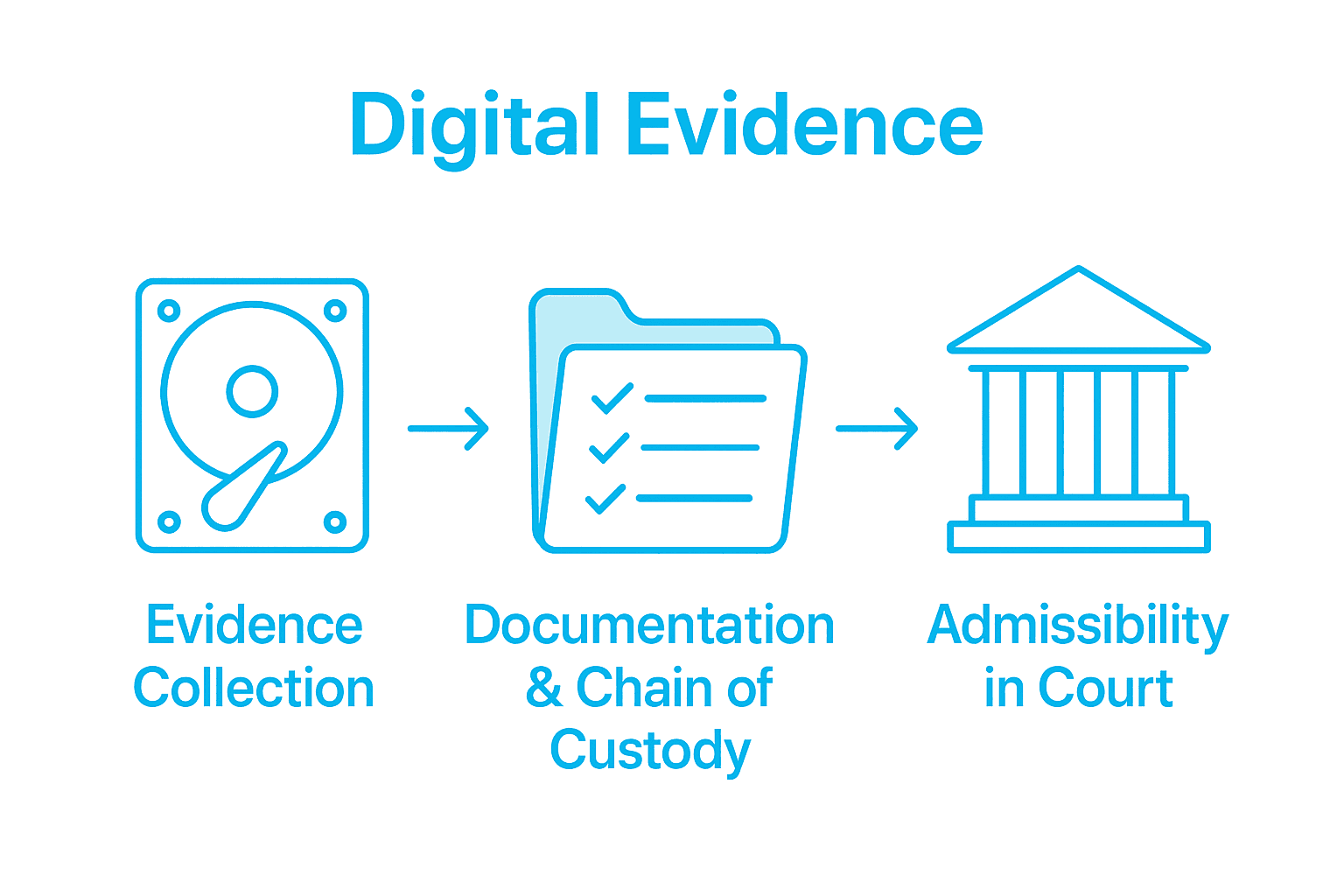
The rapidly evolving technological landscape necessitates continuous adaptation of legal standards. Open standards for digital forensic evidence have become increasingly crucial as technological complexity grows, particularly with the integration of artificial intelligence and advanced computational techniques. Legal professionals and forensic investigators must collaborate to develop robust frameworks that can reliably authenticate and validate digital evidence across diverse technological platforms, ensuring that scientific methodologies meet rigorous judicial scrutiny.
Pro Tip: Always maintain a comprehensive and transparent audit trail during digital evidence collection, documenting every technical action with precise timestamps and forensically validated methodological steps.
The table below summarises key legal criteria for digital evidence admissibility and their practical implications:
| Legal Criterion | Purpose | Impact on Investigation |
|---|---|---|
| Chain of Custody | Ensures traceability of evidence handling | Maintains evidence integrity |
| Write-Blocking | Prevents alteration during acquisition | Protects against accidental modification |
| Comprehensive Logging | Documents every procedural step | Enhances transparency and auditability |
| Scientific Methods | Validates evidence collection techniques | Satisfies court admissibility standards |
Managing Risks and Avoiding Investigation Errors
Digital forensic investigations demand extraordinary precision, with even minor procedural errors potentially compromising entire legal cases. Artificial intelligence integration in forensic methodologies has emerged as a powerful tool for mitigating human error, providing sophisticated mechanisms to validate and cross-reference investigative processes.
Risk management in digital forensics involves implementing multiple layers of verification and systematic documentation protocols. Forensic experts must establish rigorous internal controls that prevent potential contamination of digital evidence, including strict chain of custody procedures, comprehensive logging of all investigative actions, and independent verification of forensic imaging and analysis techniques. Critical risk mitigation strategies include creating multiple forensic copies, maintaining detailed audit trails, and employing redundant verification methods to ensure the integrity of electronic evidence.
Systematic approaches to digital forensic reliability emphasise the importance of standardised scientific methodologies that can withstand intense judicial scrutiny. Investigators must continuously update their technical skills, remain current with emerging technological challenges, and develop sophisticated techniques for handling increasingly complex digital environments. This requires ongoing training, participation in professional development programmes, and a commitment to maintaining the highest standards of forensic investigation.
Pro Tip: Implement a comprehensive quality assurance process that includes independent peer review of forensic findings, ensuring multiple expert perspectives validate your investigative conclusions.
Unlock the Full Potential of Digital Forensics in Your Legal Case
Navigating the complex world of digital evidence requires precision and expertise to overcome challenges such as maintaining the chain of custody and ensuring evidence admissibility. The article highlights the vital importance of systematic digital forensic analysis and preservation methods to provide compelling, legally defensible proof in court. If you are facing difficulties recovering, analysing, or preserving electronic evidence, trusted professional support can make all the difference.
At Computer Forensics Lab, we specialise in delivering comprehensive digital forensic services tailored to legal professionals and organisations. Our expertise includes advanced techniques for Electronic Evidence handling and Digital Evidence Preservation that safeguard the integrity of your crucial data. Act now to ensure your digital evidence withstands judicial scrutiny and strengthens your case with expert reports and meticulous forensic protocols.
Take control of your investigation and secure reliable digital evidence today by visiting Computer Forensics Lab to learn how we can support your legal challenges with precision and authority.
Frequently Asked Questions
What is digital forensics and how does it benefit legal cases?
Digital forensics is a scientific discipline focused on collecting, preserving, and analysing electronic evidence. It benefits legal cases by providing reliable, scientifically validated evidence that can help uncover facts, clarify events, and support or challenge claims in court.
What types of digital evidence are commonly used in legal investigations?
Common types of digital evidence include storage media (like hard drives and USB devices), network-based evidence (such as emails and web logs), communication records (like SMS and instant messages), and cloud artifacts (data stored online). Each type requires specific forensic techniques for analysis.
How do forensic experts ensure the integrity of digital evidence during investigations?
Forensic experts ensure the integrity of digital evidence by following strict chain of custody protocols, using write-blocking technologies to prevent alterations, and meticulously documenting every step taken during the investigation process to maintain evidential validity.
Why is the admissibility of digital evidence important in court cases?
The admissibility of digital evidence is crucial because it determines whether such evidence can be presented in court. Courts require that evidence meet strict legal standards, ensuring it has been collected and preserved using scientifically validated techniques to be considered credible and trustworthy.