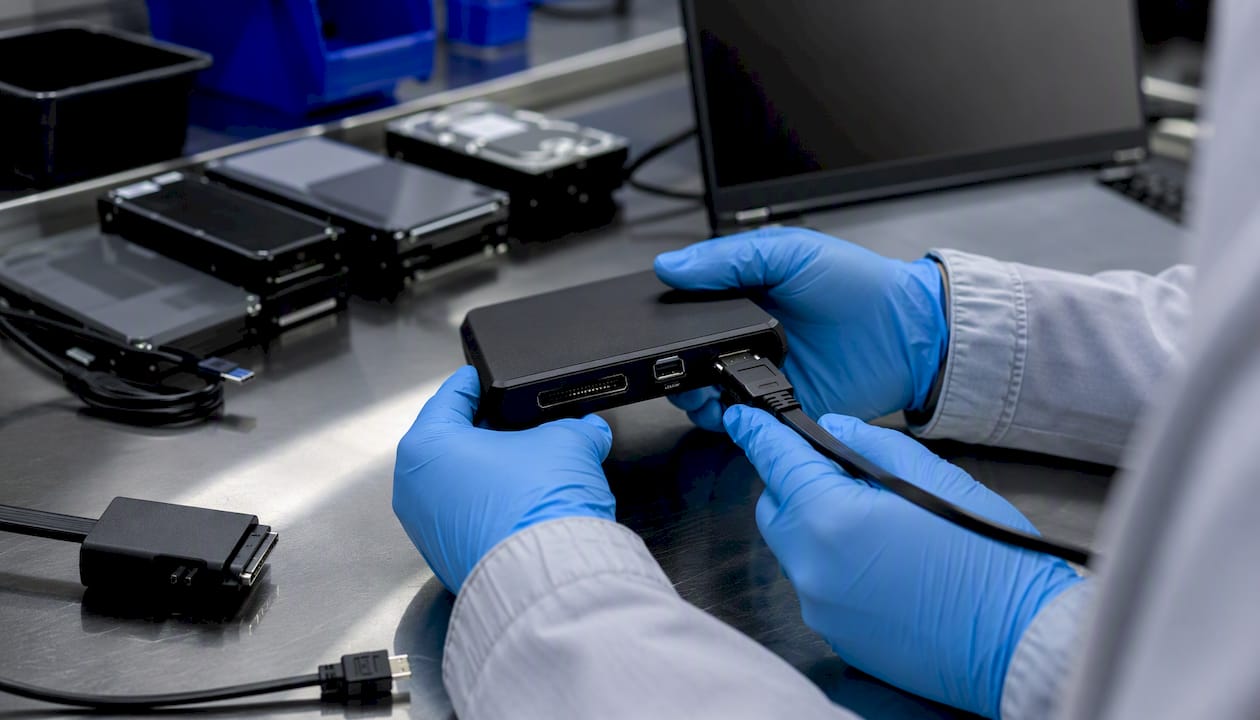
Anti-forensics refers to deliberate actions taken to obstruct, impede, or invalidate digital forensic analysis, with the primary purpose of making evidence unavailable, unusable, or inadmissible. The NIST glossary defines it as techniques for concealing or destroying data so that others cannot access it. For investigators and legal teams, understanding what anti-forensics involves is not academic: it directly affects whether digital evidence survives to court.
The three core goals of any anti-forensic action are to obscure evidence (hide it in plain sight), destroy it (render it unrecoverable), or manipulate it (alter it so it misleads rather than informs). Each goal maps to a distinct category of technique:
- Data hiding: concealing data within other files or storage areas (steganography, hidden partitions, slack space)
- Artefact wiping: overwriting or destroying file system traces, logs, and metadata
- Trail obfuscation: altering timestamps, routing through anonymising networks, or clearing audit logs
- Attacks on forensic tools and processes: crafting malformed files or exploiting parser vulnerabilities to crash or corrupt analysis software
Gary Kessler’s practitioner analysis notes that many anti-forensic measures aim to delay analysis rather than permanently destroy evidence, which increases investigative cost and narrows the usable time window for recovery. That distinction matters operationally: rapid volatile capture is often the difference between a recoverable case and a dead end.
Key takeaways
Anti-forensics encompasses deliberate techniques to obscure, destroy, or manipulate digital evidence, and detecting it requires rapid volatile capture, cross-source timeline analysis, and rigorous chain-of-custody documentation.
| Point | Details |
|---|---|
| Core definition | Anti-forensics covers actions that make evidence unavailable, unusable, or inadmissible, per NIST guidance. |
| Four technique groups | Data hiding, artefact wiping, trail obfuscation, and attacks on forensic tools form the accepted taxonomy. |
| Detection priority | Capture RAM before shutdown; cross-correlate $MFT, event logs, and network telemetry to identify manipulation. |
| UK legal context | Deliberate evidence destruction in legal proceedings may engage the Criminal Justice Act 1967, Contempt of Court Act 1981, or Computer Misuse Act 1990. |
| Computerforensicslab | Provides RAM capture, forensic imaging, and CPR 35-compliant expert witness reports for UK cases involving suspected anti-forensic activity. |
Table of Contents
- What is anti-forensics? Taxonomy and investigative implications
- Concrete anti-forensic techniques investigators encounter in practice
- How investigators detect and respond to anti-forensic activity
- Anti-forensics in UK law: when does it become a criminal offence?
- How a UK forensic lab approaches suspected anti-forensics in practice
- Practical steps organisations can take to detect anti-forensic activity earlier
- The cat-and-mouse reality of modern anti-forensics
- When professional forensic support is the right call
- Sources
What is anti-forensics? Taxonomy and investigative implications
Scholarly literature confirms there is no single universally accepted definition of anti-forensics. Most practitioners rely on functional taxonomies and treat the underlying technologies as neutral: it is intent that determines whether an action is anti-forensic. Encryption, for example, is a standard security control; encrypting a device specifically to prevent lawful forensic examination is a different matter entirely.
A systematic extended taxonomy published in academic literature organises the field into four primary groups, each with distinct investigative implications:
| Technique group | What it does | Investigator priority |
|---|---|---|
| Data hiding | Conceals data within legitimate files, slack space, or encrypted containers | Conduct image carving, hash comparisons, and entropy analysis |
| Artefact wiping | Overwrites file system metadata, MFT entries, and log files | Cross-correlate with shadow copies, backup logs, and network telemetry |
| Trail obfuscation | Alters timestamps, clears event logs, or routes traffic through anonymising proxies | Reconstruct timelines from multiple independent sources |
| Attacks on tools/processes | Exploits parser bugs or deploys malformed files to crash forensic software | Validate tool integrity; use multiple independent toolchains |
Pro Tip: When you first suspect anti-forensic activity, triage by category. A single anomalous timestamp is trail obfuscation; a cluster of zero-byte log files alongside it suggests artefact wiping. Identifying the category first tells you which evidence sources to prioritise before they degrade.
Concrete anti-forensic techniques investigators encounter in practice
The taxonomy becomes actionable when mapped to specific techniques. The following are among the most common, drawn from practitioner research at the Naval Postgraduate School:
- Timestomping: Modifying NTFS or ext4 metadata (MAC times: Modified, Accessed, Created) to make a file appear older or newer than it is. This directly undermines timeline analysis and can place a suspect outside a window of activity. Detection relies on cross-referencing $MFT entries, $LogFile, and $UsnJrnl records, which are harder to alter consistently.
- Secure delete and overwrite: Tools that overwrite file content and directory entries before deletion, defeating standard undelete recovery. Investigators look for residual slack space artefacts and inconsistencies in the $MFT sequence numbers.
- Steganography: Embedding data within image, audio, or video files. A JPEG containing hidden text shows no visible anomaly; detection requires statistical analysis tools such as StegDetect or entropy measurement.
- Encrypted containers: VeraCrypt hidden volumes present a plausible-deniability layer: one password reveals a decoy partition, another reveals the real one. Without the correct passphrase, the hidden volume is cryptographically indistinguishable from random data.
- Memory-only malware (fileless malware): Malicious code that executes entirely within RAM, leaving no persistent file on disk. Once the system is powered down, the artefact is gone. Live RAM capture using tools such as WinPmem or Magnet RAM Capture is the only reliable recovery path.
- Log clearing: Deliberate deletion or truncation of Windows Event Logs, syslog entries, or application logs. Investigators cross-reference with centralised SIEM logs and network flow data that the suspect may not have controlled.
- Compression bombs: Malformed archives that expand to enormous sizes when processed, designed to crash or stall forensic tools. Early detection protects the forensic environment and preserves chain of custody.
The critical distinction between anti-forensic intent and legitimate privacy practice is context. A VPN used for personal privacy is not anti-forensic. The same VPN activated immediately before a data exfiltration event, combined with log clearing and timestomping, forms a pattern of deliberate obstruction. Investigators document the pattern, not the individual tool. For a broader view of how anti-forensics affects evidence handling, the tactical context is as important as the technical detail.
Anti-forensic techniques are also spreading into financial crime. A recent preprint analysing blockchain transaction obfuscation documents how mixing services and CoinJoin protocols are deployed specifically to frustrate blockchain attribution, applying the same trail-obfuscation logic to cryptocurrency investigations.
How investigators detect and respond to anti-forensic activity
Detection of anti-forensic activity depends on cross-source correlation: no single artefact source is sufficient when an adversary has actively manipulated the environment. NIST SP 800-86 provides the procedural foundation for forensic data collection, and its guidance on evidence acquisition order is directly relevant here: volatile data first, then persistent storage.
The following table maps common anti-forensic indicators to immediate investigator actions:
| Indicator | Immediate action |
|---|---|
| Anomalous MAC timestamps | Capture volatile memory; cross-reference $MFT, $LogFile, $UsnJrnl |
| Absent or truncated event logs | Acquire SIEM/network logs; document log gaps with timestamps |
| High-entropy file regions | Run entropy analysis and steganography detection tools |
| No persistent files but active processes | Perform live RAM capture immediately before shutdown |
| Malformed archive files | Isolate before processing; use sandboxed analysis environment |
| Wiped free space with tool signatures | Examine MFT sequence gaps; check VSS shadow copies |
Safe triage follows a clear sequence: isolate the device from the network, capture RAM before any shutdown, create a forensically sound image of storage media, and acquire all available logs. Each step must be documented with tool names, version numbers, hash values, and timestamps.
For detailed guidance on evidence acquisition best practices, the sequencing of volatile and non-volatile capture is covered in full.
Anti-forensics in UK law: when does it become a criminal offence?
Legality in the United Kingdom depends on intent and context. Using encryption to protect personal data is entirely lawful and, under the UK GDPR, may be a positive obligation. Deliberately destroying digital evidence to obstruct a police investigation or civil disclosure process is a different matter, potentially engaging several criminal provisions.
The Criminal Justice Act 1967 and the Contempt of Court Act 1981 both create liability for interference with evidence in legal proceedings. The Computer Misuse Act 1990 may apply where anti-forensic tools are deployed to modify or destroy data on systems without authorisation. In civil proceedings, deliberate destruction of disclosable documents can constitute contempt of court and attract adverse inference directions under the Civil Procedure Rules.
Investigators and organisations should take the following steps when anti-forensic activity is suspected:
- Preserve immediately: do not power down devices or clear any further logs; isolate from the network.
- Record everything: document the state of the device, visible artefacts, and any actions already taken before forensic specialists arrive.
- Notify legal counsel promptly: in litigation contexts, solicitors need to assess disclosure obligations and potential contempt exposure.
- Maintain chain of custody from the outset: every person who handles the device must be logged, with time and purpose recorded.
- Avoid further contamination: do not attempt DIY recovery; actions taken without forensic discipline may render evidence inadmissible.
Pro Tip: When documenting a device that contains privacy tools such as VeraCrypt or a VPN client, record the tool’s presence factually and note the surrounding context (timing relative to the incident, usage patterns, whether it was pre-installed). Avoid characterising the tool as malicious in your notes; that determination belongs to the court. Your role is to document what is present and what the artefacts show.
For comparative context on how evidence destruction is treated in other jurisdictions, legal analysis of evidence-tampering statutes illustrates the range of consequences that can follow deliberate obstruction.
This article provides general information on UK law as it relates to digital evidence. It is not legal advice. Consult a qualified solicitor for guidance specific to your case.
How a UK forensic lab approaches suspected anti-forensics in practice
When Computerforensicslab receives a case with suspected anti-forensic activity, the workflow follows a structured sequence designed to preserve evidence integrity at every stage.
Initial triage begins with a network isolation and RAM capture, prioritising volatile memory before any shutdown. The forensic examiner records the tool name, version, and acquisition hash contemporaneously. Storage media is then imaged using write-blocked hardware, with SHA-256 hashes verified against the original at acquisition and again at examination. This dual-hash verification is the first trust signal that the exhibit has not been altered.
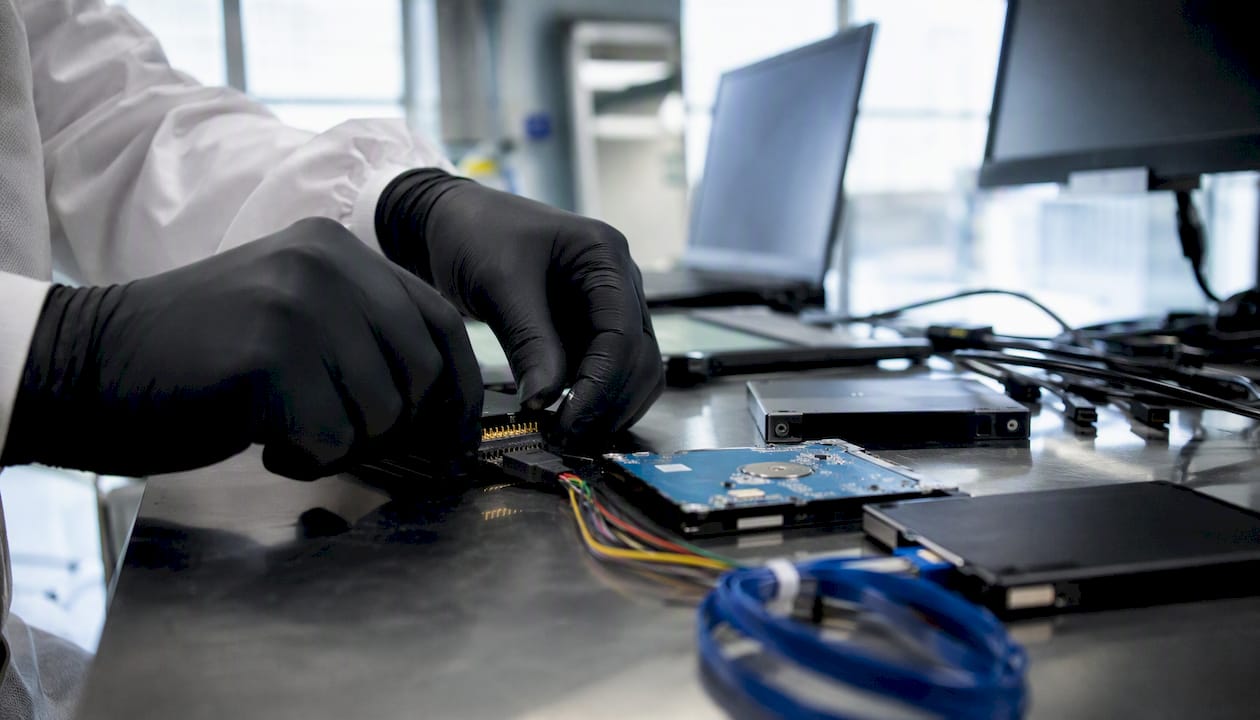
Cross-device timeline correlation follows: event logs, browser artefacts, file system metadata, and network telemetry are aligned on a single timeline to identify gaps, anomalies, and inconsistencies that suggest deliberate manipulation. Where log files are absent or truncated, the examiner documents the gap explicitly rather than inferring what may have been there.
Computerforensicslab maintains detailed chain of custody records for every exhibit, including tool version logs, acquisition hashes, and examiner notes. Where findings indicate deliberate evidence manipulation, the case is escalated to legal teams with a structured report documenting each anti-forensic indicator, the evidence basis for that classification, and the investigative steps taken. Expert witness reports prepared by the lab meet the requirements of Civil Procedure Rule 35 and the Criminal Procedure Rules, ensuring findings are presented in a form courts can rely upon.
Pro Tip: Use at least two independent forensic toolchains when anti-forensic activity is suspected. If Autopsy and X-Ways Forensics return different results for the same artefact, that discrepancy is itself evidentially significant and must be documented. Single-tool reliance is a vulnerability when adversaries are actively targeting parser behaviour.
For further detail on tactical indicators and lab workflows, the companion article expands on how examiners escalate findings.
Practical steps organisations can take to detect anti-forensic activity earlier
Defensive preparation reduces the window in which anti-forensic techniques can operate undetected. The following measures are ordered by implementation priority:
- Centralise and protect endpoint logs: ship Windows Event Logs, syslog, and application logs to an immutable SIEM in real time. An adversary who clears local logs cannot retroactively clear a remote log store.
- Enable memory-capture readiness: deploy a RAM acquisition agent (such as WinPmem or Magnet RAM Capture) on endpoints so that live memory can be acquired without installing new software during an incident.
- Implement immutable backups: use write-once storage or versioned cloud backups with integrity verification. This preserves file states that artefact-wiping tools cannot reach.
- Apply application allowlisting: tools such as AppLocker or Windows Defender Application Control prevent unauthorised executables, including many anti-forensic utilities, from running.
- Configure retention schedules with legal hold capability: define minimum log retention periods aligned with your litigation risk profile, and implement legal hold procedures that suspend deletion when proceedings are anticipated.
- Deploy user behaviour analytics (UBA): monitor for behavioural signals that often precede anti-forensic actions: bulk file deletion, log service stops, volume shadow copy deletion commands, and off-hours privileged access.
- Harden forensic toolchains: keep forensic software updated and validate tool integrity with vendor-supplied hashes. IEEE conference research documents how anti-forensic techniques increasingly target known parser vulnerabilities in forensic software itself.
- Train staff on incident response: personnel who first encounter a suspected incident must know not to power down devices or clear logs. A brief, laminated incident response card at workstations is a low-cost, high-value control.
When an incident occurs, your incident response playbook should specify the threshold at which an external forensic specialist is engaged. High-value breaches, suspected evidence tampering, and any matter with litigation potential all warrant specialist involvement from the outset. For guidance on step-by-step evidence collection, the process is documented in full.
Pro Tip: Capture volatile evidence before you do anything else. RAM contains running processes, network connections, encryption keys, and fileless malware artefacts that disappear the moment a device is powered down. The ten minutes spent on a live RAM acquisition can recover evidence that no amount of disk analysis will ever find.
The cat-and-mouse reality of modern anti-forensics
The pace of change in anti-forensic technique development has accelerated noticeably. Memory-only malware, hardware-level rootkits, and blockchain-obfuscation services represent a qualitative shift from the file-deletion tools of a decade ago: they leave fewer persistent traces, operate at layers that standard disk forensics cannot reach, and are increasingly available as commoditised services rather than bespoke attacker capabilities.
What this means in practice is that procedural discipline has become as important as technical capability. An examiner who captures RAM within minutes of isolation recovers evidence that a technically superior but slower response would miss entirely. Triage decisions made in the first hour of an investigation determine what evidence survives. Experience informs those decisions: knowing which artefact sources to prioritise, which tool combinations to deploy, and when a pattern of absence is itself the finding. Research gaps remain, particularly around hardware-level anti-forensics and the forensic analysis of encrypted memory, but the field is advancing. Studying anti-forensic techniques, as systematic academic research confirms, directly improves the robustness of forensic tools and methodologies.
When professional forensic support is the right call
Suspected evidence tampering, legal proceedings involving digital exhibits, high-value data breaches, and any situation where chain-of-custody integrity is at risk all warrant professional forensic engagement. Attempting in-house analysis without forensic discipline risks contaminating evidence and undermining admissibility.
Computerforensicslab provides digital forensics services specifically designed to address anti-forensic challenges: live RAM capture, forensically sound imaging, file system reconstruction, memory forensics, and expert witness reports prepared to Civil Procedure Rule 35 and Criminal Procedure Rules standards. The lab works with legal professionals, law enforcement, and corporate clients across the United Kingdom, maintaining full chain of custody from acquisition through to court presentation.
For case triage or to discuss a specific matter, contact Computerforensicslab directly through the digital forensic investigations service page.
Sources
The sources below underpin the definitions, taxonomy, and detection guidance in this article. Each covers a distinct dimension of the subject, from authoritative definitions through to practitioner methodology and emerging research.
- Anti-Forensic – Glossary | CSRC
- Anti‑forensics examples and practitioner considerations (NPS/Calhoun paper)
- Anti‑Forensics: Furthering digital forensic science through a new extended, granular taxonomy
- Anti‑forensics and blockchain obfuscation (arXiv preprint)
- Anti‑Forensic Challenges in digital investigations (IEEE conference)