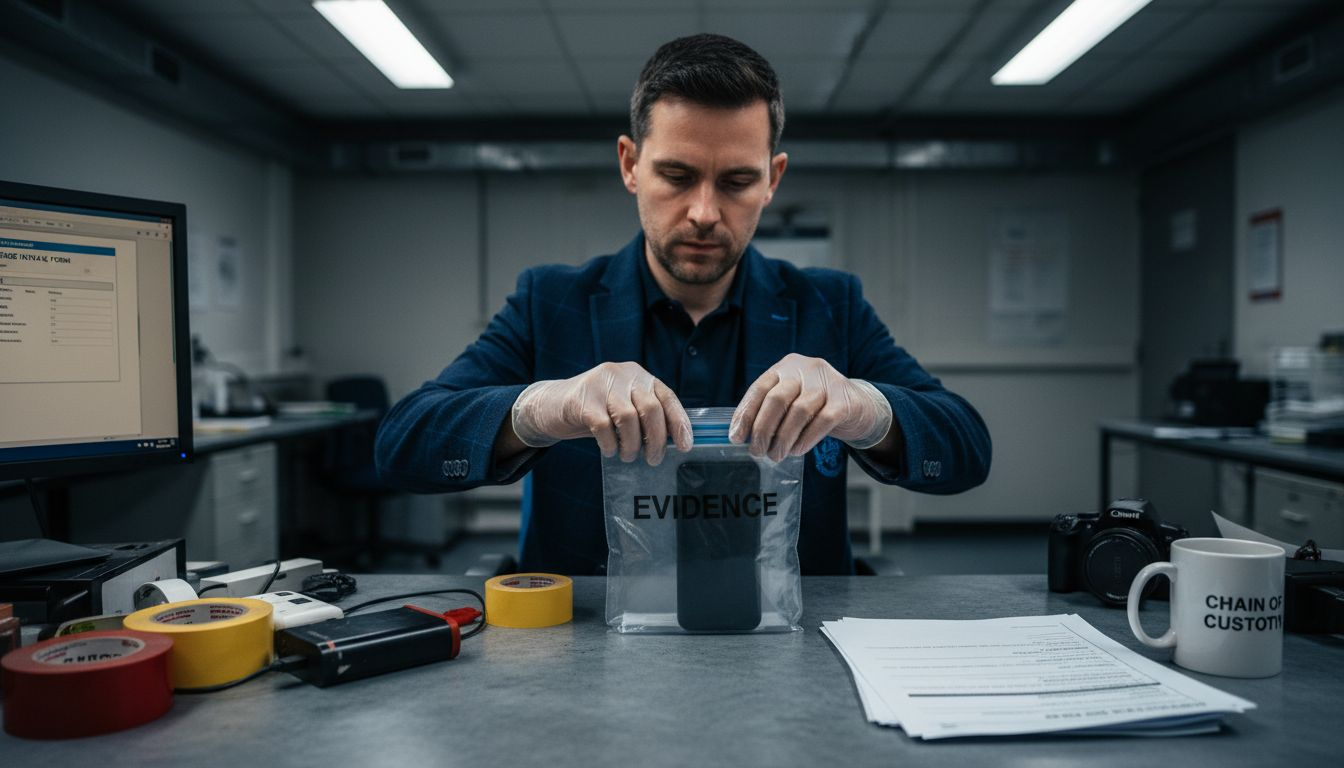
Protecting digital evidence during an investigation can feel overwhelming. One misstep might mean critical data is lost, tampered with, or thrown out in court. If you want your digital findings to stand up to legal scrutiny, every action from the moment you collect a device truly matters.
You need clear steps that go far beyond the basics. This list unlocks practical methods trusted by professional investigators, supporting you from evidence collection through to courtroom presentation. Discover proven techniques that safeguard evidence integrity, maintain an unbroken chain of custody, and ensure your digital evidence remains credible and admissible.
Table of Contents
- Secure Immediate Access to Devices
- Document Everything During Collection
- Maintain an Unbroken Chain of Custody
- Utilise Write-Blocking Technology
- Store Evidence in Controlled Environments
- Conduct Regular Integrity Checks
- Follow Standardised Procedures for Analysis
Quick Summary
| Takeaway | Explanation |
|---|---|
| 1. Secure devices immediately | Rapidly isolate devices to prevent data loss or tampering, ensuring evidence integrity. |
| 2. Document every detail | Meticulous documentation is vital for maintaining evidence integrity and admissibility in court. |
| 3. Maintain a strict chain of custody | Every interaction with evidence must be recorded to prevent legal challenges during litigation. |
| 4. Utilize write-blocking technology | Use write blockers to protect evidence from unintentional modifications during analysis. |
| 5. Store evidence under controlled conditions | Environmental control is crucial for preserving the integrity of digital evidence over time. |
1. Secure Immediate Access to Devices
When digital forensics investigators arrive at a crime scene digital evidence preservation begins with swift device seizure. Protecting electronic devices from potential tampering or remote data destruction requires strategic and immediate intervention.
Understanding the critical nature of preserving volatile digital evidence, investigators must act rapidly to prevent data loss or manipulation. Specialised forensic protocols highlight several key strategies for securing digital devices:
- Isolate devices from wireless networks
- Maintain current power supply to preserve volatile memory
- Use forensically validated hardware for evidence collection
- Document every step of device handling
- Prevent unauthorised personnel from touching seized equipment
The initial moments are paramount. Digital evidence can vanish within seconds through remote wipes remote access or network interventions. By implementing rapid isolation techniques investigators protect the integrity of potential crucial digital records.
Preserving digital evidence requires speed precision and methodical documentation.
Pro tip: Always carry forensically clean power banks and isolation bags to prevent signal interference and maintain device power during immediate evidence collection.
2. Document Everything During Collection
In digital forensics meticulous documentation is not just a procedure it is the cornerstone of maintaining evidence integrity. Every single detail observed during evidence collection can become critical in legal proceedings.
Forensic documentation protocols require comprehensive recording of evidence conditions including precise details that could make or break a case. Investigators must capture multiple perspectives to ensure a complete evidentiary record:
- Photograph devices in their original position
- Record timestamps of all interactions
- Sketch physical layout and device placement
- Note environmental conditions
- Log serial numbers and unique identifiers
- Capture video walkthroughs of the scene
Each piece of digital evidence requires systematic tracking and preservation. This means creating an unbroken chain of custody that demonstrates no tampering or unauthorized access occurred between collection and courtroom presentation.
Thorough documentation transforms fragile digital evidence into legally admissible testimony.
Successful documentation involves not just recording what you see but creating a narrative that reconstructs the exact circumstances of evidence discovery. Your documentation becomes the silent witness speaking on behalf of the digital artefacts.
Pro tip: Create a standardised digital evidence collection template before arriving at any scene to ensure consistent and comprehensive documentation.
3. Maintain an Unbroken Chain of Custody
In digital forensics legal admissibility hinges on maintaining a pristine chain of custody. Every single interaction with digital evidence must be meticulously documented to prevent challenges during litigation.
Forensic investigators understand that chain of custody documentation represents a critical legal safeguard. This process ensures that digital evidence remains untainted and legally credible from collection through courtroom presentation.
Key principles for maintaining an unbroken chain include:
- Document every single handler of evidence
- Record precise timestamps for each transfer
- Use tamper-evident evidence bags
- Create detailed movement logs
- Restrict evidence access to authorised personnel
- Implement secure storage protocols
- Photograph and video document evidence handling
Each piece of digital evidence requires rigorous tracking and accountability. A single undocumented moment can compromise an entire investigation rendering potentially crucial evidence inadmissible.
One unaccounted moment can invalidate years of forensic work.
Successful chain of custody management transforms digital artefacts from mere electronic data into legally defensible testimony. Your documentation becomes the silent guardian of evidence integrity.
Pro tip: Create a standardised digital evidence tracking form with unique evidence numbers that can be cross-referenced across all documentation stages.
4. Utilise Write-Blocking Technology
Write-blocking technology represents the forensic investigator’s first line of defence in preserving digital evidence. These specialised tools prevent any accidental or intentional modifications to source media during forensic examination.
Write blockers act as critical forensic safeguards by creating a one-way information pathway. They function like a protective membrane allowing data to be read but blocking any potential write operations that could compromise evidence integrity.
Key features of write-blocking technology include:
- Preventing write access to source media
- Capturing exact bit-by-bit forensic images
- Preserving deleted and hidden data
- Supporting legal admissibility requirements
- Maintaining forensic investigation standards
- Protecting original evidence from accidental modification
Forensic professionals have two primary write-blocking approaches: hardware and software solutions. Hardware write blockers physically interrupt write commands between devices while software variants control access through operating system interventions.
One mistaken keystroke can invalidate an entire digital investigation.
Understanding and implementing write-blocking technology transforms digital evidence from potentially fragile data into legally robust documentation.
Pro tip: Always verify your write-blocker’s compatibility with multiple device interfaces and keep firmware updated to ensure consistent forensic performance.
5. Store Evidence in Controlled Environments
Digital forensics demands precise environmental management when preserving electronic evidence. A seemingly innocuous environmental factor could potentially compromise critical investigative data.
Controlled storage environments protect digital evidence integrity through strategic preservation techniques. These environments act as protective ecosystems that shield sensitive electronic artefacts from potential degradation or tampering.
Key storage considerations include:
- Maintain consistent temperature ranges
- Control humidity levels precisely
- Use anti-static storage containers
- Restrict physical access
- Install environmental monitoring systems
- Create comprehensive access logs
- Implement redundant backup protocols
Forensic professionals understand that electronic evidence is fragile. Storage conditions can dramatically impact data retention and potential legal admissibility. Electronic storage media like hard drives magnetic tapes and solid-state drives require specific environmental parameters to prevent data corruption.
Environmental control transforms evidence storage from basic preservation to forensic science.
By implementing rigorous storage protocols you transform potential evidence from vulnerable digital data into robust legal documentation.
Pro tip: Invest in specialised climate-controlled evidence storage cabinets with integrated logging and monitoring capabilities to ensure consistent preservation conditions.
6. Conduct Regular Integrity Checks
In digital forensics evidence integrity represents the critical foundation of legal investigations. Regular validation ensures that collected data remains untampered and legally admissible.
Forensic integrity checks involve systematic processes that verify digital evidence remains unchanged from its original state.
Key integrity verification methods include:
- Cryptographic hash generation
- Periodic file signature comparisons
- Multi-stage verification protocols
- Automated audit trail logging
- Independent cross-referencing techniques
- Time-stamped validation records
- Comprehensive metadata tracking
Forensic professionals understand that digital evidence is inherently fragile. A single undetected modification can invalidate months of investigative work rendering potentially crucial evidence inadmissible in legal proceedings.
Integrity checks transform digital data from potentially unreliable information into court-defensible documentation.
By implementing rigorous verification protocols you create a robust framework that protects the evidentiary value of digital artefacts throughout their lifecycle.
Pro tip: Develop an automated integrity checking workflow that generates cryptographic hash comparisons at predefined intervals to ensure continuous evidence validation.
7. Follow Standardised Procedures for Analysis
Forensic investigation success depends entirely on following precise methodological protocols. Standardisation transforms individual investigative efforts into legally defensible scientific processes.
Forensic analysis procedures require meticulous attention to detail and unwavering commitment to established methodological frameworks.
Standardisation encompasses critical elements:
- Consistent evidence collection techniques
- Uniform documentation protocols
- Validated analytical methodologies
- Systematic quality assurance checks
- Reproducible scientific procedures
- Clear investigative workflow guidelines
- Transparent reporting mechanisms
Forensic professionals understand that deviation from established protocols can compromise entire investigations. Each procedural step must be carefully executed to maintain evidential integrity and legal admissibility.
Standardised procedures transform individual efforts into credible scientific investigations.
By implementing rigorous methodological frameworks you create a robust investigative approach that withstands intense legal scrutiny and supports reliable forensic conclusions.
Pro tip: Develop comprehensive procedural checklists that mandate each investigative step and include mandatory verification points to ensure consistent methodology.
Below is a comprehensive table summarising the central strategies and practices for preserving and analysing digital evidence as outlined in the article.
| Aspect | Details | Importance |
|---|---|---|
| Immediate Device Seizure | Swiftly secure devices, isolate from networks, preserve volatile memory, document all actions, restrict access. | Prevents data loss or tampering, ensuring evidence integrity. |
| Comprehensive Documentation | Record device conditions, timestamps, environmental details, serial numbers, and use templates for consistency. | Establishes a credible evidentiary narrative supporting legal proceedings. |
| Chain of Custody Maintenance | Track handlers, timestamp transfers, use tamper-evident containers, secure storage, and maintain detailed logs. | Ensures evidence remains untampered, sustaining legal admissibility. |
| Utilisation of Write-Blocking Technology | Utilise hardware or software tools to prevent accidental data modifications. | Protects original data integrity during forensic examination. |
| Controlled Evidence Storage | Use stable temperature, controlled humidity, anti-static containers, and monitor access with logs. | Prevents physical and environmental degradation of electronic evidence. |
| Regular Integrity Verification | Perform cryptographic hashing, cross-referencing, timestamp audits, and metadata tracking. | Confirms evidence integrity and detects unauthorised modifications. |
| Standardised Procedural Practices | Implement consistent methodologies, quality checks, and reporting mechanisms. | Enhances investigation reliability and supports legal scrutiny. |
Protect Your Digital Evidence with Expert Forensic Services
Preserving crucial digital evidence demands precision and strict adherence to best practices. From securing devices swiftly to maintaining an unbroken chain of custody and utilising write-blocking technology every step matters to ensure evidence remains admissible and reliable. Many face challenges in managing volatile data and creating comprehensive documentation that withstands legal scrutiny.
At Computer Forensics Lab we specialise in supporting legal professionals and investigators with expert Digital Evidence Preservation and Electronic Evidence handling. Our London-based team applies rigorous methodologies aligned with forensic standards and offers advanced forensic techniques designed to safeguard your evidence integrity throughout the investigation.
Don’t risk compromising your case with mishandled digital data. Visit Computer Forensics Lab today to learn how our professional forensic solutions can protect your evidence and strengthen your legal position. Contact us now for trusted digital forensics expertise.
Frequently Asked Questions
What should I do immediately when securing digital evidence?
To secure digital evidence, immediately isolate the devices from wireless networks and ensure they maintain power to preserve volatile memory. Collect necessary tools like forensically clean power banks to facilitate rapid intervention within the first moments of discovery.
How can I ensure thorough documentation during evidence collection?
To guarantee thorough documentation, create a standardised digital evidence collection template before arriving at the scene. This should include photographing devices in their original positions and logging timestamps, which can help create a complete record of the evidence collection process.
What is the importance of maintaining a chain of custody in digital forensics?
Maintaining a chain of custody is vital as it ensures that every interaction with digital evidence is documented, preventing any tampering and ensuring legal admissibility. Keep detailed logs of each handler and record timestamps for each transfer to maintain accountability throughout the investigation.
How do I validate the integrity of digital evidence?
To validate the integrity of digital evidence, conduct regular integrity checks using methods such as cryptographic hash generation and periodic file signature comparisons. Implement these checks at scheduled intervals, for instance, every 30 days, to ensure the evidence remains untampered.
What role does write-blocking technology play in digital forensics?
Write-blocking technology is essential as it prevents any modifications to the original data during forensic examinations. Use hardware or software write blockers to create a safe, one-way path for data reading that protects the integrity of the evidence throughout the investigation.
What environmental factors should I control when storing digital evidence?
When storing digital evidence, it’s crucial to control temperature and humidity levels to prevent data degradation. Ensure that storage units are climate-controlled and monitored regularly to maintain optimal conditions, ideally within temperature ranges of 18-22°C and humidity levels between 30-50%.