
Most organisations underestimate just how strict legal standards for digital evidence have become. With privacy laws and forensic procedures constantly changing, even a minor mistake can lead to critical data being dismissed in court. For anyone involved in handling or investigating social media evidence, understanding these rules is vital. This guide steps through the exact processes british businesses need, showing how to build legal compliance, preserve digital integrity, and turn social media data into credible, courtroom-ready proof.
Table of Contents
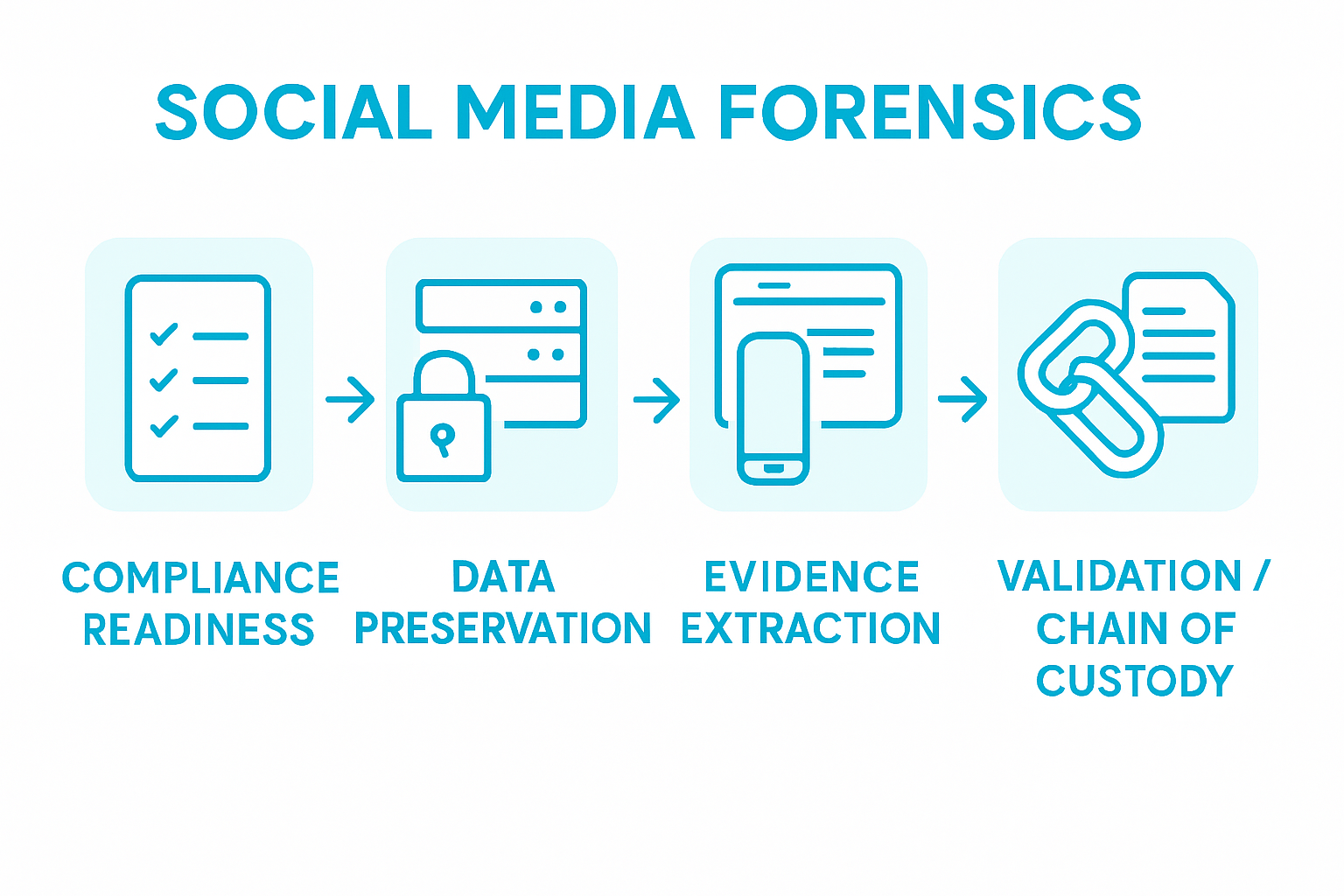
- Stage 1: Establish Forensic Readiness And Legal Compliance
- Stage 2: Secure And Preserve Relevant Social Media Data
- Stage 3: Extract And Document Digital Evidence Systematically
- Stage 4: Analyse Content For Evidential Value And Credibility
- Stage 5: Validate Findings And Maintain Chain Of Custody
Quick Summary
| Key Takeaway | Explanation |
|---|---|
| 1. Establish forensic readiness | Develop protocols for evidence collection that meet legal standards and protect privacy rights. |
| 2. Secure social media data | Use legally valid methods to obtain and preserve social media evidence while maintaining integrity. |
| 3. Systematic evidence extraction | Follow structured methods to collect and document digital evidence without altering original data. |
| 4. Analyze evidence critically | Evaluate digital content for reliability and authenticity, cross-referencing with multiple sources. |
| 5. Validate and maintain custody | Ensure an unbroken chain of custody and rigorous documentation for all interactions with digital evidence. |
Stage 1: Establish forensic readiness and legal compliance
Establishing forensic readiness and legal compliance is a critical first step in preparing for social media forensic investigations. Your goal is to create a structured approach that ensures all evidence collected meets stringent legal standards and respects privacy regulations while maintaining forensic integrity.
To begin, organisations must develop a comprehensive privacy-compliant digital forensics strategy that addresses potential legal challenges. This involves creating clear protocols for data collection, preservation, and analysis. Research indicates that privacy compliance is paramount, with significant risks associated with breaching user confidentiality during digital investigations. Your strategy should include detailed documentation processes, consent frameworks, and strict chain of custody procedures that protect both the investigative integrity and individual privacy rights.
Practical implementation requires developing standardised workflows that align with current legal requirements. This means establishing precise guidelines for evidence collection, ensuring all digital forensic activities are transparent, traceable, and defensible in potential legal proceedings. Document every step meticulously, capturing metadata, timestamps, and authentication details to create a robust audit trail that can withstand rigorous legal scrutiny. Remember that thorough preparation reduces the risk of evidence being challenged or potentially dismissed due to procedural inconsistencies.
Stage 2: Secure and preserve relevant social media data
Securing and preserving social media data is a critical stage in forensic investigations that demands meticulous attention to legal and technical details. Your primary objective is to collect and safeguard digital evidence in a manner that maintains its authenticity, integrity, and admissibility in potential legal proceedings.
The process begins with understanding the essential digital evidence preservation methods that ensure comprehensive data collection. When retrieving social media evidence, investigators must navigate complex legal requirements carefully. Relevant digital information must be obtained through legally valid mechanisms, which typically involves obtaining either explicit user consent or securing appropriate judicial authorisation such as a search warrant. This legal foundation is crucial to prevent potential challenges to the evidence’s validity.
Practical preservation involves creating forensically sound copies of all relevant social media data, including screenshots, downloaded content, metadata, and communication logs. Implement strict chain of custody protocols to document every interaction with the digital evidence. This means recording detailed timestamps, capturing system metadata, and ensuring no alterations occur during the collection process. Each piece of collected data must be cryptographically hashed to provide a verifiable digital fingerprint that can prove the evidence remains unmodified from its original state. By following these rigorous preservation techniques, you create a robust evidentiary record that can withstand intense legal scrutiny and support comprehensive forensic analysis.
Stage 3: Extract and document digital evidence systematically
Extracting and documenting digital evidence requires a methodical approach that ensures forensic integrity and legal admissibility. Your goal is to collect social media data comprehensively while maintaining an unbroken chain of evidence that can withstand rigorous legal scrutiny.

The extraction process begins with systematically collecting digital evidence through precise and legally compliant methods. Lawyers have a fundamental ethical obligation to preserve electronically stored information, which means advising clients against deleting any potentially relevant digital content. This preservation mandate extends to all forms of social media communications, including posts, messages, images, and interaction logs.
Practical extraction involves creating forensically sound duplicate copies of all digital evidence, ensuring no original data is altered during the process. Document every step meticulously using standardised forensic tools that generate verifiable hash values and comprehensive metadata logs. This approach creates an immutable record that demonstrates the evidence’s authenticity and prevents potential challenges to its reliability. Each extracted piece of digital evidence must be carefully annotated with contextual information including timestamps, user identifiers, and precise capture methodologies to provide a complete and defensible forensic narrative.
Stage 4: Analyse content for evidential value and credibility
Analysing social media content for evidential value requires a systematic and rigorous approach that goes beyond surface level examination. Your objective is to critically evaluate digital evidence to determine its reliability, authenticity, and legal significance.
The analysis begins with understanding the comprehensive policies for social media evidence validation, which emphasise the critical need to corroborate information from internet sources. Investigators must navigate complex privacy considerations during open source intelligence gathering, ensuring that all data collection adheres to ethical and legal standards. This means meticulously documenting the origin, context, and retrieval methods of each piece of digital evidence.
Practical content analysis involves cross referencing social media information with multiple sources, verifying user identities, examining contextual metadata, and assessing potential tampering or manipulation. Pay close attention to timestamp discrepancies, inconsistent user behaviour patterns, and digital forensic markers that might indicate content modification. Create a comprehensive assessment matrix that rates each piece of evidence based on its provenance, consistency, and alignment with other collected information. By implementing a structured and transparent evaluation process, you transform raw digital content into credible legal evidence that can withstand intense judicial scrutiny.
Stage 5: Validate findings and maintain chain of custody
Validating digital forensic findings and maintaining an unbroken chain of custody requires meticulous attention to legal and procedural details. Your primary objective is to ensure the integrity and admissibility of social media evidence throughout the investigative process.
Legal procedures for accessing and preserving social media evidence demand comprehensive documentation and strict adherence to forensic protocols. Investigators must balance the duty to review social media content with the critical obligation of preserving evidence, avoiding any potential spoliation or unauthorized alteration. This means creating a comprehensive log that tracks every interaction with the digital evidence including timestamps, accessing personnel, examination procedures, and storage conditions.
Practical validation involves implementing multiple verification techniques such as cross referencing metadata, confirming digital signatures, and establishing the authenticity of each piece of evidence through forensically sound methodologies. Develop a rigorous tracking system that documents the complete lifecycle of the evidence including its origin, collection method, storage locations, and all subsequent handling. Each transfer must be explicitly recorded with signatures from authorised personnel to create an immutable audit trail that can withstand intense legal scrutiny. By maintaining this level of forensic discipline, you transform raw digital content into legally defensible evidence that meets the highest standards of judicial review.
Enhance Your Legal Investigations with Expert Social Media Forensics
Navigating the complexities of social media forensics requires meticulous attention to legal compliance, evidence preservation, and rigorous analysis to ensure digital evidence remains admissible and credible. If you are facing challenges such as maintaining an unbroken chain of custody, validating digital footprints, or extracting forensic data without compromising privacy regulations, understanding and applying these critical steps can feel overwhelming.
At Computer Forensics Lab, we specialise in providing comprehensive Social Media Forensics services tailored to support legal professionals and investigators. Our expertise ensures that every phase—from securing evidence to analysing content—meets the highest standards of forensic integrity and legal scrutiny. Don’t risk crucial evidence being dismissed due to procedural errors. Take control of your digital investigations today with our trusted forensic solutions.
Discover how our Digital Forensic Investigation services can complement your case work. Visit us at computerforensicslab.co.uk now and secure the decisive advantage your legal investigations deserve.
Frequently Asked Questions
What initial steps should I take for social media forensics in legal investigations?
Establish a structured approach that addresses privacy compliance and legal readiness. Create clear protocols for evidence collection, preservation, and documentation to ensure your investigations meet legal standards.
How do I secure and preserve relevant social media data effectively?
Begin by obtaining either explicit user consent or appropriate judicial authorisation for data access. Ensure you create forensically sound copies of the social media data, and implement strict chain of custody protocols to document every interaction with the evidence.
What methods can I use to extract and document digital evidence from social media?
Utilise standardised forensic tools to create duplicate copies of all digital evidence without altering the original data. Document the process meticulously, including timestamps and capture methodologies, to maintain a complete and defensible digital narrative.
How can I analyse social media content for evidential value?
Evaluate the reliability and authenticity of the evidence by cross-referencing social media information with multiple sources. Pay attention to discrepancies in timestamps and user behaviour and document findings thoroughly to facilitate an informed legal analysis.
What steps can I take to validate findings and maintain a chain of custody?
Implement rigorous tracking systems to document the complete lifecycle of the evidence, including every handling and storage condition. Ensure that each transfer of evidence is recorded with signatures from authorised personnel to uphold the integrity and admissibility of the social media data.
Recommended
- Definitive Guide To Social Media Forensics
- Social Media Forensics: Methods, Challenges and How It Can Help Civil and Criminal Litigants
- 7 Essential Types of Forensic Analysis for Legal Cases
- 7 Key Examples of Cybercrime Evidence Law Firms Must Know
- 7 Essential Steps for a Claims Management Process Checklist – Digital Insurance Platform | IBSuite Insurance Software | Modern Insurance System