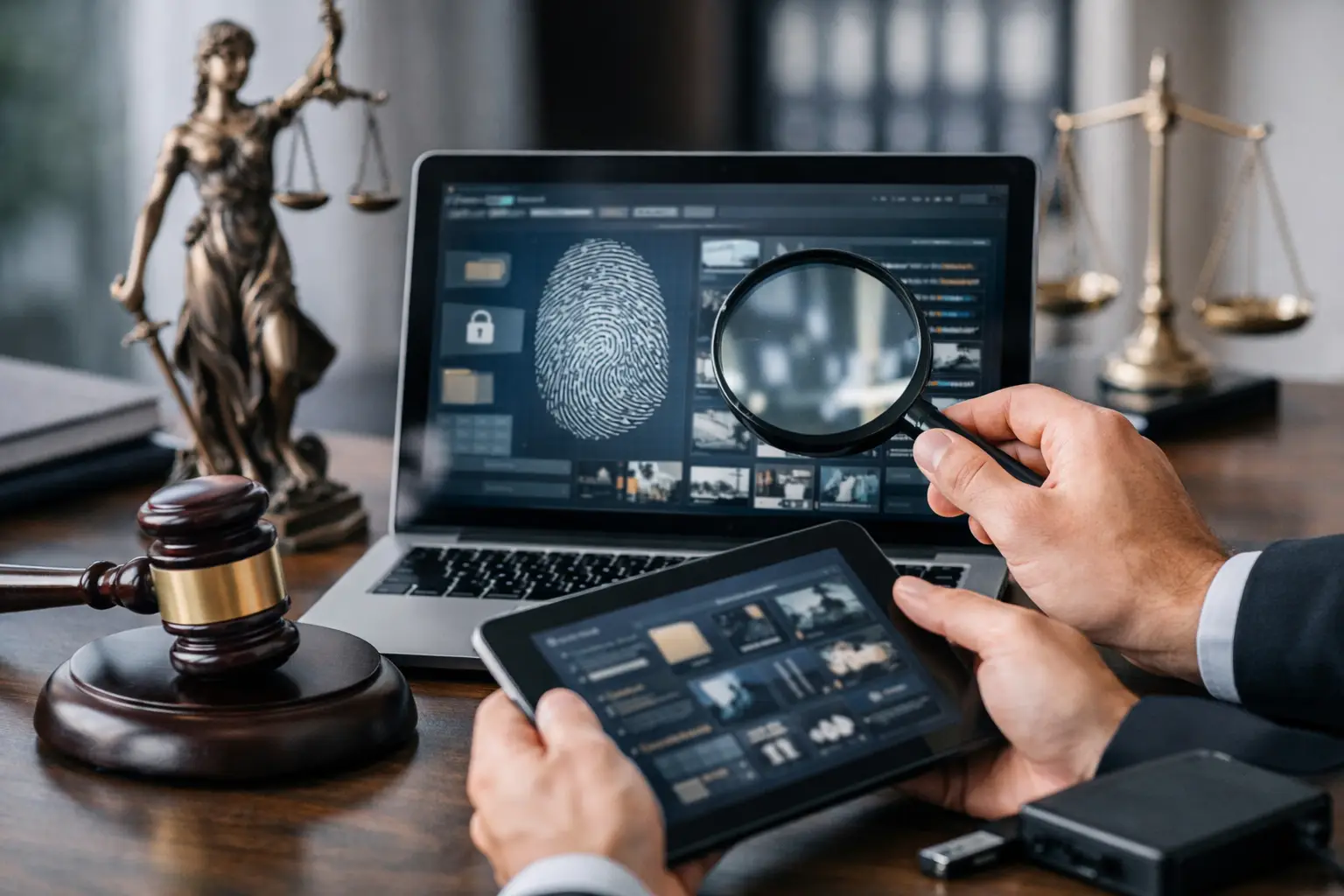
A disputed text message, a wiped laptop, a cloud account accessed at the wrong time – these are not technical side issues in live proceedings. They are often the facts that decide credibility, sequence, intent and loss. That is why litigation support digital evidence matters so much in civil disputes, criminal matters and internal investigations. When digital material is mishandled, challenged or left unexplained, a case can weaken quickly.
For solicitors and litigation teams, the central question is rarely whether digital evidence exists. It is whether that evidence can be identified, preserved, analysed and presented in a way that will withstand scrutiny. Courts do not reward speculation. They expect provenance, continuity, method and clear reporting. A screenshot with no context or a device examined by a non-specialist may create more problems than it solves.
What litigation support digital evidence actually involves
Litigation support in this context is not simply extracting data from a device and sending over a spreadsheet. It is a structured forensic process designed to support pleadings, disclosure, expert analysis and, where required, oral evidence. The work may involve mobile phones, computers, tablets, removable media, messaging platforms, email stores, cloud-linked data and deleted material.
The objective is to convert raw digital artefacts into evidence that is intelligible, relevant and defensible. That includes preserving metadata, recording chain of custody, using repeatable forensic methods and distinguishing clearly between fact, inference and limitation. In practice, this can support a broad range of matters, including shareholder disputes, employee misconduct, fraud allegations, harassment cases, matrimonial proceedings, breach of contract claims and criminal defence instructions.
The difference between general IT support and forensic litigation support is significant. An IT technician may help access data. A forensic examiner must be able to explain how the data was acquired, whether anything changed during collection, what tools and methods were used, what limitations apply and why the findings can be relied upon.
Why evidential integrity matters more than volume
One of the most common mistakes in digital cases is assuming that more data automatically means a stronger position. It often means more noise. If the collection process is poorly controlled, the opposing side may challenge integrity before relevance is even debated.
Evidential integrity starts at the earliest stage. Devices and accounts should be identified properly, secured promptly and examined through a defensible process. If a mobile phone is powered on casually, if a user continues accessing an account, or if messages are exported without preserving context, important evidence may be altered or lost. In some cases, even well-meaning attempts to “check what is there” can compromise the record.
Chain of custody is equally important. Legal teams need to know who handled the item, when, where it was stored and what actions were taken. That record does not exist for administrative neatness. It exists because authenticity is often contested. If provenance is unclear, the value of the evidence may collapse under cross-examination.
Common sources of digital evidence in litigation support
The modern case file is spread across far more than a desktop hard drive. Relevant material may sit on a handset, within an encrypted messaging application, in synchronised cloud storage or inside system logs that a layperson would never think to preserve. The evidence may be direct, such as a message or document, or circumstantial, such as location records, login events or file access history.
In civil litigation, key evidence often includes emails, attachments, calendar entries, deleted files, USB usage, browser history and messaging data. In employment and corporate disputes, investigators may also look at document transfers, account access, exfiltration indicators and signs of concealment. In criminal matters, app communications, call data, geolocation, internet activity and device attribution may become central.
It depends on the issue in dispute. If the allegation concerns harassment, timing and content of communications may dominate. If the issue is intellectual property theft, file movement, storage devices and cloud synchronisation may matter more than message content. A good forensic strategy is therefore issue-led, not device-led.
From preservation to presentation
A useful digital evidence exercise follows a disciplined sequence. First, potential evidence sources are identified. Next, they are preserved in a way that protects integrity. Only then should analysis begin, and analysis should always be proportionate to the issues in dispute.
Preservation may involve imaging a computer, performing a forensic extraction from a mobile phone, securing cloud-linked content or isolating media for examination. The method will vary according to the device type, the operating system, encryption status, available access credentials and the urgency of the matter. There is no single method that suits every case, and anyone claiming otherwise is simplifying a complex evidential problem.
Analysis then focuses on relevance and chronology. That may include recovering deleted items, correlating communications across sources, testing whether user activity can be attributed to a specific person, or examining whether timestamps reflect local use, server-side activity or later manipulation. This is where expertise matters most. Digital artefacts can appear straightforward while hiding important caveats.
Presentation is the final discipline. Courts and legal teams need findings that are clear, neutral and properly scoped. A forensic report should explain what was examined, what was found, how those findings were reached and what limitations remain. It should avoid advocacy. The role of the expert is to assist the court, not to overstate a party’s position.
The reporting standard that litigation teams should expect
A report prepared for litigation must do more than recite technical output. It should answer the actual questions in dispute. That means the examiner needs to understand the instruction, the legal context and the evidential threshold required.
Good reporting is transparent. If material could not be accessed because of encryption, that should be stated. If deleted content was partially recoverable but not complete, that should be stated too. If timestamps may have been affected by system settings or clock changes, the report should address that directly. Precision builds credibility. Overclaiming destroys it.
Legal teams should also expect a clear distinction between observed data and expert interpretation. For example, a report may identify that a file was copied to external media at a particular time. Whether that supports dishonesty, legitimate backup activity or a different explanation is a matter that must be addressed carefully and in context.
This is where specialist firms such as Computer Forensics Lab add value. The work is not limited to extraction. It is built around court-ready examination, evidential continuity and reporting that can be defended under challenge.
When speed matters – and when caution matters more
Many instructions arrive under pressure. There may be an injunction hearing approaching, a disclosure deadline, an arrest, a disciplinary process or a live risk of evidence destruction. Urgency is real, but haste can create avoidable evidential weaknesses.
The right response is controlled speed. That means taking immediate preservation steps while resisting shortcuts that may later be attacked. In some cases, a rapid triage review is appropriate to identify critical evidence and advise on next steps. In others, particularly where authenticity is likely to be contested, a fuller forensic acquisition should happen before any substantive opinion is formed.
It also depends on proportionality. Not every matter justifies an exhaustive review of every device and account. Costs, volume, privacy issues and relevance all need to be balanced. A disciplined examiner will help narrow the scope to what is necessary and useful, rather than collecting material indiscriminately.
What solicitors should look for in a digital evidence partner
The strongest support usually comes from experts who understand both technical recovery and litigation risk. Solicitors should look for forensic independence, clear chain of custody procedures, documented methodology, experience across mobile and computer evidence, and reporting that stands up in conference and in court.
It is also worth asking practical questions early. Can the examiner preserve the evidence immediately? Can they work with damaged or partially accessible devices? Can they address deleted data, messaging applications and cloud-linked activity? Can they provide an expert report in a format suitable for proceedings? Can they explain findings plainly to counsel and to the court?
Just as important is judgment. Not every artefact is decisive. Not every absence of data proves deletion. Not every account login proves user intent. Digital evidence can be powerful, but it must be handled with restraint and interpreted with care.
The cases that benefit most from forensic support are often the ones where the facts appear messy at first glance. Properly examined, that mess becomes chronology, attribution and evidence. And when the evidence is preserved properly from the outset, your case is in a far stronger position when scrutiny arrives.