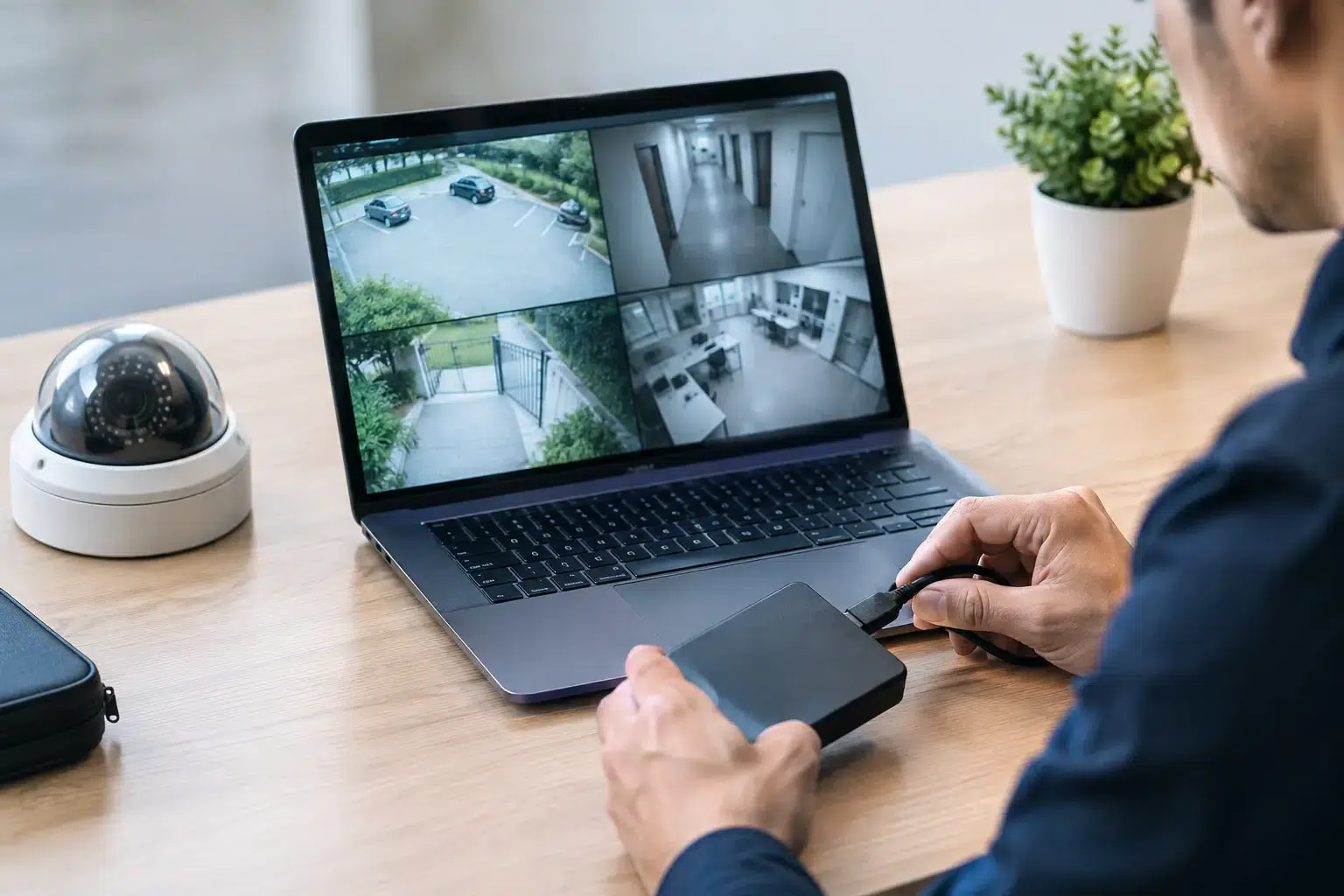
A CCTV recorder may overwrite the very clip that matters within hours or days. When footage could establish who entered a premises, corroborate an account, prove a timeline or expose misconduct, the first priority is not simply viewing it. It is preserving it in a manner that can be explained and defended later. Knowing how to recover CCTV footage therefore means balancing speed with evidential discipline.
This is particularly relevant in criminal proceedings, employment disputes, civil claims, safeguarding matters and internal investigations. A playable video file is not automatically reliable evidence. Its value can be weakened if the source is unclear, the system clock is wrong, footage has been edited, or nobody can account for how the material was obtained and stored.
Act before the recording is overwritten
Most CCTV systems record continuously or when motion is detected, using a rolling retention period. A small domestic recorder might retain only a few days; a larger commercial system may keep footage for weeks, subject to storage capacity, camera count, image quality and recording settings. Cloud-connected cameras may operate under a different retention policy again.
As soon as an incident is identified, establish the likely date and time range, including a sensible period before and after the event. Do not rely solely on a witness’s recollection of the time. Compare it with access-control logs, alarm records, till data, telephone records or other contemporaneous material where available.
Then take proportionate steps to stop automatic loss. This may involve exporting the relevant clip through the recorder, applying a retention lock where the platform allows one, or arranging for the system and associated hard drives to be preserved. Avoid switching off, restarting or reconfiguring the recorder unless there is a clear operational reason. Some systems overwrite data, alter logs or trigger a repair process after an unexpected shutdown.
If the recorder remains in service, record its make, model, serial number, location, connected cameras, current date and time displayed, and the identity of every person who handles it. Photographs of the installation and screen can assist later, provided they are taken without changing settings.
How to recover CCTV footage with evidential integrity
The recovery method depends on whether the footage remains visible on the system, has been deleted, is held in the cloud, or sits on damaged storage. In every scenario, preserve the original source wherever possible before attempting repairs, conversion or playback using third-party software.
Export available footage correctly
Where the incident is still visible in the CCTV interface, export the relevant date and time range in the system’s native format, if available. Native exports may retain proprietary metadata, camera identifiers, audit data and authentication information that a standard MP4 or AVI export does not.
It is often sensible to create a second, accessible copy in a common video format for review. That viewing copy should not replace the native export. Keep both files, record the export process, and note the operator account used, the system time, selected cameras, date range and export destination.
A proper export should include sufficient lead-in and follow-on footage. A 30-second clip may show an alleged act but omit context such as a person approaching, another individual entering the scene, or a camera obstruction. The appropriate period depends on the allegation, but narrow extracts should be supported by preservation of the wider recording window.
Preserve the recorder if deletion is suspected
If footage has been deleted, overwritten or is no longer listed by the recorder, do not continue using the system as though nothing has happened. Further recording can overwrite data sectors that may still be recoverable. Repeated attempts to search, rebuild an index or format a drive can also complicate recovery.
The recorder may use an internal hard drive, removable media or a network video recorder connected to central storage. These devices commonly use proprietary file systems and fragmented recording structures. The absence of a conventional video file does not prove that images are unrecoverable.
Forensic recovery can involve making a verified forensic image of the relevant storage media, examining unallocated space, reconstructing proprietary recording databases and assessing system logs. The aim is to identify what remains, distinguish recovered material from active recordings, and document the process so that the results can be independently assessed.
Consider cloud, app and remote-access evidence
Modern CCTV frequently combines local recording with cloud storage, mobile applications and remote viewing portals. Relevant evidence may include saved clips, account activity, device notifications, subscription records and audit logs showing who accessed or exported material.
Do not assume that downloading a clip from an app captures everything needed for an investigation. The download may be a shortened derivative, stripped of source metadata or generated at a different resolution from the underlying recording. Preserve account details, subscription status, notification timestamps and any available export history alongside the footage.
Where disclosure or lawful preservation of cloud-held material is required, the appropriate route will depend on the provider, the account holder’s authority and the nature of the proceedings. Legal advice may be needed, particularly where third-party data or personal data is involved.
Check the issues that affect reliability
CCTV evidence is frequently challenged not because the video is fabricated, but because its meaning has been overstated. A forensic examination should address the technical limits as well as the apparent content.
System time is a common issue. The timestamp may be inaccurate due to daylight saving changes, a loss of network time synchronisation, manual adjustment or an incorrectly configured recorder. A time discrepancy can materially affect an alibi, sequence of events or comparison with another data source. It should be measured against an independently reliable reference, not casually corrected in a video editor.
Image quality also matters. Compression artefacts, low light, motion blur, frame rate, camera angle and digital zoom can all limit identification. Enhancement may improve visibility, but it cannot create detail that was never captured. Any processing must be documented, repeatable and kept separate from the preserved original.
Finally, establish whether cameras were recording as expected. A blank period could reflect a power failure, network issue, storage fault, motion-detection setting or deliberate interference. Recorder logs, maintenance records and surrounding camera footage may help distinguish between these possibilities.
Maintain a clear chain of custody
Chain of custody is the documented history of evidence from collection to presentation. It is not administrative paperwork added at the end of an investigation. It is how a court, tribunal or opposing party can understand what was collected, from where, by whom, when and what happened to it afterwards.
For CCTV material, record the source location, recorder and camera identifiers, the person supplying access, collection date and time, media used for export, file names and cryptographic hash values where appropriate. Secure the original source media and limit access to authorised personnel. Keep working copies clearly labelled as such.
Avoid messaging footage between personal mobile phones, uploading it to uncontrolled sharing services or editing it for convenience. Those actions can create uncertainty over completeness and provenance. They may also expose sensitive personal data. If footage must be circulated for case preparation, use controlled copies and retain a record of recipients.
In a contested matter, an independent forensic practitioner can examine the recording environment, acquire data using defensible methods, assess metadata and provide a transparent report. Computer Forensics Lab approaches this work with the same focus required of any digital evidence: preservation first, impartial analysis and findings that can be tested.
When specialist recovery is warranted
Specialist assistance is appropriate where footage has been deleted, a recorder has failed, storage is damaged, timestamps are disputed, video is alleged to have been manipulated, or the material is central to litigation or a criminal investigation. It is also prudent where an employer, insurer, landlord or third party controls the system and the evidence may later be challenged.
Early instruction matters. The longer a CCTV system continues recording, the lower the prospect of recovering overwritten data. Equally, rushed handling can destroy the context and technical information needed to establish authenticity. Preserve what you can, document every action, and let the significance of the evidence determine the level of forensic examination required.
When a case may turn on a few minutes of video, careful handling is not a procedural extra. It is what gives that footage the best chance of being believed when it matters.