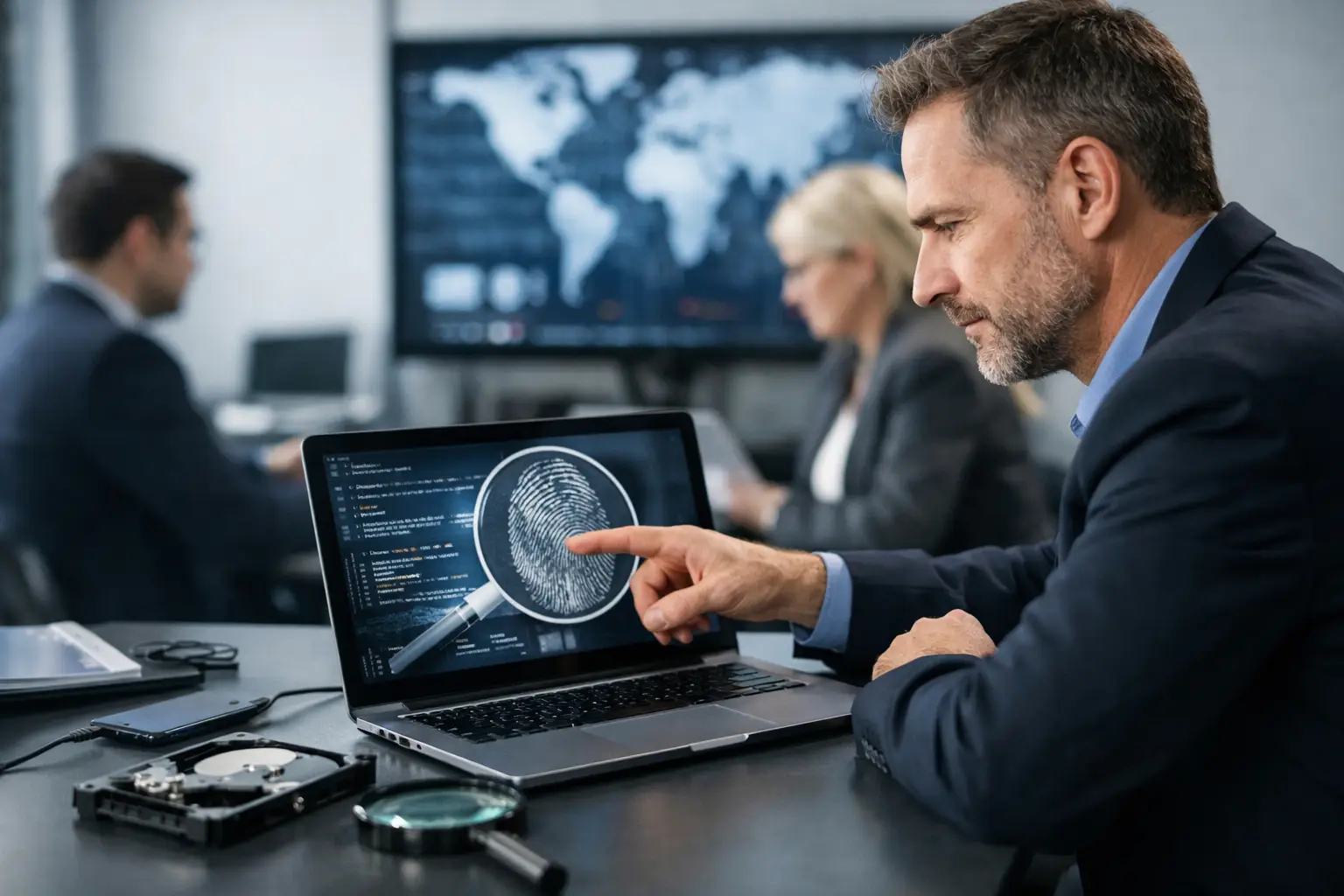
A disputed WhatsApp exchange, a wiped laptop, a login from the wrong location, or allegations of unauthorised access can alter the direction of a case within hours. In those moments, a digital forensics expert witness is not simply a technical adviser. They are a court-facing specialist who must recover and interpret digital evidence in a way that is lawful, impartial, and capable of withstanding scrutiny.
For solicitors, businesses, and private clients, the distinction matters. Many people can look at a device. Far fewer can preserve evidence without contaminating it, document their process properly, and produce an expert opinion that stands up in litigation. Where the facts depend on phones, computers, cloud data, user activity, deleted material, or cyber events, the quality of the forensic handling often becomes as important as the underlying evidence itself.
What a digital forensics expert witness actually does
A digital forensics expert witness examines electronic material for the purposes of legal proceedings. That usually involves identifying relevant devices and accounts, preserving data in a forensically sound manner, analysing user activity or artefacts, and reporting findings in clear terms for the court.
The work sits at the intersection of technical examination and evidential discipline. It is not enough to say that messages existed, files were deleted, or a device was accessed. The expert must explain what was found, how it was recovered, what the data can and cannot prove, and whether there are alternative interpretations. In criminal matters, civil disputes, family proceedings, employment cases, shareholder disputes, and internal investigations, that level of rigour is often decisive.
A proper expert witness is also independent. Their duty is to the court, not to the party instructing them. That can be uncomfortable for clients who want certainty, but it is exactly what gives the evidence weight. A report designed to advocate rather than inform is more likely to be challenged and less likely to assist the tribunal.
When expert evidence becomes necessary
Not every case involving a device requires expert testimony. Sometimes disclosure is straightforward and the digital material speaks for itself. But where authenticity, timing, attribution, deletion, manipulation, or access are disputed, expert involvement becomes far more valuable.
That is often the case where one party alleges messages have been altered, a computer was used by somebody else, data has been exfiltrated, or a handset contains relevant communications that are no longer visible to the user. It also arises where businesses face insider misconduct, intellectual property theft, ransomware events, or unauthorised account activity and need findings that can support formal action.
Timing is critical. Early instruction gives the best chance of preserving volatile evidence, securing metadata, and avoiding well-meaning but damaging interference. A device powered on repeatedly, synced to a cloud service, reset by the user, or handled by general IT staff may still yield useful evidence, but opportunities can be lost. Delay can also weaken the chain of custody, which is a frequent line of attack when digital evidence is challenged.
The difference between IT support and a digital forensics expert witness
This is where many cases go wrong. An internal IT team may be excellent at restoring systems, checking logs, or recovering access for operational purposes. That does not make them forensic experts. Their priority is usually continuity, not evidential preservation.
A digital forensics expert witness approaches the task differently. Devices are documented, isolated where appropriate, imaged using accepted forensic methods, and analysed in a way that preserves the provenance of the evidence. The process is repeatable. The findings are transparent. If the matter reaches court, the expert can explain and defend each step.
That difference is not procedural theatre. If evidence has been collected casually, the opposing party may argue that it was altered, incomplete, or improperly interpreted. Even strong underlying facts can be weakened by poor handling. In high-stakes matters, technical capability without evidential discipline is not enough.
What the court expects from digital expert evidence
Courts do not need theatrical certainty. They need reliable assistance. A credible expert report should set out the instructions received, the materials examined, the methodology used, the findings made, and the limits of those findings. It should separate fact from opinion and avoid overstating what the data shows.
That last point matters. Digital artefacts rarely tell a single, simple story. A login may indicate access, but not always the identity of the person at the keyboard. A deleted file may show deliberate removal, or routine user action, or system behaviour. Timestamps can be highly probative, but they may also be affected by time zone settings, device clock changes, sync events, or application behaviour. Good experts explain those nuances plainly.
The strongest evidence is often not the most dramatic. A pattern of usage, location data aligned with communications, file system artefacts, browser history, account records, and device-level metadata may together support a reliable conclusion. The expert’s role is to build that evidential picture carefully and disclose the limitations honestly.
How a digital forensics expert witness handles evidence
Forensic work begins before analysis. The first question is often how to preserve the material without changing it. Depending on the case, that may mean forensic imaging of a computer, logical or physical extraction from a mobile device, acquisition of removable media, or preservation of cloud-linked data and account records.
Chain of custody then becomes central. Every handover, examination stage, storage decision, and analytical step should be documented. If a device has passed through multiple hands before instruction, the expert may need to assess and explain the impact of that history. Imperfect handling does not always destroy value, but it does have to be addressed with candour.
Analysis itself is directed by the issues in dispute. In one case the focus may be deleted messages and photographs. In another it may be external storage use, file transfer activity, USB connection history, or evidence of remote access. In cyber matters, the work may extend to attack timelines, persistence mechanisms, user attribution, or exfiltration indicators. The key is relevance. A disciplined expert does not generate noise. They target the material that answers the legal questions.
Instructing the right expert
For legal professionals, the quality of instruction can materially affect the usefulness of the evidence. Clear issues, realistic timescales, and early access to case context allow the examination to stay proportionate and focused. Vague instructions often produce broad reports that are technically detailed but less helpful than they should be.
It is sensible to ask whether the expert has experience of the relevant device type, the nature of the alleged conduct, and the forum in which the evidence will be used. Mobile phone evidence in family proceedings is different from corporate data theft, and both differ again from criminal allegations involving account compromise or malware. Technical competence matters, but so does experience in reporting for litigation and giving oral evidence under challenge.
Independence should also be tested, not assumed. The right expert will be measured, careful, and willing to say when the evidence does not support a preferred theory. That is a strength, not a weakness. Reports that read like submissions rarely survive close examination.
Why impartiality and procedure matter so much
Digital evidence can appear deceptively precise. Screenshots, message threads, and user-facing logs often look persuasive at first glance. Yet they may be incomplete, edited, misinterpreted, or missing the underlying metadata needed to assess reliability. That is why procedure matters.
An evidentially sound process protects everybody involved. It protects the instructing solicitor from relying on material that later unravels. It protects businesses dealing with serious internal allegations. It protects private clients who need the truth established rather than assumptions repeated. Above all, it protects the integrity of the proceedings.
At Computer Forensics Lab, that principle is not cosmetic. Court-ready work depends on disciplined acquisition, transparent analysis, peer-reviewed reporting where appropriate, and a clear understanding that the evidence must stand on its own under scrutiny.
The practical value in live disputes
A good expert witness can do more than prepare a report for trial. Early findings can shape pleadings, inform disclosure strategy, support applications, narrow factual disputes, and identify where settlement is realistic. In internal investigations, they can help employers decide whether misconduct is evidenced, whether systems were accessed improperly, and whether urgent containment steps are required.
There is, however, a trade-off. Comprehensive forensic work takes time and proportionality matters. Not every allegation justifies a full-scale examination across multiple devices and accounts. The right approach is often staged – preserve first, assess the likely evidential value, then expand or limit the investigation based on what the data shows and what the case requires.
That balance is where experienced judgment counts. The best digital expert evidence is not the broadest. It is the most reliable, relevant, and defensible.
When digital evidence may decide the outcome, the question is not whether somebody can access the data. It is whether the evidence can be recovered, interpreted, and presented in a form the court can trust.