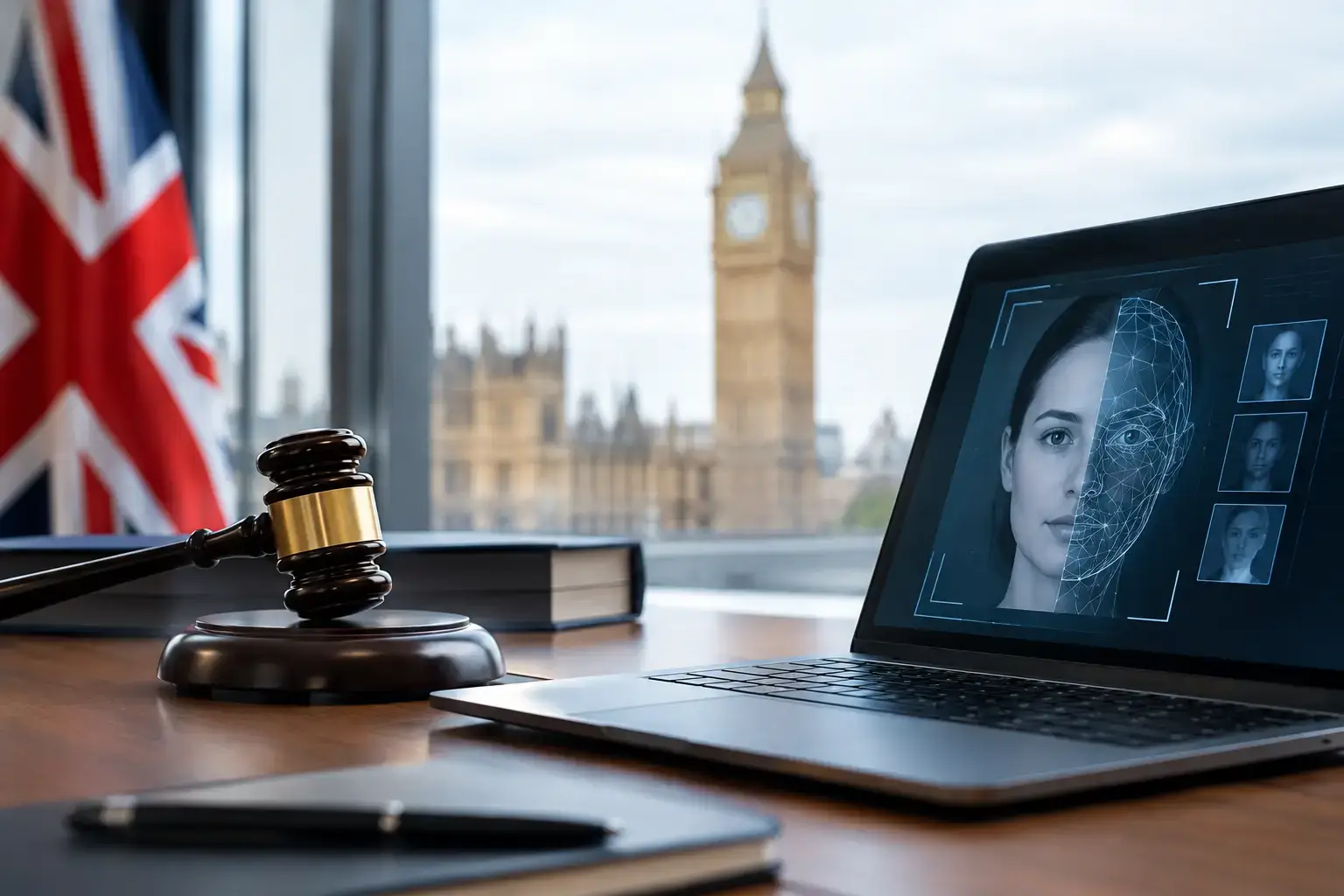
A disputed recording can now alter the direction of a case before anyone has tested whether it is genuine. Audio said to contain an admission, CCTV footage showing an alleged act, a screenshot of a video call, or an image used to support a harassment claim may all be challenged as synthetic or manipulated. Deepfake evidence litigation trends are therefore moving authenticity from a background issue to a central question in civil, criminal and internal investigations.
For solicitors and investigators, the practical risk is not limited to sophisticated artificial intelligence-generated media. Genuine material can be edited, re-encoded, cropped, slowed, relabelled or presented without the surrounding context needed to interpret it fairly. A court-ready approach must distinguish between a concern that content could be a deepfake and evidence that it is one.
Why deepfake evidence litigation trends matter now
The growth of accessible generative tools has changed the evidential environment. Parties no longer need specialist technical capability to create a plausible voice clone, alter a face in video, generate a convincing image, or fabricate a message exchange. Equally, a person confronted with authentic and damaging material has a ready-made basis for denial: the allegation that the material is AI-generated.
This creates a two-sided litigation problem. False media may be deployed to exert pressure, influence an investigation or support a misleading account. At the same time, genuine evidence may be unfairly dismissed because it is inconvenient or visually unusual. Neither response should be accepted without examination.
UK courts have long assessed reliability, provenance and weight in digital evidence. The underlying legal discipline has not disappeared. What has changed is the frequency with which legal teams must ask early questions about source, handling, technical integrity and corroboration. The issue is rarely resolved by looking at a clip on a phone screen.
Authenticity is a process, not an assertion
A party may say that a recording is “original”, but that description has limited value unless its origin can be demonstrated. The relevant questions are practical: which device created the file; when was it created; has the source device been retained; how was the material transferred; who had access; and does the available metadata support the account?
Original acquisition matters. A video sent through a messaging platform may be a derivative copy that has been compressed, stripped of metadata or converted into another format. A screen recording of the video is further removed from the source. It may still be relevant, but it should not be mistaken for the best available evidence.
A forensic examination can preserve the available data in a manner that permits repeatable review. This normally involves documenting the device and its condition, recording the acquisition method, creating forensic images or logical extractions where appropriate, and calculating cryptographic hash values for collected files. The aim is not simply to obtain a usable copy. It is to establish that the material examined and disclosed can be identified and shown not to have altered during handling.
Chain of custody is particularly significant where evidence has passed through several hands. A short, clear record of seizure or receipt, storage, examination, export and disclosure is far more persuasive than retrospective assurances. If a party waits until close to trial before raising a deepfake allegation, gaps in that history can become difficult and expensive to remedy.
The limits of deepfake detection tools
There is understandable interest in software that claims to detect AI-generated audio or video. Such tools can assist an investigation, but they should not be treated as a conclusive answer. Detection models may perform differently depending on the generator used, the quality of the recording, compression, cropping, re-encoding and post-production edits. A low-quality social-media copy may contain too little reliable signal for a definitive technical opinion.
The question for litigation is not whether a tool produces a probability score. It is whether an appropriately qualified expert can explain the method, its limitations, the data examined and the reasoning that supports the opinion. A black-box result without transparent methodology is vulnerable to challenge.
Technical examination may consider file structure, encoding history, metadata consistency, frame-level anomalies, audio spectrograms, synchronisation between lip movement and speech, editing traces, and signs of compositing. None of these indicators should be considered in isolation. Some are consistent with ordinary platform processing, poor recording conditions or legitimate editing.
The strongest opinion is often a bounded one. It may state that the examiner found no indicators of synthetic generation in the material available, or that the file has characteristics consistent with editing, while explaining that the findings cannot identify the person responsible or prove the exact software used. Precision about what the evidence does and does not establish protects the credibility of the expert evidence.
Context and corroboration will decide many disputes
Deepfake claims are unlikely to be determined by file analysis alone. A recording should be assessed against independent evidence. Does it align with call records, cell-site or location data, device artefacts, cloud account activity, contemporaneous messages, witness evidence, access logs or the known timeline? Is there a native copy on the recording device? Are there earlier or later versions of the same media?
In a workplace investigation, for example, a purported audio recording of an executive may be tested against meeting calendars, corporate telephony records, collaboration-platform logs and the relevant handset or computer. In a criminal matter, the provenance of a video may need to be examined alongside CCTV system records, extraction history and evidence from the device that first received it. In family or civil disputes, the surrounding communications may show whether a clip emerged contemporaneously or appeared only after proceedings became contentious.
This is where disclosure strategy matters. Parties should identify relevant devices, accounts and repositories early, preserve them lawfully, and consider whether narrow, proportionate forensic enquiries can answer the disputed issue. Broad requests for every device and account are rarely appropriate. However, an unexplained refusal to preserve the obvious source device can carry consequences for the weight attached to the material.
Deepfake evidence litigation trends in disclosure and case management
The developing trend is towards earlier, more focused treatment of authenticity issues. A bare allegation of “AI manipulation” should be particularised. Legal teams should identify which item is challenged, the basis for the challenge, the source material sought, and the expert questions that genuinely require determination.
That approach supports proportionate case management. It can avoid a costly forensic exercise where the material is peripheral, while ensuring that potentially decisive evidence is preserved before routine device replacement, cloud retention limits or platform deletion make recovery impossible.
In civil proceedings, the applicable disclosure obligations and directions will shape the scope of any exercise. In criminal proceedings, investigators and defence teams must remain alert to disclosure duties, continuity and the need to test material that may assist or undermine the respective case. Internal investigations involve different procedural settings, but the same basic safeguards apply: preserve first, examine impartially, document decisions and avoid contaminating the evidence.
A further trend is the need for clear expert instructions. An instruction that merely asks whether a file is “fake” is too vague. It should define the media in issue, provide the available originals and derivatives, set out the alleged provenance, identify relevant devices or accounts, and ask focused questions within the expert’s field of competence. If the issue concerns identity, motive or truthfulness, those are ordinarily matters for the court or tribunal, not technical experts.
A defensible response when media is challenged
When a potentially manipulated recording or image arises, urgency is justified but speculation is not. Preserve the source and the environment in which it was found. Avoid forwarding the only copy through consumer applications, opening it repeatedly on the source device, or allowing a well-meaning colleague to “check the metadata”. Those actions can alter access records, create additional copies and complicate later evidence.
The next step is to establish the evidential questions that matter to the dispute. Is the issue whether the media was generated, edited, misattributed or taken out of context? Is an original device available? Does a quick triage indicate that full forensic acquisition is proportionate? The answers will differ between a contested interim application and a trial where the recording is central to liability or guilt.
Independent forensic work should be capable of scrutiny by the opposing party, the court and another expert. That means retaining notes, recording tools and versions where relevant, preserving working copies, and setting out findings in language that distinguishes fact, inference and opinion. Peer review can provide a further safeguard in high-stakes matters.
For legal teams, the practical lesson is straightforward: treat a deepfake allegation as an evidential issue requiring disciplined preservation and testing, not a tactical label. Early instruction of an independent digital forensic expert can protect material that may otherwise be lost and provide the court with a transparent basis for deciding what weight it deserves. Computer Forensics Lab can assist where disputed digital media requires careful recovery, examination and litigation-ready reporting.