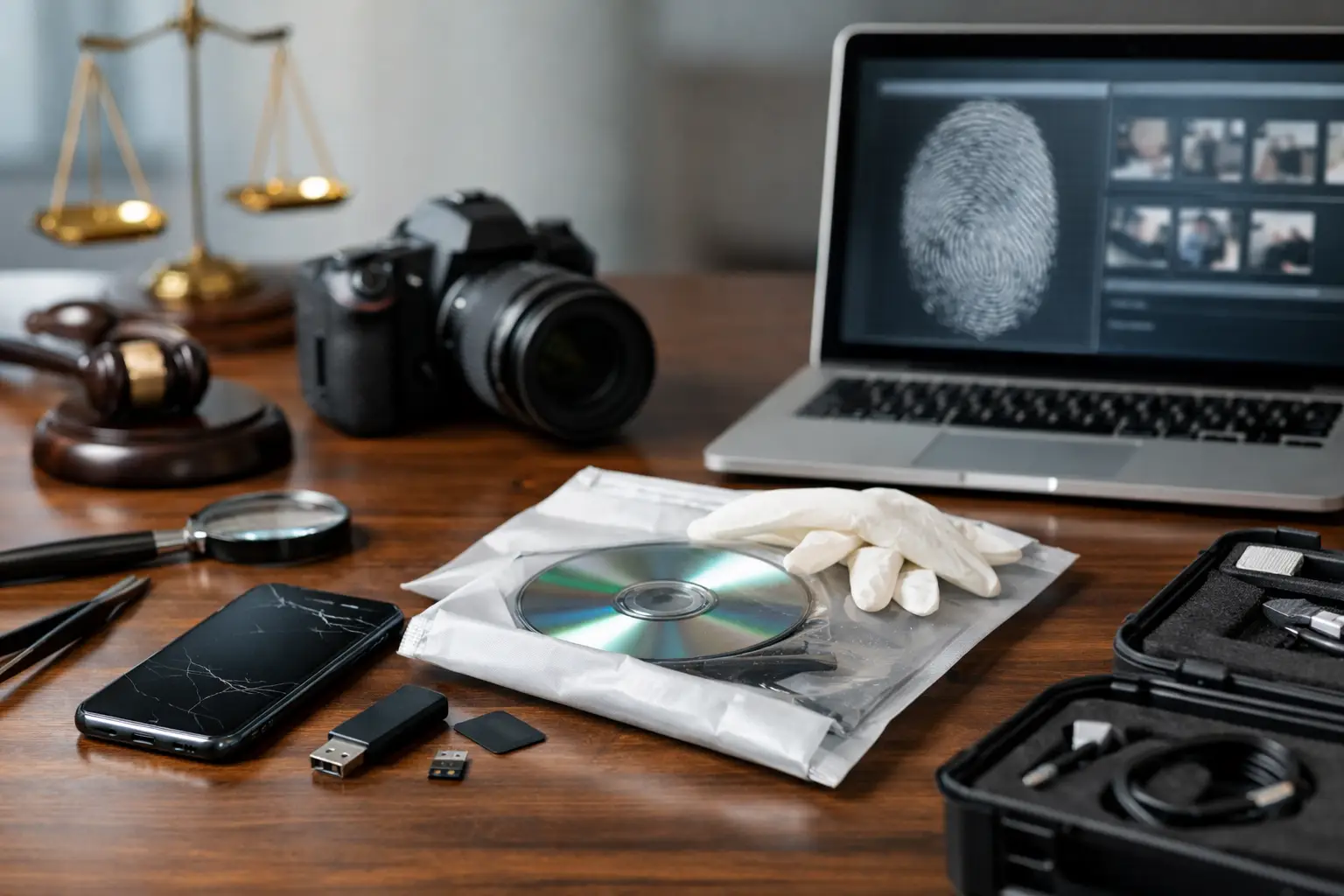
A phone left on a desk, a laptop used by a departing employee, or a USB drive produced late in a dispute can contain decisive evidence. It can also be altered in seconds. Understanding how to collect device evidence is therefore not simply a technical exercise. It is the first test of whether the material can be relied upon in an investigation, disclosed fairly, and defended under legal scrutiny.
For solicitors, businesses and private parties, the immediate objective is preservation, not exploration. The temptation to search messages, open files or confront the device user is understandable. In a contested matter, however, those actions may change data, overwrite timestamps, trigger remote deletion or create questions about who accessed the material and why.
Start by securing the device and its surroundings
Treat the device as a potential evidence source from the moment it is identified. Record where it was found, who had possession of it, its visible condition, whether it was powered on, and any connected cables, storage media or peripherals. Photograph the device in situ where practical, including its screen, identifying marks and connections.
A mobile phone requires particularly careful handling. Its state may change through incoming messages, notifications, synchronisation and remote-access services. A device connected to a network may receive commands that alter or erase data. Equally, switching it off without assessment can be risky where encryption is active and access depends on a live unlocked state.
There is no universal instruction to power every device down. The correct approach depends on the device type, its condition, whether it is unlocked, the suspected risk of remote interference, and the legal purpose of the examination. That is why early forensic advice is often more valuable than an improvised response.
For computers, preserve the scene before disconnecting anything. Note whether the system is running, which applications are open, whether external drives are attached, and whether there are visible signs of encryption, remote access or data transfer. Live systems may contain volatile evidence such as active network connections, running processes and encryption keys. Collecting that material requires specialist methodology. A well-meaning attempt to inspect it can destroy precisely the evidence the investigation needs.
Do not investigate the content yourself
Once a device is secure, resist the urge to look through it. Opening a document, playing a recording, searching an inbox or browsing a chat application can alter access dates, create cached data and affect audit records. On some devices, merely unlocking the screen may cause applications to synchronise with cloud services.
This is especially significant in allegations of employee misconduct, harassment, intellectual property theft, fraud or unauthorised access. The eventual issue may not only be what data was found, but whether the examination was proportionate, authorised and reproducible.
Instead, document what is already visible without navigating further. For example, record the displayed date and time, visible notifications, the device make and model, serial number or IMEI where available, and any apparent damage. Use contemporaneous notes. If a later report is challenged, notes made at the time carry far more weight than recollection.
How to collect device evidence without breaking chain of custody
Chain of custody is the documented history of an item from seizure or receipt through examination, storage and production. It demonstrates that the device or extracted data is the same material that was originally obtained, and that access has been controlled throughout.
A clear record should identify the item, the person who supplied or recovered it, the date, time and location of receipt, its condition, and each transfer of possession. Give every item a unique reference. Store it in a controlled location, with access limited to authorised personnel.
For a device, the record should distinguish between the physical exhibit and any forensic copy created from it. A specialist examiner will normally create a forensic acquisition designed to preserve the source data while allowing analysis to take place on a verified copy. Cryptographic hash values are commonly used to demonstrate that a forensic image has not changed after acquisition. If the hash value matches at later stages, it provides strong evidence of integrity.
The same discipline applies to files supplied by email, messaging platforms or cloud storage. Preserve the original source where possible, not just screenshots or copied text. A screenshot may be useful as an illustration, but it rarely captures the underlying metadata, account context or full conversation history needed to assess authenticity.
Preserve context, not just the device
A device rarely tells the whole story alone. Its evidential value often depends on the surrounding context: who used it, which accounts were linked to it, when relevant events occurred, and whether other people had access.
Create a concise chronology while events are fresh. Record key dates, relevant names, known usernames, telephone numbers, email addresses, Wi-Fi networks, cloud accounts and any passcodes or recovery details that have been lawfully provided. Do not attempt to obtain passwords by deception or access accounts without proper authority.
In a workplace investigation, preserve relevant policies, employment records, access-control logs, security alerts and correspondence concerning the allegation. In civil or family matters, retain original messages, device ownership information and a factual timeline rather than selectively compiling only material that supports one side. Selective preservation can create disclosure difficulties and may undermine the credibility of the evidence.
Where cloud data may be relevant, act promptly. Devices may synchronise to services that retain valuable records, but retention periods vary and account holders may alter or delete content. The legal route to preserving or obtaining cloud-held material depends on the case, the account holder, jurisdiction and applicable privacy obligations. Legal advice and forensic input should be coordinated early.
Keep the process lawful and proportionate
Possession of a device does not automatically grant authority to examine everything on it. Personal phones used for work, shared household devices and company laptops can all contain private information belonging to third parties. The scope of an examination should be defined by the allegations, the relevant time period and the lawful basis for access.
For employers, this may involve contractual provisions, acceptable-use policies, privacy notices and the necessity of the investigation. For solicitors, it may involve client instructions, disclosure duties, privilege considerations and any court order or protocol governing the material. For private individuals, accessing a partner’s, relative’s or colleague’s device without permission can create serious legal and evidential consequences.
Proportionality also protects the investigation. A focused examination is easier to explain than an unrestricted search of a person’s digital life. It helps separate relevant evidence from sensitive but unrelated material, including legally privileged communications, medical information and private images.
Know when forensic collection is necessary
Simple preservation may be appropriate where a device is voluntarily supplied and the issue is limited. A full forensic examination is more likely to be necessary when data has been deleted, activity is disputed, malware or unauthorised access is suspected, or the evidence may be used in court.
Specialist collection can recover and assess data beyond what is visible to an ordinary user, including deleted artefacts where technically possible, application databases, system logs, browser activity, external-device connections and relevant metadata. It can also establish limitations. A proper forensic opinion should say what the evidence supports, what it does not support, and where alternative explanations remain possible.
This impartiality matters. A report designed for litigation should not simply present findings favourable to the instructing party. It should explain the methods used, preserve an audit trail, distinguish fact from opinion and identify material caveats. Those are the qualities that allow digital evidence to withstand challenge.
Avoid the mistakes that weaken evidence
The most damaging errors are often avoidable: using a device after it has been identified, allowing several people to handle it, photographing only selected messages, relying on screenshots without originals, or failing to record the transfer from one custodian to another.
Another common problem is delay. A device may be remotely wiped, a cloud account may change, CCTV may be overwritten, and business systems may rotate logs before anyone recognises their relevance. Preserve first, then determine the right scope and method of examination.
If there is an immediate risk of data loss, cyber compromise or destruction of evidence, seek specialist assistance before taking further action. Computer Forensics Lab can advise on preservation, forensic acquisition and court-ready reporting where the integrity of digital evidence is central to the case.
The strongest device evidence is not merely information found on a screen. It is information collected lawfully, preserved carefully and explained transparently, so that the facts can be tested with confidence when they matter most.