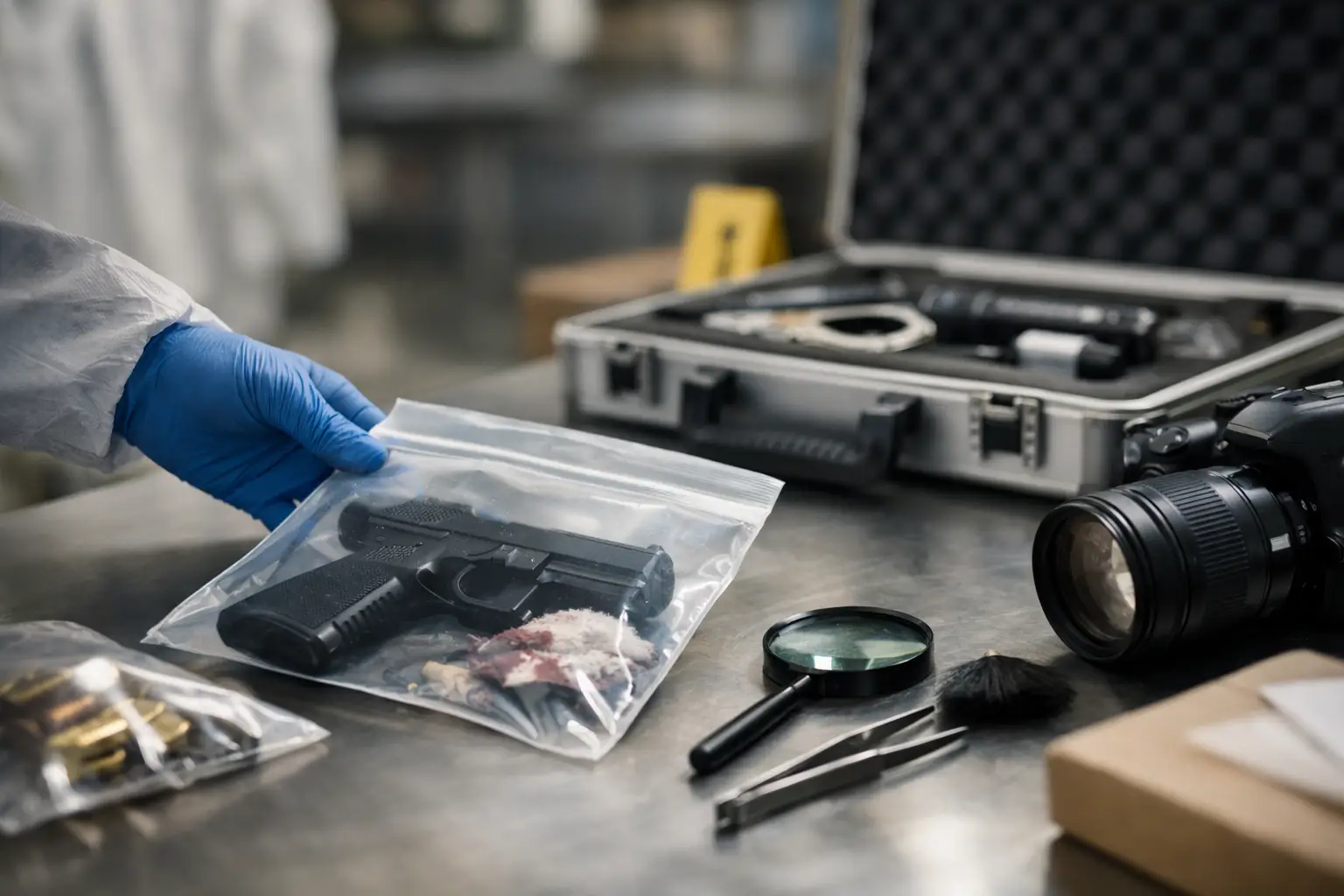
A case can turn on a single handset, a laptop image, or a set of messages pulled from cloud-linked data. When that material is mishandled, the problem is not merely technical – it becomes evidential. The best practices for evidential handling are therefore not administrative niceties. They are the procedures that protect integrity, preserve context, and keep digital evidence defensible when a dispute reaches court.
For solicitors, businesses, and private clients, the risk usually begins before any forensic expert is instructed. A device is powered on to “have a quick look”. A manager asks IT to copy files. Screenshots are taken instead of preserving native data. A phone is returned to a user after an allegation has been raised. Each step may appear sensible in the moment, yet each can damage provenance, alter metadata, or create uncertainty that opposing parties will exploit.
Digital evidence is especially vulnerable because it is easy to change without meaning to. System processes write to storage. Applications update in the background. Network activity changes logs. Even simply unlocking a device may alter artefacts relevant to usage, location, or communication. That is why evidential handling must start from a disciplined premise: preserve first, examine second, report third.
Why best practices for evidential handling matter
The central issue is reliability. Courts do not simply want data; they want confidence in how that data was obtained, preserved, analysed, and presented. If there are gaps in possession, uncertainty over who accessed a device, or no record of what was done and when, the evidential value may be reduced even where the underlying material is genuine.
This is where chain of custody becomes decisive. A proper chain of custody records the movement, control, storage, and examination of an exhibit from the moment it is identified. That record should show who handled the item, the date and time of each transfer, the reason for access, and the condition of the exhibit. In digital matters, it should also record serial numbers, device identifiers, passwords where lawfully provided, packaging details, and the method of acquisition.
There is also a strategic point. Weak handling creates room for challenge. In criminal matters, that may affect disclosure, attribution, or continuity. In civil disputes, it can undermine credibility, inflate costs, and force parties into satellite arguments about process instead of substance. Sound handling does not guarantee a favourable outcome, but poor handling can compromise even a strong case.
Securing the exhibit at the earliest stage
The first decision is often the most important: whether to isolate, power down, keep powered, or refrain from touching the device at all. The right answer depends on the device type, the suspected issue, encryption risks, live data concerns, and the legal basis for preservation. There is no single rule for every scenario.
For example, a powered-on laptop in a suspected insider misconduct matter may contain volatile evidence such as active sessions, network connections, or running processes. In another matter, shutting down a phone may trigger encryption barriers that prevent later access. Conversely, leaving a device connected to networks may permit remote wiping or further tampering. Best practice is not blind standardisation. It is making a reasoned forensic decision, recording it clearly, and acting proportionately.
At the point of seizure or collection, exhibits should be labelled individually, photographed where appropriate, and packaged to prevent contamination or accidental use. Access should be restricted from the outset. That means no informal inspection by colleagues, no ad hoc browsing by in-house IT, and no attempt to “test” whether material is present. Curiosity is one of the fastest routes to evidential damage.
Preserve native data, not just visible content
One of the most common failures in evidential handling is confusing information with evidence. A screenshot may show a message. A printout may show a document. But neither necessarily preserves metadata, authorship markers, timestamps, file system context, deletion history, or application data that may later prove critical.
Forensic preservation aims to capture the native source as completely and accurately as possible. Depending on the device and circumstances, that may involve a forensic image, a logical extraction, a targeted collection, or preservation of cloud-associated records. The method chosen must be suited to the question in dispute. If the issue is file manipulation, metadata matters greatly. If the issue is user activity, application artefacts and logs may be central. If the issue is communication, deleted or partial data may be as important as visible threads.
This is why evidential handling should always be linked to case theory. Over-collection can create proportionality and privacy issues. Under-collection can leave decisive evidence behind. The proper course is a scoped, justified preservation plan that is wide enough to protect relevant material and narrow enough to remain defensible.
Documentation is part of the evidence
Good forensic work is visible in the record. Every material step should be documented contemporaneously, not reconstructed later from memory. Notes should identify the exhibit, the date and time of action, the person conducting it, the tool or method used, and the result. If an issue arises – a damaged handset, an inaccessible account, a failed extraction, a missing charger, a broken seal – that too should be recorded.
Hash values are particularly important in digital matters because they help demonstrate that a forensic image or acquired dataset has not changed since capture. They are not a substitute for proper handling, but they are a valuable integrity check within a larger evidential framework.
Documentation should also explain judgement calls. If a live acquisition was performed, why? If a device was isolated in a Faraday solution, why? If a partial extraction was accepted because a full file system acquisition was not technically available, that limitation should be stated plainly. Courts and legal teams do not expect impossible certainty. They do expect transparency.
Independence, competence, and procedural discipline
Not every person who can access data is qualified to handle it evidentially. That distinction matters. An internal IT team may be entirely capable of recovering files for business continuity and entirely unsuited to preserving evidence for litigation. The goals are different, and so are the standards.
Evidential handling should be performed by those with the technical competence to understand acquisition risks and the procedural discipline to maintain impartiality. An examiner is not there to prove a client’s theory at any cost. The task is to recover, preserve, analyse, and report the evidence as it is, including where findings are limited, contradictory, or less helpful than expected.
That independence is often what gives the work weight. A peer-reviewed report, a clear methodology, and an auditable chain of custody are far more persuasive than unsupported assertions from a well-meaning non-specialist. In practice, this can make the difference between evidence that assists the court and evidence that becomes a point of contention.
Best practices for evidential handling in live disputes
When proceedings are contemplated or underway, timing becomes critical. Delay can mean overwritten logs, expired cloud data, changed device states, and lost opportunities for lawful preservation. Early instruction allows proper triage: what must be secured immediately, what can wait, and what legal or procedural constraints apply.
There are trade-offs. A business facing a cyber incident may need urgent containment while also preserving evidence of intrusion. A family dispute may involve a shared device where privacy and relevance have to be balanced carefully. A criminal defence team may need rapid review of prosecution material while preserving the ability to challenge acquisition methods. Best practice is not simply acting fast. It is acting fast without sacrificing integrity.
That usually requires a coordinated approach between legal advisers and forensic specialists. The legal team frames the issues in dispute and the evidential threshold. The forensic team designs a preservation and examination path that answers those issues without contaminating the source material. Where that coordination is absent, effort is often wasted on collecting the wrong data, in the wrong way, at the wrong time.
Presentation matters as much as preservation
Evidence can be preserved correctly and still be presented poorly. Technical findings must be translated into a form the court, instructing solicitors, and clients can follow. That does not mean oversimplifying the science. It means setting out what was received, what was done, what was found, what limitations applied, and what conclusions can properly be drawn.
Clear schedules, exhibit references, date ranges, and methodology sections all help. So does restraint. Overstated conclusions invite challenge. Measured, evidence-led reporting carries more authority, particularly where the examiner distinguishes observed facts from inference.
Computer Forensics Lab works in exactly this space because digital evidence is only useful when it is recovered and handled in a way that remains credible under scrutiny. For legal and investigative clients, that credibility is not an optional extra. It is the point.
The safest course is usually the simplest one: if a device, account, or dataset may matter in a dispute, treat it as evidence before someone else treats it as ordinary IT. That early discipline often protects the one thing no later process can repair – confidence in the integrity of the record.