
TL;DR:
- UK organizations face ongoing cyber threats, with 43% experiencing breaches causing significant costs and risks. Implementing comprehensive policies, training, and technical controls is essential to meet GDPR obligations and prevent incidents. Early breach detection, quick response, and robust supply chain management reduce regulatory and reputational damage.
The threat of a data breach is no longer a distant possibility for UK organisations. 43% of UK businesses experienced a cyber breach or attack in the past 12 months, with the average cost of the most disruptive incident reaching £1,600 per business. For larger organisations, that figure rises sharply. Regulatory pressure from the Information Commissioner’s Office (ICO) adds another layer of financial and reputational risk. This guide offers corporate managers and compliance officers a structured, practical approach to reducing breach exposure and meeting UK GDPR obligations, from benchmarking your current posture to responding decisively when incidents occur.
Table of Contents
- Assessing your current data protection posture
- Establishing robust policies, training, and audits
- Implementing technical and organisational security measures
- Managing data processing and risk: contracts, records, and DPIAs
- Incident response and reporting: what to do after a breach
- Why compliance alone is not enough: lessons from UK enforcement
- How expert digital forensic solutions support corporate security
- Frequently asked questions
Key Takeaways
| Point | Details |
|---|---|
| UK breach risks | Nearly half of UK businesses face breaches, with phishing as the main threat. |
| Policy and training essentials | Effective policies, regular staff training, and ongoing audits are crucial for compliance. |
| Technical safeguards | Secure storage, strong passwords, access controls, and reliable backups mitigate breach risks. |
| Legal and regulatory duties | Processor contracts, records, and DPIAs are legally required for most organisations. |
| Rapid response required | Report breaches to the ICO within 72 hours or face hefty fines and reputational damage. |
Assessing your current data protection posture
Before identifying solutions, it is critical to understand how your organisation currently stands in relation to UK risks and required practices.
Any honest assessment starts with benchmarking. Most UK organisations believe their protections are adequate until they measure them against what the ICO actually expects. The 2025/2026 cyber security breaches survey found that while 81% of businesses have malware protection, far fewer have formal incident response plans or conduct regular penetration testing. That gap between basic controls and genuine resilience is where most breaches occur.
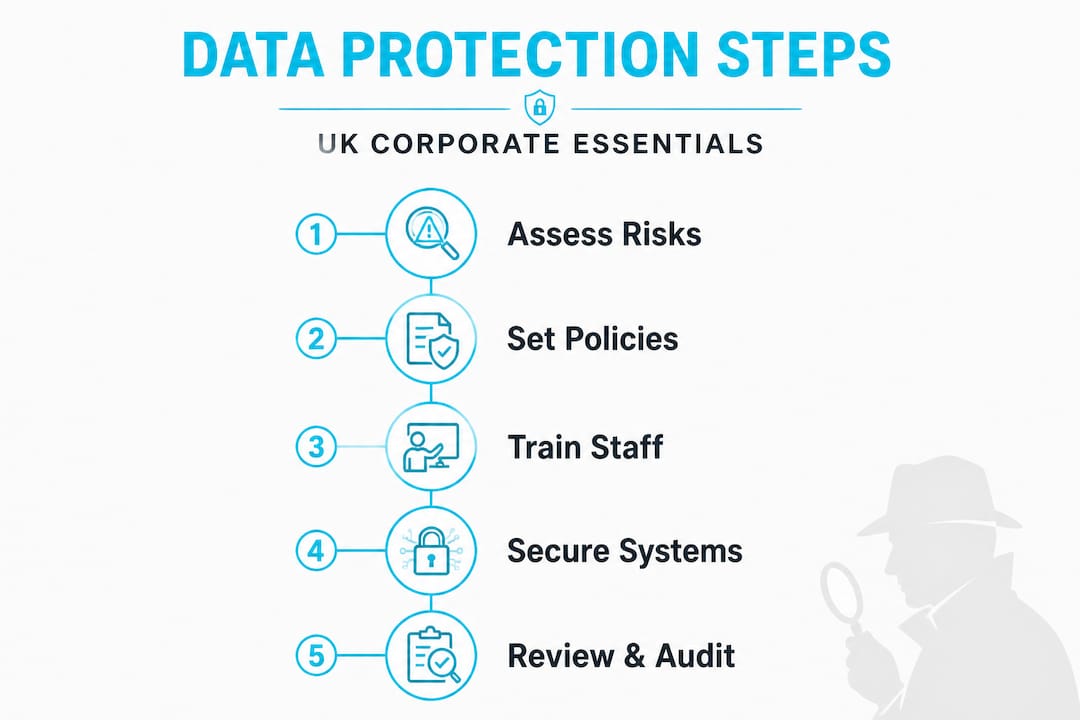
Understanding signs of data breaches early can significantly limit the damage. Common indicators include unusual account activity, unexpected outbound data transfers, unfamiliar login locations, and sudden performance degradation on key systems. Compliance officers should ensure these indicators are actively monitored, not just listed in a policy document.
The compliance officer role in UK organisations has expanded considerably under UK GDPR. You are now expected to demonstrate accountability, not simply assert it. That means producing evidence of controls, training records, audit trails, and documented risk decisions. An internal gap analysis should evaluate the following areas:
- Identity and access management: Are user permissions reviewed regularly, and is least-privilege access enforced across systems?
- Patch management: Are operating systems and software updated on a defined schedule, or reactively?
- Data inventory: Do you know exactly what personal data you hold, where it is stored, and who has access?
- Incident history: Have previous near-misses been formally documented and acted upon?
- Third-party risk: Are processor contracts in place and do they specify required security standards?
Engaging with cybersecurity best practices at the outset of a gap analysis helps frame the review around outcomes rather than checklists. The goal is not to tick boxes but to identify where a determined attacker or a careless employee could cause real harm. Reviewing data breach review tips can also help you structure findings in a way that satisfies both legal teams and senior management.
| Assessment area | Basic level | Advanced level |
|---|---|---|
| Access controls | Password protection only | Multi-factor authentication, role-based access |
| Data inventory | Informal awareness | Documented data map with retention schedules |
| Incident response | Ad hoc reaction | Tested, documented plan with clear ownership |
| Staff training | One-off induction | Annual refreshers with phishing simulations |
| Third-party audits | Contracts in place | Annual security questionnaires and reviews |
Establishing robust policies, training, and audits
Once you understand your baseline, the next step is to formalise protections through policies and people.
The ICO is explicit: UK GDPR accountability principles require organisations to implement data protection policies, conduct staff training, and carry out regular audits. Accountability is not a passive state. It requires active, documented effort. Many organisations fall short because their policies exist on paper but are neither communicated nor enforced consistently across departments.
Here is a structured approach to creating cybersecurity policy frameworks that actually work:
- Draft a data protection policy that is specific to your organisation. Generic templates from the internet rarely address sector-specific risks or your actual processing activities.
- Develop an incident response policy with named roles, escalation paths, and a clear decision tree for breach classification.
- Implement a clear desk and screen lock policy to reduce physical data exposure in open-plan offices and shared workspaces.
- Create a remote working policy that mandates the use of approved VPNs, encrypted devices, and prohibits the use of personal email for work data.
- Schedule quarterly internal audits against each policy, with findings reported to senior leadership and remediation tracked to completion.
“Organisations must be able to demonstrate compliance with data protection principles, not merely assert it.” ICO, Guide to accountability and governance.
Staff training is where many organisations invest too little. Annual e-learning modules that employees click through in ten minutes are not sufficient. Effective training combines scenario-based learning, phishing simulations, and role-specific guidance. A finance team needs to understand invoice fraud and payment redirection scams. A HR team needs to understand the risks of sharing salary data via unencrypted email. One-size-fits-all approaches consistently underperform.
Pro Tip: Run quarterly phishing simulations using your IT security team or a managed service provider, and track click-through rates over time. A reduction in susceptibility is a measurable, auditable indicator of training effectiveness that the ICO will view favourably if a breach ever occurs.
Audit cycles should be planned, not reactive. A 12-month audit calendar should cover data mapping reviews, access control audits, policy refreshes, staff training assessments, and third-party supplier evaluations. Document every outcome, assign owners, and set deadlines for remediation. This paper trail is precisely what the ICO looks for when assessing whether an organisation took its accountability obligations seriously.
Implementing technical and organisational security measures
With policies in place, it is time to tackle the practical side by deploying proven technical and operational defences.

The ICO’s guidance on minimising data breach risk specifies concrete technical measures: secure storage, strong passwords, locked filing cabinets, and access controls. These are foundational, not optional. Yet audits regularly reveal organisations that are storing sensitive HR or legal files in shared drives with no access restrictions, or using default administrator passwords on network devices.
Physical security is frequently underestimated. Unlocked filing cabinets containing employee records, visitor passes left on desks, and unsupervised printer trays are common sources of data exposure. Corporate managers should treat physical data security with the same rigour as digital controls.
| Control type | Common mistake | Recommended practice |
|---|---|---|
| Passwords | Reusing passwords across systems | Unique, complex passwords managed via a password manager |
| Filing cabinets | Left unlocked overnight | Locked at all times; keys in designated secure location |
| Remote access | VPN optional for remote staff | Mandatory VPN with multi-factor authentication |
| Data backups | Weekly manual backup to local drive | Daily automated backups to encrypted, offsite or cloud storage |
| Sending personal data in plain text | Encrypted email or secure file transfer portals |
Understanding the full landscape of examples of cyber threats facing UK organisations in 2026 helps managers prioritise where to invest. Ransomware, credential stuffing, business email compromise, and insider threats each require distinct technical countermeasures. Deploying endpoint detection and response (EDR) software, network segmentation, and email filtering are proven methods for reducing attack surface.
Pro Tip: Review corporate law dos and don’ts alongside your IT security strategy. Data protection obligations are frequently intertwined with contractual and employment law, and a joined-up approach prevents costly oversights when managing employee devices or departing staff.
Supply chain risk deserves particular attention. A supplier with weak security controls can expose your organisation’s data without any failure on your part. Every third-party vendor with access to personal data should be subject to a supplier risk assessment before onboarding, and annually thereafter. Contracts must specify minimum security standards. If a supplier cannot demonstrate compliance, that is a red flag that warrants serious consideration before proceeding.
Managing data processing and risk: contracts, records, and DPIAs
Beyond technical controls, businesses must strengthen their legal and organisational frameworks for handling and processing sensitive information.
The legal obligations here are precise. Written contracts with processors must specify the security measures the processor will implement and the assistance they will provide if you need to respond to a data subject rights request. A handshake agreement or an email chain is not sufficient. If your processor suffers a breach and no formal contract exists, your organisation bears significant regulatory risk.
Contractual liability essentials are particularly relevant when engaging cloud service providers, HR software vendors, payroll processors, and IT managed service providers. Each of these entities processes personal data on your behalf and must be contractually bound to meet UK GDPR requirements.
Your Article 30 obligations under UK GDPR require you to maintain records of processing activities. These records must document:
- The name and contact details of your organisation and, where applicable, your Data Protection Officer (DPO).
- The purposes of each processing activity.
- A description of the categories of data subjects and personal data involved.
- Categories of recipients, including any transfers to third countries.
- Retention schedules for each data category.
- A general description of technical and organisational security measures.
Many organisations maintain these records in spreadsheets, which is acceptable provided they are accurate, accessible, and regularly reviewed. Records that were accurate two years ago but have not been updated since a system migration or product launch are a liability, not an asset.
Data Protection Impact Assessments (DPIAs) are mandatory for high-risk processing activities, including the use of innovative technology, large-scale profiling, and processing special category data such as health, biometric, or criminal records at scale. A DPIA is not bureaucracy for its own sake. It is a structured risk assessment that identifies problems before they become incidents. Organisations that conduct thorough DPIAs before launching new data-driven products or services are significantly better positioned when the ICO comes knocking.
Incident response and reporting: what to do after a breach
Even with strong protections, breaches may still occur, so it is vital to be ready with an effective, compliant incident response plan.
Speed is everything. UK organisations must report personal data breaches to the ICO within 72 hours of becoming aware of them, provided the breach is likely to result in risk to individuals’ rights and freedoms. Where the risk to individuals is high, those individuals must also be notified directly without undue delay. Failing to notify can result in fines up to £8.7 million or 2% of annual global turnover, whichever is higher.
Here is the recommended response sequence:
- Contain the breach immediately. Isolate affected systems, revoke compromised credentials, and prevent further data loss before investigating the full scope.
- Assess the risk to individuals. Not every breach triggers an ICO notification obligation. Determine whether the breach is likely to result in harm such as financial loss, discrimination, or reputational damage.
- Notify the ICO within 72 hours if the risk threshold is met. Use the ICO’s online reporting tool and provide as much detail as available at the time, noting that further information can follow.
- Notify affected individuals if the risk is high. Communications must be clear, jargon-free, and explain what happened, what data was involved, and what steps individuals can take to protect themselves.
- Document everything. Even breaches that do not require ICO notification must be recorded internally under Article 33(5) UK GDPR. This includes the facts of the breach, its effects, and the remedial actions taken.
“All personal data breaches must be documented, even if they do not need to be reported to us.” ICO, Personal data breaches: a guide.
Pro Tip: Appoint a named incident response lead before any breach occurs. Deciding who is in charge during a live incident wastes precious hours. Your lead should have the authority to escalate to the ICO, engage legal counsel, and communicate externally without waiting for multiple sign-offs.
Understanding how to approach investigating data breaches from a forensic perspective is increasingly important. Digital forensic investigation can establish the timeline of a breach, identify the attack vector, determine what data was accessed or exfiltrated, and produce evidence suitable for regulatory submissions or litigation.
Why compliance alone is not enough: lessons from UK enforcement
Having covered actionable strategies, it is worth reflecting on a pattern we observe repeatedly in corporate data protection.
The ICO’s proactive, risk-based approach stands in direct contrast to the compliance checklists that dominate most internal audit programmes. Compliance checklists are useful as a starting point. They are deeply insufficient as an ending point. We consistently see organisations that have policies for everything and practise almost none of them. They pass internal audits and fail catastrophically when confronted with an actual incident.
The uncomfortable truth is that most significant ICO enforcement actions follow breaches that were entirely preventable. Not sophisticated nation-state attacks. Preventable failures such as unpatched systems that IT flagged six months earlier, personal data sent to the wrong email address because no verification step existed, or contractor accounts left active six months after the contract ended.
Integrated governance means that data protection is not the compliance team’s problem. It is embedded in procurement decisions, HR processes, software development cycles, and board-level risk reporting. When the CISO, DPO, General Counsel, and CFO are aligned on data risk, the organisation moves faster and more decisively when a breach occurs. When they operate in silos, the 72-hour ICO notification window becomes a frantic scramble rather than an orderly process.
Spotting data breaches early requires a culture of reporting, not blame. Employees who fear disciplinary action for accidentally forwarding a file to the wrong recipient will conceal the incident. Organisations that foster psychological safety around data incidents get earlier warnings and better outcomes. That cultural shift is something no policy document achieves alone.
How expert digital forensic solutions support corporate security
When an incident moves beyond internal capability, or when you need forensically sound evidence for regulatory submissions, litigation, or disciplinary proceedings, specialist support becomes essential.
Computer Forensics Lab works with corporate legal teams and compliance officers across the UK to provide independent, court-ready digital investigations. Whether you need to understand the full scope of a breach, identify an insider threat, or recover data from a compromised device, our team provides the technical depth and evidential rigour your situation demands. Explore our digital forensics services for a full overview of investigation capabilities tailored to corporate clients. You can also learn how digital footprints investigations can reveal the true extent of data exposure across devices, cloud accounts, and networks. We maintain chain of custody throughout, ensuring every finding is admissible and defensible.
Frequently asked questions
What are the most common causes of corporate data breaches in the UK?
Phishing is the most common cause, responsible for 65% of incidents, with malware also featuring prominently despite 81% of businesses having some form of malware protection in place.
How quickly must a UK organisation report a data breach to the ICO?
If the breach poses a likely risk to individuals’ rights and freedoms, notification to the ICO must happen within 72 hours of becoming aware of it, with direct notification to affected individuals required where the risk is high.
What is a DPIA and when is it required?
A DPIA is a Data Protection Impact Assessment, and it is required before undertaking high-risk processing activities such as large-scale profiling, use of innovative technology, or processing special category data at scale.
What fines can UK businesses face for failing to notify the ICO after a breach?
Non-notification can result in fines up to £8.7 million or 2% of annual global turnover under the UK GDPR enforcement framework.
How can supply chain risks impact corporate data protection?
Third-party suppliers with inadequate controls can expose your organisation’s personal data, which is why supply chain security reviews and contractually mandated security standards are essential components of any robust data protection programme.
Recommended
- Spot the signs of data breaches: guide for UK legal teams
- Spot the signs of data breaches: guide for UK legal teams
- Cybersecurity best practices: UK essentials for resilient defence
- Cybersecurity best practices: UK essentials for resilient defence
- 6 Essentials for an Employee Monitoring Checklist 2026
- Employee Privacy Rights in the Workplace: What You Need To Know