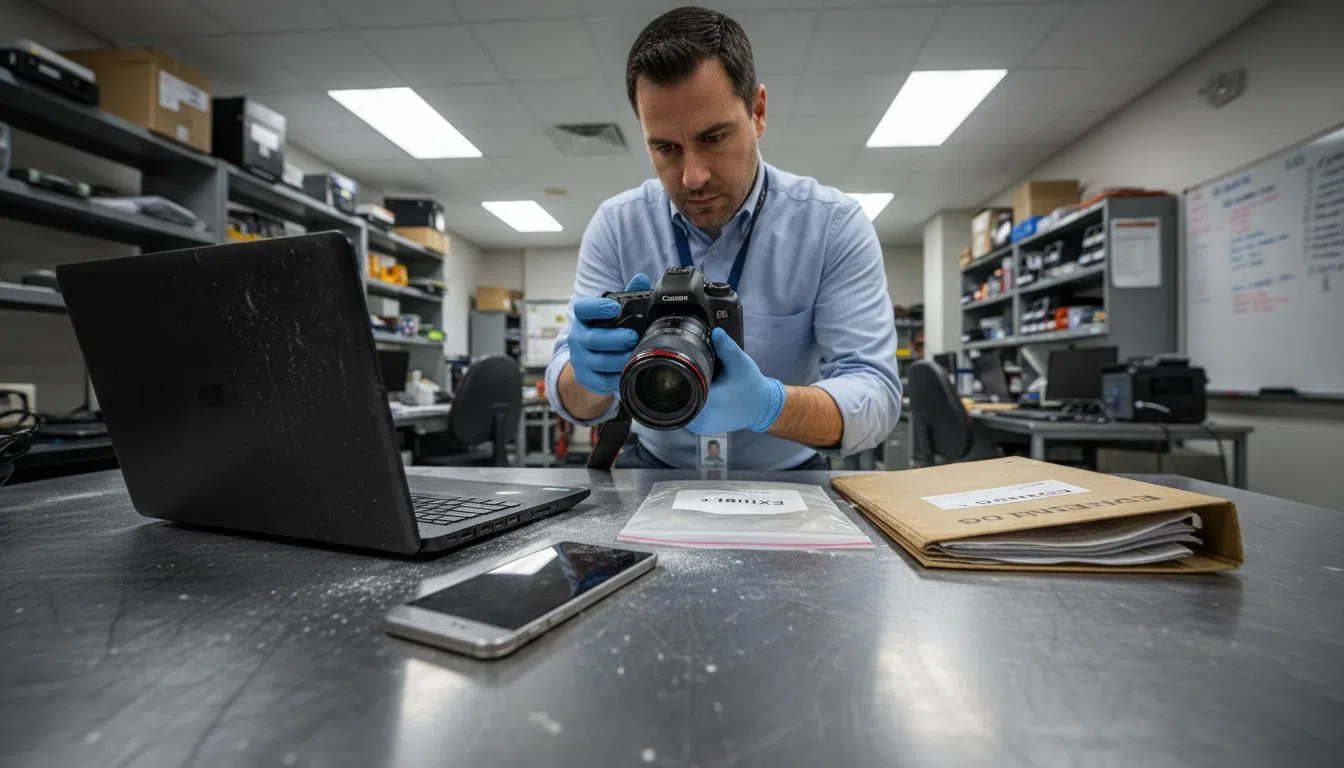
Every step in managing digital evidence can mean the difference between a case proceeding or falling apart in court. In the UK, legal professionals and digital forensics investigators face growing pressure to protect the chain of custody and guarantee the integrity of electronic evidence during criminal and civil litigation. Meticulous chain of custody documentation stands as the backbone of admissible digital evidence, safeguarding reliability from initial collection through to courtroom presentation.
Table of Contents
- Chain Of Custody Basics In Digital Forensics
- Types And Stages Of Digital Evidence Handling
- Uk Legal Standards And Documentation Rules
- Roles And Duties In Maintaining Custody
- Risks And Pitfalls To Avoid In Practice
Key Takeaways
| Point | Details |
|---|---|
| Chain of Custody Importance | Precise documentation and tracking are essential to maintain the integrity and admissibility of digital evidence in legal proceedings. |
| Rigorous Protocols Needed | Each stage of digital evidence handling requires strict adherence to procedures to prevent evidence compromise. |
| Roles and Responsibilities | Clearly defined roles in the chain of custody ensure accountability and transparency in evidence management. |
| Risk Mitigation Strategies | Implementing best practices and training can significantly reduce the risks of evidence mishandling and procedural errors. |
Chain of custody basics in digital forensics
In digital forensics, the chain of custody is a systematic methodology that tracks electronic evidence through its entire investigative lifecycle. Digital evidence tracking requires meticulous documentation to ensure legal admissibility and preserve evidence integrity.
This critical forensic process involves several key components that legal professionals must understand:
- Comprehensive documentation of every evidence interaction
- Strict tracking of evidence movement and handling
- Detailed logging of all forensic actions
- Maintaining evidence authenticity throughout investigation
The chain of custody serves multiple crucial functions in digital investigations. It provides a transparent record demonstrating that digital evidence has not been tampered with, modified, or compromised during collection, transportation, analysis, or presentation stages.
Forensic professionals must establish clear protocols for managing digital evidence, including:
- Immediate evidence identification
- Precise collection procedures
- Secure storage mechanisms
- Detailed transfer documentation
- Comprehensive analysis tracking
Each interaction with digital evidence must be rigorously documented, including timestamps, personnel involved, and specific actions taken. This creates an unbroken documentary trail that validates the evidence’s reliability in legal proceedings.
Digital forensics relies on absolute precision: one broken link in the chain can render critical evidence inadmissible.
Pro tip: Always photograph and document the initial evidence state, create forensic hash values immediately, and maintain a comprehensive log of every single interaction with digital evidence.
Types and stages of digital evidence handling
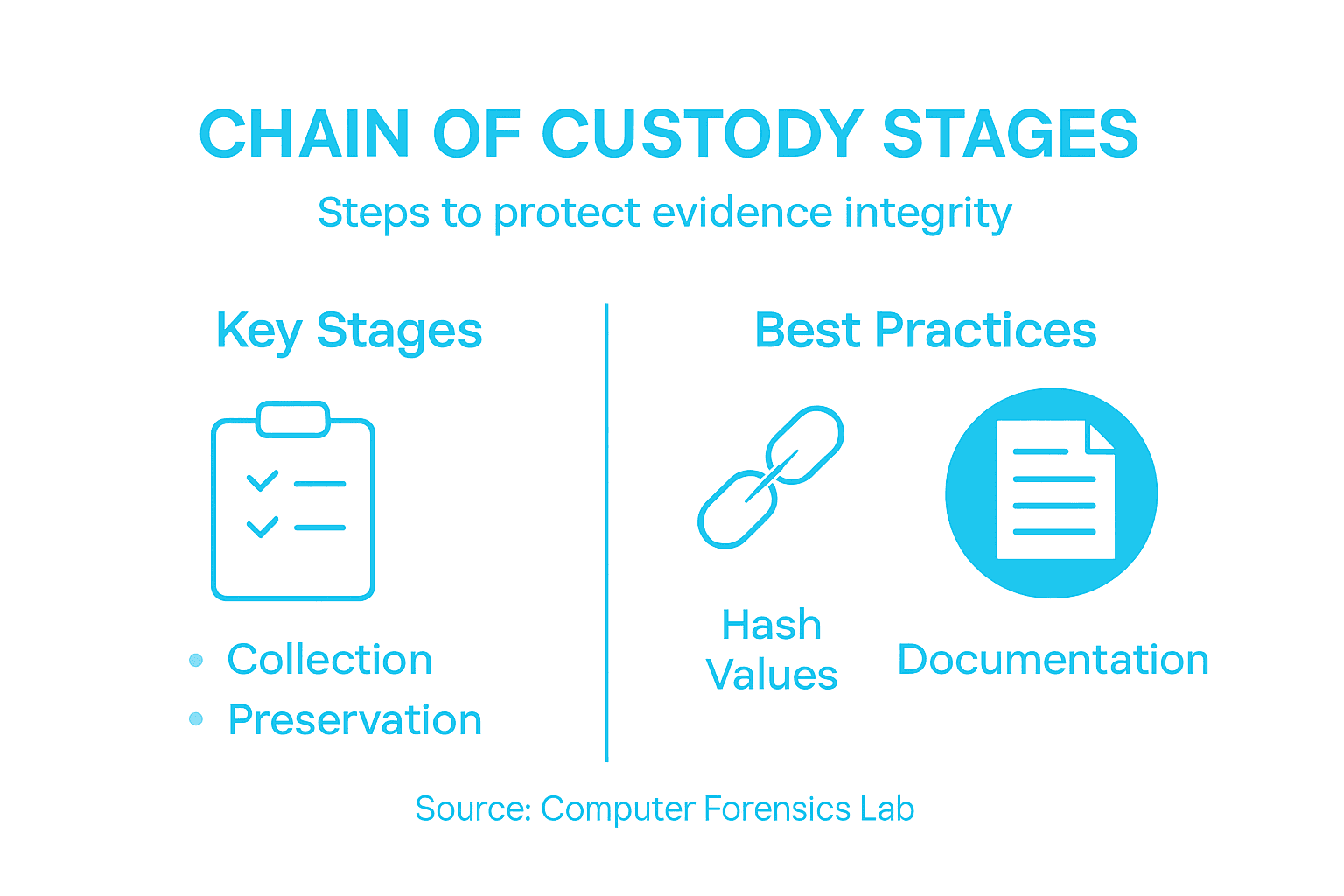
Digital evidence handling encompasses a structured process of evidence management techniques that legal professionals must meticulously follow. The stages of digital evidence collection and preservation require precision and systematic approach to maintain forensic integrity.
The primary stages of digital evidence handling include:
- Identification: Recognising potential digital evidence
- Collection: Securing and isolating digital devices
- Acquisition: Creating forensically sound copies
- Preservation: Maintaining evidence integrity
- Analysis: Examining and interpreting digital data
- Presentation: Documenting findings for legal proceedings
Forensic investigators must adopt rigorous protocols during each stage to ensure the admissibility and reliability of digital evidence. This involves using specialised tools and techniques that prevent data manipulation and maintain a comprehensive audit trail.
Each stage demands specific technical and legal considerations:
- Initial device isolation
- Forensic imaging without data alteration
- Cryptographic hash verification
- Detailed documentation of all actions
- Secure evidence storage
Digital evidence is fragile: one incorrect handling procedure can compromise an entire investigation.
Pro tip: Always use write-blockers when creating forensic images and maintain multiple independent copies of digital evidence to prevent potential data loss.
UK legal standards and documentation rules
UK digital forensics follows stringent legal documentation protocols designed to ensure evidence reliability and court admissibility. These standards mandate comprehensive tracking and preservation of digital evidence through precise, legally recognised procedures.
Key documentation requirements for digital forensic investigations include:
- Comprehensive log creation detailing every evidence interaction
- Timestamped records of evidence handling
- Signature verification for each evidence transfer
- Secure storage documentation
- Forensic tool validation records
- Explicit chain of custody tracking
Forensic professionals must adhere to strict guidelines that prevent potential evidence contamination or manipulation. This involves maintaining meticulous records that demonstrate the continuous, unbroken path of digital evidence from initial collection through court presentation.
Critical documentation stages involve:
- Initial evidence seizure details
- Device examination procedures
- Forensic imaging processes
- Evidence storage conditions
- Investigator authentication
In UK legal proceedings, documentation is not just a formality—it is the foundation of evidence credibility.
Pro tip: Always use standardised forensic documentation templates and ensure every team member understands the precise reporting requirements to maintain legal compliance.
Roles and duties in maintaining custody
Digital forensic investigations demand precise evidence handling responsibilities across multiple professional roles. Each team member plays a critical part in maintaining the integrity and legal admissibility of digital evidence throughout the investigative process.
Key roles in the chain of custody include:
- Crime Scene Investigator: Initial evidence identification and secure collection
- Forensic Analyst: Detailed evidence examination and documentation
- Evidence Custodian: Secure storage and controlled evidence movement
- Legal Representative: Verifying documentation and evidence authenticity
- Technical Specialist: Forensic tool management and data preservation
- Compliance Officer: Ensuring procedural standards are maintained
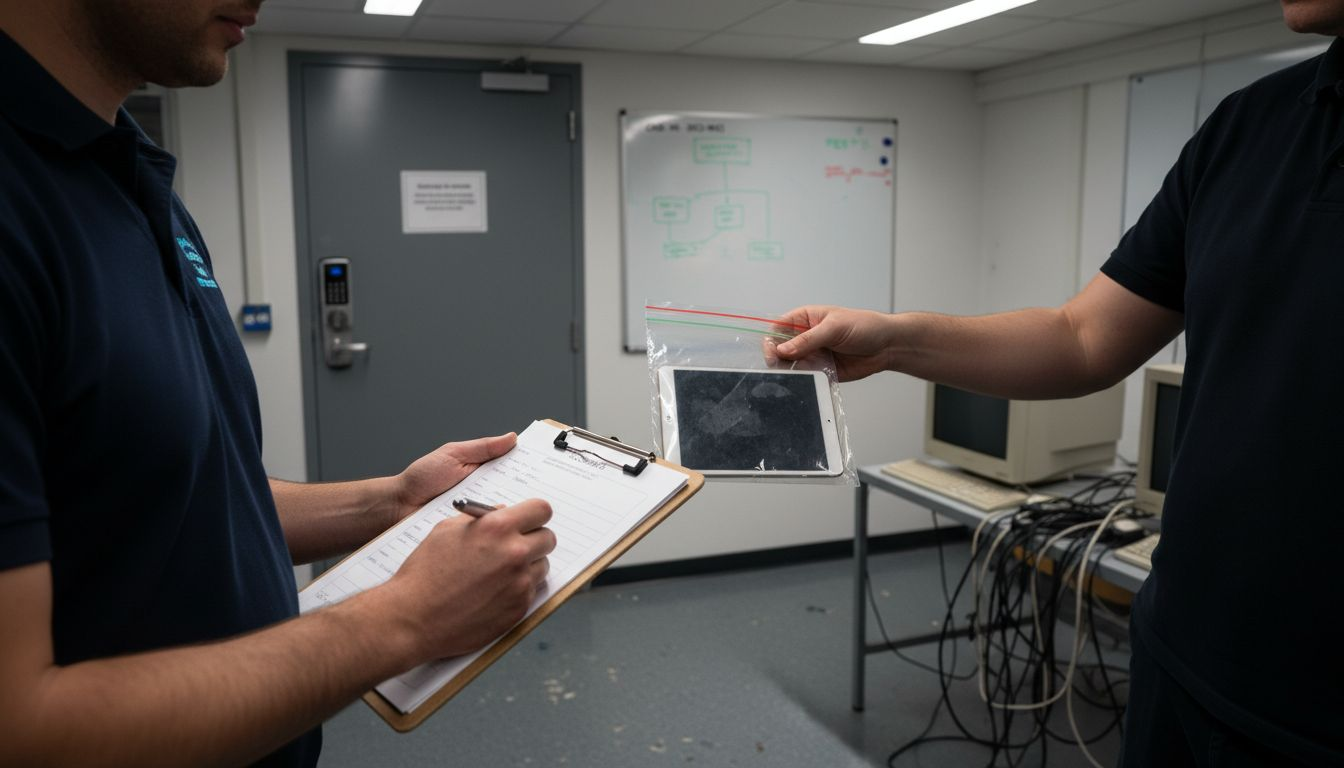
Each professional must meticulously document their interactions with digital evidence, creating a transparent and traceable record. This documentation includes precise details about evidence collection, transfer, analysis, and storage conditions.
Here is a quick reference summarising chain of custody roles and their primary responsibilities in digital forensic investigations:
| Role | Main Custody Responsibility | Chain Impact |
|---|---|---|
| Crime Scene Investigator | Collect and label evidence | Ensures initial integrity |
| Forensic Analyst | Examine and document findings | Maintains evidence validity |
| Evidence Custodian | Secure storage and movement | Prevents unauthorised access |
| Legal Representative | Review and authenticate processes | Guarantees legal compliance |
| Technical Specialist | Manage forensic tools and data | Prevents data alteration |
| Compliance Officer | Monitor adherence to protocols | Upholds procedural standards |
Specific duties for each role involve:
- Documenting exact time and location of evidence collection
- Using tamper-evident packaging and seals
- Creating detailed forensic logs
- Maintaining unbroken evidence tracking
- Preventing unauthorized evidence access
A single undocumented interaction can compromise the entire forensic investigation.
Pro tip: Develop standardised handover protocols and ensure every team member receives comprehensive training on chain of custody documentation procedures.
Risks and pitfalls to avoid in practice
Digital forensics professionals must be acutely aware of critical evidence handling risks that can compromise entire investigations. Understanding these potential pitfalls is crucial for maintaining the legal integrity of digital evidence and preventing costly procedural errors.
Key risks that can critically undermine forensic investigations include:
- Incomplete documentation of evidence interactions
- Uncontrolled evidence access
- Improper storage conditions
- Inadequate device security
- Inconsistent handling protocols
- Lack of forensic tool validation
Professionals must develop rigorous strategies to mitigate these risks, recognising that a single procedural misstep can render potentially crucial evidence inadmissible. This requires constant vigilance, systematic training, and meticulous adherence to established forensic protocols.
The following table outlines typical challenges faced in digital evidence handling and practical strategies for mitigation:
| Common Challenge | Potential Consequence | Best Practice Mitigation |
|---|---|---|
| Incomplete documentation | Evidence may be ruled inadmissible | Implement double-verification |
| Improper storage | Data loss or contamination | Use secure, monitored facilities |
| Lack of tool validation | Analyses may be disputed in court | Regular tool certification |
| Uncontrolled access | Evidence tampering risk | Restrict access, use tracking |
| Inconsistent procedures | Case reliability undermined | Standardise staff training |
Specific scenarios that pose significant risks involve:
- Failing to log evidence transfer details
- Using unvalidated forensic tools
- Allowing uncontrolled device handling
- Neglecting cryptographic verification
- Insufficient staff training on custody procedures
One undocumented moment can destroy months of investigative work.
Pro tip: Implement a mandatory double-verification system where two independent forensic professionals must confirm and document each critical evidence handling stage.
Ensure Absolute Evidence Integrity with Expert Chain of Custody Solutions
Protecting digital evidence from the very start is a critical challenge highlighted in the article “Chain of Custody Tips: Protecting Evidence Integrity”. The risk of incomplete documentation, uncontrolled access, and breaks in the evidence trail can jeopardise entire investigations. Maintaining a flawless chain of custody demands meticulous tracking and secure handling at every stage to guarantee the legal admissibility and reliability of digital data.
At Computer Forensics Lab, we understand these pressures and offer specialised Chain of Custody Tracking services tailored to safeguard your digital evidence. Our expert team supports legal professionals and businesses by employing rigorous forensic procedures, including detailed logging, secure storage, and verified evidence transfer methods. Backed by cutting-edge Digital Forensics technologies, we help you maintain unbroken custody chains and withstand judicial scrutiny.
Don’t leave evidence integrity to chance. Visit Computer Forensics Lab today and secure your digital investigations with trusted chain of custody expertise. Act now to protect your case with proven forensic protocol and professional support.
Frequently Asked Questions
What is the chain of custody in digital forensics?
The chain of custody in digital forensics refers to the systematic process of tracking electronic evidence throughout its investigative lifecycle, ensuring that it remains untampered and legally admissible.
Why is documentation important in maintaining the chain of custody?
Comprehensive documentation is vital because it creates a transparent record of every interaction with digital evidence, which validates its authenticity and protects its integrity during legal proceedings.
What are the key stages of digital evidence handling?
The key stages include identification, collection, acquisition, preservation, analysis, and presentation of digital evidence, each requiring precise protocols to maintain forensic integrity.
What risks are associated with improper handling of digital evidence?
Risks include incomplete documentation, uncontrolled access, improper storage conditions, and inadequate security, all of which can compromise the integrity of the evidence and lead to it being ruled inadmissible in court.