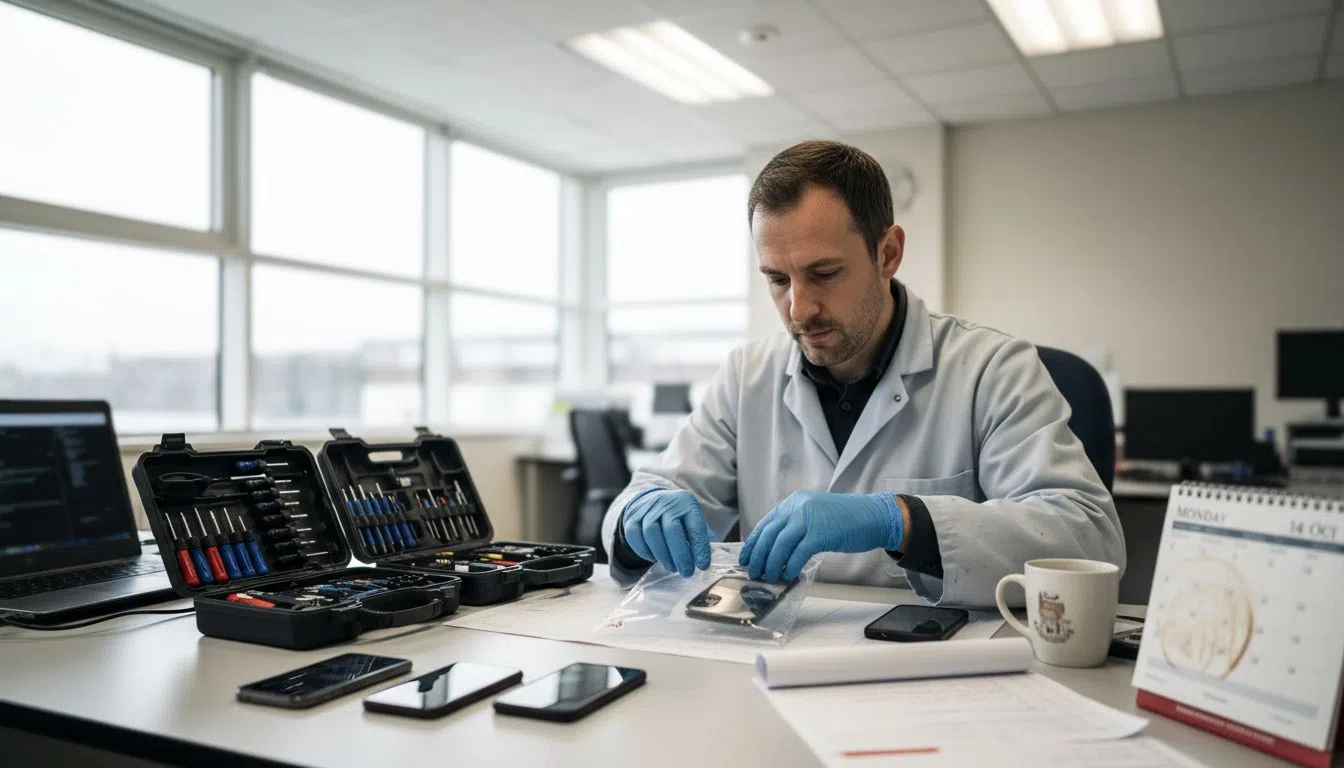
Protecting mobile evidence is far more complex than simply seizing a device in London, especially when cybercrime cases hinge on flawless forensic practice. Legal professionals and forensic analysts face relentless scrutiny over every step taken to secure, extract and document mobile data. This guide breaks down the critical importance of forensic integrity by detailing industry-approved protocols for preparing tools, isolating devices and maintaining robust chains of custody, empowering you to present evidence that stands up in any British courtroom.
Table of Contents
- Step 1: Prepare Forensic Tools And Secure Devices
- Step 2: Isolate Mobile Devices And Record Details
- Step 3: Extract And Preserve Mobile Data Securely
- Step 4: Analyse Device Contents For Evidence
- Step 5: Verify Findings And Maintain Chain Of Custody
Quick Summary
| Key Insight | Explanation |
|---|---|
| 1. Use Forensic Tools Properly | Assemble validated hardware and software to ensure evidence integrity. |
| 2. Isolate Devices Immediately | Protect devices by securing them in Faraday bags to prevent interference. |
| 3. Document Everything Thoroughly | Maintain detailed records and logs for all interactions with the evidence. |
| 4. Verify Findings Diligently | Employ multiple analysis tools to confirm the integrity and accuracy of evidence. |
| 5. Maintain Chain of Custody | Record every handler and use tamper-evident measures to secure evidence. |
Step 1: Prepare forensic tools and secure devices
Mobile device forensics requires meticulous preparation and specialised equipment to ensure legal evidence remains uncompromised. Your primary objective in this initial stage is assembling validated forensic tools and establishing secure protocols for device handling.
Begin by gathering essential forensic hardware and software. Digital evidence preservation standards recommend specific equipment configurations that prevent data contamination. Your forensic toolkit should include:
- Write-blockers to prevent unintentional data modification
- Forensically-sound computer systems with write protection capabilities
- Validated mobile device forensic software
- Multiple evidence storage devices with encrypted backup capabilities
- Personal protective equipment for device handling
Securing mobile devices requires extreme precision. Each device must be carefully isolated from network signals, electrical interference, and potential remote wiping attempts. Recommended strategies include:
- Place devices in faraday bags to block wireless communications
- Document device state and condition immediately upon receipt
- Create comprehensive chain of custody documentation
- Photograph device exterior before any forensic intervention
Forensic integrity begins the moment a device enters your investigative process.
Expert recommendation: Always assume every mobile device might contain critical evidence and handle it with utmost care and professional methodology.
Here is a summary of common forensic evidence risks and effective mitigation strategies:
| Risk Encountered | Possible Consequence | Mitigation Strategy |
|---|---|---|
| Unauthorised device access | Evidence alteration or deletion | Use Faraday bags and secure storage |
| Data contamination | Legal inadmissibility | Employ write-blockers at all stages |
| Poor documentation | Evidence chain breaks | Maintain detailed logs and intake forms |
| Inadequate backups | Permanent data loss | Store multiple encrypted copies separately |
Step 2: Isolate mobile devices and record details
In mobile forensic investigations, isolating devices and meticulously documenting their condition is critical for preserving potential legal evidence. Your goal is to prevent data loss, tampering, or remote interference while creating a comprehensive record of the device’s initial state.
Digital forensic standards mandate specific protocols for device isolation and documentation. Immediately upon receiving a mobile device, you must implement rigorous protection measures:
- Switch device to airplane mode if powered on
- Place device in signal-blocking Faraday bag
- Disconnect from any network or charging sources
- Wear protective gloves to prevent contamination
- Use evidence tags for device identification
Prepare a detailed forensic intake form capturing critical device information:
- Photograph device from multiple angles
- Record manufacturer and model number
- Note serial number and IMEI details
- Document visible screen content
- List any physical damage or modifications
- Capture battery status and connectivity state
Precise documentation is the foundation of forensically sound evidence collection.
Expert recommendation: Create redundant documentation methods by taking both physical and digital notes to ensure no critical details are missed during device isolation.
Step 3: Extract and preserve mobile data securely
Extracting and preserving mobile data requires precision, specialised forensic techniques, and strict adherence to digital evidence preservation protocols. Your primary objective is to capture comprehensive device data while maintaining absolute forensic integrity.
Forensic technology standards demand meticulous approaches to data extraction and preservation. Before beginning the extraction process, ensure you have the following essential equipment:
- Write-blocking hardware to prevent data modification
- Forensically-validated extraction software
- Multiple secure, encrypted storage devices
- Cryptographic hash generation tools
- Evidence tracking documentation
Proceed with data extraction using these systematic steps:
- Connect device to write-blocked forensic workstation
- Select appropriate extraction method
- Generate cryptographic hash of original device storage
- Create complete forensic image of device
- Verify image integrity using hash comparison
- Store extracted data in encrypted, secure environment
Forensic data extraction is a delicate process where precision determines evidential admissibility.
Expert recommendation: Always maintain multiple backup copies of extracted data in geographically separate secure locations to mitigate potential data loss risks.
Step 4: Analyse device contents for evidence
Analysing mobile device contents demands meticulous attention to detail and systematic forensic techniques to uncover critical digital evidence. Your primary objective is to extract, examine, and correlate digital artifacts that could potentially support legal investigations.
Advanced forensic examination techniques require comprehensive strategies for data investigation across multiple digital platforms. Begin by structuring your analysis methodically:
- Examine communication logs and messaging applications
- Review multimedia files and metadata
- Analyse application usage and installed software
- Reconstruct user activity timelines
- Investigate system logs and configuration files
- Extract geolocation and network connection data
Proceed through these systematic analysis steps:
- Categorise data types systematically
- Cross-reference communication records
- Identify potential evidentiary patterns
- Document forensic findings comprehensively
- Validate digital artifact authenticity
- Prepare detailed forensic report
Digital evidence requires methodical interpretation beyond surface-level examination.
Expert recommendation: Create contemporaneous documentation for every discovered digital artifact, ensuring precise tracking and maintaining potential legal admissibility.
Step 5: Verify findings and maintain chain of custody
Verifying digital forensic findings and maintaining an unbroken chain of custody are critical steps that determine the legal admissibility of your evidence. Your objective is to systematically validate your analysis and document every interaction with the digital evidence.
Digital evidence verification protocols require comprehensive cross-validation techniques to ensure absolute accuracy and integrity. Implement these rigorous verification strategies:
- Use multiple forensic analysis tools
- Cross-reference findings between independent software
- Generate cryptographic hash values for all evidence
- Document precise timestamps of every action
- Capture screenshots of critical digital artifacts
- Create detailed forensic examination logs
Maintain chain of custody through these essential steps:
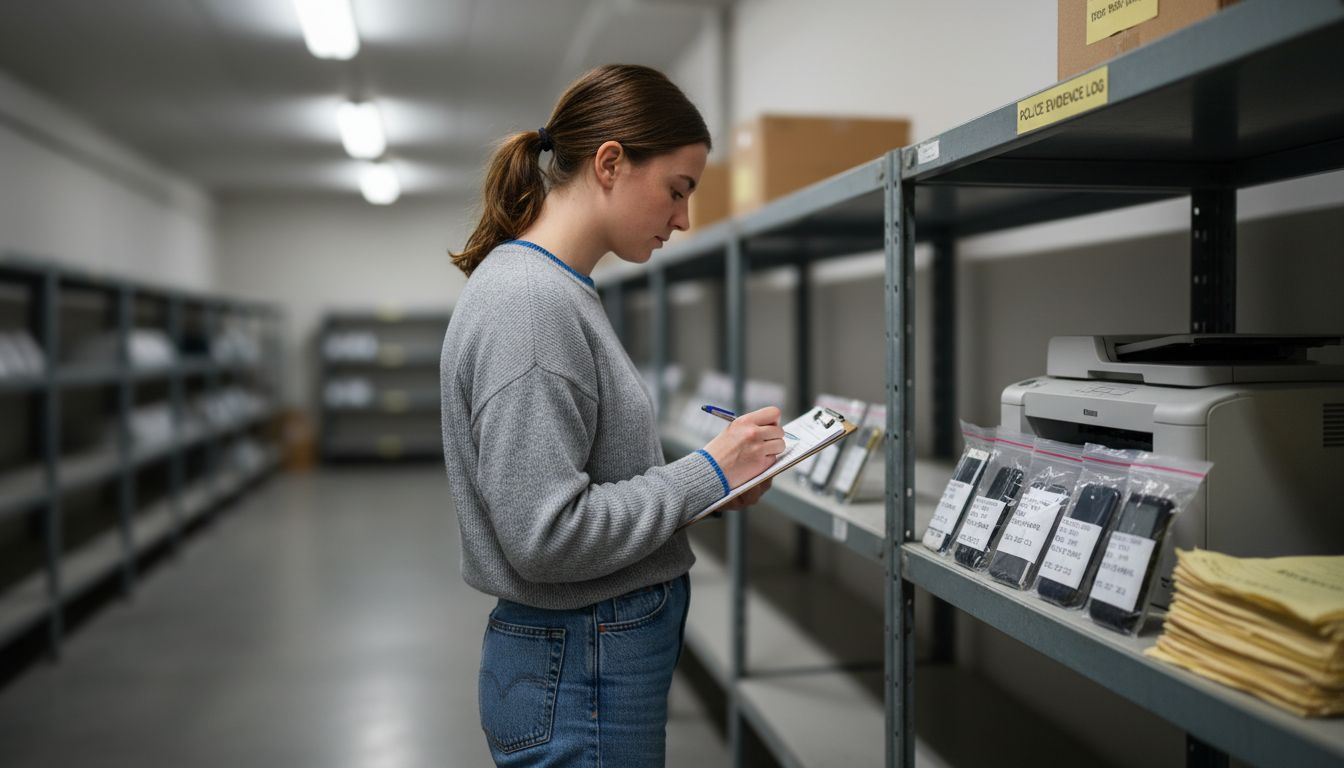
- Create a comprehensive evidence tracking log
- Record each individual handling the evidence
- Use tamper-evident evidence bags or digital signatures
- Secure evidence in controlled access environments
- Photograph and document evidence packaging
- Maintain uninterrupted documentation trail
Every interaction with digital evidence must be meticulously recorded and verifiable.
Expert recommendation: Develop a redundant documentation system that includes both physical and digital records to guarantee comprehensive evidence tracking and legal defensibility.
The table below contrasts documentation types used in each forensic process step:
| Stage | Physical Documentation | Digital Documentation |
|---|---|---|
| Device intake | Paper forms, signed evidence logs | Digital photographs, spreadsheets |
| Data extraction | Printed chain of custody sheets | Digital hash logs, extraction logs |
| Findings verification | Signed reports, annotated printouts | Electronic reports, screenshots |
Trust Expert Mobile Forensics for Reliable Legal Evidence
Navigating the complexities of mobile device analysis for legal purposes demands precise expertise and strict adherence to forensic standards such as maintaining the chain of custody and ensuring data integrity. Whether isolating devices, extracting data without contamination, or verifying digital findings, every step requires specialist skills to protect critical evidence from alteration or loss. At Computer Forensics Lab, we understand the importance of meticulous documentation and advanced forensic techniques that the article highlights, ensuring your investigative process is robust and admissible in court.
If you are seeking dependable support for your investigation, our Mobile Phone Forensic Experts are ready to assist with comprehensive device analysis, secure data extraction, and detailed forensic reporting. Discover how our experienced team can provide clarity and confidence to your digital evidence handling by visiting Mobile Phone Forensics or explore our full range of services on the Computer Forensics Lab website today. Do not risk compromising vital evidence take the first step towards legally sound mobile forensic solutions now.
Frequently Asked Questions
What steps should I follow in mobile device analysis for legal evidence?
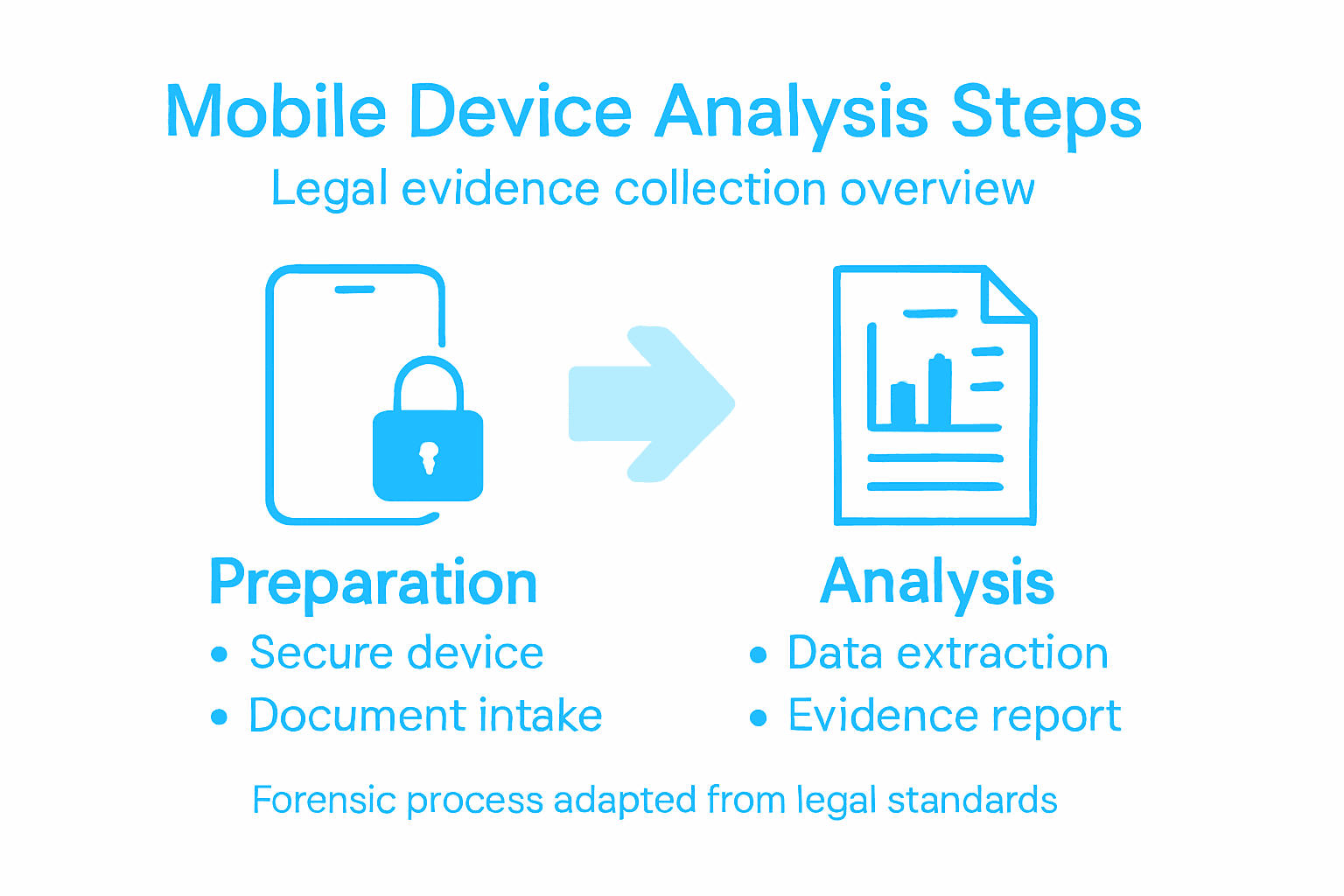
Begin with careful preparation of your forensic tools and securing devices. Follow this up by isolating the devices, extracting data, analysing contents, verifying findings, and maintaining an unbroken chain of custody.
How can I ensure the integrity of digital evidence during analysis?
To maintain evidential integrity, use write-blockers during data extraction and store evidence in secure, tamper-evident containers. Document every interaction and ensure proper handling protocols are followed throughout the process.
What is the importance of documenting the device’s condition at intake?
Documenting the device’s condition immediately upon receipt helps prevent disputes regarding the evidence’s state. Take photographs and detailed notes about visible damage or unique characteristics to create a comprehensive record.
How should I handle data extraction from a mobile device?
Connect the device to a write-blocked forensic workstation, select the appropriate extraction method, and generate a cryptographic hash of the device’s storage. Ensure to create a complete forensic image and verify its integrity before making any analysis.
Why is maintaining a chain of custody crucial in mobile forensics?
Maintaining a chain of custody is essential to prove the evidence’s authenticity and reliability in legal contexts. Keep meticulous records of who handles the evidence, when it is accessed, and ensure it is stored securely at all stages.
What are common risks in mobile device forensics and how can I mitigate them?
Common risks include unauthorised access and data contamination, which can compromise the evidence. Use Faraday bags to block signals and write-blockers to prevent data modification during the analysis process.