Most advice about CCTV forensics gets it wrong. Many British viewers believe what they see on crime dramas, expecting video footage to deliver instant answers. In truth, forensic analysis of CCTV evidence is an intricate science that demands technical skill and careful interpretation. With over 80 percent of criminal cases in the United Kingdom involving video evidence at some stage, understanding the real strengths and limits of CCTV forensics helps separate media myths from courtroom realities.
Table of Contents
- CCTV Forensics Defined and Common Misconceptions
- Types of CCTV Systems and Video Evidence
- How CCTV Evidence Is Analysed and Interpreted
- Legal Standards and Admissibility in Court
- Chain of Custody and Evidential Integrity
- Risks, Limitations, and Common Pitfalls
Key Takeaways
| Point | Details |
|---|---|
| CCTV Forensics Requires Expertise | The analysis of CCTV footage is a meticulous process that demands extensive technical knowledge and careful interpretation. |
| Understanding System Limitations | Different CCTV systems present varying capabilities and challenges that impact the evidential quality of video recordings. |
| Chain of Custody is Essential | Proper management of the chain of custody is critical to ensure the integrity and admissibility of digital evidence in legal contexts. |
| Navigating Misconceptions is Crucial | Common myths about CCTV capabilities can create investigative blind spots, highlighting the need for realistic expectations in forensic analysis. |
CCTV Forensics Defined and Common Misconceptions
CCTV forensics represents a sophisticated digital investigation technique involving systematic analysis of closed-circuit television recordings to extract critical evidence for legal proceedings. Unlike popular media portrayals, this process requires meticulous technical expertise and careful interpretation.
Contrary to widespread misconceptions, CCTV forensics is not a magical solution that instantly reveals every detail. The ‘CSI effect’ has created unrealistic expectations about forensic capabilities, leading many to believe that video evidence can always provide crystal-clear identifications and reconstructions. In reality, forensic experts must navigate numerous technical challenges:
- Varying camera quality and resolution
- Limited visibility during night-time recordings
- Potential image degradation or compression artifacts
- Complex lighting and environmental conditions
Common misconceptions about CCTV often stem from overestimating technological capabilities, such as assuming all cameras can magically produce high-definition facial recognition or zoom into minute details. Professional forensic analysts understand that each piece of video evidence requires careful, nuanced examination, considering factors like camera positioning, recording technology, and environmental constraints.
Ultimately, CCTV forensics is a precise scientific discipline that demands rigorous methodological approach, advanced technological understanding, and expert interpretation to transform raw visual data into legally admissible evidence.
Types of CCTV Systems and Video Evidence
CCTV systems represent a diverse technological landscape, ranging from basic surveillance setups to advanced digital recording platforms. These systems vary from simple configurations connecting cameras directly to monitors, to complex networked systems with digital video recorders (DVRs) or network video recorders (NVRs), each offering unique methods for capturing and preserving potential legal evidence.
The primary categories of CCTV systems include:
- Analogue Systems: Traditional cameras transmitting signals to dedicated recording devices
- IP Network Systems: Digital cameras transmitting data over computer networks
- Hybrid Systems: Combining analogue and digital camera technologies
- Wireless CCTV Systems: Utilising radio frequency transmission for camera connectivity
Each system type presents distinct advantages and challenges for forensic investigators. Analogue systems typically offer robust, straightforward recording capabilities, while IP network systems provide advanced features like remote access and higher resolution imaging. Forensic experts must carefully evaluate the specific system’s technical characteristics to ensure accurate evidence extraction and preservation.
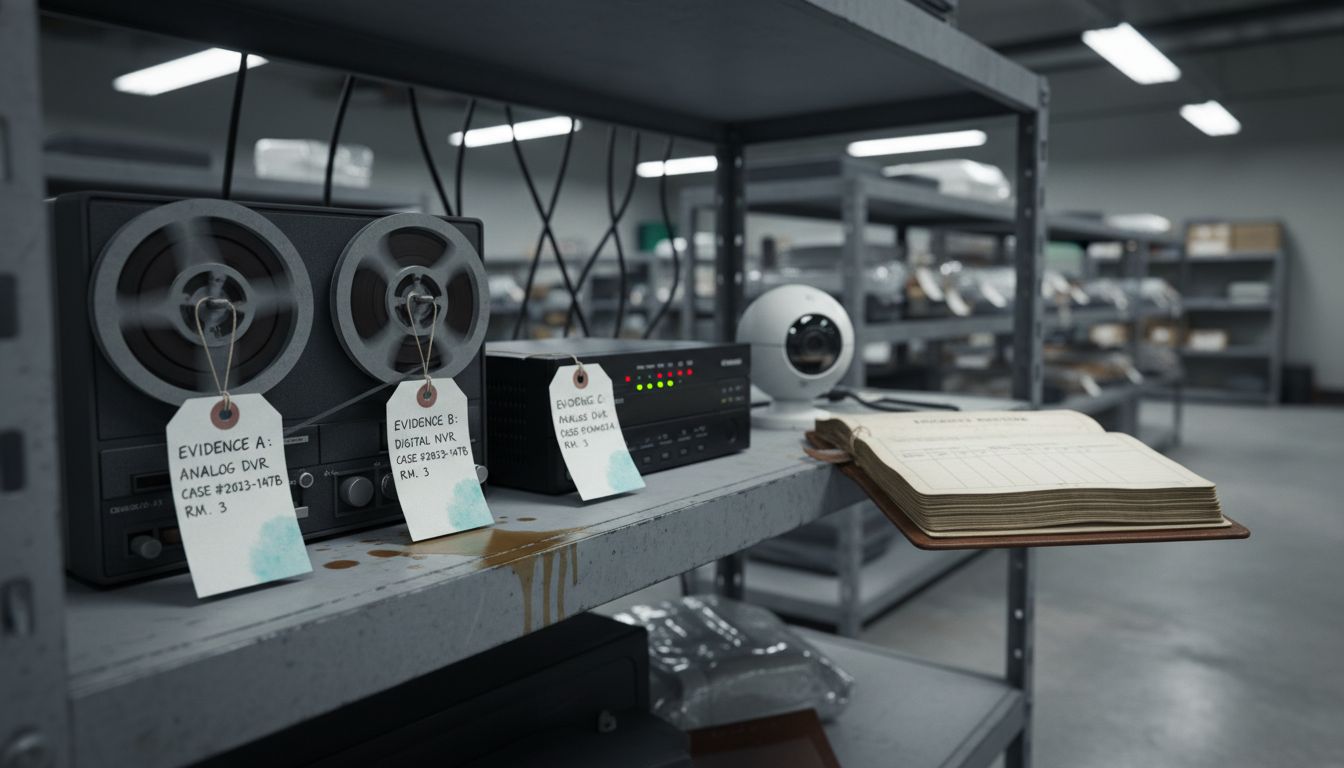
The evidential value of CCTV recordings depends not just on the system’s technological sophistication, but on meticulous handling, proper chain of custody maintenance, and expert forensic analysis. Professional investigators understand that raw video footage requires careful authentication, technical verification, and contextual interpretation to transform visual data into legally admissible evidence.
How CCTV Evidence Is Analysed and Interpreted
CCTV evidence analysis represents a sophisticated forensic discipline that transforms raw video footage into legally admissible investigative insights. Advanced deep learning techniques, such as convolutional neural networks (CNNs) and recurrent neural networks (RNNs), are now employed to analyse footage for detailed activity detection, dramatically enhancing the precision of digital investigations.
The forensic analysis process typically involves several critical stages:
- Frame-by-Frame Examination: Meticulously reviewing individual video frames
- Temporal Correlation: Understanding sequential events and their interconnections
- Image Enhancement: Improving visual clarity and reducing visual noise
- Metadata Analysis: Extracting technical information about recording conditions
Collaborative cross-camera video analytics enable more efficient interpretation by leveraging spatiotemporal correlations among multiple camera systems, allowing investigators to reconstruct comprehensive event sequences. This approach significantly improves both the accuracy and speed of video evidence interpretation, transforming fragmented visual data into coherent investigative narratives.
Ultimately, successful CCTV evidence analysis requires a delicate balance between technological sophistication and human expertise. Forensic professionals must combine advanced computational techniques with nuanced investigative skills, ensuring that digital evidence is not just technically processed, but contextually understood and legally validated.
Legal Standards and Admissibility in Court
The legal admissibility of CCTV evidence hinges on stringent forensic standards that demand meticulous documentation, authentication, and technical validation. The ‘CSI effect’ significantly influences juror expectations, potentially challenging the perceived reliability of forensic evidence, requiring forensic experts to provide comprehensive and transparent explanations of their analysis methodology.
Key criteria for CCTV evidence admissibility include:
- Chain of Custody: Demonstrating uninterrupted and documented handling of digital evidence
- Technical Integrity: Proving the original footage has not been manipulated
- Forensic Authenticity: Verifying the source and recording conditions
- Expert Witness Testimony: Providing professional interpretation of video evidence
Courts typically evaluate CCTV evidence through a rigorous assessment of its technical reliability and probative value. This involves examining the recording system’s calibration, maintenance records, camera positioning, environmental conditions, and the forensic analysis techniques employed. Forensic professionals must be prepared to explain complex technical processes in clear, accessible language that assists the court in understanding the evidence’s significance.
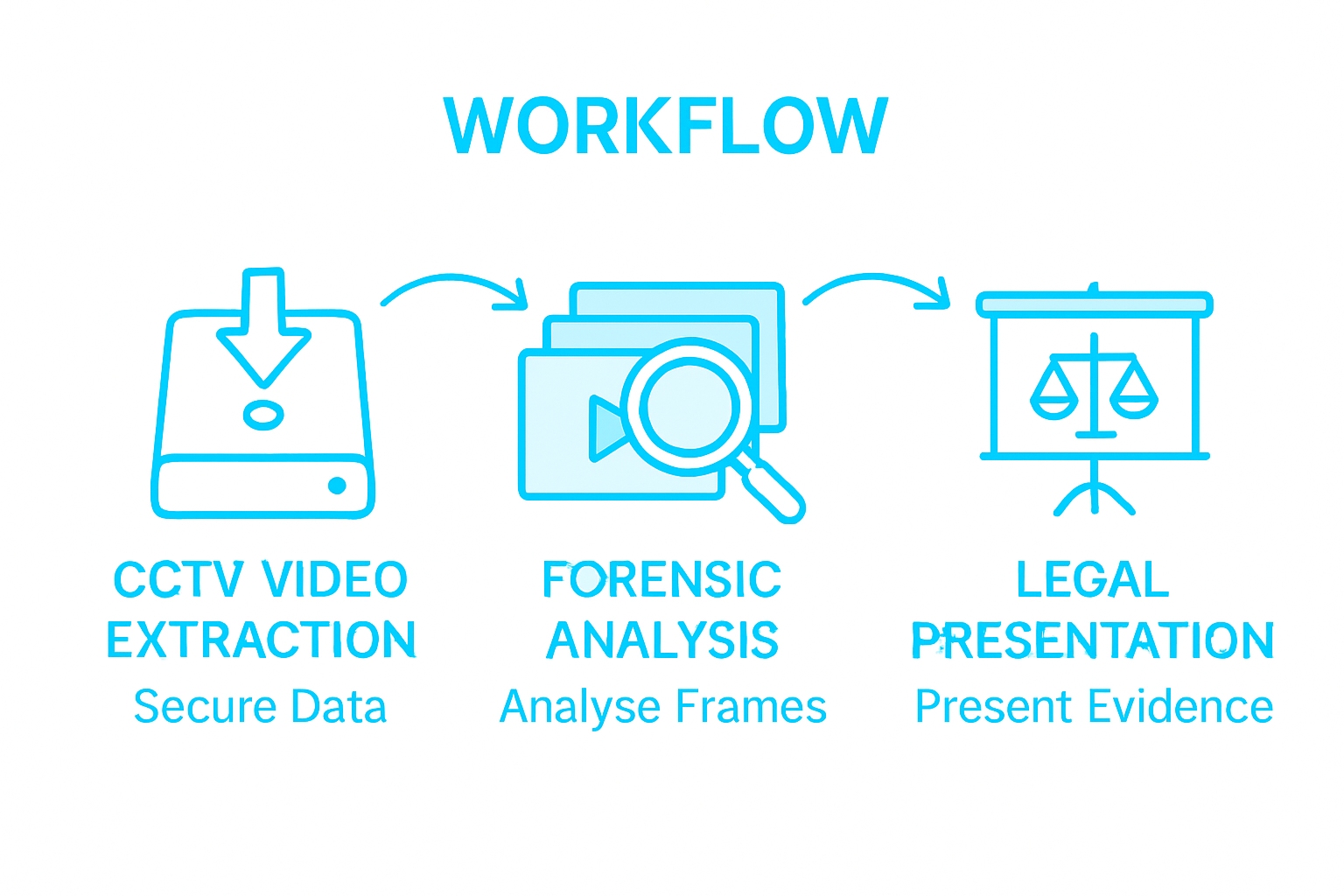
Ultimately, successful legal presentation of CCTV evidence requires a delicate balance between technological sophistication and clear, transparent communication. Forensic experts must bridge the gap between complex digital analysis and legal comprehension, ensuring that video evidence is not only technically sound but also effectively communicated within the judicial system.
Chain of Custody and Evidential Integrity
Chain of custody represents the fundamental legal mechanism ensuring the reliability and authenticity of digital evidence in forensic investigations. Maintaining a clear chain of custody for CCTV evidence is crucial, involving proper documentation and handling procedures to preserve evidential integrity for legal proceedings, with every interaction meticulously recorded and validated.
The critical components of maintaining evidential integrity include:
- Comprehensive Documentation: Recording every person who handles the evidence
- Secure Storage: Protecting digital files from potential tampering or corruption
- Strict Access Control: Limiting evidence access to authorised personnel
- Detailed Logging: Tracking all interactions, modifications, and examinations
Advanced systems like CryptoCam introduce innovative privacy-conscious approaches to CCTV, emphasising secure sharing and encryption to maintain the confidentiality and integrity of video evidence, addressing growing concerns about digital evidence manipulation. These technological safeguards provide an additional layer of protection, ensuring that forensic evidence remains untampered and legally admissible.
Ultimately, successful chain of custody management requires a combination of rigorous procedural protocols, technological sophistication, and unwavering professional integrity. Forensic experts must create an unbreakable digital trail that can withstand the most stringent legal scrutiny, transforming raw video recordings into credible, legally defensible evidence.
Risks, Limitations, and Common Pitfalls
CCTV forensic investigations require careful navigation of complex technological and legal challenges. Misconceptions about CCTV capabilities can lead to significant vulnerabilities, such as overestimating their effectiveness in challenging environmental conditions, creating potential investigative blind spots that compromise forensic analysis.
Key risks and limitations in CCTV forensics include:
- Technical Constraints: Limited resolution and visibility in poor lighting
- Perspective Limitations: Restricted camera angles reducing comprehensive coverage
- Equipment Degradation: Quality reduction over time affecting evidential reliability
- Potential Data Corruption: Risk of unintentional or deliberate evidence manipulation
Privacy concerns surrounding CCTV technologies underscore the critical need for robust protocols protecting individual rights and preventing unauthorized access to sensitive footage, highlighting the delicate balance between investigative requirements and personal privacy protections. Forensic professionals must implement stringent safeguards to mitigate potential misuse and maintain ethical standards.
Successful CCTV forensic practice demands continuous awareness of technological limitations, proactive risk management, and a nuanced understanding of both technical capabilities and legal constraints. Investigators must approach each case with critical scrutiny, recognising that video evidence is a powerful but imperfect investigative tool requiring sophisticated, contextualised interpretation.
Unlock the Full Potential of CCTV Forensics with Expert Digital Analysis
The challenges presented in CCTV forensics demand precision and expert handling from professionals who understand both the technical and legal complexities. With limitations such as video quality, evidential integrity, and strict legal standards, navigating CCTV evidence requires advanced forensic techniques and rigorous chain of custody protocols. If you are seeking to turn raw video footage into compelling, court-ready evidence, expert interpretation and secure handling are essential to overcome common pitfalls and misconceptions.
At Computer Forensics Lab, we specialise in comprehensive Audio Visual Forensics services tailored for digital investigations involving CCTV analysis and other multimedia evidence. Our experienced team ensures meticulous examination, enhancement, and authentication of video evidence while maintaining strict chain of custody and legal admissibility. Don’t let technical challenges undermine your case or investigation. Discover how our trusted digital forensic expertise can support your needs by visiting Computer Forensics Lab today and explore our full range of forensic solutions including Cloud Forensic Analysis designed to safeguard and analyse your digital evidence with the highest professional standards.
Frequently Asked Questions
What is CCTV forensics?
CCTV forensics is the systematic analysis of closed-circuit television recordings to extract evidence for legal proceedings, requiring technical expertise and careful interpretation.
How is CCTV evidence analysed?
CCTV evidence analysis involves stages such as frame-by-frame examination, image enhancement, metadata analysis, and understanding temporal correlations between events.
What are the common misconceptions about CCTV forensics?
Common misconceptions include overestimating the capabilities of CCTV technology, such as believing all cameras provide clear identifications or that video evidence can be easily interpreted without challenges.
What is the chain of custody in CCTV forensics?
The chain of custody refers to the documented process of maintaining the integrity and authenticity of digital evidence, ensuring it is securely stored and handled to prevent tampering.