
Most people are surprised to learn that nearly 90 percent of british legal cases now involve some form of digital evidence. As technology shapes modern investigations, documenting electronic data has become critical for both legal and forensic professionals. Understanding what digital evidence documentation means can make the difference between a strong case and inadmissible proof, so this article clarifies the process and reveals key standards every british investigator should know.
Table of Contents
- What Digital Evidence Documentation Means
- Types Of Digital Evidence Documentation
- Legal Requirements And Chain Of Custody
- How Documentation Supports Admissibility
- Risks Without Proper Documentation
Key Takeaways
| Point | Details |
|---|---|
| Importance of Documentation | Systematic documentation of digital evidence is essential for maintaining its integrity and admissibility in legal proceedings. |
| Types of Digital Evidence | Legal professionals must recognise various categories of digital evidence, each requiring specific documentation methods. |
| Chain of Custody | A well-maintained chain of custody is crucial for ensuring that digital evidence remains credible and unaltered throughout investigations. |
| Risks of Inadequate Documentation | Insufficient documentation can lead to legal dismissal of evidence, undermining investigative efforts and professional credibility. |
What Digital Evidence Documentation Means
Digital evidence documentation represents the systematic process of recording, preserving, and tracking electronic data that could serve as potential legal proof during investigations. According to the Organisation of American States, digital evidence encompasses “information and data of value to an investigation that is stored on, received, or transmitted by an electronic device”.
At its core, digital evidence documentation involves meticulously capturing and maintaining the integrity of electronic information. This process requires comprehensive recording of every detail surrounding the digital artefact, including its origin, collection method, chain of custody, and potential forensic analysis. Legal professionals rely on precise documentation to ensure that electronic evidence remains admissible and credible in court proceedings.
The documentation process typically involves several critical steps:
- Identifying the digital source
- Creating forensically sound bit-by-bit copies
- Maintaining a detailed log of evidence handling
- Preventing potential data contamination
- Ensuring traceability of all investigative actions
Successful digital evidence documentation demands technical expertise, rigorous protocols, and an unwavering commitment to preserving electronic data’s forensic integrity. By following structured methodologies, investigators can transform raw digital information into compelling legal evidence that withstands stringent judicial scrutiny.
Types Of Digital Evidence Documentation
Digital evidence documentation encompasses multiple distinct categories that legal professionals must understand to maintain forensic integrity. According to the Organisation of American States, these types can be broadly categorised into universal and case-specific digital evidence, ranging from internet browsing histories to specialised investigative materials.
The universal types of digital evidence typically include:
- Device Logs: System configuration records, access logs, and activity timestamps
- Communication Records: Emails, text messages, instant messaging transcripts
- Internet Browsing History: Website visits, search engine queries, downloaded content
- Financial Documentation: Transaction records, banking statements, digital payment trails
- Media Files: Images, videos, audio recordings with embedded metadata
Case-specific digital evidence requires more nuanced documentation strategies. These might involve highly sensitive materials such as potential cyber terrorism data or digital artefacts related to specific criminal investigations. Each category demands meticulous handling protocols to ensure forensic reliability and legal admissibility.
Forensic experts must apply rigorous documentation techniques across these evidence types, creating comprehensive audit trails that capture not just the content, but the complete context of digital information. By understanding the intricate landscape of digital evidence classifications, legal professionals can develop more robust investigative and prosecutorial strategies.
Legal Requirements And Chain Of Custody
Chain of custody represents a critical legal framework that ensures the integrity and admissibility of digital evidence in judicial proceedings. Forensic documentation procedures mandate comprehensive tracking of every interaction with electronic evidence, creating an unbroken chronological record that courts can trust.
Legal requirements for digital evidence documentation typically encompass several key elements:
- Detailed logging of evidence acquisition
- Comprehensive documentation of handling procedures
- Preservation of original data integrity
- Verification of forensic tool configurations
- Timestamped records of all investigative actions
- Proof of secure evidence storage and transfer
- Qualified expert witness testimonials
The fundamental principle underlying chain of custody involves creating an auditable trail that demonstrates the evidence has not been tampered with or compromised. According to the Organisation of American States, this requires recording “every action taken, such as tools used, settings, timestamps, and decisions, to support reproducibility and credibility of findings”.

Forensic professionals must meticulously document each step of evidence handling, ensuring that any potential legal challenge can be comprehensively addressed. This rigorous approach transforms digital evidence from mere electronic data into a legally defensible instrument of justice, capable of withstanding the most stringent judicial scrutiny.
How Documentation Supports Admissibility
Legal admissibility of digital evidence hinges critically on comprehensive documentation. Electronic discovery processes establish fundamental protocols for identifying, collecting, and producing electronically stored information that meets stringent judicial standards. Courts demand meticulous records that demonstrate the authenticity, reliability, and integrity of digital materials.
The key factors supporting digital evidence admissibility include:
- Provenance Verification: Establishing the original source of digital materials
- Forensic Integrity: Demonstrating no unauthorised modifications occurred
- Comprehensive Metadata: Capturing complete contextual information
- Unbroken Chain of Custody: Tracking every interaction with the evidence
- Reproducible Collection Methods: Using standardised forensic techniques
- Expert Witness Validation: Professional testimony confirming investigative procedures
According to legal standards, courts determine admissibility by rigorously assessing several critical elements. These include the evidence’s direct relevance to the case, its authentic representation of original digital files, and strict compliance with the best evidence rule. Forensic experts must therefore create documentation that not only preserves digital evidence but also anticipates potential legal challenges, transforming raw electronic data into a credible and compelling legal instrument.
Ultimately, robust documentation acts as a critical bridge between technical digital investigation and legal proceedings, ensuring that electronic evidence can effectively communicate its investigative insights within the structured environment of judicial review.
Risks Without Proper Documentation
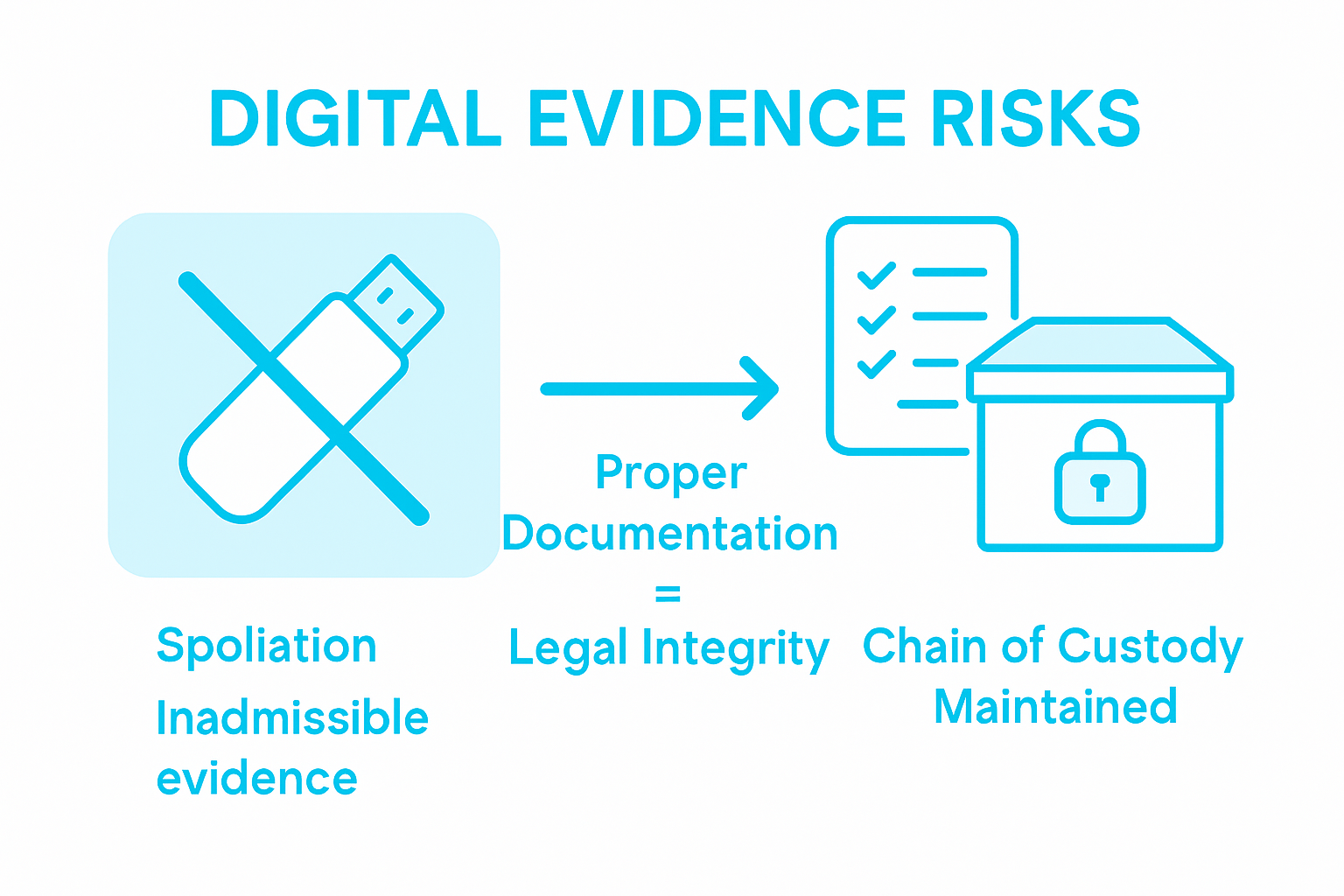
Insufficient digital evidence documentation can catastrophically undermine entire legal proceedings. Digital evidence can be ruled inadmissible when forensic professionals fail to maintain rigorous documentation standards, potentially destroying the credibility of critical investigative findings.
The primary risks associated with inadequate documentation include:
- Legal Dismissal: Complete exclusion of digital evidence from court proceedings
- Investigative Invalidation: Rendering months of forensic work potentially worthless
- Professional Liability: Potential disciplinary actions against forensic experts
- Procedural Sanctions: Potential legal penalties for improper evidence handling
- Reputational Damage: Loss of professional credibility and trust
- Case Compromise: Potential collapse of criminal or civil litigation
Electronic discovery failures can lead to devastating consequences known as spoliation, where evidence becomes inadvertently altered or destroyed. This risk extends beyond simple procedural errors, potentially creating irreparable damage to legal strategies and institutional reputation. Forensic professionals must recognise that documentation is not merely a bureaucratic exercise, but a fundamental protective mechanism that safeguards the integrity of judicial processes.
Without meticulous documentation, digital evidence transforms from a potential instrument of justice into an unreliable and potentially dangerous liability. The stakes are high: a single documentation error can unravel complex investigations, compromise legal proceedings, and erode the foundational principles of forensic digital evidence collection.
Secure Your Legal Success with Expert Digital Evidence Documentation
The challenge of maintaining legal integrity through flawless digital evidence documentation cannot be underestimated. Without meticulous preservation of the chain of custody and forensic soundness, crucial evidence risks rejection in court, potentially compromising entire investigations. If you are looking to safeguard your case with precise handling of electronic evidence including device logs, communication records, or internet browsing histories, then specialised support is essential.
At Computer Forensics Lab, we understand the critical need for comprehensive and trustworthy digital evidence handling. Our team provides advanced Digital Evidence Preservation solutions designed to protect the authenticity and admissibility of your data. Combined with expert services in Electronic Evidence analysis and documentation, we help legal professionals, law enforcement, and businesses build ironclad cases through expert forensic processes.
Do not risk the consequences of inadequate documentation. Contact us today at Computer Forensics Lab to ensure your digital evidence withstands the highest legal scrutiny and supports your pursuit of justice.
Frequently Asked Questions
What is digital evidence documentation?
Digital evidence documentation is the systematic process of recording, preserving, and tracking electronic data that may serve as legal proof during investigations. It involves meticulously capturing the details surrounding digital evidence to maintain its integrity.
Why is documentation of digital evidence important for legal cases?
Proper documentation ensures that digital evidence is admissible in court by preserving its authenticity, reliability, and integrity. Without comprehensive documentation, evidence can be ruled inadmissible, jeopardising the outcome of legal proceedings.
What are the risks of inadequate digital evidence documentation?
Insufficient documentation can lead to legal dismissal of evidence, rendering investigative work worthless, possible professional liability for forensic experts, and loss of reputational credibility. It can also compromise the integrity of the entire legal case.
What elements are essential for maintaining the chain of custody for digital evidence?
Key elements include detailed logging of evidence acquisition, thorough documentation of handling procedures, preservation of the original data integrity, and timestamped records tracking every interaction with the evidence.
Recommended
- Essential Digital Evidence Preservation Methods for 2025
- Role of Digital Evidence – Impact on Modern Investigations
- Complete Guide to Digital Forensics Chain of Custody
- Understanding Why Digital Document Authentication Matters in Court
- My Insights into the Google Document Leak – Paul Baguley
- Understanding Similarity Search The Core of AI Document Retrieval
- IRS Audit Survival Guide: Step-by-Step Defense Tactics – Unique Solutions to IRS Tax Problems