

More than sixty percent of British businesses report a rise in sophisticated cyber attacks every year, putting both sensitive data and company reputations at risk. For cybersecurity professionals and legal consultants in London, digging into the complexities of cyber investigations is now a critical part of keeping corporate clients safe and compliant. This overview explains how digital investigations now demand a mix of technical skill and legal expertise to respond effectively when a breach occurs.
Table of Contents
- Defining Cyber Investigations And Core Purposes
- Major Threats And When To Investigate
- Legal Duties And Compliance Imperatives
- Value Of Digital Evidence In Litigation
- Risks, Pitfalls, And Best Practice Approaches
Key Takeaways
| Point | Details |
|---|---|
| Importance of Cyber Investigations | Cyber investigations require a multi-disciplinary approach that integrates technical, legal, and forensic expertise to address digital security threats effectively. |
| Emerging Cyber Threats | Ransomware and advanced persistent threats are among the most significant modern cyber threats, necessitating tailored investigative strategies. |
| Legal and Compliance Challenges | Cyber investigations must adhere to international legal standards and rigorous evidence handling protocols to maintain the integrity and admissibility of digital evidence. |
| Best Practices for Investigations | Implementing comprehensive training and robust documentation processes is essential for minimising risks and enhancing the reliability of digital forensic evidence. |
Defining Cyber Investigations And Core Purposes
Cyber investigations represent a sophisticated, multi-disciplinary approach to understanding and addressing digital security threats. Comprehensive surveys reveal these investigations have evolved from simple forensic techniques to complex, integrated processes that span technical, legal, and investigative domains. Digital forensics now requires professionals to navigate intricate technological landscapes while maintaining rigorous evidence collection standards.
At their core, cyber investigations serve multiple critical purposes. These include identifying digital perpetrators, preserving electronic evidence, understanding attack methodologies, and preventing future security breaches. Modern cybercrime investigation frameworks emphasise the need for interdisciplinary expertise that combines technological skills with legal understanding. Investigators must now seamlessly integrate technical analysis, legal compliance, and forensic documentation to build comprehensive case portfolios.
The scope of cyber investigations extends far beyond traditional computer forensics. These examinations now encompass mobile devices, cloud platforms, social media records, and complex network infrastructures. Professionals must track digital footprints across multiple platforms, reconstruct incident timelines, and provide forensically sound evidence that can withstand legal scrutiny. This requires advanced technical skills, meticulous documentation, and an understanding of both technological vulnerabilities and legal requirements.
To clarify the scope of cyber investigations, here is a comparison of digital evidence sources and typical challenges encountered:
| Evidence Source | Investigation Challenge | Required Expertise |
|---|---|---|
| Mobile Devices | Encryption obstacles | Mobile forensics, encryption |
| Cloud Platforms | Cross-jurisdictional data access | Cloud technologies, legal |
| Social Media Records | Data authenticity verification | Social media forensics |
| Network Infrastructures | Complex data reconstruction | Network analysis, systems |
Pro tip: Always maintain a strict chain of digital evidence custody and document every step of your forensic investigation to ensure legal admissibility and investigative credibility.
Major Threats And When To Investigate
Global cybercrime trends demonstrate an increasingly complex landscape of digital threats that demand sophisticated investigative approaches. Modern cyber threats have evolved dramatically, moving beyond simple malware and phishing attempts to become highly sophisticated, multi-layered attacks. Ransomware, advanced persistent threats (APTs), and state-sponsored cyber intrusions now represent the most critical challenges for digital security professionals.
Comprehensive academic research reveals that organisations should initiate cyber investigations under several key circumstances. These include detecting unusual network activities, experiencing unexpected data access or modifications, identifying potential financial irregularities, and recognising patterns of systematic information breaches. Financial institutions, government agencies, and large corporate entities must maintain vigilant monitoring systems that can quickly detect and escalate potential security incidents.

The most prevalent cyber threats currently include sophisticated ransomware campaigns, targeted phishing operations, supply chain attacks, and AI-driven intrusion attempts. Each threat category requires a nuanced investigation approach, combining technical forensics, legal documentation, and strategic response protocols. Cybersecurity teams must develop adaptive investigation frameworks that can rapidly assess, contain, and analyse potential security breaches across diverse technological environments.
Here is a summary of major cyber threats and tailored investigative approaches for each:
| Threat Type | Key Indicators | Investigation Focus |
|---|---|---|
| Ransomware | Sudden data encryption | Malware tracing, payment tracking |
| Advanced Persistent Threats | Lingering unauthorised access | Intrusion analysis, attribution |
| Supply Chain Attacks | Compromised third parties | Vendor forensics, network review |
| AI-driven Intrusions | Unusual automation patterns | Algorithm analysis, anomaly detection |
Pro tip: Develop a standardised incident response protocol that outlines clear triggers for launching a formal cyber investigation, ensuring your team can react swiftly and systematically to potential security threats.
Legal Duties And Compliance Imperatives
Legal and ethical obligations for cyber investigators represent a complex framework of procedural requirements that extend far beyond traditional investigative approaches. Cyber investigations now demand rigorous adherence to international data protection standards, strict evidence handling protocols, and comprehensive documentation of every investigative action. Professionals must navigate intricate legal landscapes that balance technological capabilities with fundamental human rights protections.
Global regulatory requirements for cyber investigations have become increasingly sophisticated, presenting multinational organisations with substantial compliance challenges. Different jurisdictions impose unique reporting timelines, evidence preservation mandates, and cross-border investigation protocols. Financial institutions, technology companies, and government agencies must develop adaptive compliance strategies that can rapidly respond to diverse legal frameworks while maintaining the integrity of their investigative processes.
Key compliance imperatives include maintaining chain of evidence documentation, protecting individual privacy rights, ensuring data handling meets international legal standards, and providing transparent reporting mechanisms. Investigators must meticulously record every digital forensic action, preserve original evidence in its unaltered state, and create forensically sound documentation that can withstand potential legal scrutiny. This requires not just technical expertise, but a deep understanding of legal principles across multiple jurisdictional boundaries.
Pro tip: Develop a comprehensive compliance checklist that documents every investigative step, ensuring your digital forensic processes remain legally defensible and ethically sound across different jurisdictional requirements.
Value Of Digital Evidence In Litigation
Contemporary legal research demonstrates that digital evidence has become a transformative element in modern litigation processes. Digital forensic evidence now plays a critical role in determining case outcomes, offering unprecedented insights that traditional evidence collection methods cannot match. Courts increasingly recognise the sophisticated analytical capabilities that enable precise reconstruction of digital interactions, communications, and potential criminal activities.
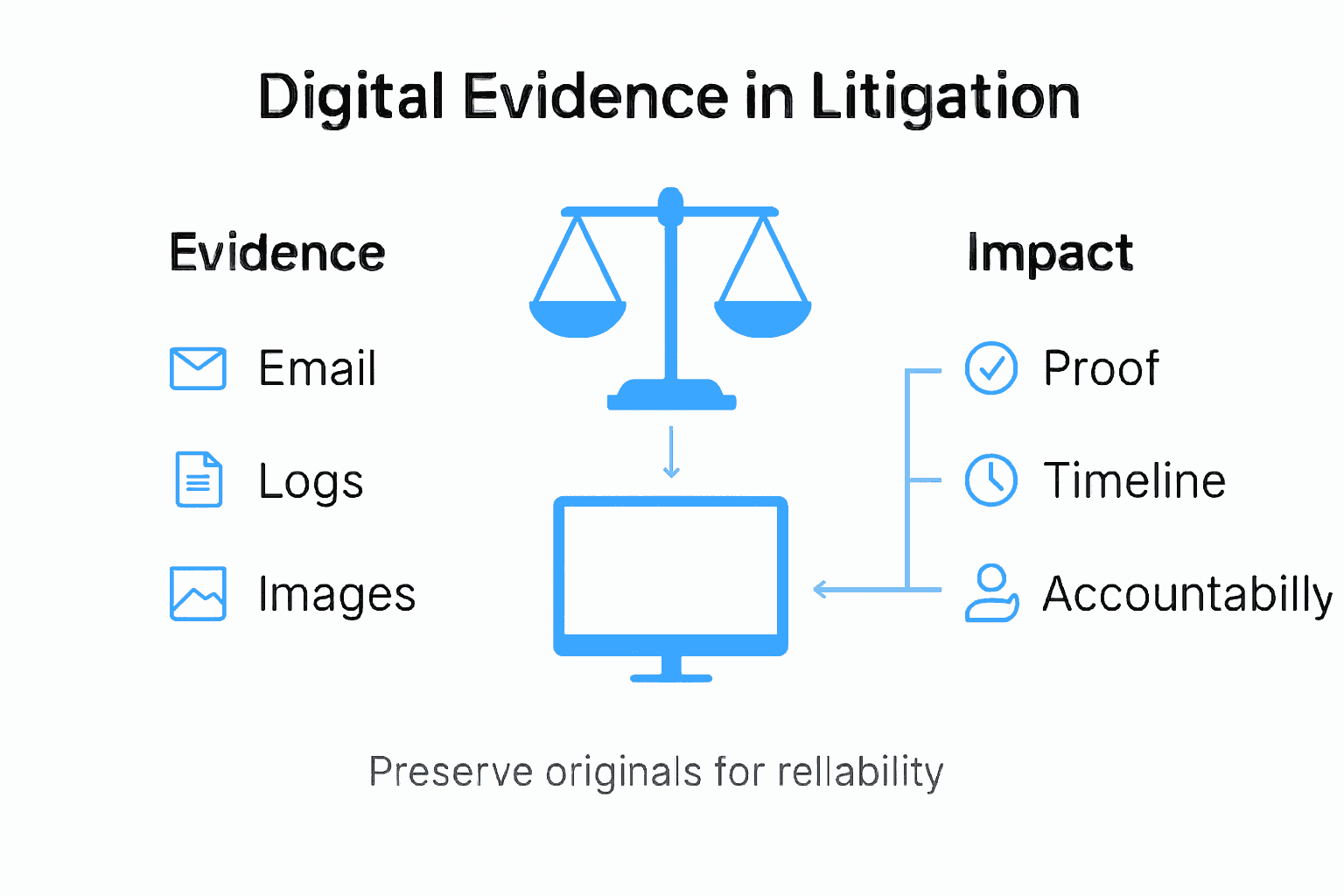

Doctoral research into digital evidence standards highlights the complex challenges of integrating technological evidence within legal frameworks. Investigators must navigate intricate authentication processes, ensuring that digital evidence meets rigorous admissibility criteria. This requires maintaining an impeccable chain of custody, implementing forensically sound collection methodologies, and providing transparent documentation that can withstand intense legal scrutiny across different judicial systems.
The value of digital evidence extends beyond criminal proceedings, proving crucial in civil litigation, corporate investigations, and intellectual property disputes. Electronic records, metadata, communication logs, and system timestamps can provide objective, time-stamped insights that human testimony cannot replicate. Sophisticated digital forensic techniques allow legal professionals to uncover hidden patterns, reconstruct event sequences, and establish factual timelines with remarkable precision and reliability.
Pro tip: Always preserve original digital evidence in its unaltered state and document every step of the forensic collection process to ensure maximum legal credibility and admissibility.
Risks, Pitfalls, And Best Practice Approaches
Europol and Eurojust investigative research reveals significant challenges that can compromise digital forensic investigations. Cybercrime investigations face complex risks including massive data volumes, encryption barriers, legal uncertainties, and international jurisdictional complications. Professionals must develop sophisticated strategies to navigate these intricate technological and legal landscapes, ensuring the integrity and admissibility of digital evidence.
Key risks in cyber investigations include potential evidence contamination, chain of custody breaches, technological complexity, and rapidly evolving digital environments. Investigators must implement rigorous protocols to mitigate these challenges, such as maintaining forensically sound collection methods, using validated forensic tools, and documenting every investigative action with meticulous precision. The dynamic nature of digital technologies demands continuous adaptation of investigative techniques and an understanding of emerging technological vulnerabilities.
Best practice approaches for cyber investigations encompass comprehensive training, standardised methodological frameworks, and interdisciplinary collaboration. Successful digital forensic professionals must blend technical expertise with legal understanding, maintaining a holistic approach that considers technological capabilities, ethical considerations, and legal requirements. This involves developing robust documentation processes, employing advanced forensic techniques, and staying current with emerging technological and legal developments in the digital investigation landscape.
Pro tip: Develop a comprehensive digital forensics checklist that includes technical validation, legal compliance checks, and systematic documentation protocols to minimise investigative risks and enhance evidence reliability.
Ensure Your Cyber Investigations Deliver Actionable Results
The rising complexity of cyber threats means organisations and individuals face escalating challenges in preserving digital evidence, tracking sophisticated attacks like ransomware or advanced persistent threats, and maintaining legal compliance throughout investigations. The article highlights the critical need for specialised skills in data recovery, malware analysis, and meticulous documentation to uphold the chain of custody and deliver legally defensible outcomes. Failing to address these pain points risks compromised investigations, lost evidence, and weakened litigation positions.
At Computer Forensics Lab, we understand these challenges. Our expert team offers comprehensive Digital Forensic Investigation services designed to uncover hidden digital footprints across devices, cloud platforms, and social media. Whether you face hacking incidents or complex cybercrime scenarios, our bespoke Hacking Investigation expertise ensures thorough analysis and reliable evidence collection. Acting promptly is essential to preserving vital digital clues. Visit Computer Forensics Lab today to secure professional support that strengthens your cyber investigation from start to finish and safeguards your legal and cybersecurity interests.
Frequently Asked Questions
What are the core purposes of conducting cyber investigations?
Cyber investigations aim to identify digital perpetrators, preserve electronic evidence, understand attack methodologies, and prevent future security breaches.
What are the major threats that necessitate cyber investigations?
Major threats include ransomware, advanced persistent threats (APTs), supply chain attacks, and AI-driven intrusions, each requiring tailored investigative approaches to effectively address.
Why is legal compliance important in cyber investigations?
Legal compliance is crucial in cyber investigations to ensure adherence to data protection standards, maintain chain of custody, and protect individual privacy rights, which ultimately supports the admissibility of evidence in court.
How can digital evidence impact legal proceedings?
Digital evidence plays a transformative role in legal proceedings by providing objective, time-stamped insights that can uncover hidden patterns, reconstruct event sequences, and establish factual timelines more reliably than traditional evidence methods.