

Cybercrime legal cases in British courts demand rigorous evidence handling at every step. Even a minor lapse during early collection can put critical data at risk and affect court outcomes. For digital forensic specialists in London law firms, understanding each stage—from scene control to detailed chain of custody—is non-negotiable. This guide presents tested techniques that strengthen forensic integrity and help you meet both British legal standards and international best practices. Over 90 percent of digital evidence challenges arise from preventable missteps in the initial response.
Table of Contents
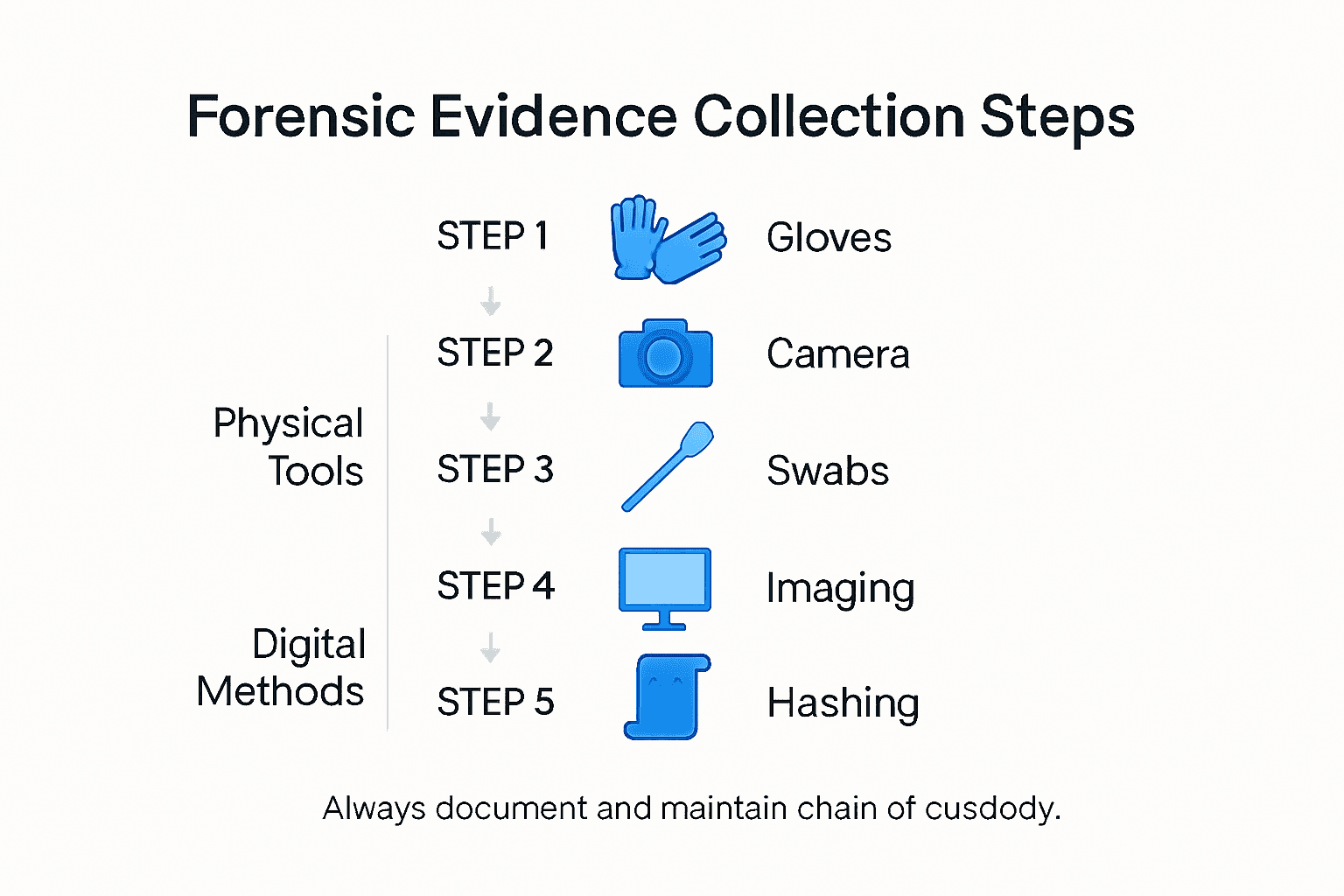
- Step 1: Prepare Forensic Tools And Secure The Scene
- Step 2: Identify And Preserve Potential Digital Evidence
- Step 3: Collect Data Using Approved Forensic Methods
- Step 4: Document Procedures And Maintain Chain Of Custody
- Step 5: Validate Integrity And Analyse Gathered Evidence
Quick Summary
| Key Point | Explanation |
|---|---|
| 1. Use protective equipment diligently | Always wear forensic-grade gloves, shoe covers, and disposable overalls to prevent contamination at the crime scene. |
| 2. Take meticulous documentation | Record every aspect of the scene with high-resolution photography and detailed logs before moving any evidence. |
| 3. Preserve digital evidence carefully | Identify and document all electronic devices, powering them down to prevent data loss and ensure proper evidence recovery. |
| 4. Maintain a strict chain of custody | Document every interaction with evidence, noting times and personnel to establish trustworthiness and integrity of collected data. |
| 5. Validate evidence integrity rigorously | Use cryptographic hash values to confirm that digital evidence remains unchanged and document all verification processes in detail. |
Step 1: Prepare forensic tools and secure the scene
Criminal investigations demand precise preparation and methodical evidence preservation. Your primary objective in this stage is establishing a controlled forensic environment where potential evidence remains uncompromised.
Begin by selecting appropriate protective equipment including forensic-grade gloves, shoe covers, disposable overalls, and sealed evidence collection kits. International forensic best practices recommend meticulous planning before entering any potential crime scene. Establish a strict perimeter using physical barriers or crime scene tape, restricting access to authorised personnel only. Document the initial scene condition using high-resolution photography and detailed written observations, capturing everything before any movement or interaction occurs.
Prioritise scene protection by minimising foot traffic and potential contamination. Each team member must follow strict protocols designed to preserve forensic integrity. Maintain a comprehensive log recording everyone who enters the scene, their role, and precise entry and exit times. Use clean, sterile equipment for evidence collection and store samples in sealed, labelled containers to prevent cross-contamination.
Expert Advice: Always carry multiple evidence collection kits and backup documentation tools to prevent unexpected interruptions during critical forensic documentation.
Here’s a summary of essential forensic preservation tools and their purpose:
| Tool Type | Function | Importance in Forensics |
|---|---|---|
| Protective gloves | Prevents evidence contamination | Maintains sample integrity |
| Shoe covers | Reduces scene contamination | Protects all physical evidence |
| Disposable overalls | Shields clothing from contamination | Preserves forensic environment |
| Sealed collection kits | Stores items safely and securely | Prevents cross-contamination |
| High-resolution camera | Captures scene details | Assists accurate documentation |
Step 2: Identify and preserve potential digital evidence
Forensic investigators must swiftly and systematically identify digital devices that could contain critical evidence during legal investigations. Your primary goal involves recognising potential information sources while maintaining absolute evidentiary integrity.
Carefully survey the scene for electronic devices including computers, smartphones, tablets, external hard drives, and network equipment. Global digital forensics standards recommend prioritising volatile digital storage based on potential information value and risk of data loss. Begin by documenting each device’s location, connection status, and initial condition through detailed photographs and written logs. Handle devices with extreme caution using anti static bags and protective equipment to prevent electrical discharge or physical damage.

Each digital item requires meticulous preservation techniques. Power down devices carefully to prevent automatic updates or data alterations. Create forensic disk images using write blockers that prevent any modification of original data. Seal and label each piece of evidence with unique identifiers, recording chain of custody documentation. Maintain strict security protocols preventing unauthorised access or potential contamination of digital evidence.
Expert Advice: Always work with a duplicate forensic image rather than original digital media to protect potential evidence from accidental modification.
Step 3: Collect data using approved forensic methods
Forensic data collection requires precision, methodical approach, and strict adherence to internationally recognised protocols. Your objective is extracting digital evidence systematically while maintaining its legal admissibility and evidential integrity.
Standardised forensic collection techniques demand careful tool selection and meticulous documentation. Begin by creating forensically sound bitstream images of digital storage devices using write blockers that prevent any accidental data modification. These specialised tools ensure bit-perfect copies of entire storage media without altering original content. Document each device’s characteristics including serial numbers, storage capacity, file systems, and initial configuration before extraction.
Ensure comprehensive evidence collection by extracting data from multiple sources comprehensively. This includes volatile memory snapshots, hard drive contents, cloud storage artefacts, network logs, and email archives. Use forensically validated software that generates cryptographically signed hash values proving the authenticity and unaltered state of collected evidence. Maintain detailed logs recording every action taken during the collection process including timestamps, examiner details, and specific methodologies employed.

Expert Advice: Always generate multiple forensic copies of digital evidence and store them in separate secure locations to prevent potential data loss.
Step 4: Document procedures and maintain chain of custody
Documenting forensic procedures is a critical process that ensures the legal admissibility and credibility of collected evidence. Your primary objective involves creating a comprehensive and transparent record of every interaction with potential evidence.
Comprehensive chain of custody documentation requires meticulous attention to detail and systematic record keeping. Create a detailed log that tracks each piece of evidence from initial collection through analysis and potential court presentation. This documentation must include specific information such as date and time of collection, collection location, identifying details of the evidence, names of all personnel handling the evidence, and the purpose of each interaction.
Each transfer of evidence must be explicitly recorded with signatures from individuals involved, creating an unbroken timeline that demonstrates the evidence has not been tampered with or compromised. Use standardised chain of custody forms that include fields for each handler’s credentials, contact information, and a precise description of their actions. Implement secure evidence storage protocols that restrict access and require documented authorisation for any interactions. Digital evidence requires additional documentation of forensic imaging processes, including hash values and verification methods that prove the original data remains unchanged.
Expert Advice: Always photograph and document the evidence packaging and seal immediately after collection to provide additional verification of its original condition.
Step 5: Validate integrity and analyse gathered evidence
Forensic evidence validation represents the critical bridge between raw data collection and legal admissibility. Your primary objective is to ensure that every piece of collected digital evidence maintains its original integrity and can withstand rigorous scientific scrutiny.
Systematic evidence validation protocols require comprehensive verification techniques. Begin by generating cryptographic hash values for all digital evidence using multiple standardised algorithms such as MD5, SHA1, and SHA256. Compare these hash values across different forensic tools to confirm consistency and eliminate potential data corruption. Create detailed analytical reports documenting the verification process, including timestamps, tool specifications, and precise methodology used during evidence examination.
Compare key digital evidence validation algorithms and their typical forensic application:
| Algorithm | Typical Use Case | Strengths | Common Limitation |
|---|---|---|---|
| MD5 | Quick data checks | Fast and widely supported | Vulnerable to collisions |
| SHA1 | Forensic imaging | Improved security over MD5 | Increasingly deprecated |
| SHA256 | Evidence authentication | Highly robust and secure | Slower performance |
Develop a structured approach to analysing digital evidence that includes systematic file recovery, metadata examination, and cross referencing different data sources. Reconstruct digital timelines by correlating timestamps from various artefacts, identifying potential anomalies or intentional data modifications. Employ forensic analysis software capable of performing in depth examinations of file systems, recovering deleted content, and extracting hidden metadata. Your analysis must be transparent, reproducible, and capable of withstanding potential legal challenges.
Expert Advice: Always document your analytical methodology in sufficient detail that another forensic expert could independently replicate your entire examination process.
Secure Your Legal Case with Expert Digital Forensics Support
Gathering forensic evidence for legal cases requires precision and expert handling to maintain the integrity and legal admissibility of the digital proof. If you are facing challenges in preserving the chain of custody, collecting uncontaminated electronic evidence, or performing thorough digital forensic investigations you are not alone. The complex nature of digital devices and the need for methodical documentation can make this process daunting especially when every detail matters in court.
At Computer Forensics Lab we specialise in comprehensive Digital Forensic Investigation and Digital Evidence Preservation services designed to meet the rigorous standards outlined in your article. Our London-based experts deploy proven forensic techniques for data recovery, forensic imaging, and detailed analysis while ensuring strict adherence to chain of custody protocols. Do not risk compromising your case by relying on unverified methods. Visit Computer Forensics Lab today to safeguard your digital evidence and gain the confidence that your legal investigation is supported by trusted professionals.
Contact us now to take the next step towards securing your forensic data with precision and care.
Frequently Asked Questions
What are the initial steps to prepare for gathering forensic evidence in legal cases?
Start by selecting appropriate protective equipment, such as forensic-grade gloves and sealed evidence collection kits. Establish a controlled forensic environment by restricting access to authorised personnel and documenting the initial scene condition using high-resolution photography and detailed notes.
How do I identify and preserve potential digital evidence in a legal investigation?
Carefully survey the scene for electronic devices like computers and smartphones. Document each device’s location and condition, power them down safely, and create forensic disk images using write blockers to maintain data integrity before sealing and labelling all evidence.
What approved methods should I use to collect data during a forensic investigation?
Utilise standardised tools to create forensically sound bitstream images of storage devices. Extract data from various sources systematically, ensuring that you document every action to maintain the data’s legal admissibility and evidential integrity.
How do I maintain a proper chain of custody for collected forensic evidence?
Create detailed logs that track each piece of evidence from the moment of collection through analysis. Ensure each transfer is documented with signatures, including date, time, and names of the personnel involved, to maintain an unbroken timeline of evidence handling.
What steps should I take to validate the integrity of gathered forensic evidence?
Generate cryptographic hash values for all digital evidence to ensure its original integrity during analysis. Document the verification process with detailed analytical reports, so the methodology can withstand scrutiny and prove the evidence remains unaltered.
How can I ensure that my forensic procedures are legally admissible in court?
Meticulously document every step taken during the evidence collection and analysis processes, including detailed logs and records of methodologies. Ensure that all actions are reproducible and transparent, which will help establish the credibility and admissibility of the evidence in legal proceedings.