

Digital forensic analysts in London are confronting a wave of powerful technologies that demand fresh expertise in 2025. Artificial intelligence and quantum computing are reshaping how evidence is gathered and interpreted, raising the bar for both speed and precision across complex investigations. With the rapid evolution of cyber threats and the growing use of cloud and IoT devices, staying ahead means understanding AI-driven analysis and mastering new legal and ethical expectations that increasingly define modern forensic work.
Table of Contents
- Digital Forensics In 2025 Explained
- AI, Automation, And Evolving Threats
- Cloud And IoT Evidence Challenges
- Emerging Legal Standards And Compliance
- Investigator Responsibilities And Key Risks
Key Takeaways
| Point | Details |
|---|---|
| Emerging Technologies | By 2025, integration of Artificial Intelligence and Quantum Computing will revolutionise digital forensics, enhancing evidence analysis and recovery. |
| Legal and Ethical Frameworks | Researchers must navigate complex legal landscapes and ensure compliance with evolving regulations while maintaining ethical standards in investigations. |
| Continuous Professional Development | Forensic professionals should commit to ongoing training and skill updates to keep pace with technological advancements and emergent challenges. |
| Adaptability in Investigation | Investigators must develop flexible methodologies to address the diverse challenges presented by Cloud and IoT environments. |
Digital Forensics in 2025 Explained
The landscape of digital forensics is undergoing a radical transformation, driven by advanced technologies like artificial intelligence and quantum computing. By 2025, these innovations will fundamentally reshape how investigators analyse and recover digital evidence across complex technological environments.
Key developments in digital forensics will centre around three primary domains:
- Artificial Intelligence Integration: Machine learning algorithms capable of processing massive datasets with unprecedented speed and accuracy
- Quantum Computing Capabilities: Advanced cryptographic analysis and enhanced data recovery techniques
- Enhanced Risk Management: Proactive approaches to identifying and mitigating digital security threats
Quantum technologies are particularly promising, with potential to revolutionise forensic investigations through accelerated cryptographic analysis. These systems can break through complex encryption barriers that currently limit investigative capabilities, enabling forensic experts to uncover critical evidence more efficiently.
Legal and ethical considerations remain paramount in this technological evolution. Forensic professionals must balance technological capabilities with robust legal frameworks, ensuring that advanced investigative techniques adhere to strict evidentiary standards and privacy regulations.
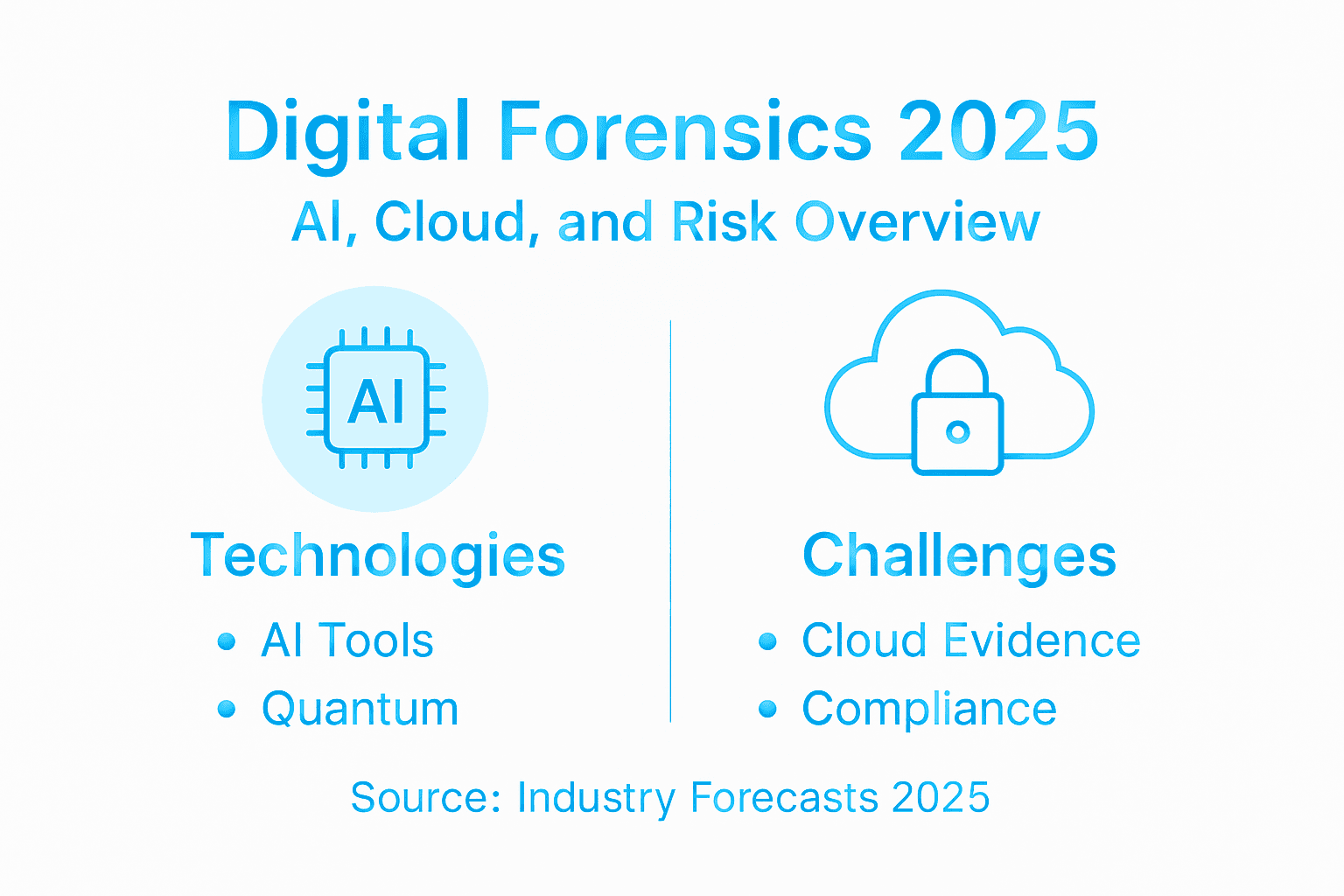

Pro Tip: Invest in continuous professional development to stay ahead of emerging digital forensics technologies and methodological advances.
Here’s a concise summary of how emerging technologies will reshape digital forensics by 2025:
| Technology | Key Impact | Business Benefit |
|---|---|---|
| Artificial Intelligence | Accelerates data analysis and threat identification | Reduces investigation costs and timelines |
| Quantum Computing | Breaks complex encryption, secures advanced data recovery | Unlocks previously inaccessible evidence |
| IoT and Cloud Computing | Introduces fragmented evidence environments | Expands scope for investigations and risk forecasting |
| Machine Learning | Offers predictive insights and enhances pattern recognition | Improves precision in threat detection |
AI, Automation, and Evolving Threats
The digital forensics landscape is experiencing a profound transformation, driven by artificial intelligence’s unprecedented capabilities to analyse complex cybersecurity challenges. Advanced machine learning techniques are reshaping how investigators approach digital evidence collection and threat detection.
Key capabilities of AI in digital forensics include:
- Automated Pattern Recognition: Identifying hidden connections within massive datasets
- Predictive Threat Analysis: Anticipating potential cyber vulnerabilities before they are exploited
- Anomaly Detection: Highlighting suspicious activities that might escape human observation
- Rapid Evidence Processing: Accelerating investigative timelines by orders of magnitude
Machine learning algorithms now enable forensic professionals to manage increasingly sophisticated cyber threats with unprecedented precision. These systems go beyond traditional automation by providing contextual intelligence and nuanced threat assessments.
AI does not replace human investigators but significantly augments their analytical capabilities, transforming how digital evidence is interpreted and understood.
However, the integration of AI into digital forensics is not without challenges. Ethical considerations and potential algorithmic biases remain critical concerns that demand rigorous oversight and transparent methodological frameworks.
Pro Tip: Develop a comprehensive understanding of machine learning principles to effectively leverage AI tools in digital forensic investigations.
Cloud and IoT Evidence Challenges
Digital forensics is confronting unprecedented complexity with the proliferation of cloud and Internet of Things (IoT) technologies. Emerging forensic challenges demand sophisticated approaches to evidence collection and preservation across increasingly fragmented technological landscapes.
Key challenges in cloud and IoT forensic investigations include:
- Device Heterogeneity: Investigating across diverse technological platforms and architectures
- Data Dispersal: Managing evidence spread across multiple cloud storage environments
- Jurisdictional Complexity: Navigating legal boundaries in cross-border data retrieval
- Limited Device Resources: Working within constrained computational capabilities of IoT devices
The intricate nature of modern digital ecosystems presents significant obstacles for forensic professionals. Continuous device connectivity, encryption protocols, and varied provider policies create substantial barriers to comprehensive digital evidence collection.
Successful cloud and IoT forensic investigations require adaptive methodologies that can navigate technological diversity and legal constraints.
Investigators must develop sophisticated techniques that transcend traditional forensic approaches, incorporating advanced technological understanding and legal expertise to effectively extract and analyse digital evidence in increasingly complex technological environments.
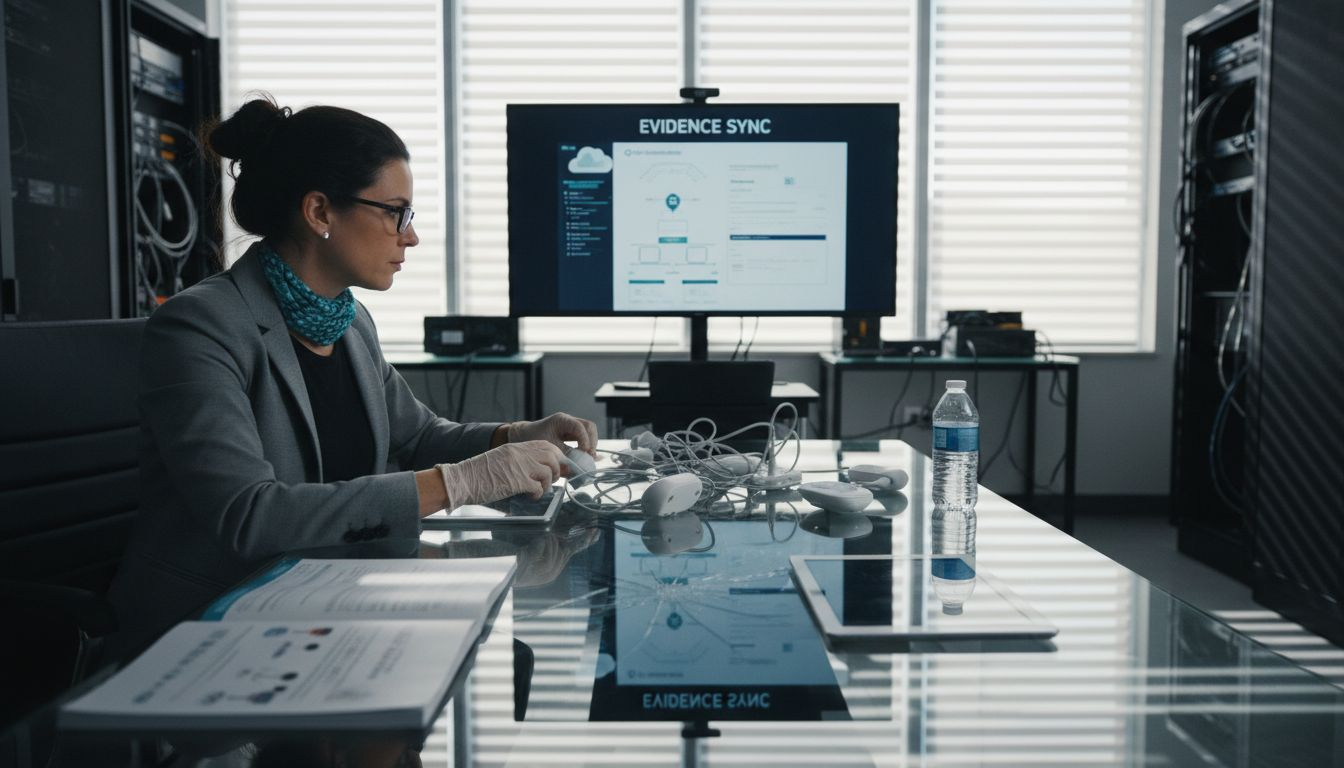
Pro Tip: Develop a comprehensive understanding of multi-platform forensic techniques to effectively investigate evidence across cloud and IoT environments.
The following table compares the major challenges faced in cloud and IoT forensics with traditional digital investigations:
| Challenge Type | Cloud/IoT Forensics | Traditional Forensics |
|---|---|---|
| Evidence Location | Dispersed across platforms | Usually stored locally |
| Device Diversity | High (varied architectures) | Standardised hardware |
| Legal Complexity | Cross-jurisdictional barriers | Primarily single jurisdiction |
| Resource Constraints | Limited by device capability | Typically full access to resources |
Emerging Legal Standards and Compliance
The digital forensics landscape is experiencing a profound transformation in legal and regulatory frameworks. Global legal harmonisation efforts are critically reshaping how investigators approach digital evidence collection and preservation across international boundaries.
Key emerging legal standards encompass several critical domains:
- Privacy Protection: Ensuring individual rights are maintained during digital investigations
- Cross-Jurisdictional Compliance: Developing consistent standards for international digital evidence handling
- Data Integrity Protocols: Establishing rigorous chain of custody documentation
- Ethical Evidence Collection: Creating transparent frameworks for digital forensic practices
Modern digital forensic investigations must navigate increasingly complex legal landscapes, balancing technological capabilities with stringent regulatory requirements. Investigators are now required to demonstrate not just technical proficiency, but also comprehensive understanding of evolving legal frameworks.
Successful digital forensic practices demand a delicate balance between technological innovation and legal accountability.
The global nature of cybercrime necessitates collaborative approaches to legal standardisation, with regulations like GDPR and emerging international frameworks providing critical guidance for digital evidence collection and analysis.
Pro Tip: Continuously update your legal knowledge and maintain meticulous documentation to ensure forensic evidence remains admissible across diverse jurisdictional environments.
Investigator Responsibilities and Key Risks
Digital forensic investigators operate in an increasingly complex technological landscape with profound legal and ethical responsibilities. Critical investigative protocols demand extraordinary precision and comprehensive understanding of technical and legal challenges.
Key investigator responsibilities encompass:
- Evidence Preservation: Maintaining forensically sound data collection techniques
- Ethical Conduct: Ensuring transparent and unbiased investigative processes
- Technical Proficiency: Mastering advanced forensic tools and methodologies
- Legal Compliance: Adhering to stringent jurisdictional requirements
- Continuous Learning: Updating skills to match rapidly evolving cyber threats
The stakes for digital forensic professionals have never been higher. Investigators must navigate intricate technical landscapes while maintaining rigorous documentation standards that can withstand intense legal scrutiny.
Forensic investigators are the critical bridge between complex digital evidence and legal accountability.
Technical competence alone is insufficient. Modern investigators must possess a sophisticated blend of technological expertise, legal knowledge, and ethical understanding to effectively support complex digital investigations.
Pro Tip: Develop a comprehensive professional development strategy that integrates technical training, legal updates, and ethical guidelines to maintain investigative excellence.
Stay Ahead with Expert Digital Forensics Solutions
As digital forensic trends like AI integration, cloud complexities and rising cyber risks reshape investigations in 2025, challenges such as evidence dispersal, encryption barriers and legal compliance intensify. If you are seeking to overcome these hurdles and ensure thorough digital evidence collection and analysis, Computer Forensics Lab offers expert support tailored to these evolving demands. Our team specialises in advanced techniques including data recovery, malware analysis and cloud forensics to help uncover critical evidence swiftly and securely.
Discover how our Digital Forensics Examination services can empower your investigations with cutting-edge methods and legal adherence. For corporate needs involving complex cyber threats and data breaches, explore our Corporate Forensic Investigations to safeguard your assets and reputation. Don’t let emerging trends outpace your capabilities. Take decisive action today by visiting Computer Forensics Lab and connect with experts ready to support your next investigation.
Frequently Asked Questions
What impact will artificial intelligence have on digital forensics by 2025?
AI will significantly accelerate data analysis, enhance threat identification, and improve anomaly detection in digital forensics, enabling investigators to manage cyber threats with greater precision and efficiency.
How does quantum computing influence digital forensic investigations?
Quantum computing can breach complex encryption barriers, thereby revolutionising forensic investigations. It enhances data recovery techniques and facilitates access to critical evidence that was previously inaccessible.
What are the key challenges in investigating cloud and IoT evidence?
Challenges in cloud and IoT forensic investigations include device heterogeneity, data dispersal across multiple platforms, jurisdictional complexities in data retrieval, and limited resources on IoT devices.
What responsibilities do digital forensic investigators have in 2025?
Investigators must ensure evidence preservation, ethical conduct, technical proficiency, legal compliance, and continuous learning to navigate the rapidly evolving landscape of digital forensics.