

A cyber incident can escalate rapidly, turning controlled digital operations in a London law firm into a scene of confusion and potential legal peril. For British cybersecurity professionals, understanding the demands of a structured response is vital to both limit damage and preserve crucial evidence. This overview highlights how a well-configured incident response strategy not only mitigates technical threats but also addresses the complex legal consequences of data breaches, setting your firm on a more secure and resilient path.
Table of Contents
- Cyber Incident Response Defined and Debunked
- Key Stages and Methodologies in Practice
- Evidence Preservation and Chain of Custody
- Legal Duties and Regulatory Requirements
- Risks, Liabilities and Common Pitfalls
Key Takeaways
| Point | Details |
|---|---|
| Structured Approach | Effective cyber incident response requires a systematic framework, transforming reactive responses into proactive problem-solving. |
| Cross-Disciplinary Collaboration | Legal and cybersecurity professionals must work together to ensure comprehensive management of threats and compliance with legal obligations. |
| Evidence Preservation | Maintaining a robust chain of custody is crucial for the admissibility of digital evidence in legal contexts, necessitating meticulous documentation. |
| Continuous Improvement | Regular risk assessments and training simulations are vital to adapt strategies, enhancing organisational resilience against evolving threats. |
Cyber Incident Response Defined and Debunked
Cyber incident response represents a structured strategic approach for managing digital security threats and breaches within organisational environments. Comprehensive incident management requires understanding multiple complex dimensions beyond simple technical remediation.
The fundamental framework for cyber incident response involves several critical stages that transform reactive panic into systematic problem-solving. These stages typically include:
- Detection: Identifying potential security breaches or anomalous system behaviours
- Containment: Limiting the immediate spread and impact of the identified threat
- Eradication: Removing the underlying cause or malicious element
- Recovery: Restoring systems to full operational capacity
- Lessons Learned: Documenting insights to prevent future similar incidents
Incident response goes far beyond simple technical troubleshooting. Organized cybersecurity approaches demand cross-team coordination, precise communication protocols, and meticulous documentation.
Professional incident response teams must rapidly assess situations while maintaining rigorous documentation standards. This means capturing comprehensive logs, understanding attack vectors, and developing strategic mitigation plans that address both immediate risks and long-term systemic vulnerabilities.
Effective incident response transforms potential catastrophic breaches into manageable, learnable experiences that incrementally improve organisational cyber resilience.
Successful cyber incident response requires a blend of technical expertise, strategic thinking, and calm decision-making under pressure. Legal professionals and cybersecurity experts must work collaboratively to ensure comprehensive threat management.
Pro tip: Develop a pre-approved incident response playbook that outlines clear escalation procedures, communication channels, and decision-making protocols before a crisis emerges.
Key Stages and Methodologies in Practice
Cyber incident response demands a systematic approach that transforms potential chaos into structured problem-solving. Comprehensive incident methodologies require organisations to develop robust, repeatable processes that can be activated swiftly during critical security events.
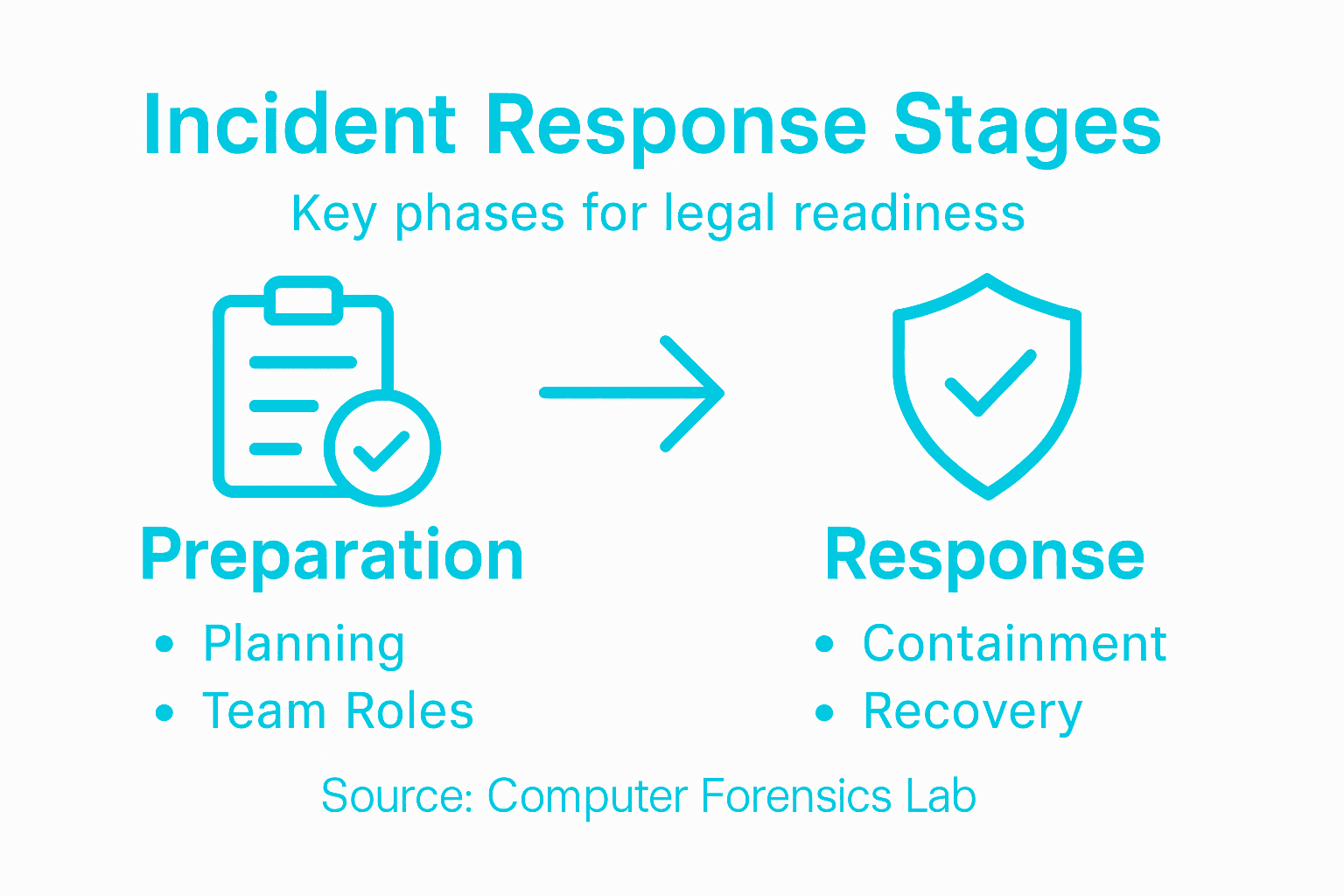
The standard cyber incident response lifecycle typically encompasses several interconnected stages:
- Preparation: Developing infrastructure, tools, and team readiness
- Detection: Identifying and verifying potential security incidents
- Analysis: Investigating the scope, impact, and characteristics of the threat
- Containment: Limiting the immediate spread and potential damage
- Eradication: Completely removing the threat from systems
- Recovery: Restoring normal operational capabilities
- Post-Incident Review: Documenting insights and improving future responses
Strategic methodologies require more than technical checklists. Federal incident response playbooks emphasise the importance of coordinated team approaches that integrate technical expertise with strategic thinking.
Professional incident response teams must develop adaptable frameworks that can quickly pivot between different incident types. This requires continuous training, scenario simulation, and regular updates to response protocols. Effective teams understand that each incident is unique and demands nuanced, flexible approaches.
Successful incident response is less about perfect execution and more about rapid, informed decision-making under uncertain conditions.
Communication plays a critical role in effective incident response. Teams must establish clear communication channels, define precise roles and responsibilities, and maintain transparent reporting mechanisms that keep stakeholders informed without causing unnecessary panic.
Pro tip: Conduct quarterly tabletop exercises that simulate diverse cyber incident scenarios to test and refine your response methodologies.
Evidence Preservation and Chain of Custody
In legal proceedings involving cyber incidents, evidence preservation becomes a critical foundation for establishing credibility and supporting potential litigation. Rigorous evidence collection protocols are essential to maintain the integrity and admissibility of digital evidence in court.
The chain of custody represents a meticulous documentation process that tracks digital evidence from initial discovery through analysis and potential legal presentation. Key components of maintaining a robust chain of custody include:
- Immediate Preservation: Securing digital evidence immediately upon discovery
- Comprehensive Documentation: Recording every action, transfer, and modification
- Secure Storage: Protecting evidence from potential contamination or tampering
- Detailed Logging: Maintaining a comprehensive audit trail of evidence handling
- Forensic Imaging: Creating exact, verifiable copies of original digital materials
Forensic experts must adhere to strict incident response standards.pdf) that ensure the scientific and legal validity of digital evidence. This involves implementing sophisticated techniques to prevent evidence degradation or potential challenges to its authenticity.
The legal implications of poor evidence handling can be catastrophic. A broken chain of custody can render potentially crucial digital evidence inadmissible, potentially undermining entire legal strategies. Forensic professionals must treat each piece of digital evidence as a critical legal document, understanding that even minor procedural lapses can compromise an entire investigation.
Digital evidence is fragile. One misstep can transform potentially damning proof into legal inadmissibility.
Multidisciplinary collaboration becomes paramount in these scenarios. Legal teams, cybersecurity professionals, and forensic experts must work in seamless coordination, ensuring that technical collection methods align perfectly with legal evidentiary standards.

Pro tip: Develop a standardised evidence handling protocol that includes immediate forensic imaging and creates multiple authenticated copies to protect against potential data loss or contamination.
Legal Duties and Regulatory Requirements
Cyber incident response intersects critically with complex legal and regulatory landscapes that demand meticulous attention. Comprehensive incident response policies must navigate intricate compliance requirements that vary across different sectors and jurisdictions.
Organisations face multiple layers of legal obligations when managing cyber incidents, which typically include:
- Mandatory Reporting: Disclosing security breaches within specified timeframes
- Data Protection: Safeguarding sensitive information during incident management
- Regulatory Compliance: Adhering to industry-specific legal standards
- Documentation: Maintaining comprehensive records of incident response activities
- Notification Requirements: Informing affected parties about potential data compromises
Legal frameworks impose stringent responsibilities on organisations, requiring them to demonstrate proactive risk management and transparent incident handling. These regulations are not mere bureaucratic exercises but critical mechanisms for protecting stakeholder interests and maintaining organisational accountability.
The consequences of non-compliance can be severe, potentially resulting in substantial financial penalties, reputational damage, and legal liabilities. Forensic professionals must therefore develop a nuanced understanding of relevant legislation, ensuring that their incident response strategies align with both technical best practices and legal requirements.
Regulatory compliance is not a destination, but a continuous journey of adaptation and vigilance.
Multidisciplinary collaboration becomes essential, with legal experts, cybersecurity professionals, and compliance officers working in close coordination to develop robust response strategies that meet complex regulatory standards.
To clarify the differences between evidence handling and legal compliance, see this comparison table:
| Area | Evidence Preservation | Regulatory Compliance |
|---|---|---|
| Primary Objective | Maintain authenticity of digital evidence | Meet statutory reporting and protection standards |
| Who is responsible? | Forensic specialists and IT teams | Legal counsel and compliance officers |
| Key Process | Chain of custody and secure storage | Mandatory notifications and data protection |
| Consequence of failure | Evidence inadmissible in court | Heavy fines or reputational harm |
| Collaboration | Cross-disciplinary (forensics, legal) | Multidisciplinary (legal, cybersecurity, compliance) |
Pro tip: Develop a cross-functional incident response team that includes legal counsel to ensure immediate regulatory compliance during cyber incidents.
Risks, Liabilities and Common Pitfalls
In cyber incident response, understanding potential risks and vulnerabilities becomes paramount for legal and operational survival. Comprehensive risk assessment strategies are critical in identifying and mitigating potential threats before they escalate into complex legal challenges.
The most prevalent risks and liabilities in cyber incident response encompass multiple interconnected domains:
- Operational Disruption: Extended system downtime and productivity losses
- Financial Exposure: Potential monetary penalties and legal settlements
- Reputational Damage: Loss of stakeholder trust and market credibility
- Regulatory Scrutiny: Increased compliance investigations and potential sanctions
- Legal Vulnerability: Potential litigation from affected parties
Incident management demands proactive approaches that anticipate potential pitfalls. The most common mistakes organisations make include underestimating incident severity, neglecting continuous improvement, and failing to develop comprehensive response protocols.
Legal liabilities can emerge from multiple vectors, ranging from inadequate data protection to insufficient incident documentation. Forensic professionals must meticulously record every action, ensuring transparency and demonstrating due diligence throughout the incident response process.
Legal and technical risks are two sides of the same coin – neglecting either can lead to catastrophic consequences.
Effective risk management requires continuous learning, regular training, and a proactive approach to identifying potential vulnerabilities before they become critical threats. Organisations must develop adaptive, flexible response frameworks that can evolve with changing technological and legal landscapes.
For a concise overview of typical risks and mitigation strategies, explore the table below:
| Risk Area | Example Impact | Mitigation Strategy |
|---|---|---|
| Operational | Lost productivity, prolonged outages | Maintain robust backups and response plans |
| Financial | Penalties, litigation costs | Secure cyber insurance and document all actions |
| Reputational | Loss of customer trust | Transparent communication and stakeholder management |
| Regulatory | Increased scrutiny or sanctions | Continuous compliance reviews and staff training |
Pro tip: Conduct quarterly risk assessments and simulate complex incident scenarios to identify and address potential vulnerabilities before they become critical challenges.
Strengthen Your Legal Case with Expert Cyber Incident Response
Cyber incident response plays a pivotal role in legal cases by ensuring digital evidence is preserved with an unbroken chain of custody while meeting stringent regulatory demands. If your organisation faces challenges such as evidence preservation, regulatory compliance, or needs rapid containment and analysis of a cyber incident, understanding these complexities is essential. This article highlights how professional handling of cyber incidents transforms overwhelming crises into manageable and legally defendable situations.
At Computer Forensics Lab, we specialise in delivering comprehensive digital forensic services that support legal professionals and businesses through every stage of cyber incident response. From meticulous evidence collection in Cybersecurity Forensics to actionable intelligence gathered via our Cyber Threat Intelligence capabilities, we ensure your digital investigations meet rigorous forensic and legal standards. Don’t leave critical digital evidence to chance. Contact us today at Computer Forensics Lab to safeguard your investigations and strengthen your legal position.
Frequently Asked Questions
What is cyber incident response?
Cyber incident response is a structured approach for managing security threats and breaches within an organisation’s digital environment, involving stages like detection, containment, eradication, recovery, and learning from the incident.
Why is evidence preservation important in cyber incident response?
Evidence preservation is crucial in legal cases as it helps maintain the integrity and admissibility of digital evidence in court. Proper protocols ensure that critical data is securely documented and handled.
What are the key stages of cyber incident response?
The key stages include preparation, detection, analysis, containment, eradication, recovery, and post-incident review, all of which are vital for effective management of and learning from security incidents.

How can organisations ensure regulatory compliance during a cyber incident?
Organisations can ensure regulatory compliance by developing comprehensive incident response policies that cover mandatory reporting, data protection, and maintaining detailed documentation of incident handling processes.
Recommended
- What Does Incident Response Mean in A Legal Context?
- Incident Response Step by Step for Effective Investigations
- Why Conduct Cyber Investigations Matters Most
- 7 Key Examples of Cybercrime Evidence Law Firms Must Know
- Why Staying Silent Is Still the Best Legal Advice in 2025 – Hickory Attorneys for Family Law, Criminal Defense, & Estate Planning | King & Rowe