
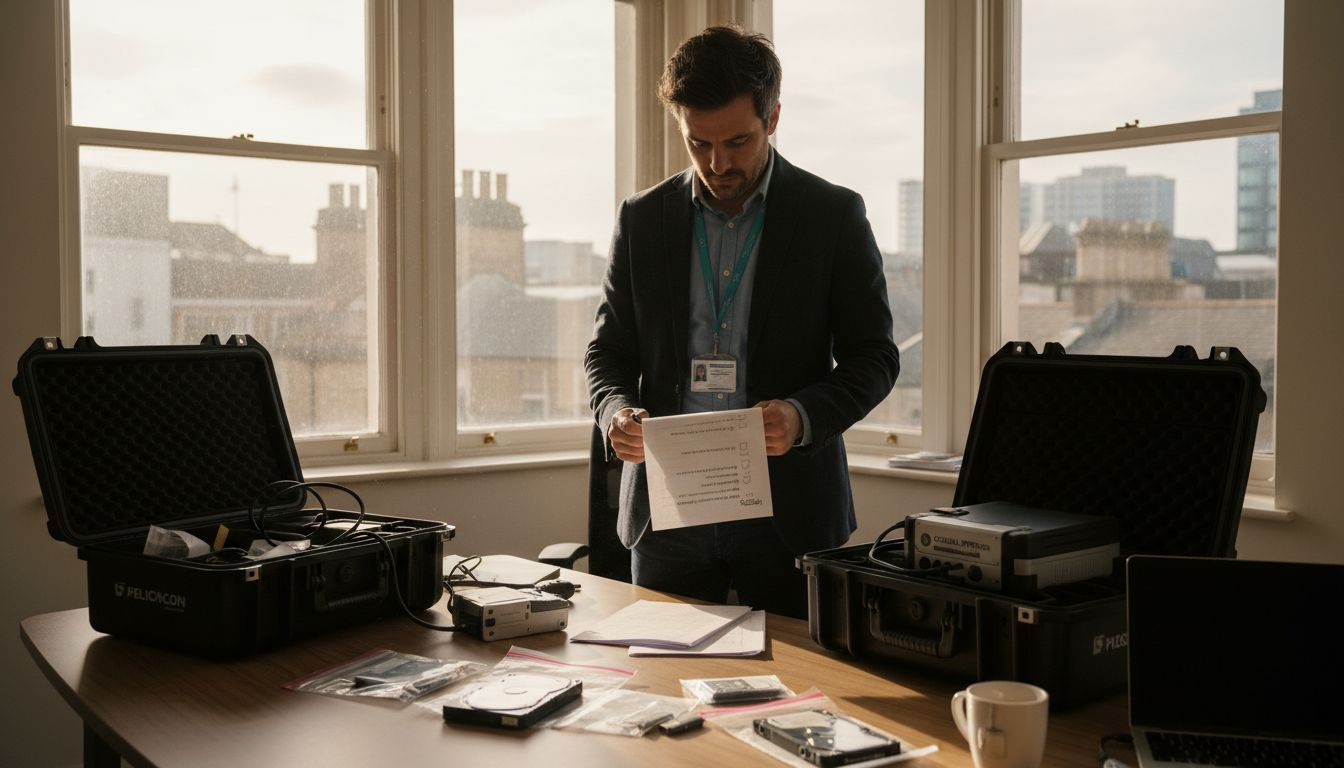
Digital evidence collection determines whether your investigation succeeds or fails in court. Every device you handle, every file you access, and every transfer you document can either strengthen your case or render crucial evidence inadmissible. Legal professionals and law enforcement officers face mounting pressure to collect digital evidence that withstands rigorous judicial scrutiny whilst navigating increasingly complex technological landscapes. This guide walks you through the essential steps in evidence collection for digital investigations, from initial preparation through final verification, ensuring your evidence maintains integrity and legal admissibility throughout the entire investigative process.
Table of Contents
- Defining Scope And Preparing For Evidence Collection
- Documenting And Securing Devices For Integrity Preservation
- Maintaining Chain Of Custody Throughout The Investigation
- Verifying Evidence Integrity And Preparing For Analysis
- Discover Expert Digital Forensics Services For Your Investigations
- What Are The Essential Steps In Digital Evidence Collection?
Key takeaways
| Point | Details |
|---|---|
| Define scope first | Clear investigative objectives limit data collection scope and focus resources effectively |
| Document everything | Detailed inventory and chain of custody records ensure evidence admissibility |
| Secure devices properly | Minimal handling with tamper-evident seals preserves data integrity |
| Verify with hashes | Cryptographic verification confirms evidence remains unchanged throughout analysis |
| Maintain strict custody | Every transfer must be logged with authorised signatures for legal validity |
Defining scope and preparing for evidence collection
Successful digital evidence collection starts with carefully defining your investigative scope and strategically preparing your devices. Before touching any hardware, you must establish clear investigative objectives that guide your entire collection process. What specific questions does your investigation seek to answer? Which devices potentially hold relevant evidence? Defining these parameters prevents unnecessary data collection and focuses your resources on material that directly supports your case.
Preparing forensic tools ensures you capture evidence without alteration. Your toolkit should include write blockers to prevent accidental data modification, forensically sound imaging software, and verified storage media. Each tool must be tested and validated before deployment. You cannot afford equipment failures during critical evidence collection moments.
Personnel training forms another crucial preparatory element. Everyone involved in evidence collection for digital investigations must understand their specific roles and responsibilities. Conduct briefings that cover legal requirements, technical procedures, and documentation standards. Your team needs to recognise potential evidence sources beyond obvious devices, including routers, smart home systems, and cloud services.
Legal considerations must be addressed before collection begins. Verify you have proper authorisation through warrants, consent forms, or corporate policies. Understanding jurisdictional requirements prevents evidence exclusion based on procedural violations. Different legal frameworks apply to corporate investigations versus criminal cases, so consult with legal counsel to ensure compliance.
Create a comprehensive equipment checklist covering forensic workstations, imaging devices, cables, adapters, evidence bags, and documentation forms. Include backup power supplies and portable lighting for field collections. Missing a single adapter can delay evidence collection and potentially compromise device states.
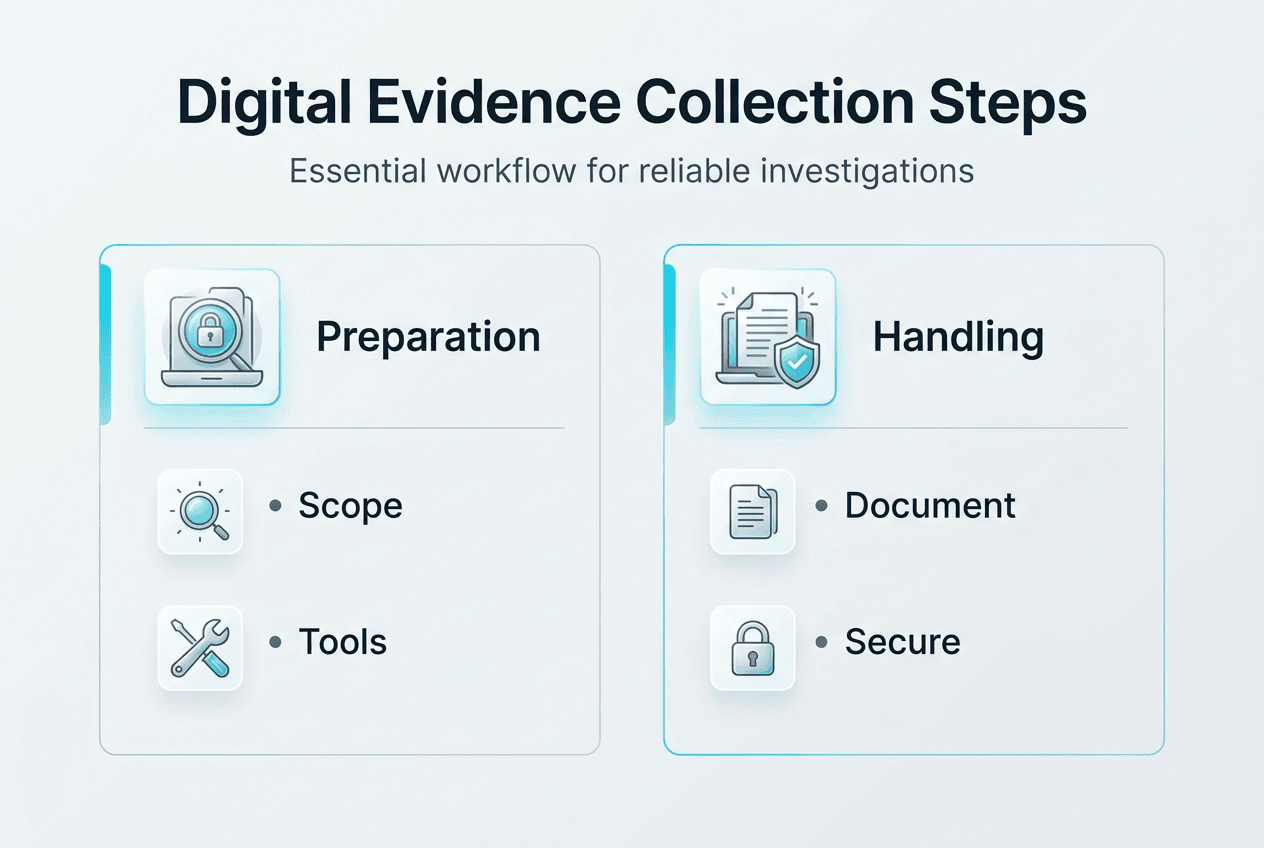

Pro tip: Photograph your prepared equipment kit before each collection to verify completeness and create a visual record of your professional setup.
Documenting and securing devices for integrity preservation
Before touching any device, create a detailed inventory documenting each item’s make, model, and serial number. This initial documentation establishes the foundation for your entire chain of custody. Record visible damage, connected peripherals, and power states. Your inventory should capture enough detail that someone unfamiliar with the case could identify each device months later in court testimony.
Photographic documentation provides visual evidence of device conditions and locations. Take wide shots showing the device in context, medium shots revealing connections and surroundings, and close-ups capturing serial numbers and unique identifiers. These images prove invaluable when opposing counsel questions your collection methods or device handling.
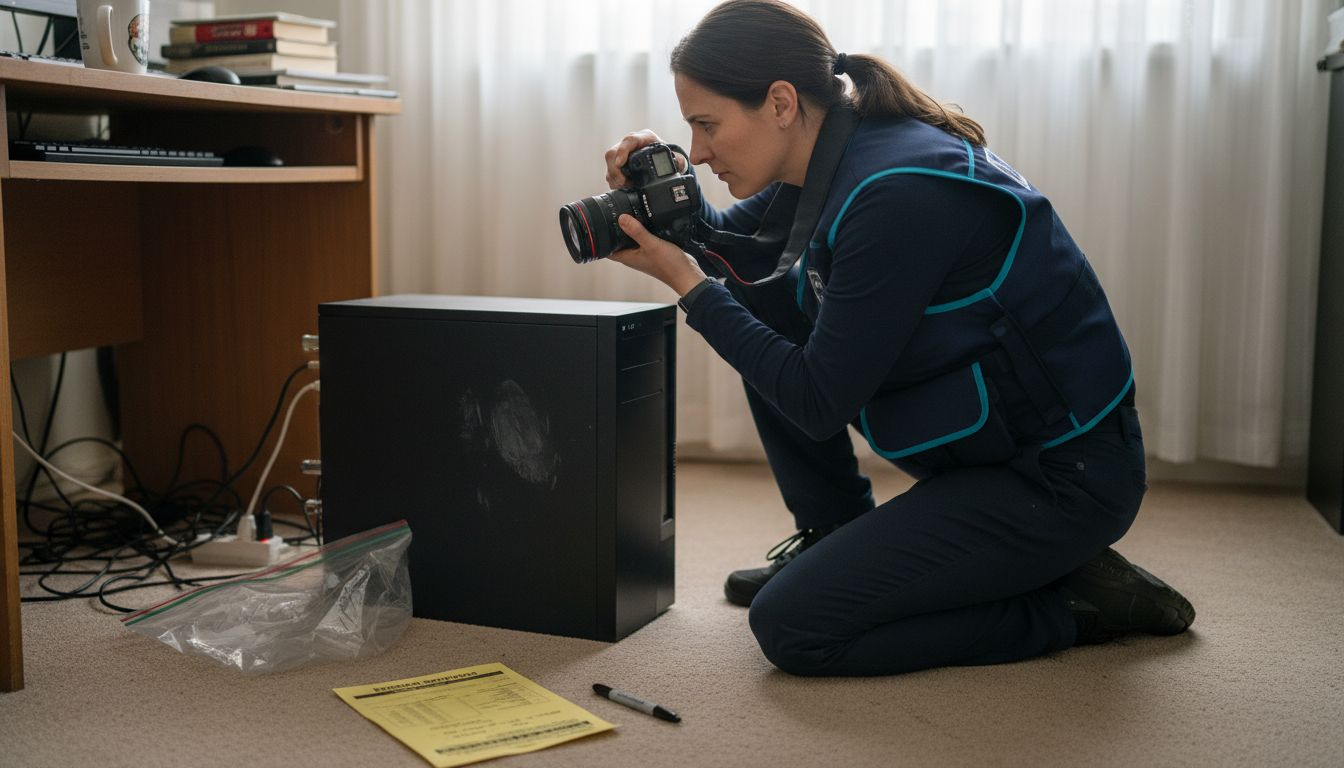
Securing devices requires both physical and digital methods working in concert. Power down devices using proper procedures rather than simply unplugging them. For mobile devices that might receive remote wipe commands, enable airplane mode or use Faraday bags immediately. Network-connected devices should be isolated to prevent remote access or data destruction.
Handle devices minimally to avoid data alteration or loss. Oils from your hands can damage components, whilst unnecessary interaction might trigger security features or modify timestamps. Use clean gloves and anti-static precautions when physical contact becomes necessary. Every touch creates potential questions about evidence integrity during cross-examination.
Employ tamper-evident seals and correct packaging to demonstrate continuous custody. Place devices in anti-static bags before sealing them in evidence containers. Apply numbered seals across openings and document seal numbers in your inventory. These physical security measures prove no unauthorised access occurred between collection and analysis.
| Documentation method | Tools required | Best for | Limitations |
|---|---|---|---|
| Written inventory | Forms, pens, clipboards | All device types | Human error risk |
| Photographic record | Camera, scale markers | Visual evidence | Storage requirements |
| Video documentation | Video camera, audio recorder | Complex scenes | Time intensive |
| Digital logging | Tablets, forensic software | Large collections | Technology dependence |
Transport considerations affect evidence integrity significantly. Avoid extreme temperatures, magnetic fields, and physical shocks during transit. Maintain climate control in transport vehicles and use padded containers for delicate electronics. Your digital evidence checklist should include transport protocols specific to different device types.
Pro tip: Create a photographic record of sealed evidence packages before leaving the collection site to document your security measures immediately.
Maintaining chain of custody throughout the investigation
Documenting the chain of custody is critical for legal admissibility and integrity of digital evidence. Every person who handles evidence must be identified, every transfer must be recorded, and every access must be justified. This documentation trail proves your evidence remained secure and unaltered from collection through courtroom presentation.
Meticulously record every transfer and access of evidence using standardised forms that capture essential details. Document the date, time, transferring party, receiving party, purpose of transfer, and condition of evidence. Include specific seal numbers and note any changes in packaging or storage conditions. These records must be contemporaneous, not reconstructed later from memory.
Standard forms and logs create consistency across your organisation and simplify court testimony. Develop templates that prompt investigators to record all necessary information without overwhelming them with bureaucracy. Digital logging systems can automate portions of this process whilst maintaining required documentation standards. However, always maintain paper backups as technology can fail at critical moments.
Only authorised personnel should handle evidence, with each access requiring proper justification and supervisor approval. Create a restricted access list identifying individuals cleared to interact with specific evidence items. Require signatures for every evidence checkout and return, noting the specific purpose and duration of access. Unauthorised handling destroys credibility and potentially renders evidence inadmissible.
The chain of custody must be unbroken and transparent. A single gap in documentation can undermine months of investigative work and allow crucial evidence to be excluded from proceedings.
Consequences of broken chain of custody extend beyond individual cases. Courts may exclude evidence entirely when custody documentation shows gaps or inconsistencies. Defence attorneys exploit chain of custody weaknesses to create reasonable doubt about evidence authenticity. Your professional reputation suffers when custody failures occur, potentially affecting future testimony credibility.
Storage facilities must provide secure, climate-controlled environments with restricted access. Evidence rooms should have surveillance systems, access logs, and regular audits. Separate storage areas for different case types prevent cross-contamination and maintain appropriate security levels. Your chain of custody procedures should specify storage requirements for various evidence categories.
Verifying evidence integrity and preparing for analysis
Cryptographic hashes verify data integrity by creating unique digital fingerprints of evidence files. Calculate hash values immediately after collection using algorithms like SHA-256 or MD5. These values serve as mathematical proof that evidence remains unchanged throughout your investigation. Any alteration, no matter how minor, produces completely different hash values, immediately revealing tampering or corruption.
Compare different verification tools to select options matching your specific needs and technical capabilities. Each tool offers distinct advantages for particular scenarios and evidence types.
| Verification tool | Hash algorithms | Speed | Best use case | Limitations |
|---|---|---|---|---|
| FTK Imager | MD5, SHA-1, SHA-256 | Fast | General imaging | Proprietary format |
| dd command | User-specified | Variable | Unix systems | Command-line only |
| EnCase | Multiple options | Moderate | Enterprise cases | Expensive licensing |
| Autopsy | SHA-256 | Fast | Open-source needs | Learning curve |
Follow comprehensive checklists ensuring no verification step is missed prior to analysis. Your checklist should cover hash calculation, hash documentation, comparison verification, storage confirmation, and backup creation. Skipping verification steps creates vulnerabilities that skilled defence attorneys will exploit during cross-examination.
Plan for timely analysis to leverage advancing technology and maintain evidence relevance. Technology’s processing power doubles approximately every two years, continuously expanding forensic capabilities. Delayed analysis might miss opportunities to employ newer techniques or tools that could reveal additional evidence. However, balance speed against thoroughness to avoid overlooking crucial details.
Document your verification process as meticulously as your collection procedures. Record which tools you used, when you performed verification, what hash values you obtained, and where you stored verification records. This documentation proves you followed proper procedures and maintained evidence integrity throughout the investigative process.
Create multiple verified copies of evidence before beginning analysis. Work exclusively on copies whilst preserving original evidence in secure storage. This practice protects against accidental modification and provides backup copies if analysis tools corrupt working files. Your digital forensics procedures should mandate working copy creation for all cases.
Pro tip: Automate hash verification using scripts that calculate and compare values across multiple algorithms simultaneously, saving time whilst increasing reliability through redundancy.
Discover expert digital forensics services for your investigations
Professional expertise ensures adherence to best practices throughout complex digital evidence collection processes. When investigations involve sophisticated technology, encrypted data, or high-stakes legal proceedings, partnering with experienced digital forensics services provides critical advantages. Specialists bring validated tools, established procedures, and court-tested methodologies that strengthen evidence credibility.
Specialised tools improve evidence integrity and analysis capabilities beyond what general-purpose software provides. Professional forensic laboratories maintain cutting-edge technology and regularly update their capabilities to address emerging challenges. Their experience with diverse case types means they recognise evidence patterns and potential issues that less experienced investigators might overlook.
Outsource complex or large investigations for optimal outcomes when internal resources lack specific expertise or capacity. Digital forensic investigations demand significant time investments and technical knowledge that might exceed your organisation’s current capabilities. Professional services scale to match investigation demands whilst maintaining consistent quality standards. They also provide expert witness testimony that courts respect, strengthening your case presentation and improving litigation outcomes. Understanding digital forensics data complexities helps you recognise when specialist assistance becomes necessary.
What are the essential steps in digital evidence collection?
What is the first step in collecting digital evidence?
Define your investigative scope by establishing clear objectives and identifying specific devices that potentially contain relevant evidence. This focused approach prevents unnecessary data collection and ensures resources target material directly supporting your case.
How do you maintain evidence integrity during collection?
Document everything through detailed inventories, photographs, and written records whilst minimising device handling. Use write blockers, tamper-evident seals, and proper packaging to prevent data alteration. Calculate cryptographic hashes immediately after collection to verify evidence remains unchanged.
Why is chain of custody documentation critical?
Chain of custody proves evidence remained secure and unaltered from collection through court presentation. Courts may exclude evidence showing custody gaps or inconsistencies. Every transfer and access must be recorded with authorised signatures to maintain legal admissibility.
What tools verify digital evidence integrity?
Cryptographic hash algorithms like SHA-256 create unique digital fingerprints proving evidence authenticity. Forensic imaging tools such as FTK Imager, EnCase, and Autopsy calculate these hashes whilst creating verified copies. Compare hash values before and after analysis to confirm no alterations occurred.
When should you involve professional forensic services?
Engage specialists for complex investigations involving encrypted data, sophisticated technology, or high-stakes legal proceedings. Professional services provide validated tools, established procedures, and expert witness testimony that strengthen evidence credibility. Their experience with diverse cases helps identify patterns and potential issues that less experienced investigators might overlook. Consider professional assistance when internal resources lack specific expertise or capacity to handle investigation demands effectively.